The discovery of constitutive laws from experimentally accessible measurements is a central problem in nonlinear computational mechanics. Many data-driven constitutive identification approaches rely either on paired strain–stress data or on full-field displacement measurements, both of which are difficult to obtain in realistic three-dimensional settings. We present a differentiable finite element framework for the discovery of hyperelastic material laws from partial observations, including boundary-only displacement measurements and global reaction forces. The method embeds the nonlinear finite element equilibrium problem directly into the learning loop, so that candidate strain-energy densities are assessed through the deformation fields and reactions they induce. This formulation enforces mechanical equilibrium as a constraint and allows the loss function to be evaluated only at observed locations. To ensure physical admissibility and promote numerical solvability throughout training, the constitutive response is represented by Hyperelastic Neural Networks, a structure-preserving neural class that enforces residual energy and stress-free conditions, frame indifference, isotropic material symmetry, polyconvexity, coercivity, and controlled volumetric growth by construction. The resulting PDE-constrained learning problem is solved using a quasi-Newton strategy combined with continuation and solver-aware backtracking. Numerical experiments in two- and three-dimensional finite elasticity demonstrate accurate recovery of hyperelastic isotropic responses from boundary-only data, robustness to measurement noise, and generalization across geometries, loading conditions, and boundary conditions.
Hyperelastic constitutive models enable modeling large deformations in elastic solids. In common practice, a strain energy density function is prescribed in advance and model-specific parameters are calibrated from experiments. However, many applications require constitutive models for a family of related materials who...
Steven J. Yang, G. Padmanabha, D. T. Seidl et al.· 1 citation
We propose an unsupervised learning framework for calibrating a physics-augmented neural network (PANN) for small-strain viscoelasticity via full-field data. It only requires quantities that are directly accessible in real experiments for training, namely global reaction forces and surface displacements. The underlying...
Brain M. Riemer, M. Kästner, K. Kalina· 1 citation
Digital materials fabricated by multi-material 3D printing are designed as controlled mixtures of stiff and compliant constituents, yielding effective responses that span more than an order of magnitude in apparent stiffness and exhibit strongly nonlinear, composition-dependent, and rate-dependent dissipative behavior....
Josué García-Ávila, Bei-Jun Shen, Manuel K. Rausch et al.· 0 citations
A novel physics-informed recurrent neural network (PIRNN) model has been developed for data-driven constitutive modeling of metallic materials under high-strain-rate loading. The proposed PIRNN framework integrates a gated recurrent unit (GRU) network and a fully connected neural network to capture the rate-dependent s...
Physics-Informed Neural Networks (PINNs) serve as continuous, mesh-free solvers for partial differential equations, but they frequently encounter optimization failures when applied to strongly coupled, stiff multiphysics systems. In piezoelectricity, the disparity in energetic scales between mechanical stress and elect...
Suhas Suresh Bharadwaj· Journal of Applied Physics· 0 citations
Classical constitutive modeling of path-dependent inelastic materials relies on internal state variables whose evolution equations must be postulated based on domain knowledge and calibrated against experimental data. However, in many practical settings, the relevant internal variables are typically not measurable in e...
Rishabh Arora, L. Scheunemann, T. Brepols et al.· 0 citations
Related blog posts
MIT News · Artificial Intelligence· news.mit.eduOct 2, 2026
Martin Trust Center Managing Director Bill Aulet introduces Dear Dreamer, a free platform for middle and high school students who want to learn about entrepreneurship.
Microsoft Research Blog· microsoft.comSep 30, 2026
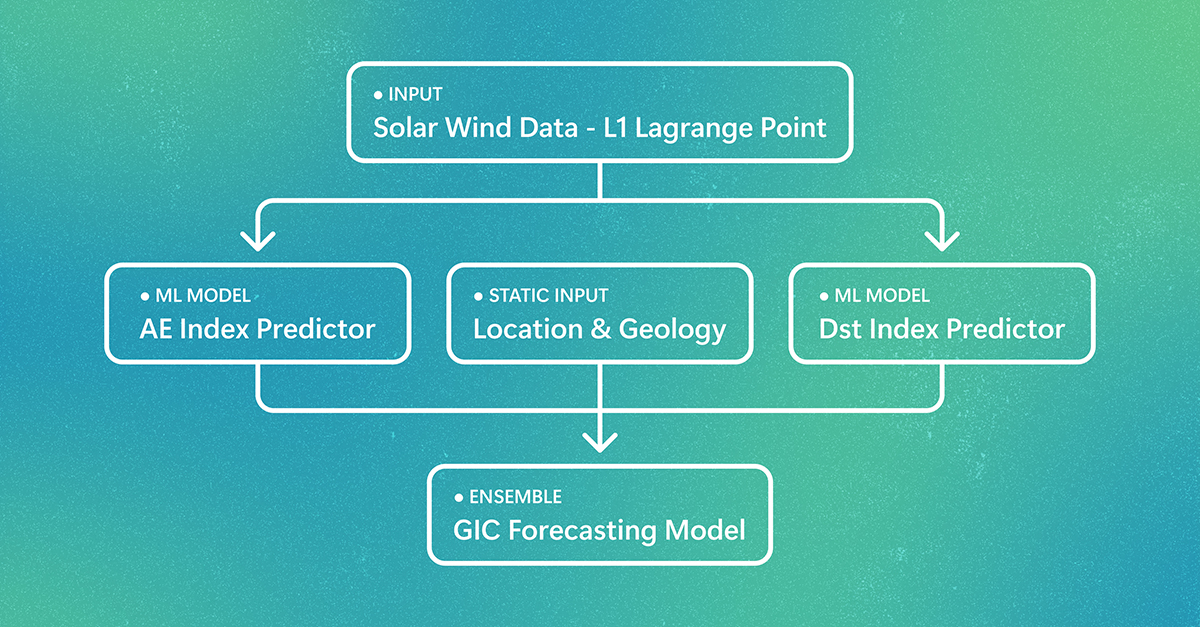
Extreme space-weather events can damage power systems on Earth and degrade GPS accuracy and satellite operations. A new machine learning system can predict where damage is likely to occur 30-60 minutes before a storm arrives. The post Forecasting space weather risks on power grids appeared first on Microsoft Research.
We use cookies to run the site and, with your consent, for analytics and to show ads.
See our Cookie Policy.