AI chatbots are increasingly used for companionship, emotional support, and personal self-disclosure; however, how social engagement with these systems unfolds over time and shapes users'well-being remains unclear. To address this, we conducted a two-wave longitudinal study of CharacterAI users, surveying 1,182 participants at baseline and 439 after a mean follow-up of 12 months. We examined how social engagement with AI companions evolves and how these longitudinal engagement patterns may influence well-being through two hypothesized pathways: sustained social engagement over time and the displacement of human social interaction. We found that interaction intensity, companionship use, and self-disclosure all showed substantial continuity over time. Greater interaction intensity at baseline predicted greater subsequent interaction intensity, companionship use, and self-disclosure. Consistent with the longitudinal engagement pathway, sustained social engagement across these dimensions was consistently associated with lower well-being. Results further support the social displacement pathway, indicating that these links were mainly explained by lower in-person social interaction. These findings highlight the importance of designing AI companions that support human social relationships without displacing them

This publication proposes a definition and a classification of agile software development approaches and analyses ten software development methods that can be characterized as being "agile" against the defined criterion.
P. Abrahamsson, O. Salo, Jussi Ronkainen et al.· arXiv.org· 727 citations· ⚡54
The study shows that agile practices improve both informal and formal communication, but indicates that, in larger development situations involving multiple external stakeholders, a mismatch of adequate communication mechanisms can sometimes even hinder the communication.
M. Pikkarainen, Jukka Haikara, O. Salo et al.· Empirical Software Engineeri...· 401 citations· ⚡48
The results indicate that software engineering work practices are chosen opportunistically, adapted and configured to provide value under the constrains imposed by the startup context.
Nicolò Paternoster, Carmine Giardino, M. Unterkalmsteiner et al.· Information and Software Tec...· 394 citations· ⚡54
The perception of the impact of agile methods is predominantly positive, and several challenge areas were discovered, but based on this study, agile methods are here to stay.
M. Laanti, O. Salo, P. Abrahamsson· Information and Software Tec...· 260 citations· ⚡20
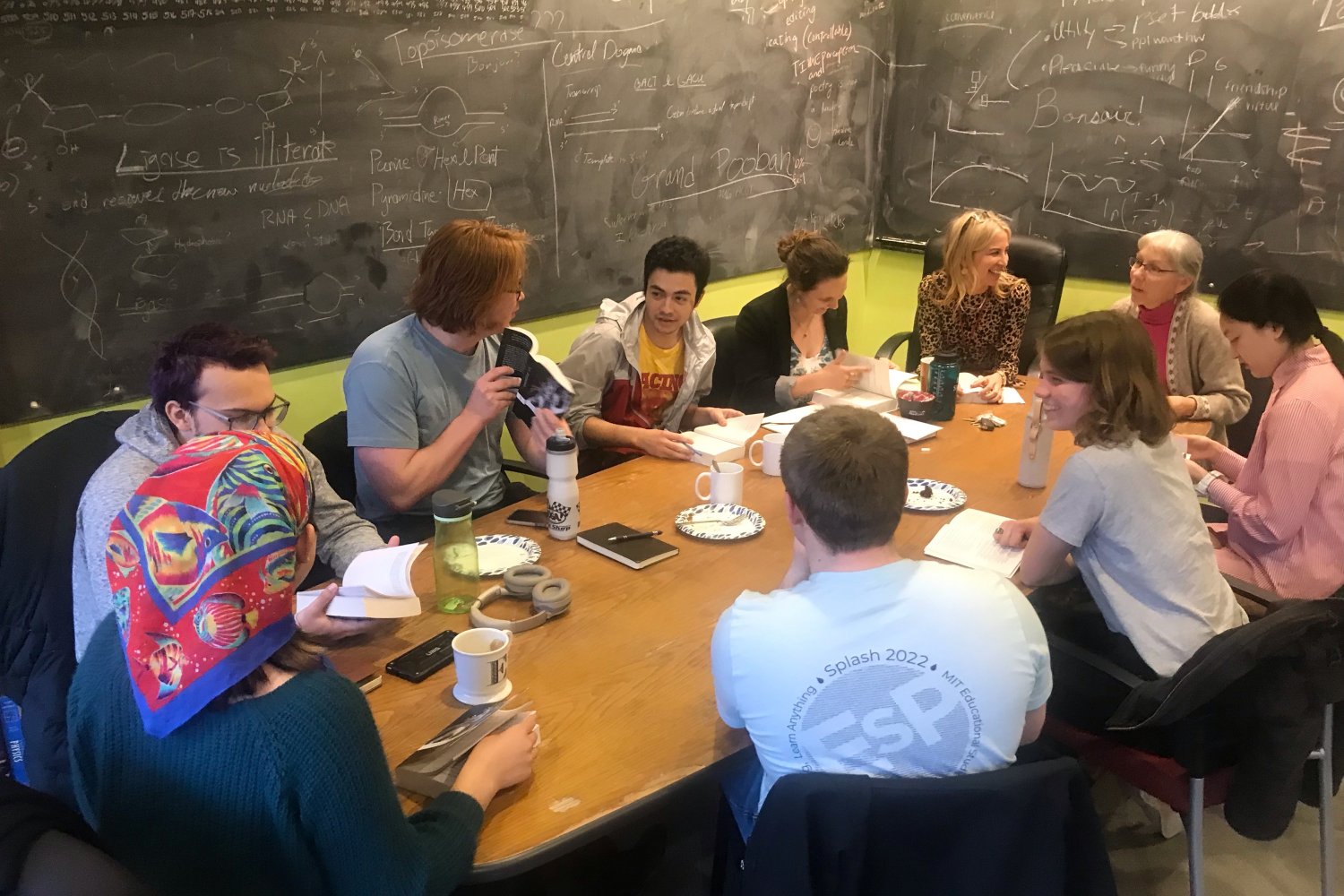
Students in MIT’s Concourse program delve deeply into the human condition, debate challenging questions, and learn to develop judgment about issues that can’t be quantified.
Jennifer Neville did not want to go into computer science—but that’s exactly where she landed. Neville discusses the starts and stops that led to her professional sweet spot and her work identifying “surprising failures” making it hard for AI to handle complexity. The post What AI gets wrong and what failure teaches us appeared first on Microsoft Research.
MIT News · Artificial Intelligence· news.mit.eduSep 30, 2026
Able to defeat top-ranked human players and more efficient than other models, the new system could help decision-makers in military maneuvers or business negotiations.
We use cookies to run the site and, with your consent, for analytics and to show ads.
See our Cookie Policy.