This paper introduces OneEmo, a unified affective generalist capable of mastering emotion perception, comprehension, and interaction, and proposes Emo-Chord, a novel reinforcement learning strategy that stabilizes optimization through unified multi-task reward allocation.
Abstract
Multimodal Large Language Models (MLLMs) have demonstrated remarkable capabilities in emotional intelligence. However, prevailing research predominantly focuses on task-specific specialization, often neglecting inter-task synergy and leaving latent reasoning potential underexplored. To bridge this gap, we introduce OneEmo, a unified affective generalist capable of mastering emotion perception, comprehension, and interaction. For this purpose, we first construct EmoWorld-130K, a comprehensive dataset that distills specialized affective knowledge into explicit reasoning trajectories via a human-in-the-loop workflow. Supervised fine-tuning on this corpus reveals significant mutual benefits derived from multi-task learning. Second, to fully unlock the latent reasoning potential, we propose Emo-Chord, a novel reinforcement learning strategy that stabilizes optimization through unified multi-task reward allocation. Extensive experiments demonstrate that OneEmo achieves state-of-the-art performance against similarly sized baselines across most benchmarks. Notably, despite having significantly fewer parameters than commercial models, OneEmo delivers highly competitive results. This paper paves the way for more reliable and interpretable affective computing. The code is available at https://github.com/waHAHJIAHAO/OneEmo.
This work proposes LongEmo, a novel memory-augmented agentic framework designed to tackle the immense challenges of long-range affective reasoning, and achieves state-of-the-art performance, demonstrating the efficacy of its event-centric memory architecture.
Shuo Zhang, Yifan Zhou, Han-Yu Wang et al.· arXiv.org· 0 citations
EmoDialogue, a bilingual dataset providing necessary fine-grained supervision through response pairs with rigorously defined EI gradations, and EmoS, a specialized evaluator model optimized via Supervised Fine-Tuning and Group Relative Policy Optimization, are introduced, establishing a foundational framework for advan...
Junyu Wang, Si-Yuan Zhang, Peiyuan Jiang et al.· 1 citation
A Hierarchical Emotional Reasoning Chain (HERC) is proposed that enhances the insufficient attribution by harmonizing fine-grained scene/object-level cues and performing a soft-gated reasoning, and a Contrastive Discriminative Visual Pruning (CDVP), which isolates discriminative visual tokens to reason the final emotio...
C. Ye, Wei-Dong Chen, Zhao-Bo Qi et al.· arXiv.org· 0 citations
Extensive experiments across three affective tasks demonstrate that MDCoT consistently outperforms state-of-the-art end-to-end models and existing prompting strategies across multiple MLLMs and confirms that explicit disentanglement effectively prevents cross-modal conflict and improves decision stability.
Wen-Rui Zhang, Hao Yang, Shao-Bo Liu et al.· Electronics· 0 citations
The AffectiveArt Multidimensional Art Emotion Understanding task asks to jointly predict an artwork's fine-grained emotion (12 classes, 1549:1 head-to-tail ratio), binary valence/arousal, and five attribute-grounded descriptions -- sub-tasks that exhibit strong empirical trade-offs, so the single-model solutions we tri...
Jian Li, Fan-Fan Ji, Jinxiang Lai et al.· 0 citations
This work recast the affective analysis task as a complex-reasoning problem, which yields one output interface across heterogeneous label spaces and a trajectory over which a verifiable reward can be optimised; to the authors' knowledge, this is the first such treatment covering both sentiment and emotion.
Tianlei Zhu, Zhiwei Liu, Yu-Yan Wang et al.· 0 citations
Related blog posts
Microsoft Research Blog· microsoft.comNov 16, 2026
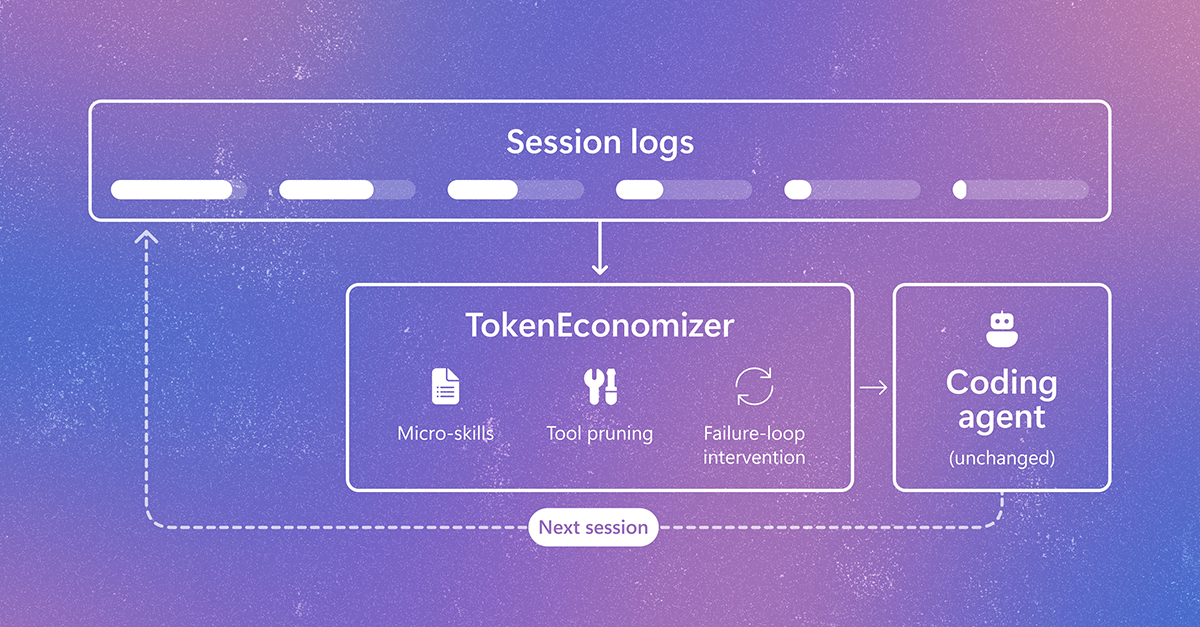
AI coding agents are increasingly help developers fix bugs and build features largely on their own, but every interaction with their models consumes tokens. In each session, an agent sends instructions, tool descriptions, and session history to its model. Most efforts to reduce this cost focus on individual tasks. Yet developers return to the same […] The post TokenEconomizer: Learning from Experience to Make AI Coding Agents More Efficient appeared first on Microsoft Research.
MIT News · Artificial Intelligence· news.mit.eduNov 13, 2026
Founded by Anthony Jules ’92, SM ’92 and Professor Emeritus Rodney Brooks, Robust AI’s robots are designed to collaborate with humans in factories and warehouses.
MIT News · Artificial Intelligence· news.mit.eduNov 12, 2026
MIT scientists developed a training method to generate models that simulate the effects of human activities on climate much more quickly than other approaches.
We use cookies to run the site and, with your consent, for analytics and to show ads.
See our Cookie Policy.