MoNe is a lightweight modular neural memory that attaches to any frozen pretrained Transformer to enable long-context inference without retraining, achieving strong performance on needle-in-a-haystack and word extraction benchmarks from RULER, where ICL degrades sharply.
Abstract
We present MoNe, a lightweight modular neural memory that attaches to any frozen pretrained Transformer to enable long-context inference without retraining. MoNe reads context in fixed-size segments via test-time learning of fast-weight neural memory networks with layer-localized gradient updates; at inference, the memory generates keys and values from the query tokens alone, with no context tokens re-read. This two-phase design decouples inference cost from context length, achieving $O(N)$ preprocessing and $O(1)$ query cost with peak GPU memory that does not grow with $N$. At 128K tokens, MoNe reduces both compute and peak GPU memory by approximately 80% compared to ICL with only 6.4% parameter overhead. MoNe generalizes to context lengths far beyond the backbone's native window, achieving strong performance on needle-in-a-haystack and word extraction benchmarks from RULER, where ICL degrades sharply.
O CTOPUS is proposed, a framework that confers fixed-memory inference onto pretrained Transform-ers without the information loss of linearization and outperforms state-of-the-art linearized baselines on the GSM8K benchmark, demonstrating that learned sparse retention serves as an effective regular-izer for long-horizon...
C. Nguyen, Ryan A. Rossi, L. Van et al.· Annual Meeting of the Associ...· 0 citations
SeDeM is proposed, a selective decompression framework that decouples compact memory storage from decoder conditioning and reduces online time-to-first-token and improves autoregressive decoding throughput relative to ICAE.
Maryam Haghifam, Jason Cong, Yizhou Sun· 1 citation
This work instantiates a new paradigm of incremental memory activation, where the effective capacity of memory is progressively expanded as the context grows, and applies this paradigm to state-of-the-art models, observing consistent improvements on standard language modeling and reasoning, as well as on long-context r...
Reza Bayat, Ali Behrouz, V. Mirrokni et al.· 1 citation
These results support depthwise convolution as a lightweight complement to self-attention for modeling short-range token interactions and suggest that the convolution makes repeated token IDs more sensitive to their immediate context.
Yu-Chuan Tian, Yingte Shu, Wei He et al.· arXiv.org· 0 citations
An extensive experimental study is presented demonstrating that ARMT-augmented models process inputs well beyond their original context limits without degrading performance relative to in-limit baselines and need 30% less FLOPs while preserving baseline performance within the original context window.
Gleb Kuzmin, I. Rodkin, A. Bulatov et al.· arXiv.org· 0 citations
ExactMoE, an inference design that applies symmetric group-128 four-bit weight quantization only to routed experts, stores those experts in kernel-native MARLIN form in pinned host memory, and executes all selected experts through a configurable GPU-resident slot cache and fused grouped MoE kernels, identifies a practi...
Amjad Saab· 0 citations
Related blog posts
MIT News · Artificial Intelligence· news.mit.eduOct 13, 2026
Machine-learning networks can learn without detailed instructions from a designer. Those that do may offer insight into how the brain reorganizes itself during learning.
MIT News · Artificial Intelligence· news.mit.eduSep 29, 2026
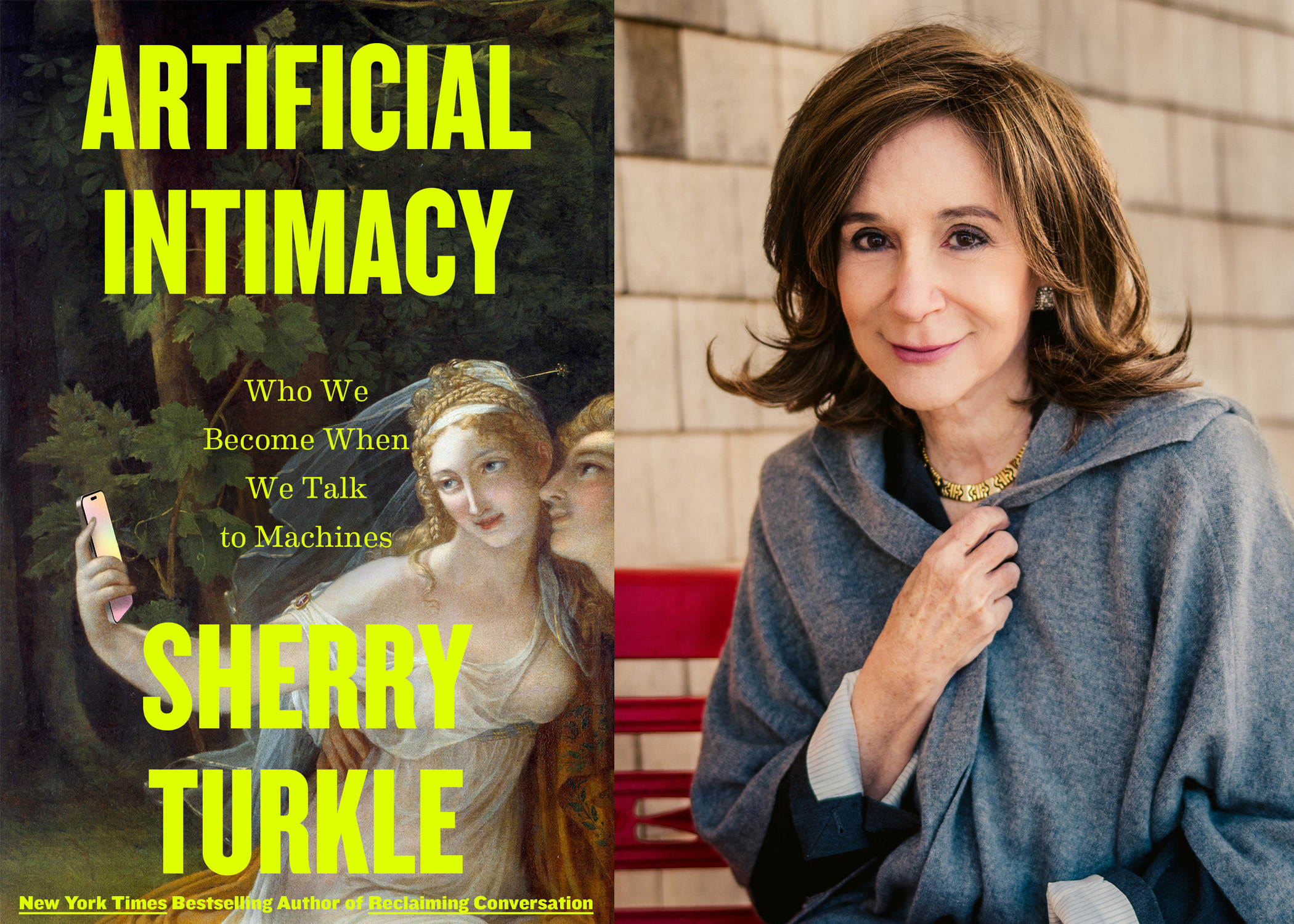
Professor Sherry Turkle’s new book, “Artificial Intimacy,” offers a withering critique of chatbots and the antisocial dynamics she believes they encourage.