This work leverages the geometric self-similarity and geometry-texture correlation existing in many natural and man-made shapes; and trains a shape-specific local texture generation and completion model that enables local geometry-conditioned texture inpainting, guided by artist-selected references, and generalizes to PBR materials and unseen meshes for texture transfer.
Abstract
Using conditional image generators, texture artists can explore many single-view looks for an existing 3D shape. Despite impressive progress, state-of-the-art generative methods still struggle to generate a full object texture while closely adhering to fine scale geometric detail and single view references, leaving little room for artists guidance. Furthermore, current automatic models lack the flexibility for artist to explore multiple textures from varied sources in an interactive and controllable manner. Unlike methods trained on large 3D datasets that generate full object textures from global guidance, our work explores a local and less data-hungry approach to texture with explicit artist control. We leverage the geometric self-similarity and geometry-texture correlation existing in many natural and man-made shapes; and train a shape-specific local texture generation and completion model. This model learns from existing image model priors and a single 3D shape, and is guided by attending to a set of geometry-aware reference patches. The trained shape-specific network can transfer any novel reference to the full target object texture through patchwise inpainting. We show improved or comparable quality to strong image-conditioned texture generation baselines, suggesting local texturing as a promising research direction. Our model also enables local geometry-conditioned texture inpainting, guided by artist-selected references, and generalizes to PBR materials and unseen meshes for texture transfer. We piloted our novel texture fill capability as a Blender addon with several 3D texturing professionals who reported positive feedback on the model's controllability, practical usefulness, and creative affordances.

This publication proposes a definition and a classification of agile software development approaches and analyses ten software development methods that can be characterized as being "agile" against the defined criterion.
P. Abrahamsson, O. Salo, Jussi Ronkainen et al.· arXiv.org· 727 citations· ⚡54
The study shows that agile practices improve both informal and formal communication, but indicates that, in larger development situations involving multiple external stakeholders, a mismatch of adequate communication mechanisms can sometimes even hinder the communication.
M. Pikkarainen, Jukka Haikara, O. Salo et al.· Empirical Software Engineeri...· 401 citations· ⚡48
The results indicate that software engineering work practices are chosen opportunistically, adapted and configured to provide value under the constrains imposed by the startup context.
Nicolò Paternoster, Carmine Giardino, M. Unterkalmsteiner et al.· Information and Software Tec...· 394 citations· ⚡54
The possibility of inferring high-dimensional data inference in a model that consists of a prior and an auxiliary differentiable constraint given some additional information is considered, thereby allowing a range of potential applications in adapting models to new domains and tasks.
Alexandros Graikos, Esmeralda S. Whitammer, N. Jojic et al.· Neural Information Processin...· 316 citations· ⚡15
It is proved that any global minimizer of the trajectory balance objective can define a policy that samples exactly from the target distribution, and empirically demonstrate the benefits of the trajectories balance objective for GFlowNet convergence, diversity of generated samples, and robustness to long action sequenc...
Esmeralda S. Whitammer, Moksh Jain, Emmanuel Bengio et al.· Neural Information Processin...· 302 citations· ⚡60
Exploring how generative AI could make machine vision more accessible to businesses. The post GenEye in a Box: Making Machine Vision Something You Can Just Ask For appeared first on GPT-Lab.
Microsoft Research Blog· microsoft.comAug 11, 2026
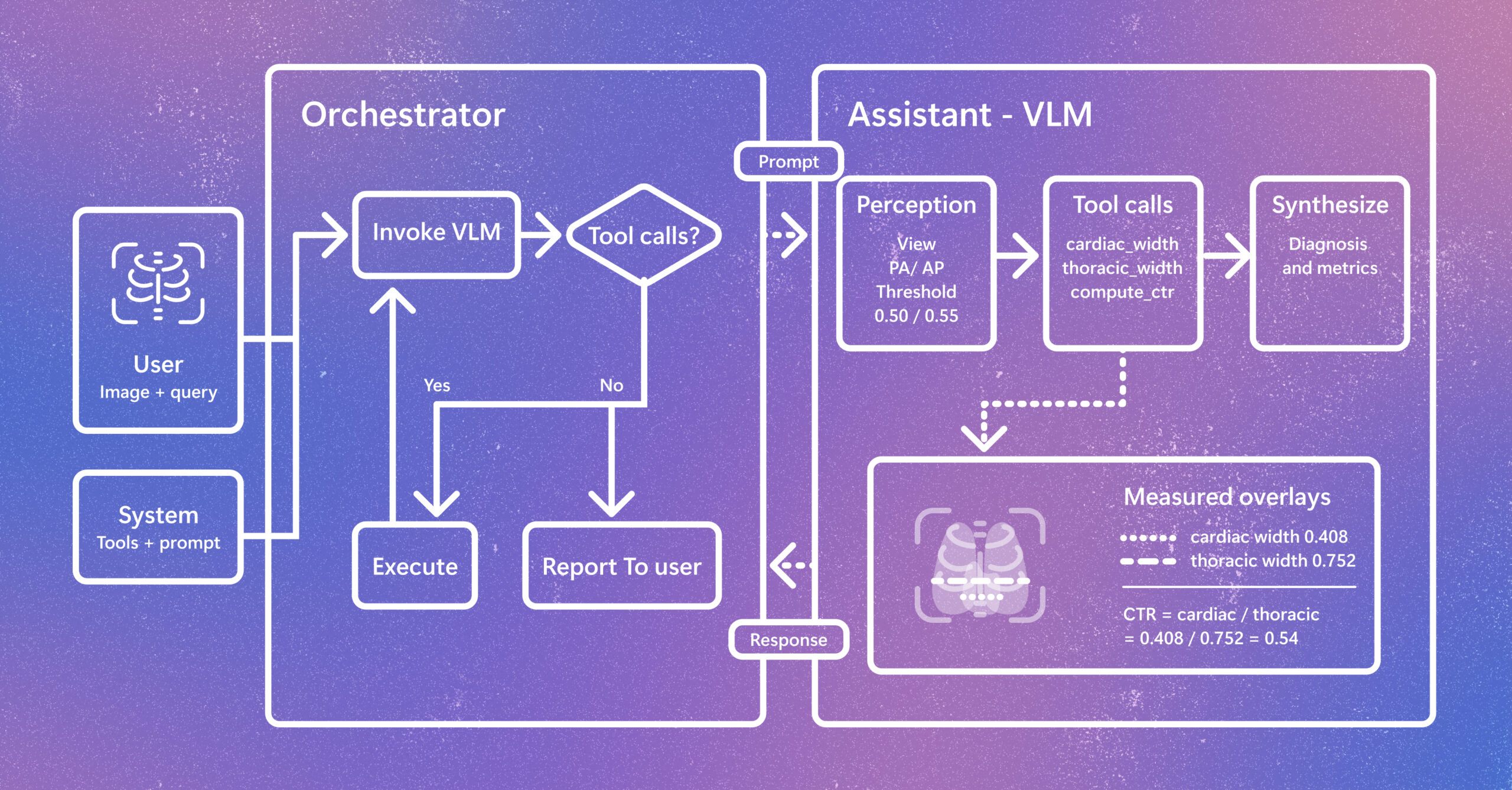
Radiology AI is evolving beyond report generation. CARE-X explores a unified approach that combines flexible reasoning, calibrated predictions, and measurement-based tools for chest X-ray interpretation. The post Introducing CARE-X: Towards Clinically Useful Radiology VLMs with Auxiliary Supervision, Reward-Aligned Learning, and Tool-Augmented Measurement appeared first on Microsoft Research.
Assistant Professor Benjamin Lindquist studies how engineers deliberately injected randomness into early AI, giving rise to deep-learning models that sometimes hallucinate.
We use cookies to run the site and, with your consent, for analytics and to show ads.
See our Cookie Policy.