Skip to content
#generative ai Open access

Between Co-Intelligence and Cognitive Offloading: Educators’ Perspectives from Dutch Academic Medical Settings on Generative AI, Critical Thinking, and Adult Professional Learning

Sep 2026 · Education sciences · 1 citation · 39 references
Artificial Intelligence in Healthcare and Education

TL;DR

How educators working in Dutch academic medical settings perceive GenAI’s implications for students’ critical thinking and how they believe it should be integrated into medical curricula is explored are explored.

Abstract

Generative artificial intelligence (GenAI) is becoming embedded in adult professional education, yet its capacity to accelerate academic work may also remove cognitive processes that underpin professional judgement. This qualitative study explored how educators working in Dutch academic medical settings perceive GenAI’s implications for students’ critical thinking and how they believe it should be integrated into medical curricula. Seventeen educators from Dutch academic medical settings participated in semi-structured interviews. Data were analysed thematically using a mixed inductive–deductive approach informed by the Technology Acceptance Model and the Paul–Elder critical thinking framework. Three themes were identified: educational value and efficiency; threats to independent critical thinking; and conditions for responsible integration. Educators valued GenAI for personalised learning, writing support, research assistance, accessibility, simulation, and administrative efficiency. However, they associated low-friction use with cognitive offloading, weaker source appraisal, reduced information filtering, possible erosion of foundational knowledge, and difficulties verifying authentic student understanding. Participants proposed AI literacy, transparent use, institutionally governed models, comparative human–AI tasks, simulation, staged access, and AI-free oral or in-class assessment. The findings suggest that adult professional education should design GenAI as co-intelligence rather than cognitive substitution, preserving productive friction while verifying unassisted competence.
Read PDF

Similar papers

#generative ai Review Open access Sep 2026

Between cognitive offloading and critical autonomy: a systematic review of the epistemic implications of generative AI in higher education

The evidence suggests that the educational consequences of GenAI are mediated primarily by pedagogical design, AI literacy, and assessment practices rather than by the technology itself, supporting the need for higher education institutions to promote critical AI literacy and pedagogical frameworks capable of preservin...

Iván Claudio Suazo Galdames, Meylin Santiesteban Velázquez, M. Saracostti et al. · 3 citations · ⚡1
#generative ai Open access Sep 2026

The association between generative AI use and university students’ critical thinking: a moderated mediation model of GenAI feedback literacy and reflective thinking

A cross-sectional moderated mediation model in which GenAI feedback literacy mediates the association between GenAI use and critical thinking, operationalised as self-reported critical analytical skills, and reflective thinking moderates both the direct path and the path from feedback literacy to critical thinking is t...

Zhen-Cun Yan, Zhuo-Tao Fang, Wei-Xing Zou · 2 citations
Open access Aug 2026

How Cognitive Factors and Motivation Shape Learners' Engagement in AI ‐Supported Language Learning?: Insights From the Combined SEM and fsQCA Approaches

These findings provide theoretical support for SCT in technology‐mediated learning and suggest practical strategies for educators, including tailoring instructional design to learners' cognitive profiles, fostering motivation and self‐efficacy and leveraging AI tools to enhance active and sustained engagement in langua...

Yifan Wang, Ran Zhi · 0 citations
Open access Aug 2026

EFFECTS OF ARTIFICIAL INTELLIGENCE (AI) ON STUDENTS' CRITICAL THINKING TOWARDS ACADEMIC ACHIEVEMENT IN MODIBBO ADAMA UNIVERSITY YOLA (MAU)

The findings revealed a dual-pathway effect: on one hand, AI functions as a cognitive scaffold that enhances understanding, supports idea generation, and improves academic performance, and on the other hand, it acts as a cognitive substitute that reduces analytical engagement, encourages and promotes superficial learni...

B. Usman · 0 citations
Review Open access Sep 2026

From Cognitive Substitution to Cognitive Amplification: Artificial Intelligence, Higher-Order Learning and Real-World Readiness in Online Postgraduate Public Health Education—A Scoping Review

Background: Online postgraduate (PG) public health education must develop higher-order competence and readiness for practice. Generative artificial intelligence (genAI) may enhance feedback, simulation and scaffolding, but may also substitute for learner reasoning. This review examined pedagogical conditions supporting...

Tanusha Singh · 0 citations
Open access Sep 2026

The relationship between perceived artificial intelligence competencies and critical thinking skills: The role of digital literacy and cognitive engagement

Insight is offered into how AI-related self-efficacy supports higher-order cognitive processes in digitally mediated educational settings and how perceived AI competency fosters digital literacy, which in turn promotes cognitive engagement and ultimately strengthens critical thinking skills.

Mahmut Demir, Dilek Unveren · 0 citations

Related blog posts

Microsoft Research Blog Nov 16, 2026

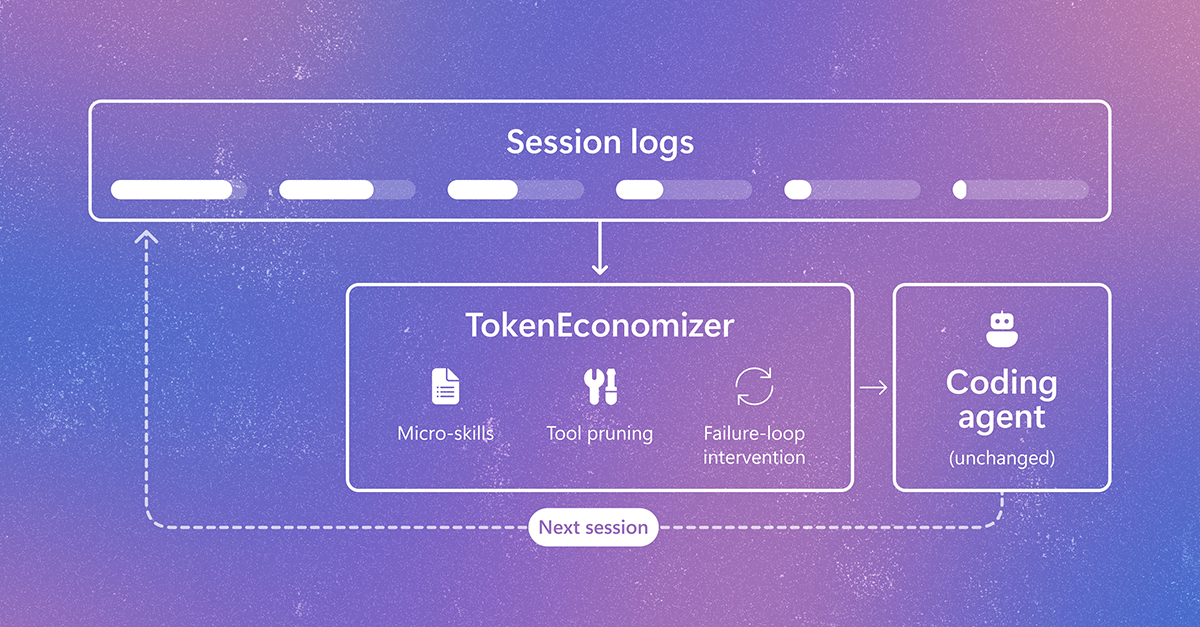
TokenEconomizer: Learning from Experience to Make AI Coding Agents More Efficient

AI coding agents are increasingly help developers fix bugs and build features largely on their own, but every interaction with their models consumes tokens. In each session, an agent sends instructions, tool descriptions, and session history to its model. Most efforts to reduce this cost focus on individual tasks. Yet developers return to the same […] The post TokenEconomizer: Learning from Experience to Make AI Coding Agents More Efficient appeared first on Microsoft Research.

GPT-Lab Nov 13, 2026

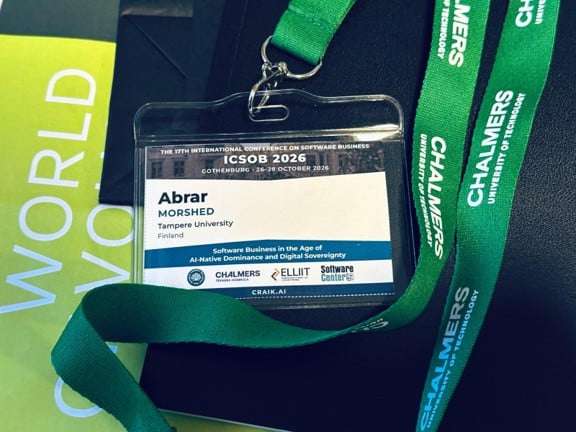
TenderIntell at ICSOB 2026: Three Days in Gothenburg

At ICSOB 2026 in Gothenburg, we presented TenderIntell, our work on multi-agent support for tendering. This post looks back at the conference, the idea behind a panel of three AI reviewers who score each proposal independently, and why evaluating agents reliably is the question we keep coming back to. The post TenderIntell at ICSOB 2026: Three Days in Gothenburg appeared first on GPT-Lab.

MIT News · Artificial Intelligence Nov 13, 2026

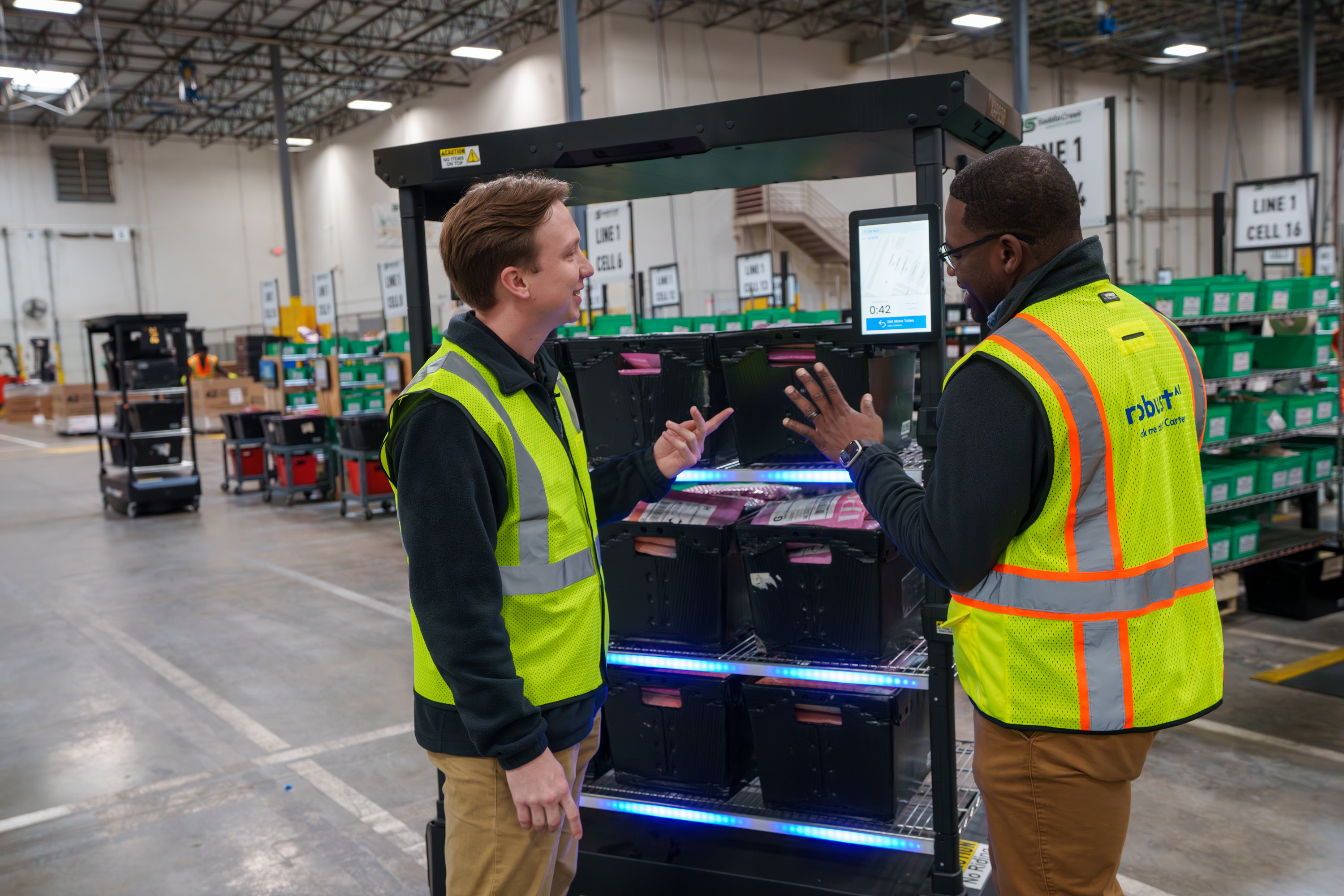
Helping robots fit into the human workplace

Founded by Anthony Jules ’92, SM ’92 and Professor Emeritus Rodney Brooks, Robust AI’s robots are designed to collaborate with humans in factories and warehouses.

We use cookies to run the site and, with your consent, for analytics and to show ads. See our Cookie Policy.