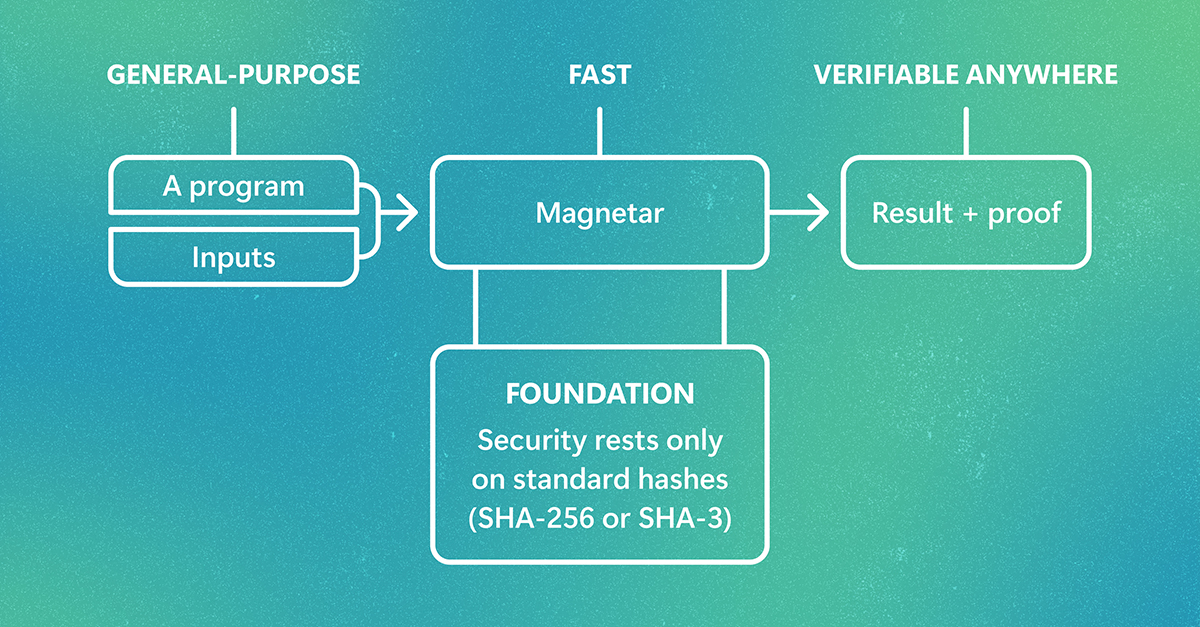
This work proposes the Evolutionary Markov Hypergraph Attack (EMHA), a black-box policy that performs feedback-driven environment evolution by coordinating authorized state transitions without requiring parameter updates, and establishes OpenART as a scalable foundation for studying agent safety in complex, evolving environments.
Abstract
AI agents operate in persistent environments where early state changes can influence decisions far into the future. Unlike conventional language-model interactions, agent behavior is mediated through a shared state that is repeatedly modified and reused across long-horizon workflows. Current safety benchmarks often fail to capture these cumulative risks because they focus on short, static tasks. To address these limitations, we introduce OpenART, an open-ended arena for scalable agent red teaming through environment evolution. OpenART provides over 10,000 validated stateful scenarios across 50 domains, drawing from a pool of more than 500,000 tools and skills. These tasks require a median of 97 tool calls and enable unified evaluation across 75 different agent-model configurations. To systematically explore these evolving attack surfaces, we propose the Evolutionary Markov Hypergraph Attack (EMHA). EMHA is a black-box policy that performs feedback-driven environment evolution by coordinating authorized state transitions without requiring parameter updates. Throughout the evaluation, task objectives remain fixed while only the environment state changes. Across all configurations, EMHA achieves a pooled Attack Success Rate (ASR) of 85.0%. Its advantage over instruction-only evolution increases from approximately 2% on simple environments to over 17% on the most complex ones, demonstrating that environment evolution increasingly exposes safety failures as task complexity grows. Furthermore, our analysis shows that the specific runtime implementation of an agent explains a significant portion of safety variation beyond the underlying model's capabilities. These results establish OpenART as a scalable foundation for studying agent safety in complex, evolving environments.
Treating the Loop Policy as a governable asset can support the accumulation, comparison, release, and reuse of control experience and improve agent performance on long-horizon complex tasks.
Siqi Wang, Xinlin Li, Zheng-Lin Li et al.· 0 citations
This work introduces AgentMercury, a scalable framework for synthesizing executable environments from high-level business scenarios that improves substantially on both enterprise workflows and out-of-domain benchmarks spanning reasoning, coding, scientific computing, and tool use.
OpenJiuwen provides a shared execution substrate and Rail-based capability composition across single agents, delegated sub-agents, and Swarm Flow, enabling developers to construct sophisticated agent harnesses under common execution semantics.
openJiuwen Team Tao Yu, Xin-Yu Zhang, Qian-Qian Chen et al.· 0 citations
LLM agents are increasingly applied to open-ended everyday requests that span work, study, and life. These tasks are long-horizon, cross-environment, and multimodal, forcing the agent to preserve goals and constraints across many steps while navigating heterogeneous tools and attachments. While prior work has addressed individual failure modes such as goals drift, states loss, and context overflow, whether a single harness can manage them jointly and remain effective across backends has received less study. We present OneDayAgent, a long-horizon harness for autonomous agents. OneDayAgent turns an open-ended request into a managed execution process that decomposes tasks into bounded subtasks, maintains execution memory under context pressure, and verifies and repairs the final deliverable. We evaluate OneDayAgent on AgentIF-OneDay across 104 tasks. With the GLM-5.2 backend, OneDayAgent sets a new state of the art with an overall score of 0.821. The same harness runs across five backend LLMs from three model families, indicating the harness generalizes across backends without tuning, even as different models induce distinct execution styles under the same workflow.
Jingsheng Zheng, Xinyuan Fang, Jintian Zhang et al.· 0 citations
Overall, persistent skill self-evolution is better understood as sparse, validation-filtered search with model- and benchmark-dependent returns, rather than steady improvement from additional rounds.
Yuxuan Liu, Zhaochen Su, Yuhao Zhang et al.· 0 citations
We present StarHarness, a framework for evolving environment-specific agent harnesses while keeping model weights fixed. The evolved harness can include prompt and task framing, tool interfaces, skills, MCP-backed providers, subagent structure, and agent-loop configuration. StarHarness constructs a compact evolution pool by stratifying tasks according to baseline failure behavior, separates proposer-visible search tasks from proposer-hidden selection tasks, and reserves held-out tasks for evaluating generalization. Across ITBench SRE, EnterpriseOps-Gym ITSM, and AutomationBench Finance, harness evolution improves full-benchmark performance by 20-35 percentage points over the default harness after 4-12 accepted changes per environment. These gains persist on tasks excluded from evolution and transfer without re-evolution across GPT and Qwen model families. Trace analysis links the improvements to interface repairs, environment conventions, and operational knowledge that compresses search, with fewer false-positive diagnoses and shorter trajectories in several settings. StarHarness therefore offers a practical way to reduce persistent model-environment mismatch in tool-rich enterprise tasks.
Esakkivel Esakkiraja, D. Akhiyarov, V. Yadav et al.· 0 citations