Sep 2026· International Journal of Creative and Open Research in Engineering and Management· 0 citations
TL;DR
This paper presents the design of SecureXon, a modular, full-stack security reconnaissance and threat-intelligence platform built around a Python/Flask backend that consolidates fifteen asynchronous reconnaissance modules with a large-language-model-driven Security Operations Center (SOC) assistant for false-positive vulnerability filtering and remediation guidance.
Abstract
The rapid expansion of internet-facing web applications has widened the attack surface available to automated scanners, botnets and malicious actors, while common weaknesses such as misconfigured servers, unpatched software, obsolete transport-layer encryption and missing HTTP security headers continue to be exploited at scale. Commercial vulnerability scanners are costly and largely opaque, whereas open-source command-line utilities operate independently of one another and demand specialised expertise, offering little contextual or remediation guidance. This paper presents the design of SecureXon , a modular, full-stack security reconnaissance and threat-intelligence platform built around a Python/Flask backend that consolidates fifteen asynchronous reconnaissance modules with a large-language-model-driven Security Operations Center (SOC) assistant for false-positive vulnerability filtering and remediation guidance. A dedicated Zero-Trust defensive subsystem, the SSRF Guard, validates every outbound network request against loopback, private, link-local, multicast and encoded IP representations before it is dispatched. A companion log-analysis engine maps detected attack signatures in Nginx/Apache traffic to the MITRE ATT&CK knowledge base. Beyond the system design, this paper contributes a normalised risk-scoring formulation, an architecture and workflow specification, a structured SSRF bypass test-vector suite, and a precision/recall/F1-based evaluation protocol for the AI-assisted CVE triage stage. As the platform is currently at the design-and-development stage, the paper specifies evaluation protocols for quantitative validation rather than reporting unmeasured performance results.
Index Terms— Web reconnaissance, vulnerability assessment, artificial intelligence in security operations, Server-Side Request Forgery, CVE triage, MITRE ATT&CK, SSL/TLS auditing, log analysis, asynchronous scanning.

Internet Relay Chat (IRC) server development remains a cornerstone of computer networking education. However, these academic practices often prioritize functional concurrency over defensive design, leading to an accumulation of security vulnerabilities. This paper analyzes how functionality-first designs unconsciously...
Melisa Saritas, Yusuf Tahir Kaya, Malek Malkawi et al.· 2026 IEEE 34th International...· 0 citations
A 24-path enterprise attack taxonomy is developed from the supplied reference model and a defense-in-depth mitigation architecture combining zero-trust identity, least privilege, data provenance, model integrity verification, secure tool execution, continuous monitoring, adversarial testing, human oversight, and AI-spe...
Sarathkumar K, P. R, Shyamala Gowri B et al.· International Research Journ...· 0 citations
Business-logic flaws in checkout flows, where a server trusts prices, totals or roles asserted by the client, remain a leading cause of financial loss in web commerce, and security studies continue to find them in widely deployed platforms. At the same time, mainstream storefronts treat shopping as a single-user activi...
Diksha Subhash Kumbhare, Nirjala Subhash Kumbhare· International Journal of Cre...· 0 citations
The Internet of Vehicles (IoV) connects vehicles, roadside infrastructure, and cloud or edge platforms to support safer and more efficient transportation. This connectivity also exposes vehicular networks to message spoofing, denial-of-service, and man-in-the-middle attacks, and to threats that target the machine-learn...
Meisam Sharifi Sani, Saeid Iranmanesh, Raad Raad· Italian National Conference...· 0 citations
The rapid proliferation of cyber threats including phishing attacks, deepfake-based abuse, non-consensual intimate image (NCII) distribution, and physical safety emergencies has created an urgent demand for a unified, intelligent protection platform. Existing solutions operate in isolation: URL-based phishing detectors...
Jikku Abraham Joseph E, Joyal Santhosh, F. P. et al.· International Conference Inn...· 0 citations
The findings demonstrate that safeguarding agentic AI frameworks require multi-layered technical controls, zero-trust architecture, automated schema validation, and strict identity governance, rather than reliance on static boundary controls.
Upendra Kanuru, Alexa Schmitt· The Pinnacle: A Journal by S...· 0 citations
Related blog posts
Microsoft Research Blog· microsoft.comNov 12, 2026
What's new in research at Microsoft? Host Anson Ho explores the latest, including AI-powered universal translation, a breakthrough in a 31-year-old mathematics challenge, and advances making AI coding agents faster and more efficient. The post Microsoft Research Focus – Edition #98 appeared first on Microsoft Research.
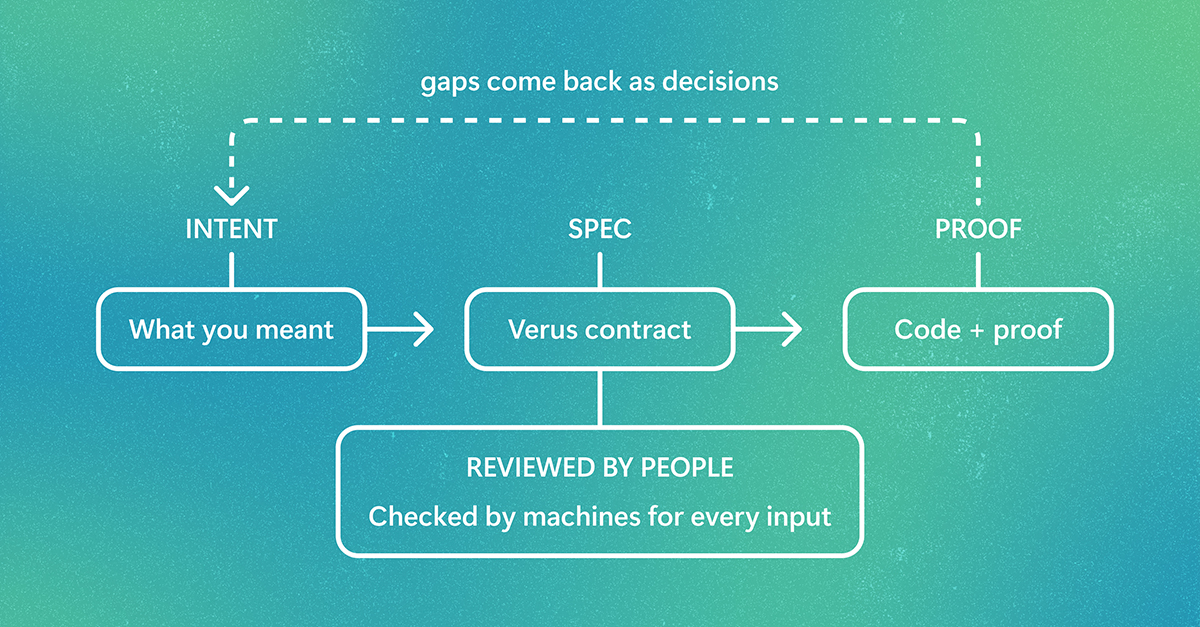
AI agents can generate code at a scale that’s hard for humans to review line-by-line. PDD Kit helps ensure the code is doing what the developer intended by creating formal specifications and testing against them. It converts developer intent into a Verus specification, proves AI-generated code meets it for every input, and uses tests where proofs aren't practical. Developers review intent, not every line. The post Formally verifying agent-written full-stack web apps with PDD Kit appeared first o…