
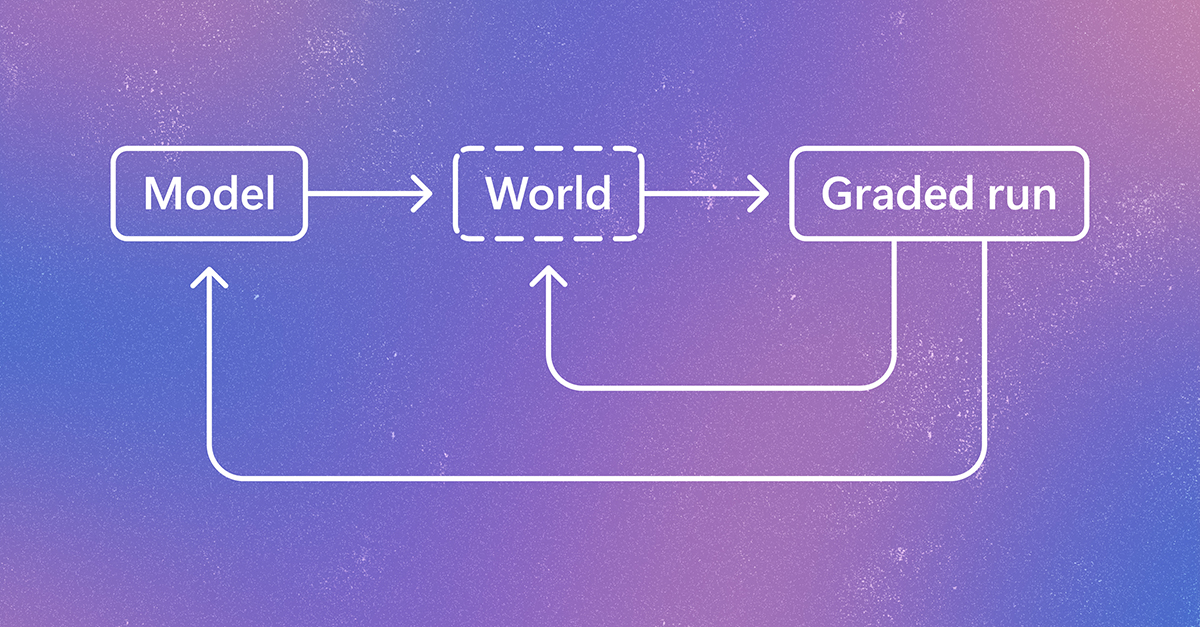
Echoverse: Deep, evolving environments for computer-use agents
Computer-use AI agents struggle with multi-step workflows like email and customer support. Echoverse trains agents in realistic environments rather than simply providing more training tasks, helping them improve as the tasks, tests, and environments evolve. The post Echoverse: Deep, evolving environments for computer-use agents appeared first on Microsoft Research.
More from the blog

Q&A: How AI came to model the “messy” human mind
Assistant Professor Benjamin Lindquist studies how engineers deliberately injected randomness into early AI, giving rise to deep-learning models that sometimes hallucinate.
Turning Database Grading into RL Rewards: Post-Training Agents with ThinkingBox
A Blog post by Microsoft on Hugging Face
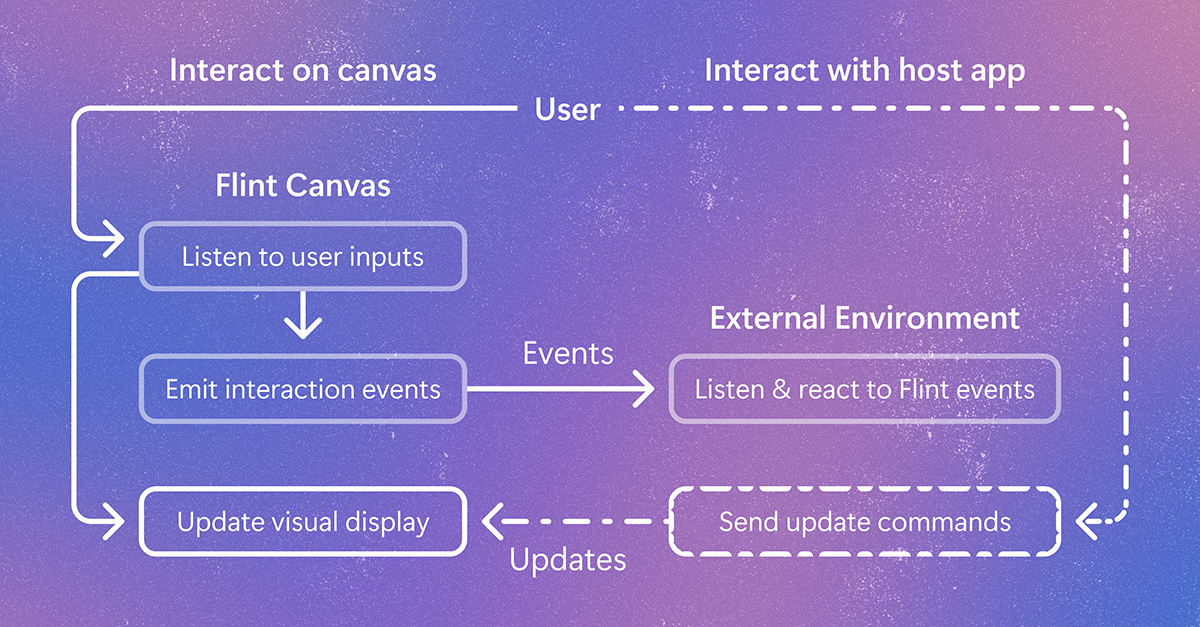
Flint-interactive: A language for creating interactive data visualizations
Flint-interactive gives AI agents a language for creating interactive visualizations. Click a chart, filter data, highlight related content, and explore beyond the view the author originally chose. The post Flint-interactive: A language for creating interactive data visualizations appeared first on Microsoft Research.

Solving a 31-year-old grand challenge in mathematics – the KLS conjecture
For decades, a fundamental question about the difficulty of computing in high-dimensional spaces has resisted proof. New research resolves this question, removing a major theoretical obstacle to understanding the efficiency of randomized algorithms used across science and computing. The Kannan–Lovász–Simonovits (KLS) conjecture was proposed in 1995. It asks whether, for a broad class of high-dimensional […] The post Solving a 31-year-old grand challenge in mathematics – the KLS conjecture appear…
Related papers
AI-powered Code Review with LLMs: Early Results
The goal is to not only refine the accuracy of the LLM-based tool but also to underscore its potential in streamlining the software development lifecycle through proactive code improvement and education.
LLM-based agents for automating the enhancement of user story quality: An early report
The use of large language models to automatically improve the user story quality in Austrian Post Group IT agile teams is explored, with a reference model for an Autonomous LLM-based Agent System developed and implemented at the company.
Can Large Language Models Serve as Data Analysts? A Multi-Agent Assisted Approach for Qualitative Data Analysis
The proposed LLM-based multi-agent system automates qualitative data analysis process, creating opportunities for researchers and practitioners, and future improvements focus on enhancing multilingual performance and integrating continuous expert feedback.
Large Language Model Evaluation Via Multi AI Agents: Preliminary results
A novel multi-agent AI model is introduced that aims to assess and compare the performance of various LLMs, and initial results indicate that the GPT-3.5 Turbo model's performance is comparatively better than the other models.