
Q&A: Enabling more human-like interactions and understanding in multimodal foundation models
Senior Research Scientist Jim Glass discusses how his MIT-IBM Computing Research Lab collaboration connects perception and language, and addresses the shortcoming of current models.
More from the blog
New approach enables physically consistent AI models of chaotic systems
Enforcing physics-based constraints prevents AI models from generating unreliable predictions for complex nonlinear systems in weather, climate, and turbulent flows.
Introducing harness adapters: adapt your favorite model to your harness to improve performance and cost
We’re on a journey to advance and democratize artificial intelligence through open source and open science.
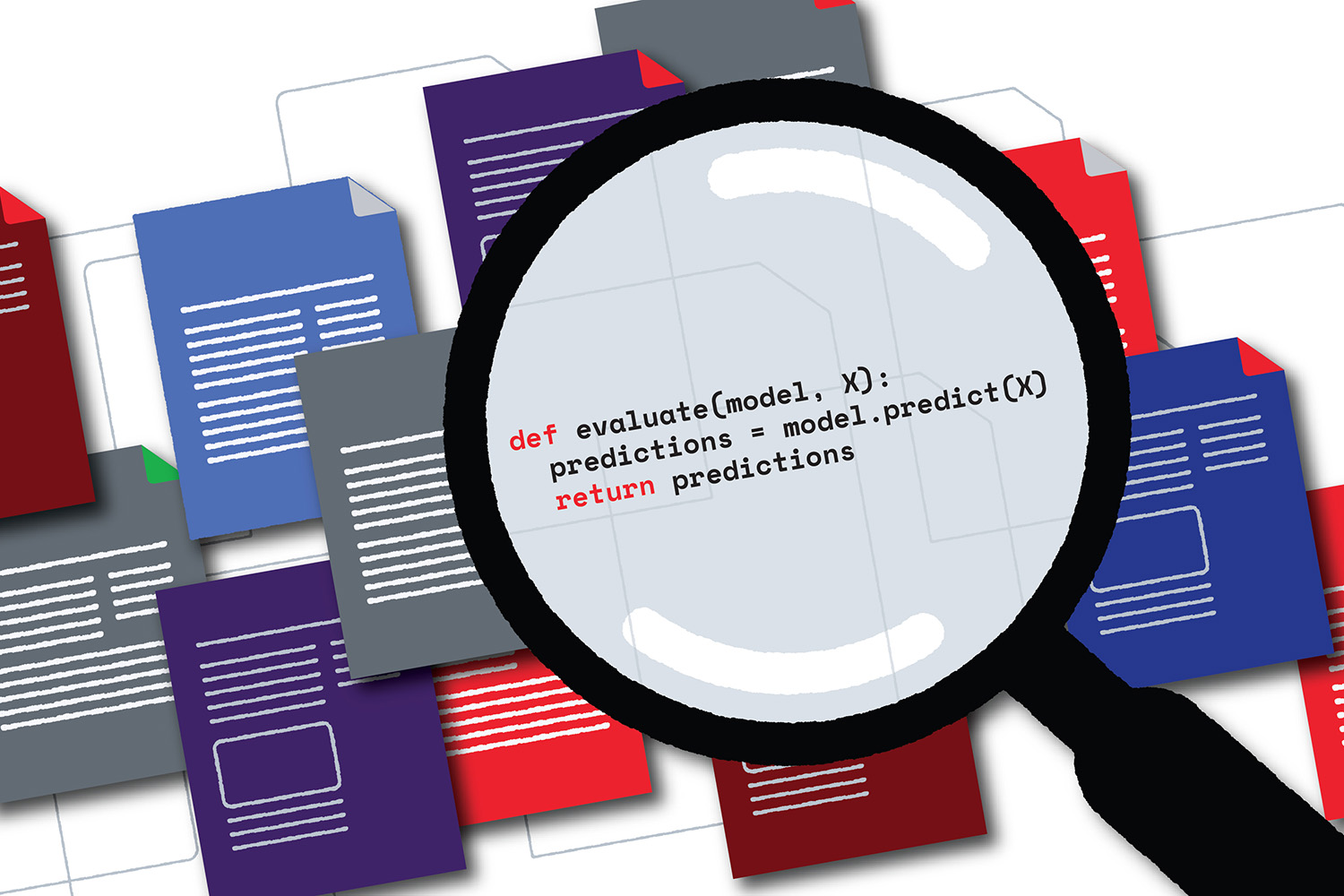
AI helps researchers investigate how thousands of medical studies share code
An MIT and Dana-Farber Institute-led team used large language models to examine nearly 4,000 studies and hundreds of code repositories, revealing gaps in the information needed to scrutinize and reuse published research.

This featherweight, flying robot carries its own sensors and computers
The speedy microrobot flies without an attached motion-capture system, moving it closer to applications like agriculture or industrial surveillance.
Related papers
“Failures” to be celebrated: an analysis of major pivots of software startups
This study conducts a case survey study based on the secondary data of the major pivots happened in 49 software startups, and demonstrates that customer need pivot is the most common among all pivot types.
Lean Internal Startups for Software Product Innovation in Large Companies: Enablers and Inhibitors
This study investigates how Lean internal startup facilitates software product innovation in large companies and identifies its enablers and inhibitors, and shows the potential of the method-in-action framework to investigate the Lean startup approach in non-startup context.
AI-powered Code Review with LLMs: Early Results
The goal is to not only refine the accuracy of the LLM-based tool but also to underscore its potential in streamlining the software development lifecycle through proactive code improvement and education.
Are Happy Developers more Productive? The Correlation of Affective States of Software Developers and their self-assessed Productivity
An empirical study on the impact of affective states on software developers’ performance while programming and the value of applying psychometrics in Software Engineering studies is demonstrated and a call to valorize the human, individualized aspects of software developers is echoed.