The rapid advancement of vision-language models (VLMs) has accelerated progress in computational pathology; however, whole-slide image (WSI)-based pathology report generation remains limited by the scarcity of large-scale WSI--report datasets and the complexity of mapping spatially distributed visual patterns to structured clinical text. To address this, we introduce a clinically curated Pan-Asia WSI--report dataset of approximately 10,500 pairs from five institutions and establish the REG 2025 benchmark through a MICCAI challenge for systematic evaluation of multimodal models. We analyze submitted methods spanning pretrained VLMs, multiple-instance learning frameworks, hierarchical expert models, retrieval-augmented generation, and cross-modal Transformers. Rather than indicating that VLM use alone was sufficient for superior performance, the results suggest that top-performing methods benefited from structured report representations, hierarchical diagnostic decomposition, and effective multimodal grounding. We identify key limitations, including instability in quantitative attribute estimation (e.g., numeric hallucination) and a tendency toward diagnostic overspecification, with some errors resembling known diagnostic pitfalls in routine pathology. These findings establish REG 2025 as a benchmark for evaluating WSI-based structured report generation and vision-language understanding in computational pathology, providing insights for the design of clinically grounded multimodal pathology models.
Yu-Mi Lee, Harim Oh, Hyo-yun Kim et al.· 0 citations
InfRared Small Target Detection (IRSTD) is a challenging task. Relying solely on pixel-level information, vision-only methods struggle to distinguish targets from clutter. Current multimodal methods typically describe both targets and backgrounds with a single textual prompt. Such an approach lacks dedicated regional guidance and ignores infrared semantic asymmetry. Consequently, it provides insufficient background suppression information and introduces severe feature optimization conflicts, overwhelming small targets with noise. To address these issues, we propose a novel Asymmetric Dual-text Guided Network (ADGNet). Specifically, accounting for the infrared semantic asymmetry, we first design the Asymmetric Dual-text Prompt (ADP), comprising an image-agnostic abstract target prompt and an image-specific detailed background prompt. To leverage these prompts, we introduce an Asymmetric Dual-Branch Interaction (ADBI) module to separately guide visual features with their respective text priors, protecting targets from noise while suppressing background clutter. Subsequently, we introduce an Adaptive Feature Aggregation (AFA) module to dynamically fuse features from the two branches. Furthermore, we construct a multimodal Asymmetric Image-Text Infrared (AITIR) dataset by providing asymmetric text annotations for three public datasets (IRSTD-1K, NUDT-SIRST, and SIRST). Extensive experiments demonstrate that ADGNet outperforms 21 state-of-the-art (SOTA) methods. Code is available at https://github.com/iLearn-Lab/MM26-ADGNet.
Tongtong Wang, Mingzhu Xu, Chenglong Yu et al.· 0 citations
Whether attention weights faithfully reflect model reasoning has been actively debated in NLP, yet this question remains largely unexplored for the visual modality in Vision-Language Models (VLMs). We address this gap through causal perturbation analysis on current VLMs, evaluating both the comprehensiveness and sufficiency gap of attention-ranked visual tokens. Our analysis reveals that visual attention faithfulness is heterogeneous, manifesting in three distinct processing modes: Faithful-Sufficient, where top-$k$ attention tokens are both necessary and sufficient for prediction; Faithful-Distributed, where they are necessary but broader visual context remains required; and Non-Focal, where no localized attention region is individually necessary while visual information remains an essential trigger for prediction. Furthermore, human-annotated ground-truth regions satisfy comprehensiveness in only $\sim 60$% of cases compared with model attention rankings, revealing systematic divergence between model visual reliance and human intuition. We demonstrate these patterns across both general VQA on VQAv2 and document tasks on VRDU and ChartQA, showing that visual attention faithfulness varies systematically with processing demands and model architectures rather than being uniformly faithful or unfaithful.
Xurui Song, Weishi Wang, Zhongqi Yue et al.· 0 citations
Digital interfaces are traditionally implemented through intermediate representations such as code, requiring their appearance and behavior to be specified in advance. We introduce Solaris, an interface world model that instead generates an interactive UI directly, frame by frame, in response to user actions. Solaris treats mouse interactions as conditioning signals and autoregressively synthesizes the resulting visual state at interactive speeds. To enable real-time generation while maintaining visual coherence over extended interactions, we combine autoregressive frame generation with few-step distillation and training on the model's own outputs. A language model complements the visual world model by interpreting user intent and specifying how interactions should affect the generated environment, separating high-level reasoning from visual rendering. By generating both the appearance and behavior of an interface dynamically, Solaris enables open-ended interactions that need not be explicitly programmed in advance. We view interface world models as a step toward a new paradigm for software, where interfaces are generated and adapted continuously around user intent rather than implemented as fixed collections of predefined states and
Yuval Alaluf, Omri Avrahami, Guy Bukchin Leshem et al.· 0 citations
Reach audiences
Advertise in front of researchers, engineers, and readers.
We present Voxel-Grounded Online Instance Manager (VOIM), a training-free voxel-grounded instance manager that builds open-vocabulary 3D instance maps from RGB-D or from monocular RGB alone, a regime no prior training-free system addresses. Online systems typically segment object instances and label them at first detection, committing when evidence is weakest. VOIM instead defers label and instance decisions until soft evidence from unmodified, off-the-shelf perception has accumulated per voxel across views. We show that the mapping stage, rather than the particular perception models, carries the result: across four perception configurations on ScanNet++, varying the region descriptor, the detector label prior and the mask source, the map exceeds the strongest online RGB-D system, OVO-SLAM, by between 4.8 and 11.7 mIoU. Perception is not neutral, and substituting that baseline's own descriptor family costs 4.1 of the margin, yet the baseline carries the marginally better 2D descriptor (33.7 vs. 31.5 mIoU over three scenes) and still realizes the weaker map. Under a like-for-like protocol VOIM reaches 44.07 mIoU on ScanNet++ against 32.37, winning all ten scenes and both aggregations (pooled 33.31 vs. 25.97), and the same system runs unchanged to fully monocular RGB, matching that baseline pooled on Replica (27.80 vs. 27.50). The advantage is regime-specific: under Replica's all-classes scoring, matched inputs give a split result, 28.60 vs. 27.50 pooled against 24.59 vs. 30.11 on the per-scene mean. Room scale is label-limited and building scale drift-limited. Labeling does not run in real time, dominated by per-class detection over the full vocabulary. The maps export occupancy grids and resolve free-form queries to object instances.
Sangmin Song, Sarath Kodagoda, Marc G. Carmichael et al.· 0 citations
Differentially private (DP) synthesis has been extensively studied for tabular and image data separately, yet many real-world datasets contain images paired with multivariate tabular records. Synthesizing such data is particularly challenging under DP, as the two modalities favor different private learning mechanisms while their dependence must also be preserved. To address this challenge, we propose DP-TabImage, a modality-specialized framework for private paired synthesis. DP-TabImage instantiates the factorization $p(x,y)=p_T(y)p_I(x\;|\;y)$ using a private Probabilistic Graphical Model for the multivariate table distribution and a table-conditioned diffusion model trained with DP-SGD for the conditional image distribution. To facilitate conditional learning under clipped and noisy gradients, we further pretrain the model on private table-image prototypes, pairing privately constructed attribute-conditioned images with tabular vectors derived from the already private tabular model at no additional privacy cost. Experiments on three real-world datasets show that DP-TabImage achieves a strong balance among tabular fidelity, image fidelity, and cross-modal alignment. Our analysis further reveals that visual warm-up primarily improves marginal image fidelity, whereas aligned table-image warm-up is critical for improving cross-modal correspondence. Our source code is available in the GitHub repository, https://github.com/KaiChen9909/TabImage_Syn.
Kai Chen, Josephine Lamp, S. Jha et al.· 0 citations
Article-level news stance detection aims to identify the perspective of news articles toward social issues. Despite advances in stance detection and its importance for trustworthy media environments, news articles pose distinct challenges because their stances are often implicit, subtly conveyed through journalistic framing, and embedded in long, structurally complex texts. To address these challenges, we introduce VFStance, which leverages visual framing to make implicit stance cues more explicit via image generation. In evaluation experiments, we demonstrate the effectiveness of VFStance over existing methods and the contribution of visual framing to its performance. Finally, a controlled user study (N=200) in a snippet-based news consumption setting further demonstrates that VFStance can make stance signals visually salient and highlights its potential use beyond automated stance detection.
Global welfare often depends on the correct interpretation of aerial and satellite imagery. Acting on such imagery (mapping flooded ground, crop extent, or damaged infrastructure) demands pixel-level segmentation to ensure perfect class localization. Pretrained general foundation models, when applied directly, often miss important features and cannot always find all the classes belonging to a given scene, overlooking smaller objects that matter most. We use a single consumer-grade GPU running a vision-language model (VLM) to supply this missing guidance, improving segmentation while producing structured, auditable evidence that drives the result and can be inspected on its own. We fuse three approaches: the frozen foundation model that labels every pixel, and two queries to a VLM, one to choose the classes that matter, and one to locate the small objects the base model misses. Evaluating across four aerial datasets, we see consistent gains at each stage where the base model is competent.
Teresa DiMeola, Charles Walter, Hong Xiao· 0 citations
We present FoldingAgent, an agentic framework for inferring explicit parametric folding programs directly from origami demonstration videos. Our framework leverages the reasoning power of a pre-trained Vision-Language Model (VLM) equipped with a suite of specialized tools that enable the agent to simulate geometric transitions, verify physical plausibility, retrieve and compare visual content, and evaluate its own predictions. To translate visual content into folding programs, we define a parametric space that consists of the paper's geometry and a set of parametric folding actions. Unlike models that predict static crease patterns, our agent operates sequentially and possesses the ability to re-plan its actions, effectively mitigating the compounding errors inherent in multi-step folding. Our approach takes a step toward closing the gap between human origami knowledge, which is primarily shared through unstructured visual demonstrations, and computational methods, which typically rely on structured, parametric representations such as a crease pattern or an executable parametric plan. We evaluate our approach on PurelandFold, a newly curated benchmark of diverse Pureland origami videos with ground-truth geometry and action labels. Our results demonstrate that by combining VLM reasoning with a set of specialized tools and physical simulation, we can successfully transform unstructured visual demonstrations into executable, physically plausible folding procedures.
Maya Moriya, Sigal Raab, Yael Vinker et al.· 0 citations
Test-time adaptation (TTA) typically assumes that model parameters can be updated at inference time. This assumption is restrictive for inference-only accelerators, frozen or third-party models, and memory-constrained deployments, and standard BatchNorm-based TTA configurations may also become inactive on architectures without BatchNorm. We study adaptation when the learned model must remain frozen. We introduce CASTER, a gradient-free method that stores source class statistics in a discriminative subspace, estimates a class-shared affine transformation from target-batch moments, and analytically transports the source class distributions before classification. CASTER requires no backward pass, optimizer state, or stored source feature bank. Across four backbones and seven datasets, it outperforms k-NN on identical frozen features in 27 of 28 backbone-dataset settings while retaining a median of 18x less state. Affine transport is not always reliable. On ImageNet-C, where batches contain only 64 samples for 1000 classes, unconditional transport loses 21.2 top-1 points. We therefore introduce an empirical residual-to-margin transportability certificate. Across 307 evaluation cells, every transport losing more than 10 points has certificate value above 3.9, although benign and destructive regimes are not perfectly separated. Gating converts an average $-3.35$-point effect of unconditional transport into a +1.69-point gain, and performance remains within 0.3 points of the best threshold over a broad threshold range. Finally, we show that this certificate is mechanism-specific: when applied to Tent, it accepts only $4.3\%$ of updates and preserves 0.6% of Tent's available gain. These results position CASTER as a lightweight adaptation mechanism for frozen-model deployment, together with an explicit account of when its safety signal is informative and when it is not.
Salim Khazem, Ibrahim Mohamed Serouis· 0 citations
Long-tail autonomous driving failures are often framed as rare-object recognition errors. We argue that this view is incomplete: the decision-critical question is not only whether a model recognizes an unusual object, but whether it infers how that object changes the ego vehicle's feasible high-level actions. We formalize this problem as decision-level driving affordance prediction, where a model maps a front-view image, ego-motion history, and navigation command to a structured longitudinal--lateral meta-action. To evaluate this capability, we introduce CoLT-Drive, a 3,536-sample counterfactual long-tail benchmark that inserts rare objects into otherwise fixed driving scenes and measures whether models predict acceptable action pairs. To improve deployable small VLMs, we propose KPA, a knowledge-preserving adaptation framework that combines structured perception-to-decision prompting, SLERP-based expert merging, and RegMoE, a regime-aware LoRA mixture-of-experts module. KPA preserves the pretrained model's open-world knowledge while allocating lightweight adaptation capacity to different driving decision regimes. Experiments on an in-domain driving split and CoLT-Drive show that KPA achieves 60.8\% pair accuracy on CoLT-Drive, outperforming the pretrained Qwen3-VL-2B baseline (50.3\%) and LoRA SFT (32.4\%) while maintaining competitive in-domain accuracy. Our benchmark and code are available at https://huggingface.co/datasets/tangzx2024/CoLT-Drive and https://github.com/tangzhengxu/CoLT-Drive.
Zhengxu Tang, Guofeng Cui, Ziyu Gong et al.· 0 citations
Despite their growing use in video moderation, multimodal large language models (MLLMs) exhibit a compositional safety blind spot: videos composed of seemingly benign components can convey harmful meaning when interpreted as a whole. We refer to this phenomenon as Distributed Implicit Harm (DIH), where harm arises from relations among components distributed along a decomposition axis of the video, rather than from any single explicit cue. Among many possible axes, we study two representative cases: temporally distributed harm across visual segments (DIH-T) and cross-modal harm between audio and visual streams (DIH-M). Studying and mitigating DIH at scale requires data that is difficult to collect: such videos lack compositional harm annotations, evade retrieval based on local visual cues, keywords, or single-modality signals, and are consequently absent from existing safety datasets. To bridge this gap, we develop a multi-agent synthesis framework that composes individually benign components into harmful scenarios and generates diverse DIH videos with explicit reasoning annotations, yielding a dataset of over 9,000 videos spanning visual-only and audio-visual settings. Benchmarking over 30 MLLMs spanning frontier proprietary models and leading open-source systems reveals substantial and consistent deficits in detecting both DIH-T and DIH-M. Notably, this failure persists even among the strongest frontier models: they often correctly assess individual components in isolation but fail to recognize the harmful meaning that emerges from their composition. We further evaluate these models on a manually collected set of real-world DIH videos from social media and observe the same failure mode, highlighting DIH as a practical and underexplored challenge for video moderation.
Ruotong Wang, Zihao Zhu, Siwei Lyu et al.· 0 citations
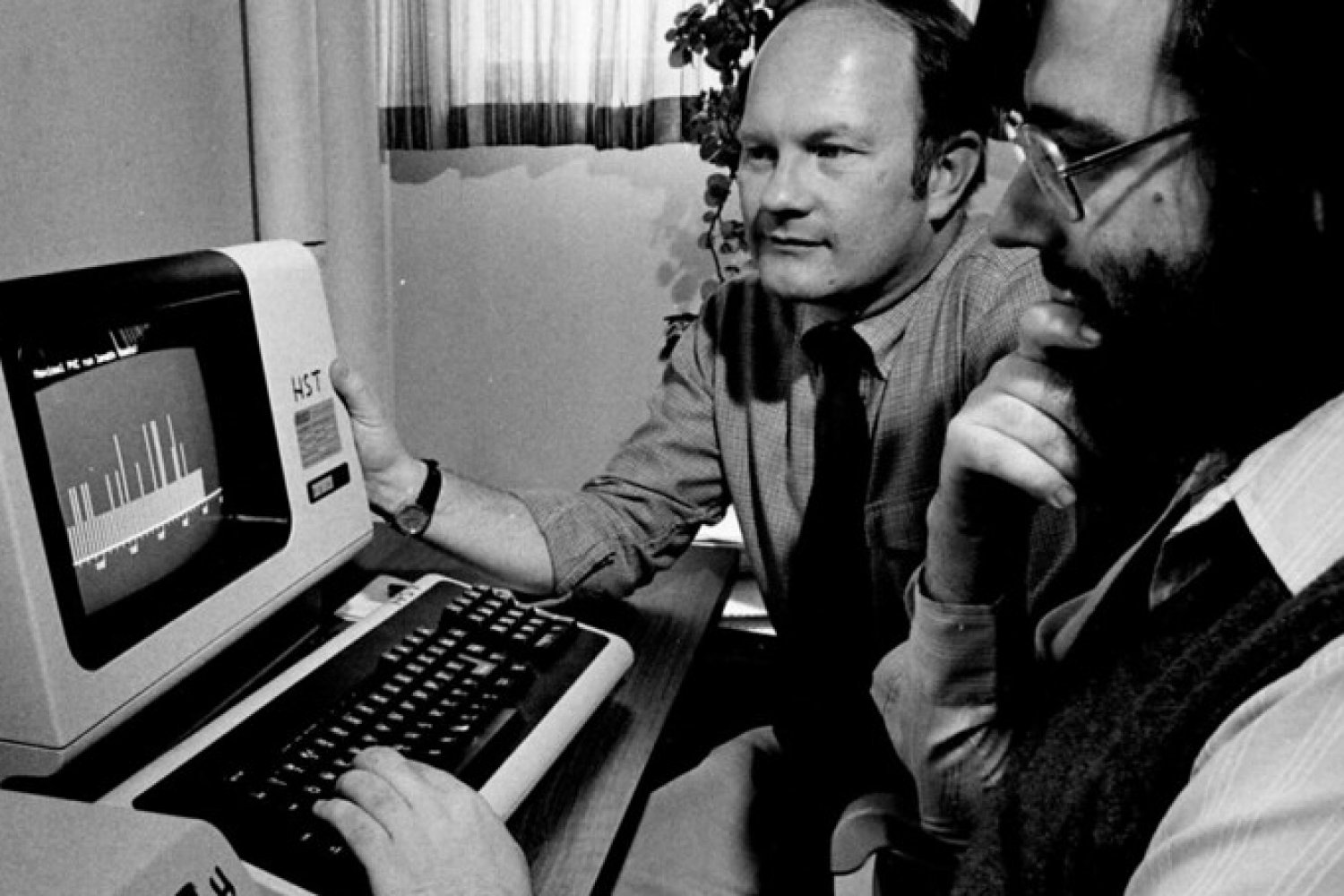
The visionary PhysioNet platform launched 25 years ago, based on a system developed at MIT in the 1970s. It has become one of the most comprehensive biomedical and clinical data repositories in existence.
Known for his clear and elegant writing style, Bertsekas shaped fields from control and optimization to large-scale computation and artificial intelligence.
MIT News · Artificial Intelligence· news.mit.eduJul 6, 2026
PhD student Rachel Sava, winner of the Envisioning the Future of Computing Prize, explores transformative improvements and dystopian risks of neural technology.
MIT News · Artificial Intelligence· news.mit.eduJun 30, 2026
Computer scientist Phillip Isola cuts through the hype to explain how AI agents work and what the future might hold for this rapidly advancing technology.