Deploying vision perception models in autonomous vehicles requires that we prioritize inference speeds, resulting in a model with shallower architectures and lesser model parameters (i.e., more pruned). Such small models do not generalize well, which could result in poor performance when encountered with novel scenarios. We propose a system that overcomes this by continuously retraining the vision models on the cloud with data uploaded by vehicles. We leverage the abundant compute resources, including machine learning accelerators, of the cloud to run a highly-accurate oracle model that will guide the retraining process of the on-vehicle model. This newly trained model is transmitted to the vehicle over the network and is utilized by the vehicle for perceptions, leading to improved inference accuracy over time.
Yuheng Zhu, Dhruva Ungrupulithaya, Boluo Ge et al.· 0 citations
Autonomous vehicles operate in dynamic, ever-changing environments where new scenarios and edge cases constantly emerge. As a result, static learning models are inadequate for ensuring safe and reliable operation. Continuous learning is essential for adapting to these evolving conditions and maintaining robust performance across diverse real-world settings. However, autonomous vehicles generate massive streams of visual data during operation, and existing continuous learning approaches typically rely on heuristic sampling methods that fail to capture temporal dynamics, often overlooking critical learning opportunities or selecting redundant frames. In this paper, we introduce FrameScope, a temporal data valuation framework for continuous learning in autonomous vehicles. FrameScope extends neural tangent kernel theory to temporal domains, enabling principled valuation of streaming visual data. Unlike cloud-centric methods that transmit all video data for processing, our approach performs principled, local frame selection on the vehicle and queries a cloud-based oracle model only for labels of those high-value frames. Extensive experiments across multiple domain shifts show that FrameScope consistently outperforms existing methods, achieving higher sample efficiency and significantly reducing catastrophic forgetting in autonomous vehicle perception. By valuing data on the vehicle and querying only labels for selected frames, FrameScope reduces bandwidth requirements, enabling scalable operation with a lightweight cloud labeling service.
Designing models that generalize effectively in low- to medium-data regimes remains a primary challenge in medical machine learning, particularly for physiological time-series classification. While tabular foundation models such as TabPFN offer an attractive alternative to conventional fine-tuning through in-context learning, they are not designed to capture the temporal dependencies inherent to physiological signals. ~In this paper, we introduce TSPFN, a foundation model that redesigns TabPFN's architecture for time series data. TSPFN integrates structured temporal representations and positional embeddings to capture intra-sample temporal and channel dependencies. To fully leverage its spatio-temporal design, the model is pretrained on 140,000 real-world physiological time series across multiple medical domains. This yields a unified, generalizable framework capable of learning the specificities of medical time series. Experiments across diverse physiological benchmarks demonstrate that TSPFN consistently outperforms standard tabular baselines and TabPFN, and achieves superior cross-domain generalization compared to specialized deep time-series models. All our experiments, ablation studies, and pre-processing scheme are publicly available at https://github.com/Jeremstym/TSPFN
J\'er\'emie Stym-Popper, Cl\'ement Rambour, Federica Granese et al.· 0 citations
Understanding which training samples influence a generated image is an important problem in generative modeling. In flow matching, training samples influence the generated image through the velocity field along the generation trajectory. Removing samples to examine their counterfactual influence changes the velocity field, and the resulting effect on the final image depends on how the change propagates through the trajectory. Consequently, local changes in the velocity field do not necessarily predict the final counterfactual effect.
This work investigates attribution in flow-matching models through a hybrid analytical--learned approach, and uses it to derive trajectory-based attribution scores at the cluster level. We evaluate these attribution scores using independently retrained leave-one-cluster-out (LOO) models, and compare with several attribution baselines using two different flow-matching latent spaces. Our experiments show that semantic similarity constitutes a strong baseline, while the closed-form trajectory-based attribution is competitive in some metrics without requiring counterfactual retraining or model gradients.
Our results show that attribution in flow matching depends not only on semantic similarity to training samples, but also on the latent representation, trajectory dynamics, and how influence is propagated to the final output.
Rania Briq, Ohad Fried, Michael Kamp et al.· 0 citations
Reach audiences
Advertise in front of researchers, engineers, and readers.
When does 3D Gaussian Splatting (3DGS) recover the true scene surface rather than just overfitting view-dependent appearance? We answer this by developing a mathematical framework based on a first-hit rendering abstraction that cleanly isolates geometry from appearance. We prove that geometric misalignment forcefully converts spatial textures into high-frequency angular signals via parallax. This establishes a strict identifiability window: if angular capacity is bounded, surface-consistent solutions are mathematically preferred; if unrestricted, the same images can be perfectly explained by an incorrect, opaque billboard geometry. Experiments on synthetic stress tests confirm this prediction, showing billboard failures emerge precisely at high angular capacities. Conversely, in the real-world datasets we evaluate under standard capture protocols, reconstructions remain surface-consistent even at high SH degrees, which is consistent with the prediction that rich spatial texture can push billboard solutions outside the tested angular-capacity range.
JEPA world models make latent-space planning a practical route to control, but they are built almost exclusively on images. Whether latent prediction survives geometric observations is unclear: point clouds are sparse, unordered, and self-occluded, and with 0.3-15% of scene points moving, the slow-feature optimum of latent prediction compounds with the geometric shortcut of 3D self-supervision. We lift three canonical JEPA designs to point clouds, frozen-encoder, distribution-prior, and action-sensitive, and re-sense the stable-worldmodel benchmark so that only the observation differs from the image baselines. All three plan without collapse: the distribution-prior model is statistically equivalent to its re-evaluated image counterpart on every benchmark, and the action-sensitive model attains the strongest result in our controlled comparison where the most geometry moves. Probing explains why: object positions are almost perfectly linearly decodable and attention falls on the few moving points. Planning withstands heavy dropout never seen in training, though range noise defeats the thinnest scene. Geometry finally makes a commanded 3D target a natural goal interface: we construct the goal latent from the target and the current latent, at no cost in success rate, without a goal observation.
Fabio F. Oberweger, Michael Schwingshackl· 0 citations
Temperature scaling is a core component of knowledge distillation, yet its role and effect are still not fully understood. Transformed Teacher Matching (TTM) clarifies the role of temperature scaling by applying it only to the teacher distribution and interpreting the resulting objective as standard distillation with an implicit R\'enyi entropy regularization on the student. However, TTM still relies on a fixed temperature and does not specify how the teacher-side temperature should be adapted for individual samples. In this paper, we introduce a sample-wise inverse-temperature update for TTM by locally minimizing the Kullback-Leibler divergence between the temperature-scaled teacher distribution and the student's prediction. We derive closed-form first and second derivatives with respect to the inverse temperature, and show that they can be expressed using variance and covariance statistics of centered teacher and student logits under the transformed teacher weighting. This yields an efficient curvature-aware update that requires one softmax evaluation and a constant number of class-wise weighted sums. Experiments on standard image classification distillation benchmarks show that our temperature adaptation generally improves TTM and WTTM, while remaining competitive with or outperforming prior temperature-adaptive distillation baselines.
The advances in visual information modeling and representation during the last decades are remarkable, mainly supported by Convolutional Neural Networks, Transformer-based, and Foundation Models. Despite this progress, critical challenges regarding the nature of similarity assessment and model transparency have been neglected. A primary concern is the Geometric Gap, where traditional pairwise measures fail to capture the intrinsic geometry of the dataset manifold. Furthermore, the Interpretability Gap persists, as representations often lack alignment with human cognition. Therefore, how to provide interpretability to representations while maintaining low dimensionality and high effectiveness in downstream tasks remains an open challenge. In this paper, we propose a novel unsupervised framework that integrates Manifold Learning strategies with Rank-based Interpretable Graph Embeddings. Our approach effectively bridges these gaps by first characterizing the contextual information of the dataset through manifold analysis and subsequently generating sparse, self-explainable embeddings. The proposed approach employs a flexible formulation, allowing different Manifold Learning and Representation Learning strategies. Extensive experimental evaluation across diverse datasets and features demonstrates that our Context-Aware representations not only provide intrinsic interpretability and dimensionality reduction but also maintain or enhance effectiveness in downstream tasks, specifically in image retrieval and semi-supervised classification using Graph Convolutional Networks (GCNs).
Thiago C\'esar Castilho Almeida, Gustavo Rosseto Let\'icio, Vinicius Atsushi Sato Kawai et al.· 0 citations
In a data-driven world, efficiently organizing and mapping relationships between objects is crucial. Graphs are powerful tools for modeling these connections, being widely used in social networks, telecommunications, and biology. However, graph-based methods often face high computational costs, particularly in memory and space usage. To address this, graph embedding techniques, also referred to as Network Representation Learning, encode graph information into lower-dimensional representations while preserving structural aspects. Traditional methods, however, lack interpretable dimensions. RaDE (Rank Diffusion Embedding) introduces a new approach using rank-based information, with a key step being the selection of a representative subset of nodes to provide interpretability for its dimensions and improve retrieval tasks. Despite its potential, RaDE's original proposal did not fully explore the effectiveness of representative subset selection across different classes or evaluate embeddings in tasks like classification and clustering. Inspired by RaDE, this work introduces GRaCE (Graph and Rank-based Contextual Embeddings), a fully unsupervised framework that generates interpretable embeddings by leveraging robust rank-based measures for representative subset selection and node embedding. GRaCE surpasses RaDE and Original Features across diverse datasets, including textual and image collections, excelling in retrieval, classification, and clustering tasks, considering state-of-the-art Transformer models as feature descriptors and Graph Convolutional Networks models in classification tasks.
Thiago C\'esar Castilho Almeida, Gustavo Rosseto Let\'icio, Lucas Pascotti Valem et al.· 0 citations
Egocentric devices, such as wearable front-facing cameras, provide a unique perspective for capturing the continuous interaction between a human viewer and the surrounding environment. A holistic and efficient multimodal model capable of reconstructing this 4D representation is therefore highly desirable. However, existing approaches often rely on auxiliary inputs such as pre-computed camera trajectories, treat scene perception and human ego-motion modeling as separate problems despite their strong interdependency, and suffer from slow inference time. To address these limitations, we present ReViV, the first unified framework for holistic egocentric 4D reconstruction that extracts both viewer and view dynamics from a single monocular RGB video. We formulate the task as learning the full joint probability distribution over multimodal signals, including RGB video, camera trajectory, gaze direction, full-body motion, hand motion, and depth. Powered by a Masked Generative Egocentric Transformer, ReViV operates within a single feed-forward architecture to simultaneously reconstruct the temporally consistent 4D reconstruction across the viewer and the view with fast inference speed. Extensive experiments on diverse benchmarks, including HoloAssist, HOT3D, ARCTIC, Aria Digital Twin, and TACO, demonstrate that ReViV achieves state-of-the-art accuracy and efficiency across holistic ego-body, hand, and gaze reconstruction, camera tracking, while maintaining highly competitive egocentric depth estimation without relying on heavy task-specific priors. Code and models are fully open-sourced: https://reviv4d.github.io/.
Literature and practice has established that the lack of management commitment has been one of the top reasons for a failed SPI (software process improvement) initiative. The paper reports results from an ongoing study aimed at clarifying the role and the meaning of management commitment in SPI initiatives. Results from five focused interviews with SPI professionals are reported together with results from 12 SPI initiatives where the level of management commitment (in terms of concrete signs) was measured in order to test whether it would correlate with the level of success of an SPI initiative. In contrast with the evidence from the literature, the results show that none of the signs of management commitment correlated significantly with the success of the SPI initiatives. It is suggested that the concept of champion may have explained the SPI project success better than management commitment. The paper concludes that many of the SPI initiatives do not require management commitment beyond obtaining the resources needed.
P. Abrahamsson· Proceedings of the 26th Euro...· 27 citations· ⚡2
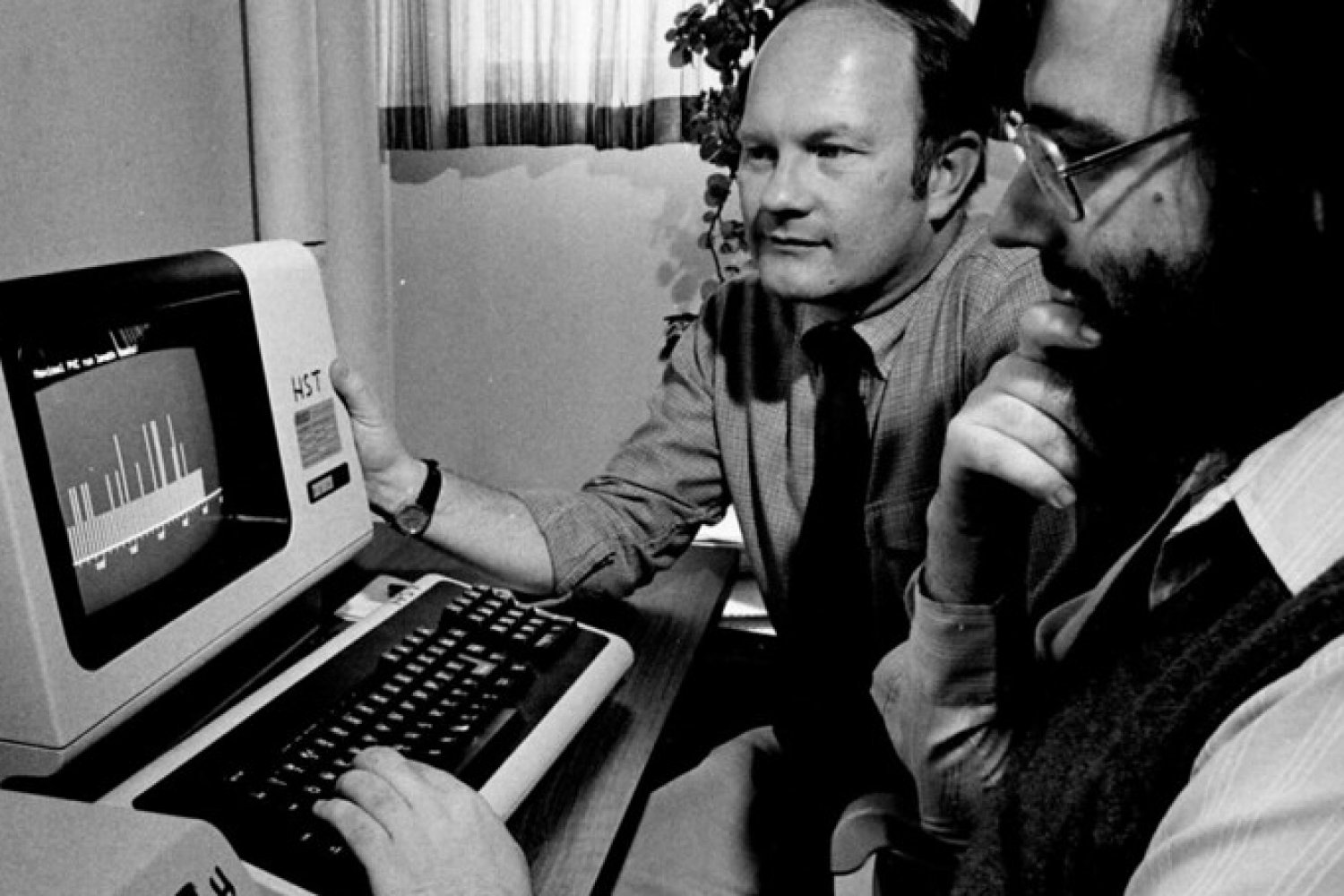
The visionary PhysioNet platform launched 25 years ago, based on a system developed at MIT in the 1970s. It has become one of the most comprehensive biomedical and clinical data repositories in existence.
Known for his clear and elegant writing style, Bertsekas shaped fields from control and optimization to large-scale computation and artificial intelligence.
MIT News · Artificial Intelligence· news.mit.eduJul 6, 2026
PhD student Rachel Sava, winner of the Envisioning the Future of Computing Prize, explores transformative improvements and dystopian risks of neural technology.
MIT News · Artificial Intelligence· news.mit.eduJun 30, 2026
Computer scientist Phillip Isola cuts through the hype to explain how AI agents work and what the future might hold for this rapidly advancing technology.
We use cookies to run the site and, with your consent, for analytics and to show ads.
See our Cookie Policy.