Evaluation of a video authoring pipeline featuring two layers of structured refusal shows that both layers independently improve the same instructional dimensions, suggesting that thoughtful resistance and generative AI are not opposites but partners.
Yearim Kim, In-Chang Baek, Nojun Kwak· 0 citations
Doc-CoB (Chain-of-Boxes), a simple-yet-effective framework that integrates coarse-to-fine layout-aware visual reasoning into multimodal large language models, and introduces two reasoning tasks for box recognition and box reasoning.
This work repurposes pretrained video generative models as a unified and data-efficient framework for geometry estimation, formulated innovatively as a next-frames prediction task, and inherits naturally structured knowledge and richer priors from the video model, enabling more data efficient and effective learning of geometry.
Haosen Yang, Jifei Song, Zhensong Zhang et al.· 0 citations
A hybrid feature fusion framework, termed DWT_AlexNet_DNN, is proposed, which combines Discrete Wavelet Transform (DWT) features with deep features extracted using AlexNet for texture image classification.
Arun D. Kulkarni· 0 citations
Reach audiences
Advertise in front of researchers, engineers, and readers.
Across four-fold cross-validation the organ-supervised model achieves the best and most stable performance, the interactive stage improves the Dice score monotonically with each prompt, and PSMA-specific training yields the strongest tracer-wise results.
Pablo Lozano-Jimenez, Sergio Romero-Tapiador, Rubén Tolosana· 0 citations
An Anatomy-Routed Contrastive Learning for 3D Chest CT (ARC-CT), a region-aware framework that addresses limitations using only reports extracted from reports by an LLM, with no manual annotations or bounding boxes, outperforms both comparable efficient baselines and larger transformer models.
H. Isik, Mehmet Alp Ozaydin, S. Kurugol et al.· 0 citations
Real-time musculoskeletal (MSK) surrogates could support personalized rehabilitation for children with cerebral palsy (CP), but their credibility depends on subject-wise evaluation, low inference latency, and calibrated uncertainty. We develop a subject-conditioned causal neural surrogate using OpenSim-derived static parameters, temporal joint kinematics, true muscle capacities, and training-only perturbations. On a real pediatric CP gait dataset comprising nine children, we use leave-one-subject-out validation on six development subjects and evaluate a frozen configuration once on three locked test subjects. The surrogate accurately reproduces musculotendon lengths (R-square = 0.92 in development validation and approximately 0.95 on locked subjects; nRMSE < 8%) while requiring only sub-millisecond to few-millisecond neural inference, well below a 100 ms interactive-rehabilitation target. In contrast, direct muscle-force estimation remains unstable at this small, heterogeneous scale: pooled metrics can overstate within-subject, per-muscle accuracy. A Monte Carlo credibility pilot further shows that propagating only +/-5% anthropometry and muscle-capacity variation produces severely overconfident nominal 90% intervals (approximately 4% force coverage and below 1% MT-length coverage). These results establish a leakage-free evaluation and credibility framework for pediatric MSK surrogates, while identifying force modeling and epistemic uncertainty as the central next challenges for clinically credible digital twins.
Precise dense correspondence is a fundamental prerequisite for multimodal spectral imaging systems that fuse disparate wavelength ranges for subsequent analysis in medical and scientific imaging. Corresponding image points are often observed with non-overlapping spectral sensitivities, leading to wavelength-dependent contrast changes, intensity inversions, and appearance shifts for which dense ground truth is difficult to obtain and conventional RGB-based training data provides only limited supervision. We address this data gap by introducing a sensor-agnostic cross-spectral modulation protocol on established correspondence benchmarks with intensity input projection, and by proposing a synthetic cross-spectral correspondence benchmark simulating physically plausible radiometric differences. Evaluation on several modern dense correspondence backbones trained with our unified cross-spectral protocol showed substantial improvements under severe spectral mismatch while maintaining performance on standard RGB benchmarks. Ablation experiments show that view-dependent channel selection and nonlinear radiometric transformations provide complementary robustness, indicating that the primary limitation of existing models is not their structural matching capacity but the mismatch between training distribution and spectral characteristics of the target image pair. Qualitative evaluations on heterogeneous medical spectral acquisition systems demonstrate the practical relevance of the proposed training data augmentation protocol as an enabler for spatially coherent spectral fusion in HSI workflows.
E. Wisotzky, Jost Triller, Simon W. Härtl et al.· 0 citations
This work presents a standardized, open-source benchmark for evaluating state-of-the-art (SOTA) deep learning methods for Earth observation change detection, and reveals that well-optimized classical architectures, such as Siamese U-Nets, frequently outperform more complex contemporary models when computational efficiency is factored in.
Tadej Tomanič, Alice Baudhuin, Jan Sotošek et al.· 0 citations
We present CheXtriev, a graph-based, anatomy-aware framework for chest radiograph retrieval. Unlike prior methods focussed on global features, our method leverages graph transformers to extract informative features from specific anatomical regions. Furthermore, it captures spatial context and the interplay between anatomical location and findings. This contextualization, grounded in evidence-based anatomy, results in a richer anatomy-aware representation and leads to more accurate, effective and efficient retrieval, particularly for less prevalent findings. CheXtriv outperforms state-of-the-art global and local approaches by 18% to 26% in retrieval accuracy and 11% to 23% in ranking quality. The code is available at https://github.com/cvit-mip/chextriev.
Interpreting a CT scan means comparing structures on either side, judging how far apart organs sit, and knowing where each one belongs. Medical vision encoders are evaluated on diagnostic accuracy, or through assembled multimodal systems where a failure is hard to attribute, so it remains unclear whether their representations support any of this. We construct SPAR-Bench, eight probes over multi-organ abdominal CT that separate coordinate localization, relational reasoning, and spatial queries, and apply them to five architectural configurations and three medical foundation models, frozen and finetuned. Probes that ask for a comparison within the slice stay at chance, and neither pretraining scale, finetuning, nor architecture closes the gap. Probes that appear solved in domain fall to chance under zero-shot transfer, indicating that their accuracy reflects recall of canonical anatomy rather than computation over the image. Reading the same frozen features with a pooled head rather than the full set of tokens moves relational recovery from 0.7% to 67.8%, so pooled probing understates what a representation holds. Questions the encoders answer well are answered at chance by four open-weight MLLMs. Our results suggest these encoders carry a map of where organs usually lie, and little of the machinery for comparing structures within a particular patient. Code and data will be available at https://spar-bench.github.io.
VersaGauss is introduced, a unified framework for generation, simulation, and rendering that supports versatile physics-based dynamic generation, particularly for multiphase interactions, and proposes the Coupled Multiphase Point Method to effectively model and generate multiphase interactions.
Rui Su, Lingxiao Yang, Xiaohua Xie et al.· 1 citation· ⚡1
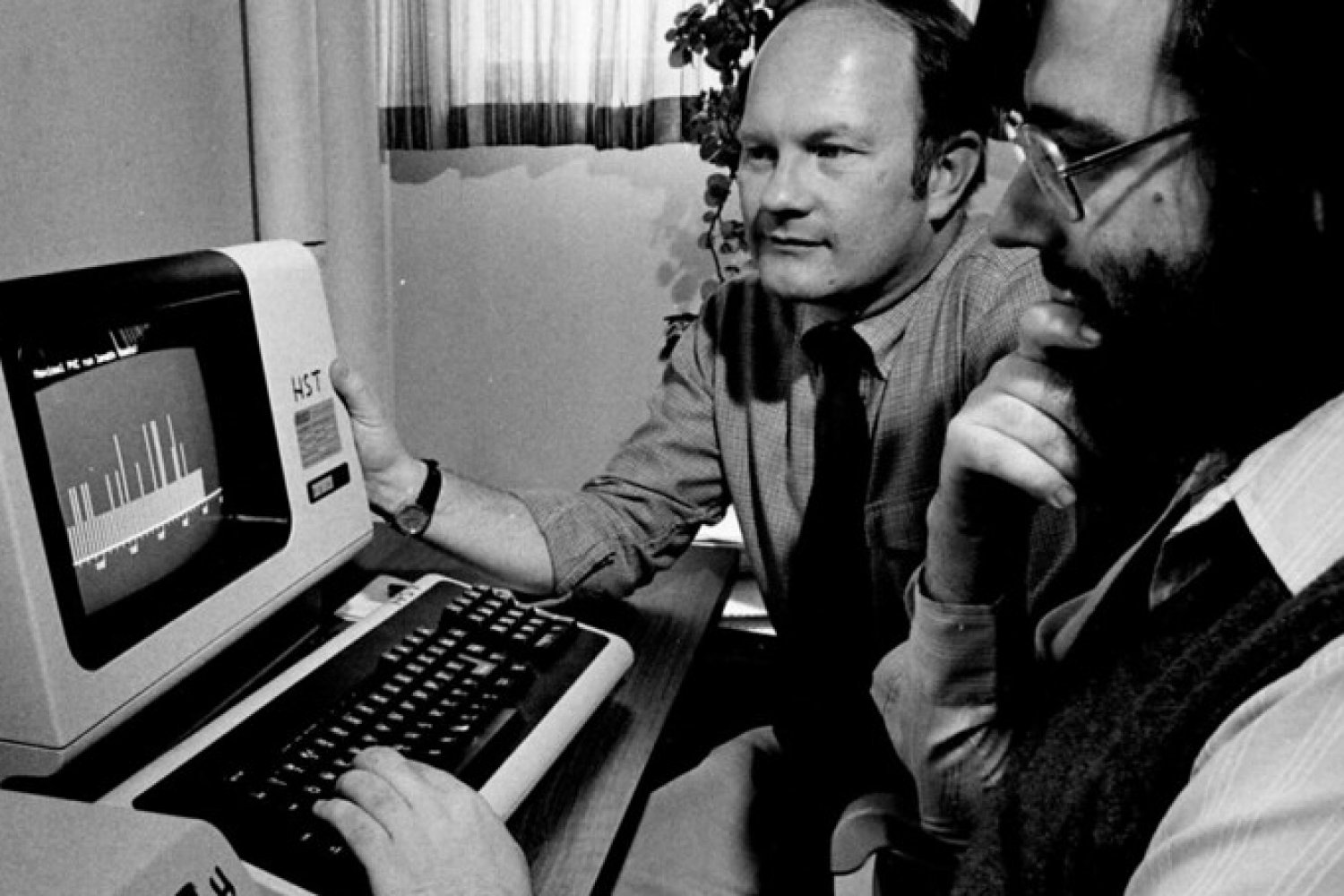
The visionary PhysioNet platform launched 25 years ago, based on a system developed at MIT in the 1970s. It has become one of the most comprehensive biomedical and clinical data repositories in existence.
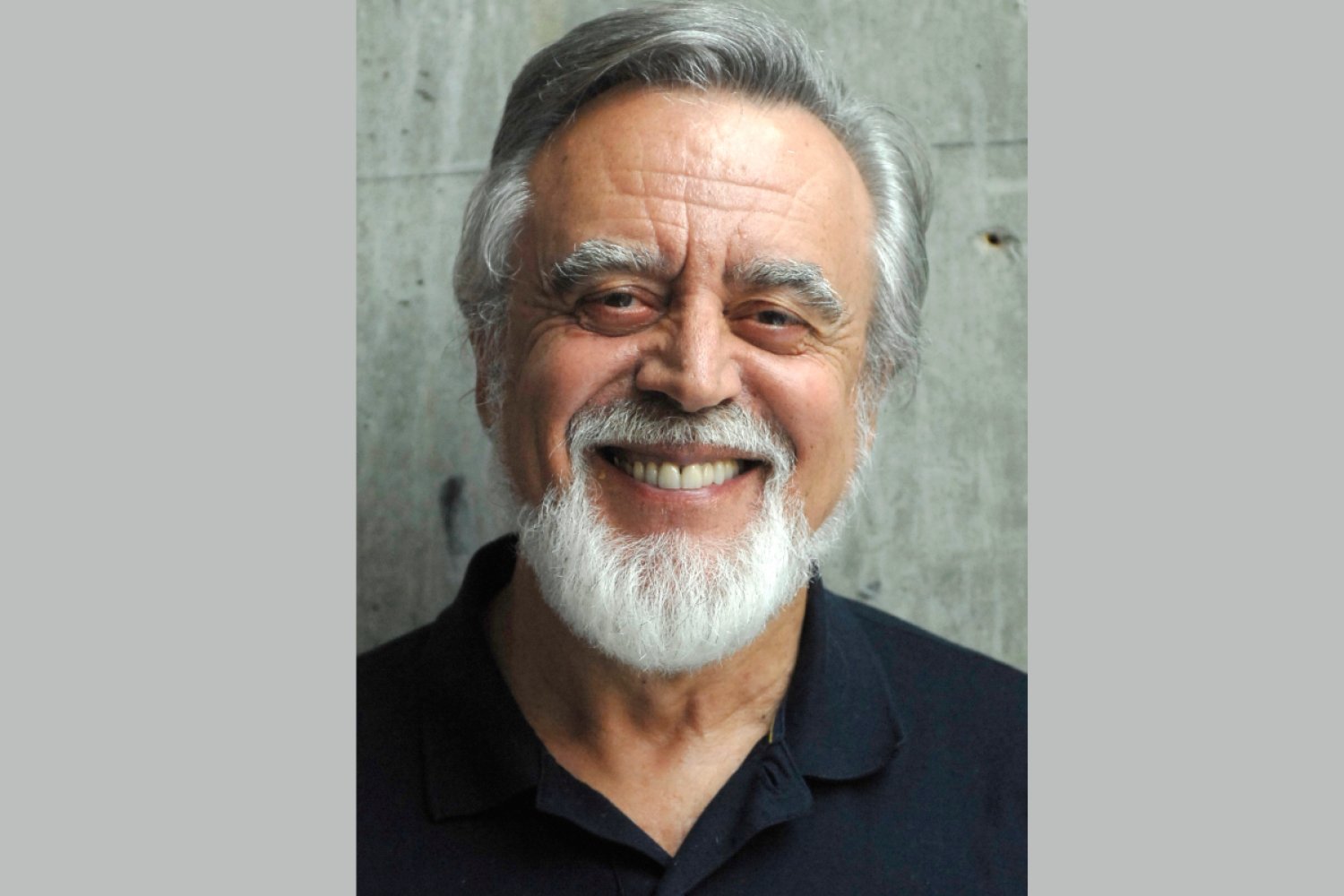
Known for his clear and elegant writing style, Bertsekas shaped fields from control and optimization to large-scale computation and artificial intelligence.
MIT News · Artificial Intelligence· news.mit.eduJul 6, 2026
PhD student Rachel Sava, winner of the Envisioning the Future of Computing Prize, explores transformative improvements and dystopian risks of neural technology.
MIT News · Artificial Intelligence· news.mit.eduJun 30, 2026
Computer scientist Phillip Isola cuts through the hype to explain how AI agents work and what the future might hold for this rapidly advancing technology.
We use cookies to run the site and, with your consent, for analytics and to show ads.
See our Cookie Policy.