Large Vision-Language Models (LVLMs) remain prone to hallucinations, producing responses that are irrelevant or inconsistent with the multimodal input. Existing mitigation methods mainly rely on external supervision, output calibration, or attention regulation, leaving the internal representation dynamics of autoregressive generation underexplored. We identify an inference-time failure mode in which cross-modal representations degrade across decoder layers and drift across generation steps, destabilizing token prediction and increasing hallucination risk. We propose \emph{Dynamic Alignment Compensation} (DAC), a training-free inference-time method that detects representation divergence and selectively applies lightweight residual compensation. DAC combines Layer-wise Semantic Compensation to mitigate inter-layer degradation with Sequential Semantic Correction to constrain temporal drift. Experiments on nine hallucination-focused and general-purpose multimodal benchmarks across multiple LVLM backbones show that DAC consistently reduces hallucinations while maintaining strong overall performance.
This work presents PCBnet, a large-scale PCB schematic dataset comprising over 300 real-world designs with annotated pins and paired SPICE netlists, and develops an automated schematic-to-netlist pipeline that combines visual recognition, topology construction, and domain-knowledge-guided multi-agent correction.
Zhen Huang, Yuhao Gao, Yuzhi Liu et al.· 0 citations
Vision foundation models are capable of generalizing across 3-dimensional (3D) scenes with high-fidelity estimates; their empirical success can be attributed to training on large-scale datasets of perspective images. However, when transferred to wide field-of-view (FoV) images, such as those captured by fisheye cameras, they return erroneous outputs due to a covariate shift stemming from the radial distortion on the image pixels. We propose a method to generalize vision foundation models to fisheye cameras. The crux of our method lies in a set of learnable parameters, termed Distortion Extenders (DEX), that model the fisheye distortion coefficients and the distributional shift between fisheye and perspective images encoded in the latent space. By minimizing a self-supervised alignment loss, DEX transforms the latent embeddings of fisheye images to resemble those of perspective images to recover high-fidelity estimates. DEX is architecture- and task-agnostic: We demonstrate DEX on monocular depth estimation and open-vocabulary segmentation for convolution- and Transformer-based architectures, where we consistently improve over baselines across indoor and outdoor fisheye datasets. As a byproduct, the activations of DEX can also be decoded to distortion coefficients to support camera calibration. Code available at: https://github.com/Suchisrit/DEX.
Cardiovascular risk prediction remains limited by incomplete clinical data and imaging biomarkers that reduce computed tomography (CT) to a small number of handcrafted features. We developed CARDINAL (Cardiovascular Assessment via Representation learning from Deep Imaging with Nested Anatomical Latent embeddings), a clinically grounded framework that learns compact representations from routine non-contrast cardiac CT for major adverse cardiovascular event (MACE) prediction. In 17,659 patients, CARDINAL was evaluated for 1-, 3-, 5-, and 10-year MACE prediction against American Heart Association (AHA) pooled cohort equations (PCE), AHA predicting risk of cardiovascular disease events (PREVENT), coronary artery calcium (CAC), segmentation-derived CT biomarkers, and 70-feature structural radiomics. Gains were largest at longer horizons. At 10 years, CARDINAL (joint) achieved an area under the receiver operating characteristic curve (AUROC) of 0.866 $\pm$ 0.020 and an area under the precision-recall curve (AUPRC) of 0.890 $\pm$ 0.015, compared with an AUROC of 0.826 $\pm$ 0.023 and an AUPRC of 0.826 $\pm$ 0.022 for structural radiomics, the strongest baseline. CARDINAL also achieved the highest survival concordance index (C-index), 0.753 $\pm$ 0.015, and high-versus-low risk-tertile hazard ratio, 10.78 $\pm$ 3.16, with favorable reclassification and exploratory calibration. These findings suggest that non-contrast cardiac CT contains prognostic information beyond conventional risk equations, CAC scoring, and engineered imaging biomarkers.
Roy Gabriel, Nattakorn Kittisut, Jamshid Hassanpour et al.· 0 citations
Reach audiences
Advertise in front of researchers, engineers, and readers.
Curvature-Aware Radius Shrinkage for Adaptive Nearest Neighbor Classification (CARSANN) is introduced, a geometry-driven framework that adapts the spatial support of each neighborhood according to local geometric complexity and is competitive with adaptive nearest-neighbor methods.
Pothole detection and its severity measurement is still an important challenges in urban infrastructure management, where late maintenance directly contributes to vehicle damage, road accidents, and escalating repair costs. Existing automated approaches depend on 2D RGB images and cannot measure physical depth of potholes. In this paper, we present a depthaware pothole detection framework and then compare five architectures: YOLOv8n, YOLOv8nSeg, YOLOv9t, RTDETRL, and RTDETRX for RGB-D sensor fusion-based detection and automated depth measurement. A custom offline augmentation pipeline is used here to simulate adverse road monitoring conditions. All models are trained on the PothRGBD dataset with an 80% training and 20% validation split and evaluated using Precision, Recall, mAP@50, and mAP@50_95. Before measuring the depth data, all depth maps are corrected for camera tilt using RANSAC ground-plane orthorectification and all zero-valued sensor pixels are cast to NaN before any statistic is computed. YOLOv8nSeg achieves the highest mAP@50 of 0.9556 and mAP@50_95 of 0.6758 with the most accurate depth estimate of 2.96 cm with the pixel-precise Dseg algorithm. YOLOv8n achieves the fastest inference at 3.6ms. RTDETRX achieves the highest detection confidence at 92.70%. An important finding is that even after full RANSAC orthorectification, bounding box models overestimate pothole depth by 0.16 to 0.21 cm compared to pixel precise segmentation masks. This confirms that the pavement inclusion bias is structural rather than a calibration artifact.
By replacing frame reconstruction with direct probabilistic inference over photon streams, this work bridges photon-counting quanta sensing with robotic vision and bridges photon-counting quanta sensing with robotic vision.
Varun Sundar, Pavan Thodima, Sacha Jungerman et al.· 0 citations
FVeinSyn explicitly decouples synthesis of vascular topology and imaging appearance to mitigate the limitations caused by insufficient training samples, such as inadequate identity diversity and restricted realism.
Yifan Wang, Jie Gui, A. Kong et al.· IEEE Transactions on Pattern...· 0 citations
Deep learning's diagnostic utility in pathology is constrained by model vulnerability to real-world data imperfections. While current strategies favor "perfect data" by filtering low-quality regions, which can lead to the loss of valuable diagnostic context, we propose a paradigm shift: engineering models to thrive in imperfect environments using "Destroy Me", a hybrid framework for realistic artifact synthesis and robust data augmentation. Our approach combines Stable Diffusion, fine-tuned to preserve morphological continuity by realistically integrating artifacts with the underlying tissue architecture, with physics-based procedural modeling to synthesize six common artifact types: tissue folds, precipitates, blur, stitching errors, dust, and pen markers. Artifact fidelity is assessed using Kernel Inception Distance (KID) and color Wasserstein distance metrics. Validating this strategy on lung adenocarcinoma pattern classification with an nnU-Net, we confirm that models trained on "destroyed" patches consistently outperform baselines on independent real-world datasets. Specifically, we observed a 10.5% relative improvement in macro F1-score and a 15% relative increase in the Cohen's Kappa ($\kappa$) coefficient. Crucially, our results demonstrate that selective, impact-weighted augmentation is vital for balancing practical robustness with the preservation of subtle diagnostic features.
Zuzanna Krawczyk-Borysiak, Adam Krawczyk, Mateusz Miller et al.· 0 citations
Experimental results across several CT inverse problem settings show that Flow Matching-based approaches consistently outperform diffusion-based methods in terms of PSNR, SSIM, and perceptual quality, while requiring fewer sampling steps.
This work introduces CURA (Certified Runtime Alarms for Computer-Use Agents), an external monitor that reads only harness-visible telemetry, with no model internals, extra LLM calls, or prompt changes, and turns the running trajectory into a sequential test with certified false-alarm control.
Divake Kumar, Sina Tayebati, Devashri Naik et al.· 0 citations
GMA is presented, a benchmark for evaluating general mobile assistants in challenging real-world scenarios, and shows that appropriate harness design can meaningfully improve performance, particularly on demanding workflows, while the effectiveness of specific designs can vary across foundation models.
Yiqi Zhu, Feiyu Gao, Jiakang Fan et al.· 0 citations
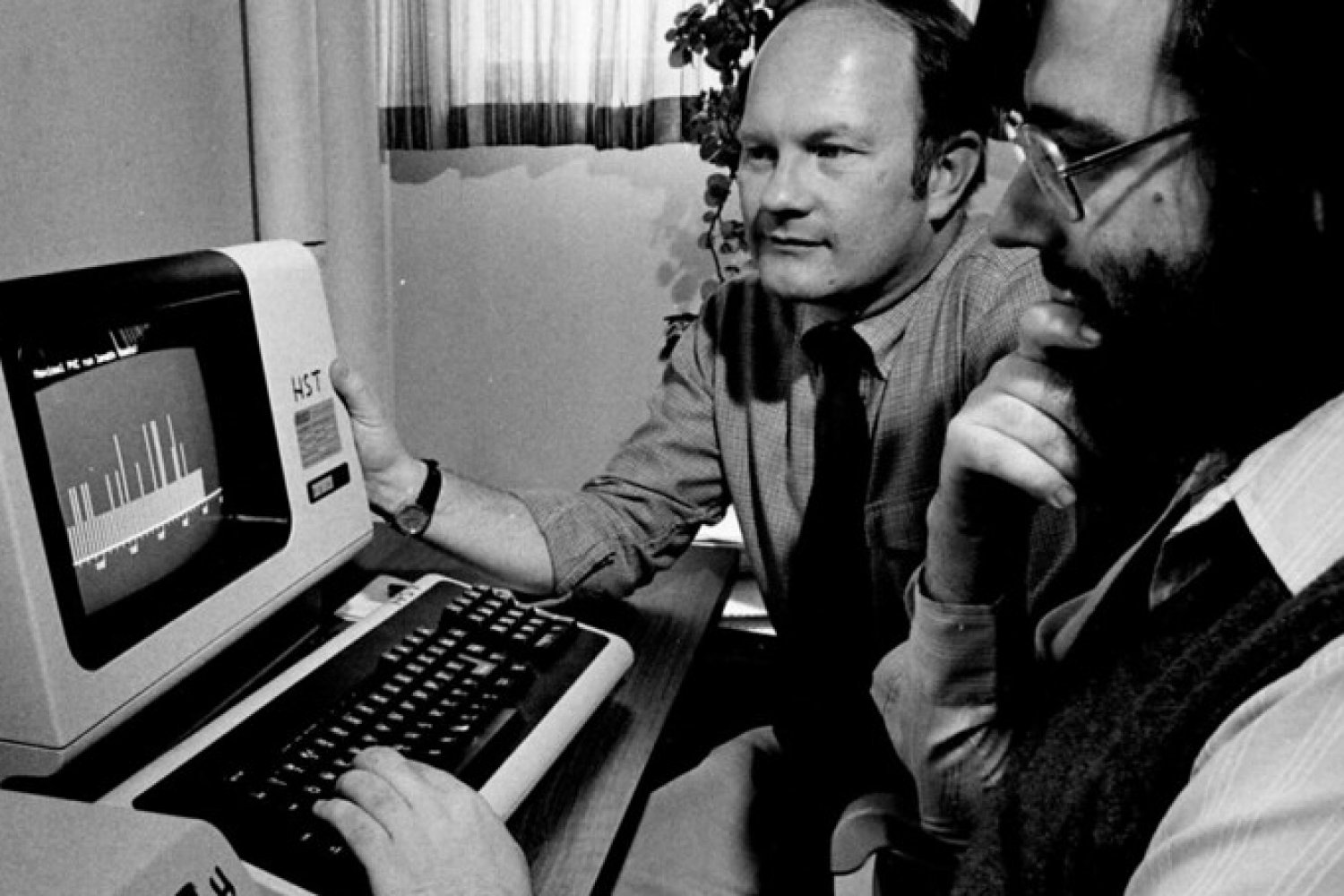
The visionary PhysioNet platform launched 25 years ago, based on a system developed at MIT in the 1970s. It has become one of the most comprehensive biomedical and clinical data repositories in existence.
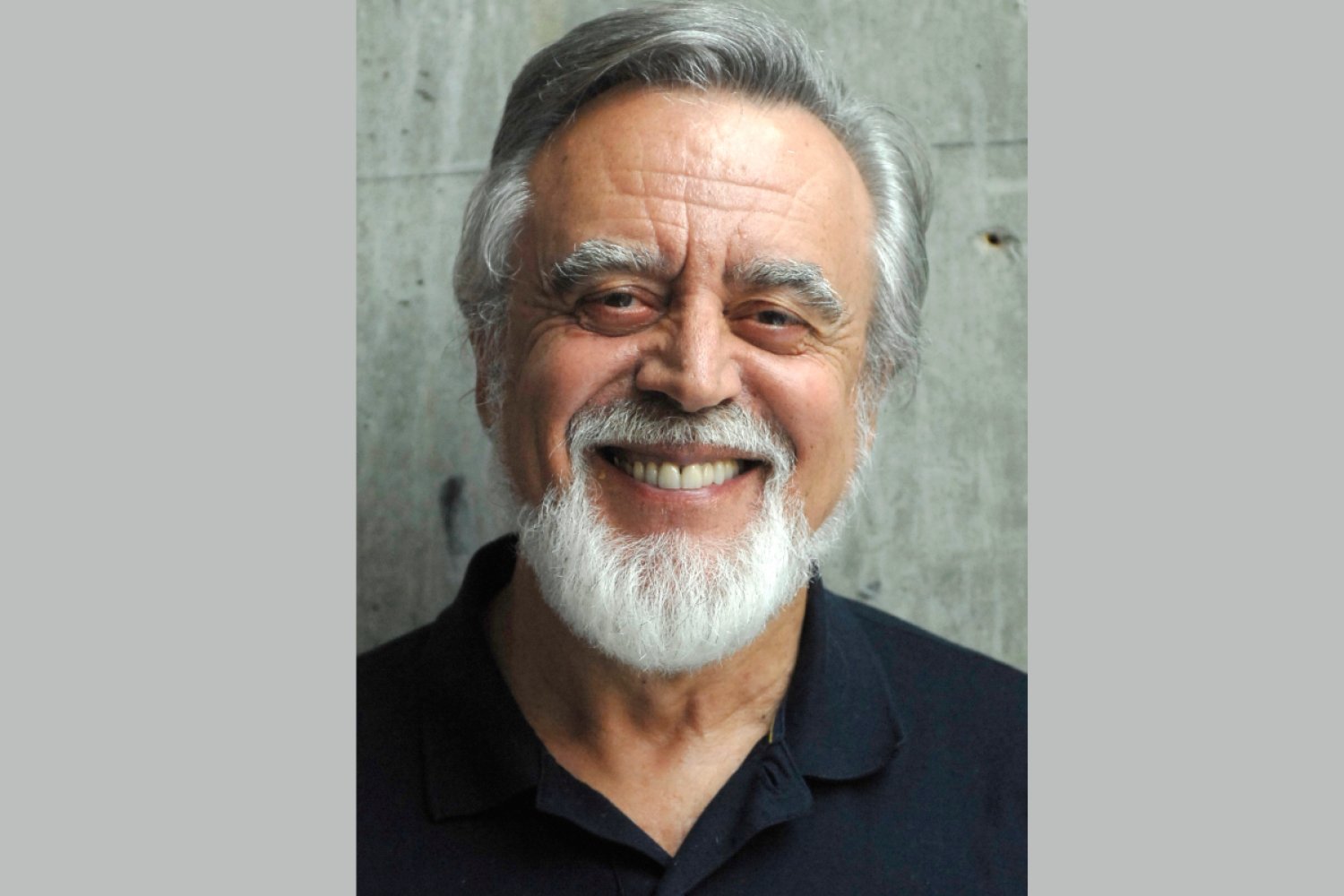
Known for his clear and elegant writing style, Bertsekas shaped fields from control and optimization to large-scale computation and artificial intelligence.
MIT News · Artificial Intelligence· news.mit.eduJul 6, 2026
PhD student Rachel Sava, winner of the Envisioning the Future of Computing Prize, explores transformative improvements and dystopian risks of neural technology.
MIT News · Artificial Intelligence· news.mit.eduJun 30, 2026
Computer scientist Phillip Isola cuts through the hype to explain how AI agents work and what the future might hold for this rapidly advancing technology.
We use cookies to run the site and, with your consent, for analytics and to show ads.
See our Cookie Policy.