An Evaluation Agent, middleware that combines Natural Language Inference factual verification, a five-signal poison detector with relevance-weighted aggregation, and a Trust Index is proposed, which reliably blocks instruction injection of unsafe advice while contradiction and subtle semantic weakening remain hard.
Balkrishna Giri, M. Hasan, Jussi Rasku et al.· 0 citations
This paper provides a formal definition of Causal WMs (CWMs) grounded in the tasks they are intended to support, connecting existing work in causal representation learning, object-centric learning, causal discovery, structural causal models, and model-based decision-making.
This work takes a minimalist approach to designing a competitive generative model that produces high quality samples at fast speed and achieves an FID of 2.56 on ImageNet 256 and simultaneously attains good precision and recall.
These findings show that reliable evaluation of LLM-generated code requires validated ground truth, protected tests, and multiple explicitly interpreted measures, and that CodeAssay provides a reproducible basis for evidence-based model evaluation in AI-augmented software development.
Shahbaz Siddeeq, Muhammad Waseem, Umar Subhan Malhi et al.· 0 citations
Reach audiences
Advertise in front of researchers, engineers, and readers.
LookBack, a training-free LVLM response scoring method that augments token likelihood with visual lookback score, a lightweight measure of how strongly each response token refers to image tokens, consistently improves Best-of-$N$ selection over existing baselines with negligible additional overhead.
Beomsik Cho, Jin-Ha Kim, Dongseok Lee et al.· 0 citations
Current structure-based drug design generative models often struggle to faithfully recapitulate genuine ligand-protein binding interactions. Instead, under the coupling of implicit learning architectures and biased training data, they tend to learn spurious statistical correlations. To address this, we propose EIP-Diff (Explicit Interaction-Prompted Diffusion), an architecture featuring a novel explicit interaction-prompt embedding mechanism that is better suited for real-world target-specific drug design. This architecture replaces biased implicit learning with explicit, residue-level biological guidance, thereby promoting more fine-grained geometric fidelity and more precise interaction-aware conditioning. To fully realize the capabilities of EIP-Diff and provide a reliable basis for performance evaluation, we further constructed CrystalData set, which provides higher-fidelity and less-biased structural supervision than existing data sets. This explicit architecture markedly improves distribution consistency: even when trained on the crossdocked data set, EIP-Diff achieves the highest alignment with authentic pharmacological distributions among evaluated models. Training on CrystalData set further enhances this alignment and improves 3D geometric accuracy, while retaining strong controllability, high chemical space coverage, and near-perfect uniqueness. In addition, target-based validation on KAT6A and YTHDC1 confirmed that EIP-Diff accurately recapitulates native-like binding modes. Furthermore, in a real-world drug design task against IDO1, we successfully designed a novel lead compound with nanomolar potency (IC50 = 0.31 nM). These results demonstrate that the EIP-Diff architecture can explicitly leverage experimentally derived structural data and biologically meaningful interaction information for target-specific molecular generation, thereby enabling its effective application to real-world structure-based drug design.
Huabin Du, Mingyang Wang, M. Luo et al.· Journal of the American Chem...· 0 citations
Post-training alignment is often shallow, eroding under fine-tuning. It remains untested as to whether constitutional midtraining interventions can produce durable alignment when cleanly isolated from post-training. We build a 394M-token constitutional corpus from Anthropic's Constitution and apply constitutional midtraining at 120B scale, where principled, values-based content is inserted into midtraining. A 2x2 design (curriculum ordering x deliberative reasoning) was used to produce four constitutionally midtrained conditions, plus a control, which were evaluated on self-generated and established benchmarks including alignment under pressure, value conflict resolution, blackmail, and emergent misalignment. All models were evaluated across three stages: post-midtraining, post-SFT, and post-benign fine-tuning. Constitutionally midtrained models outperformed the control on alignment generalization and durability, notably on blackmail: SFT instilled a blackmail propensity in all models, but constitutional midtraining blunted it, with the advantage surviving benign fine-tuning (-17.5pp). This durability did not extend to settings that required active resistance to in-context pressure or conflict, where the advantage attenuates after SFT. The presence of constitutional content at midtraining also mattered more than its structure, and constitutional midtraining incurred no capability cost, on average, at any stage (MMLU, ARC-Easy, piqa, GSM8K). A modest amount of constitutional content at midtraining could therefore yield broad, persistent alignment gains, offering a cheap, complementary addition to SFT-centered pipelines. Code, data, and models are available.
Desiree Cho, Cameron Tice, Bernie Hogan et al.· 0 citations
This work investigates MRI-based Microbial Density Stratification as a patient-level representation learning task, and Center Heatmap-driven Macro-micro modeling Network (CHM-Net) is introduced for this task, establishing the link between imaging phenotypes and microbial states through center heatmap-guided small-lesion response localization.
Jiaming Liang, Hao Chen, Ting Li et al.· 0 citations
A lightweight debiasing framework for pretrained transformer-based encoders that improves prediction fairness while preserving task performance and reduces sensitive-attribute attacker accuracy, improves fairness metrics such as demographic parity difference and equalized odds, and maintains competitive task performance.
Qiaoyue Tang, Sepidehsadat Hosseini, Mengyao Zhai et al.· 0 citations
SegWithU is a post-hoc framework that augments a frozen pretrained segmentation backbone with a lightweight uncertainty head and models uncertainty as perturbation energy in a compact probe space using rank-1 posterior probes, suggesting that perturbation-based uncertainty modeling is an effective and practical route to reliability-aware medical segmentation.
Tianhao Fu, Austin Wang, Charles D. Chen et al.· arXiv.org· 0 citations
Comparing diffusion and rectified flow objectives within the MotionGPT3 framework suggests that several known benefits of rectified flow objectives do extend to continuous-latent text-to-motion generation, highlighting the importance of the training objective choice in motion priors.
Jaymin Ban, J. Jeon, Sang-jun Jeong· arXiv.org· 1 citation
This work introduces a pioneering exploration of Self-Supervised Learning (SSL) within the SNN, and proposes a novel Spiking Self-Attention (SSA) and Spiking Transformer (Spikformer) that achieves 80+% accuracy on ImageNet.
Zhaokun Zhou, Kaiwei Che, Wei Fang et al.· arXiv.org· 69 citations· ⚡10
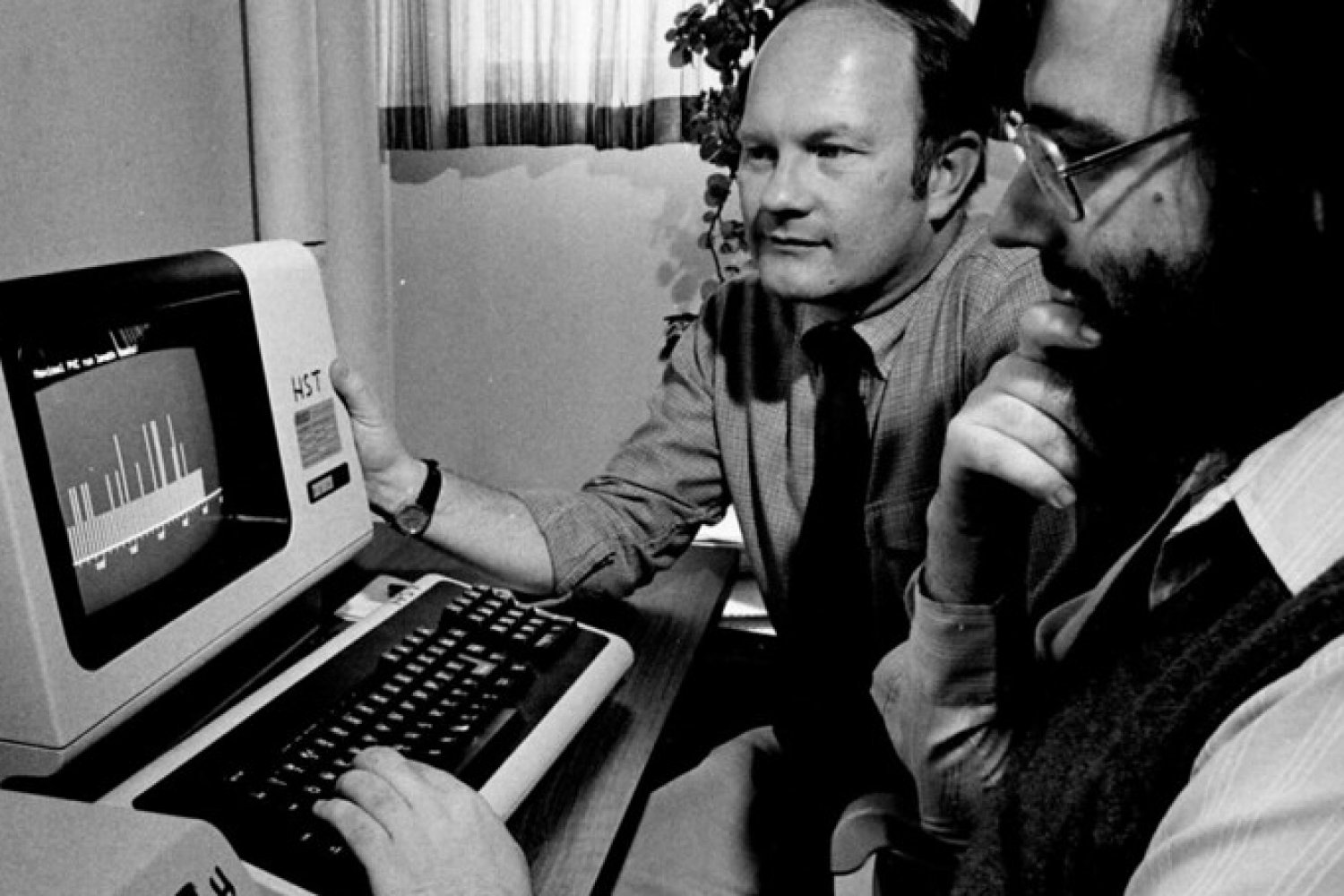
The visionary PhysioNet platform launched 25 years ago, based on a system developed at MIT in the 1970s. It has become one of the most comprehensive biomedical and clinical data repositories in existence.
Known for his clear and elegant writing style, Bertsekas shaped fields from control and optimization to large-scale computation and artificial intelligence.
MIT News · Artificial Intelligence· news.mit.eduJul 6, 2026
PhD student Rachel Sava, winner of the Envisioning the Future of Computing Prize, explores transformative improvements and dystopian risks of neural technology.
MIT News · Artificial Intelligence· news.mit.eduJun 30, 2026
Computer scientist Phillip Isola cuts through the hype to explain how AI agents work and what the future might hold for this rapidly advancing technology.
We use cookies to run the site and, with your consent, for analytics and to show ads.
See our Cookie Policy.