This work proposes Event-Causal RAG, a lightweight retrieval-augmented framework for ultra-long and streaming video reasoning and introduces ECV-1H, an hour-scale long-video QA benchmark dedicated to directed event-causal reasoning, with all source videos exceeding one hour.
P. Yan, Yu Zhao, Liang Xie et al.· arXiv.org· 0 citations
Current AI agents can flexibly invoke tools and execute complex tasks, yet their long-term advancement is hindered by the lack of systematic accumulation and transfer of skills. Without a unified mechanism for skill consolidation, agents frequently ``reinvent the wheel'', rediscovering solutions in isolated contexts without leveraging prior strategies. To address this challenge, we introduce SkillNet, an open infrastructure for creating, evaluating, and organizing AI skills at scale. SkillNet structures skills within a unified ontology that supports creating skills from heterogeneous sources, establishing rich relational connections, and performing multi-dimensional evaluation across Safety, Completeness, Executability, Maintainability, and Cost-awareness. Our infrastructure integrates a repository of over 600,000 skills, an interactive platform, and a versatile Python toolkit. Experiments on ALFWorld, WebShop, and ScienceWorld show 40% higher average rewards and 30% fewer execution steps across multiple backbone models. Furthermore, SkillNet-Gym benchmarks skill retrieval, utilization, and composition, while SkillNet-Fabric enables task-specific skill routing through lightweight Wikis. By formalizing skills as evolving, composable assets, SkillNet provides a robust foundation for agents to move from transient experience to durable mastery.
Yuan Liang, Ruobin Zhong, Haoming Xu et al.· 0 citations
DistScan is presented, a backdoor detection framework based on a simple but previously unexploited observation: backdoor injection systematically shifts a model's pre-NMS prediction class distribution away from its training class frequencies, even on clean inputs without any trigger present.
Longtian Wang, Zhengyu Zhao, Chenhao Lin et al.· 0 citations
ReWEIGH is a training-free decoding intervention that aggregates vocabulary ranks across visual positions and compares each candidate with a token-specific reference estimated from unlabeled images and applies a bounded penalty only to candidates that fall below their reference.
Jihae Jeong, Jun-Ha Choi, Hwanjo Yu· 0 citations
Reach audiences
Advertise in front of researchers, engineers, and readers.
This paper proposes a lightweight, plug-and-play framework that improves robustness to viewpoint shifts in Vision-Language-Action (VLA) policies without policy retraining. To our knowledge, this is the first approach to directly leverage 3D Gaussian-based novel-view synthesis for observation-space adaptation in VLA policies. Current VLA performance relies on the implicit assumption that training and deployment camera configurations are identical. Our experiments show that even a small displacement of the camera mount can reduce the success rate on the LIBERO benchmark from about 90% to about 10% in the worst case. Prior approaches, such as large-scale fine-tuning or generative data augmentation, are computationally expensive and risk catastrophic forgetting. To address this, viewpoint shifts are reformulated as a localized novel-view synthesis problem. Under a Locality assumption, that camera perturbations remain within a small bounded region relative to the workspace, viewpoint normalization reduces to a scene- and policy-independent disocclusion task. Our work implements this idea with a 4M-parameter 3D-Gaussian canonicalizer prepended to a frozen VLA policy. Without modifying policy weights, GS-VLA improves performance across three orthogonal axes: (1) Policy architectures, (2) Unseen task suites, and (3) Perturbation scales. These results show that a lightweight visual module can recover a large fraction of the performance lost under viewpoint shift, without policy retraining.
We introduce Bernstein-Vazirani Networks (BVNs), a non-variational quantum machine learning framework that leverages quantum interference for supervised learning, demonstrated on vision and representation learning tasks. In their standard form, BVNs follow the principle of quantum Fourier sampling: labelled data are placed in superposition and interfered in the Fourier basis to extract globally informative features. We then define generalised BVNs that enable interference in problem-adapted bases, yielding more expressive models under the same measurement budget as in the standard setting. BVNs achieve universal function approximation through (over)complete interference bases, while training of BVNs is gradient-free. Experiments on synthetic and real-world classification tasks, as well as implicit image representation, show strong generalisation capabilities and competitive performance with classical and quantum baselines.
Visual Counterfactual Explanations (VCEs) aim to explain image classifiers by generating minimally edited and realistic versions of an input image that change the classifier's prediction. Existing VCE methods are inherently classifier-dependent and therefore susceptible to classifier biases and failure modes, such as sensitivity to shortcut features and calibration errors. In this paper, we propose a classifier-free approach for visual counterfactual generation based on Contrastive Analysis (CA). Given two datasets corresponding to different classes (e.g., healthy and patients), we disentangle the generative factors that are common across the two datasets from those that are salient to each dataset, and generate counterfactual images by swapping only the salient factors. By operating directly on data distributions rather than decision boundaries, our method provides model-agnostic VCEs that are less sensitive to classifier biases. Our approach leverages the high-quality synthesis and well-structured latent space of StyleGAN2. We use the feature space F, instead than the usual W-space, to improve detail preservation. Unlike conventional CA approaches, which typically assume salient factors in only one dataset, we introduce an adapted framework and loss functions for VCE that allow multiple salient factors in each dataset. We evaluate our method on three medical imaging datasets and demonstrate superior counterfactual generation quality compared to existing approaches.
Autonomous vehicles depend on fast and reliable perception systems to detect surrounding vehicles, pedestrians, cyclists, traffic signs, and other road objects in real time. This paper presents a comprehensive survey and analysis of one-stage object detectors for autonomous driving rather than an implementation of a new detection system. The survey reviews the evolution of major one-stage detectors, including YOLOv1, SSD, RetinaNet, EfficientDet, anchor-free detectors such as FCOS and CenterNet, and recent real-time models such as YOLOv10. It compares these architectures through their design choices, feature-fusion strategies, loss functions, deployment trade-offs, and reported benchmark performance. The paper also summarizes commonly used autonomous-driving datasets, evaluation metrics, open challenges, and future research directions. Overall, this survey highlights how one-stage detectors balance speed, accuracy, efficiency, and robustness, while also emphasizing the remaining gap between benchmark results and dependable real-world autonomous-driving performance.
Jonel Roman, Ryan Sirjue, Peter Nguyen et al.· 0 citations
This work proposes GrabVG, a novel visual grounding framework inspired by human visual search that generates a compact set of reliable object hypotheses through distillation-guided proposal induction and text-aware hypothesis filtering, substantially reducing background distractions and semantic mismatches.
Chaowei Wang, Yan Di, Jingjun Sun et al.· 0 citations
Learning-state-aware dynamic generative data augmentation (LSADA) is proposed, which introduces a decoupled data augmentation and diffusion fusion strategy that applies strength-controlled transformations to class-relevant regions and generates diverse class-irrelevant regions, progressively fusing them to improve image diversity while preserving class semantics.
Ting Xiang, Chenxi Deng, Jinhui Zhao et al.· 0 citations
It is suggested that ten annotated cases are sufficient for clinically useful segmentation, effectively reducing bottlenecks for both image annotation and training time.
Sachin Dudda Nagaraju, Bendik S Abrahamsen, Ashkan Moradi et al.· 0 citations
Improvements show that CutMix has only a minor impact on segmentation accuracy but consistently improves the reliability, particularly under distribution shifts, indicating that CutMix primarily enhances the trustworthiness of the model’s calibration and uncertainty rather than the raw segmentation prediction itself.
S. Landgraf, M. Ulrich· ISPRS Annals of the Photogra...· 0 citations
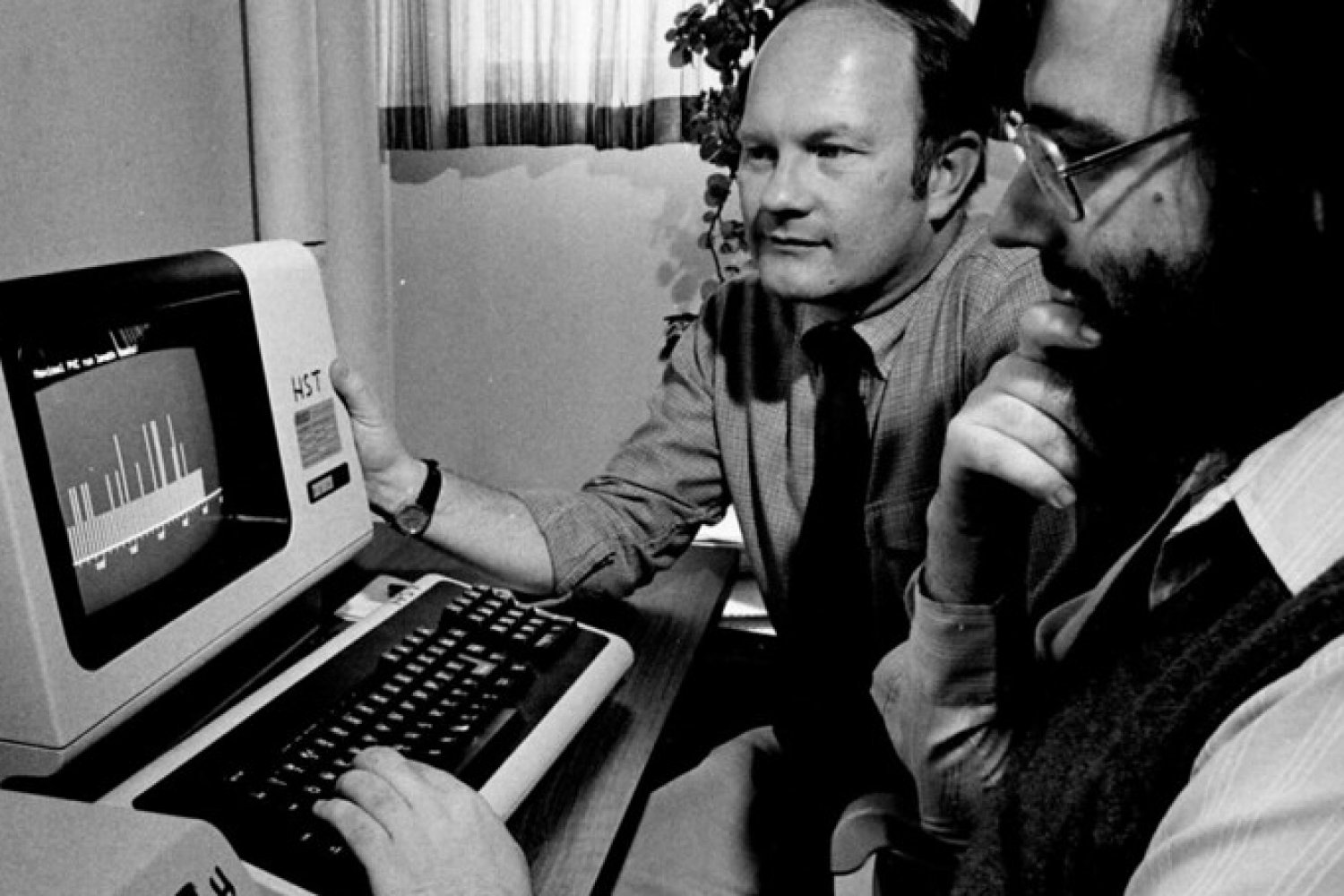
The visionary PhysioNet platform launched 25 years ago, based on a system developed at MIT in the 1970s. It has become one of the most comprehensive biomedical and clinical data repositories in existence.
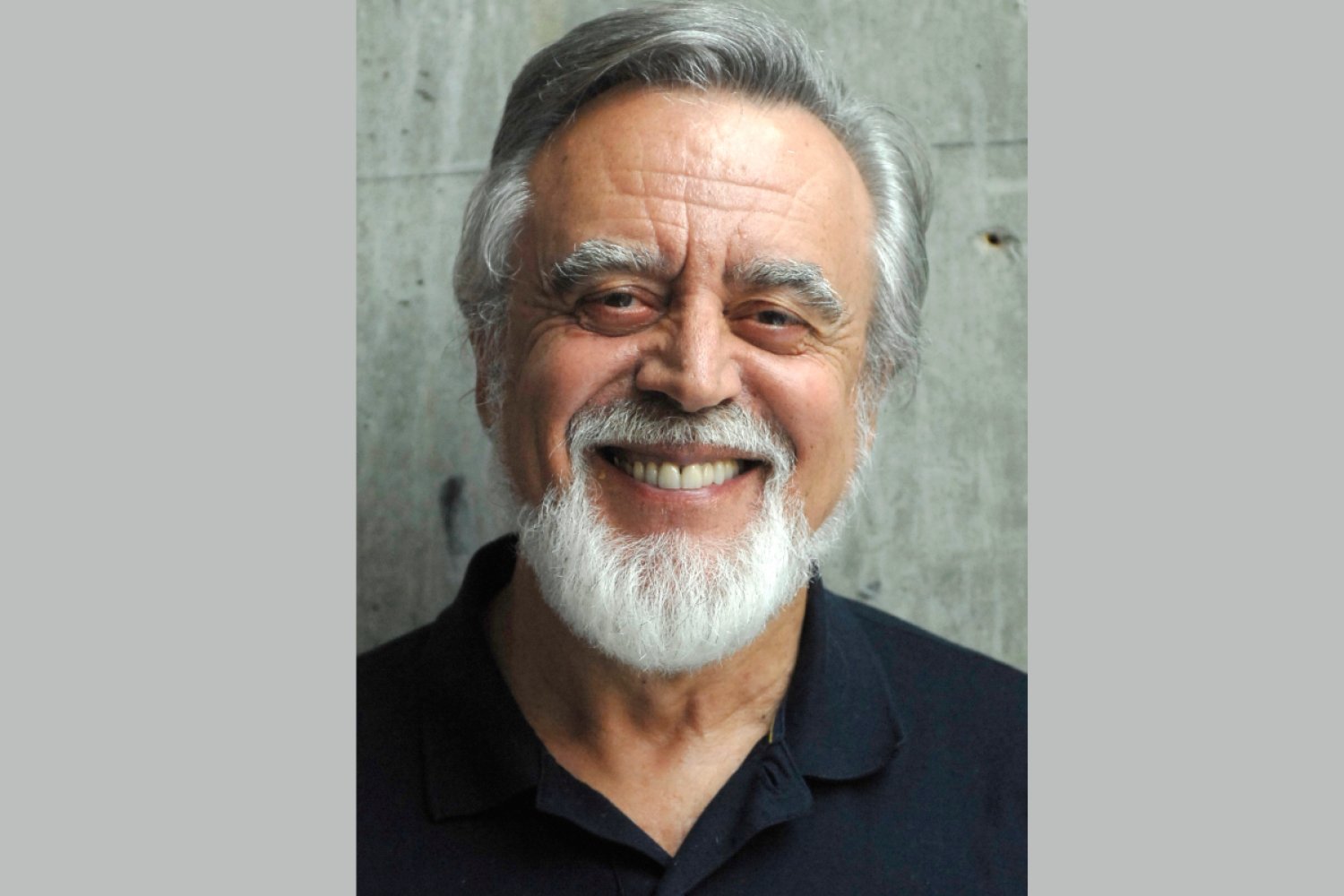
Known for his clear and elegant writing style, Bertsekas shaped fields from control and optimization to large-scale computation and artificial intelligence.
MIT News · Artificial Intelligence· news.mit.eduJul 6, 2026
PhD student Rachel Sava, winner of the Envisioning the Future of Computing Prize, explores transformative improvements and dystopian risks of neural technology.
MIT News · Artificial Intelligence· news.mit.eduJun 30, 2026
Computer scientist Phillip Isola cuts through the hype to explain how AI agents work and what the future might hold for this rapidly advancing technology.
We use cookies to run the site and, with your consent, for analytics and to show ads.
See our Cookie Policy.