Indigenous chicken (IC) production is an important livelihood activity for smallholder farmers in Kenya, contributing to food security, nutrition, and household income. Despite rising demand for improved indigenous chicken (IIC) products, adoption remains low, averaging 24% nationally and 14% in Moiben Sub-County. This study examined the economic factors influencing both the adoption and adoption intensity of IIC technology among smallholder farmers in Moiben Sub-County, Uasin Gishu County. Guided by the Diffusion of Innovations Theory and the Theory of the Firm, a cross-sectional survey was conducted among 156 farmers. Data were collected using structured questionnaires and analysed using descriptive statistics and a double-hurdle econometric model. The results showed that age and access to government or non-governmental organisation (NGO) programmes significantly increased the likelihood of adoption, whereas farming experience, access to market information, market outlets, and value addition reduced it. Adoption intensity was positively influenced by veterinary and extension services but negatively affected by distance to markets, market outlets, and participation in government or NGO programmes. These findings indicate that the determinants of initial adoption differ from those shaping post-adoption intensity. Strengthening market linkages, veterinary and extension services, farmer organisations, and post-adoption support programmes is recommended to enhance commercialisation, productivity, and the sustainable uptake of IIC technology in Kenya.
Dorothy J. Bomett, Elijah Ng’eno, Ben Chesoo· Asian Journal of Agricultura...· 0 citations
Context: Manual qualitative data analysis is time-intensive and can compromise validity and replicability, affecting analysis design, implementation, and reporting. Large Language Models (LLMs) enable human-bot collaboration in Software Engineering (SE), but their potential for qualitative data analysis in SE remains largely unexplored. Objective: The objective of this study is to design and develop an LLM-based multi-agent system that synergizes human decision support with AI to automate various qualitative data analysis approaches. Methods: We used LLM-based multi-agents systems to assist the qualitative data analysis process, deploying 27 agents, each responsible for a specific task, such as text summarization, initial code generation, and extracting themes and patterns. Results: The main findings are: (1) the LLM-based multi-agent system accelerates the qualitative data analysis process, (2) the system effectively automates tasks such as text summarization, initial code generation, and theme extraction, and (3) the publicly accessible code facilitates validation and further evaluation. Conclusion: The proposed LLM-based multi-agent system automates qualitative data analysis process, creating opportunities for researchers and practitioners. Future improvements focus on enhancing multilingual performance and integrating continuous expert feedback. The source code of proposed system and system details can be found here: https://github.com/GPT-Laboratory/Qualitative-Analysis-with-an-LLM-Based-Agentts
Z. Rasheed, Muhammad Waseem, Aakash Ahmad et al.· arXiv.org· 40 citations
Large Language Models (LLMs) have enabled multi-agent systems to perform autonomous code generation for complex tasks. Despite the recent growth in research and industrial applications in this area, there is little work on synthesizing evidence from both academic and industrial sources to capture the current state of research on LLM-based multi-agent systems for code generation. To this end, we conducted a Multi-Vocal Literature Review (MLR), combining insights from both academia and industry, including peer-reviewed studies and grey literature. The aim of this study is to systematically synthesize and analyze existing knowledge on LLM-based multi-agent systems for code generation. Specifically, the review examines the motivations for their use, employed benchmarks and models, key challenges, proposed solutions, and potential directions for future research. We selected and reviewed 114 studies, and the key findings are: 1) the identified reasons for adopting multi-agent systems for code generation were classified into nine categories; 2) the models and evaluation benchmarks utilized across the studies were systematically analyzed to provide a structured overview of commonly adopted LLM configurations and assessment practices; 3) the reported challenges and corresponding solutions were synthesized into six main categories and 26 subcategories; and 4) future research directions were identified and organized into six main categories and 18 subcategories. The results of this MLR will assist researchers and practitioners in pursuing further studies and supporting the real-world adoption of multi-agent systems in industrial settings.
Z. Rasheed, Muhammad Waseem, Kai-Kristian Kemell et al.· arXiv.org· 2 citations
Large Language Models (LLM) and Generative Pre-trained Transformers (GPT), are reshaping the field of Software Engineering (SE). They enable innovative methods for executing many software engineering tasks, including automated code generation, debugging, maintenance, etc. However, only a limited number of existing works have thoroughly explored the potential of GPT agents in SE. This vision paper inquires about the role of GPT-based agents in SE. Our vision is to leverage the capabilities of multiple GPT agents to contribute to SE tasks and to propose an initial road map for future work. We argue that multiple GPT agents can perform creative and demanding tasks far beyond coding and debugging. GPT agents can also do project planning, requirements engineering, and software design. These can be done through high-level descriptions given by the human developer. We have shown in our initial experimental analysis for simple software (e.g., Snake Game, Tic-Tac-Toe, Notepad) that multiple GPT agents can produce high-quality code and document it carefully. We argue that it shows a promise of unforeseen efficiency and will dramatically reduce lead-times. To this end, we intend to expand our efforts to understand how we can scale these autonomous capabilities further.
Z. Rasheed, Muhammad Waseem, Kai-Kristian Kemell et al.· XP Workshops· 35 citations· ⚡2
Reach audiences
Advertise in front of researchers, engineers, and readers.
Speculative decoding speeds up generation with an efficient draft model (drafter) that proposes tokens for a target model to verify in one pass, preserving the target's output distribution. High-acceptance block-diffusion drafters such as DFlash and DFlare fill an entire block in one parallel pass. In many cycles, the target accepts the whole block, so the drafter exhausts its trained block horizon before verification fails. We call this unrealized acceptance stranded speed-up. A mean committed length, per prompt or per cycle, hides it, whereas the acceptance histogram exposes it as a spike in the ceiling bin, the fraction of cycles that accept the entire block. We recommend the histogram as a preflight check before spending training compute. Naively widening the block at inference does not recover the speed-up, because once the block outgrows its training size, the drafter's bidirectional attention shifts its distribution even at early positions and erodes front-of-block verification. Instead, we post-train the drafter on a longer block with a short curriculum that emphasizes the newly exposed positions, a method we call DBloom. Expanding the pretrained DFlash and DFlare drafters from block size 16 to 24 across Qwen3-8B and Qwen3-4B targets raises the per-prompt committed length on the high-ceiling benchmarks by a median of +0.8 tokens (up to +1.1). Once continuation fine-tuning precedes expansion, the increase reaches 1.37 tokens. The same expansion also lifts committed length on all seven benchmarks for Gemma-4-12B-IT, a different model family, by a median of +0.41 tokens (Arm A), and the full continuation-then-expand pipeline (Arm B) adds +0.29 to +0.98 tokens over the same B16 drafter. In a prompt-matched comparison against JetSpec, a contemporary tree-based drafter not used in our design, DBloom commits more tokens on every benchmark at tree budgets up to 64 nodes.
Future wireless systems are expected to transform the surrounding space from a passive propagation medium into a smart electromagnetic environment, where engineered surfaces control wave propagation, support wireless sensing, and create programmable electromagnetic fingerprints. A key challenge in realizing this vision is the inverse design of metasurfaces for tailored electromagnetic propagation. While forward analysis evaluates the response of a known geometry, the inverse task starts from a prescribed scattering signature and seeks a physically realizable structure that produces it. This inverse task is inherently nonlinear and often high-dimensional, while candidate solutions may be non-unique and provide no direct indication of practical realizability. Here, we introduce a conditional diffusion framework for inverse design of dielectric resonator metasurfaces from target angular scattering patterns. Trained on T-matrix simulated geometry-response pairs, the model learns a conditional distribution of geometries instead of a deterministic mapping, enabling multiple candidate designs for the ill-posed inverse problem. The best generated metasurface achieves a mean percentage error of 1.39%, outperforming CMA-ES optimization (4.1% after 10 h) while requiring only about one minute for after-training inference. The model also produces lower error distributions than deterministic neural baselines for out-of-distribution spectra, highlighting the potential of diffusion models for efficient metasurface design.
M. Tsukerman, K. Grotov, D. Vovchuk et al.· 0 citations
Objective: The present work aimed to design and optimize a fast dissolving tablet (FDT) of ondansetron hydrochloride (4 mg) to achieve rapid disintegration, acceptable taste masking, and prompt antiemetic action, thereby enhancing patient compliance in paediatric, geriatric, and dysphagic populations. Methods: Nine formulations (F1–F9) were prepared by direct compression following inclusion complexation of the drug with β-cyclodextrin via the kneading method. The formulations employed varying levels of crospovidone and croscarmellose sodium as binary superdisintegrant blends. Preformulation studies, including Fourier-transform infrared (FTIR) spectroscopy, were conducted to assess drug–excipient compatibility and inclusion complexation. Micromeritic properties of lubricated blends and physicomechanical characteristics of compressed tablets were evaluated. Disintegration time, wetting time, water absorption ratio, and taste masking were assessed. In vitro drug release was performed in pH 6.8 phosphate buffer using a USP Type II dissolution apparatus at 37 ± 0.5 °C and 50 rpm. Dissolution kinetics were analysed by zero-order, first-order, Higuchi, Korsmeyer–Peppas, and Hixson–Crowell models. Accelerated stability studies were conducted as per ICH Q1A(R2) guidelines. Results: Compatibility studies confirmed the absence of physicochemical interactions between ondansetron and the selected excipients; FTIR spectra of the inclusion complex suggested effective drug entrapment within the β-cyclodextrin cavity. Among all batches, formulation F5, containing 4% w/w crospovidone and 2% w/w croscarmellose sodium, exhibited the most desirable performance: a disintegration time of 18 ± 1 s, wetting time of 15 ± 1 s, and cumulative drug release of 98.5 ± 1.0 % within 10 min. The release followed first-order kinetics most closely (R² = 0.965) with a Fickian diffusion mechanism (release exponent, n = 0.428; R² = 0.996). All formulations complied with pharmacopoeial limits for weight variation, hardness, friability, and content uniformity. Accelerated stability testing (40 ± 2 °C / 75 ± 5% RH, 90 days) demonstrated no significant change in drug content, disintegration time, or release behaviour; the similarity factor (f₂) remained above 82. Conclusion: The optimized fast dissolving tablet achieved rapid disintegration and near-complete drug release within 10 min, alongside successful taste masking, presenting a viable platform for the rapid management of chemotherapy-induced and postoperative nausea and vomiting.
Alisha Banafar*· Zenodo (CERN European Organi...· 0 citations
Objective: The present work aimed to design and optimize a fast dissolving tablet (FDT) of ondansetron hydrochloride (4 mg) to achieve rapid disintegration, acceptable taste masking, and prompt antiemetic action, thereby enhancing patient compliance in paediatric, geriatric, and dysphagic populations. Methods: Nine formulations (F1–F9) were prepared by direct compression following inclusion complexation of the drug with β-cyclodextrin via the kneading method. The formulations employed varying levels of crospovidone and croscarmellose sodium as binary superdisintegrant blends. Preformulation studies, including Fourier-transform infrared (FTIR) spectroscopy, were conducted to assess drug–excipient compatibility and inclusion complexation. Micromeritic properties of lubricated blends and physicomechanical characteristics of compressed tablets were evaluated. Disintegration time, wetting time, water absorption ratio, and taste masking were assessed. In vitro drug release was performed in pH 6.8 phosphate buffer using a USP Type II dissolution apparatus at 37 ± 0.5 °C and 50 rpm. Dissolution kinetics were analysed by zero-order, first-order, Higuchi, Korsmeyer–Peppas, and Hixson–Crowell models. Accelerated stability studies were conducted as per ICH Q1A(R2) guidelines. Results: Compatibility studies confirmed the absence of physicochemical interactions between ondansetron and the selected excipients; FTIR spectra of the inclusion complex suggested effective drug entrapment within the β-cyclodextrin cavity. Among all batches, formulation F5, containing 4% w/w crospovidone and 2% w/w croscarmellose sodium, exhibited the most desirable performance: a disintegration time of 18 ± 1 s, wetting time of 15 ± 1 s, and cumulative drug release of 98.5 ± 1.0 % within 10 min. The release followed first-order kinetics most closely (R² = 0.965) with a Fickian diffusion mechanism (release exponent, n = 0.428; R² = 0.996). All formulations complied with pharmacopoeial limits for weight variation, hardness, friability, and content uniformity. Accelerated stability testing (40 ± 2 °C / 75 ± 5% RH, 90 days) demonstrated no significant change in drug content, disintegration time, or release behaviour; the similarity factor (f₂) remained above 82. Conclusion: The optimized fast dissolving tablet achieved rapid disintegration and near-complete drug release within 10 min, alongside successful taste masking, presenting a viable platform for the rapid management of chemotherapy-induced and postoperative nausea and vomiting.
Alisha Banafar*· Zenodo (CERN European Organi...· 0 citations
SignificanceHolographic 3D display can reconstruct the complete wavefront information of 3D objects and is therefore regarded as a key direction for the development of next-generation naked-eye 3D display. However, traditional hologram generation methods struggle to balance holographic reconstruction quality with calculation speed. Among these challenges, suppressing speckle noise is a core challenge in holographic 3D display. Originating from coherent illumination and random phase distributions, speckle noise is the primary factor affecting the quality of holographic reconstructions. In recent years, deep learning has provided a new computational paradigm for generating low-noise holograms. Therefore, this paper systematically reviews deep learning-based methods for generating low-noise holograms, providing a detailed discussion of the basic principles, technical advancements, and future trends of data-supervised, model-supervised, and hybrid-supervised methods, with the aim of providing a reference for further optimizing low-noise hologram generation methods.ProgressIn recent years, low-noise hologram generation methods based on deep learning are experiencing rapid development, and innovations around data-supervised, model-supervised, and hybrid-supervised methods are driving the progress of holographic 3D display. Data-supervised methods are dependent on paired datasets of target images and holograms, and the low-noise hologram is generated by learning the mapping relationship between them. Early data-supervised studies are focused on the application of deep neural networks to hologram generation, where tensor holography enables real-time synthesis of low-noise holograms, and diffraction-engineered networks further enhance the visual realism of holographic 3D display. A noteworthy strategy is that low-noise holograms are generated directly from 2D target images, which simplifies the construction of training datasets. However, data-supervised methods remain highly dependent on large-scale, high-quality datasets, and both generalization ability and model performance are closely related to dataset quality. Model-supervised methods embed differentiable physical models into the training process, which not only avoids reliance on paired datasets but also enables unsupervised or self-supervised learning of low-noise holograms by minimizing the intensity difference between reconstructed and target images. Hardware-based model-supervised methods calibrate optical aberrations through system feedback and achieve high-quality color holograms. Software-based model-supervised methods introduce complex-valued neural networks or lightweight architectures to generate holograms with high accuracy and high frame rates. In addition, model-supervised methods are applied to solve occlusion problems in complex 3D scenes. Nevertheless, repeated diffraction propagation calculations are required in the model-supervised methods, and the training cost is high. Hybrid-supervised methods integrate the advantages of data and model supervision, and generate high-fidelity, low-noise holograms by combining data and physical losses. For example, two-stage hybrid training method first pre-trains networks on high-quality datasets and then performs unsupervised fine-tuning with physical models, thereby surpassing the performance ceiling of data-supervised methods. Under data-scarce conditions, hybrid-supervised methods based on non-paired learning achieve object-to-hologram mapping through cycle-consistency structures. Hybrid-supervised methods are also applied to optical system optimization, propagation error compensation, and hologram generation under low spatial coherence. However, hybrid-supervised methods still face challenges of complex training processes and limited stability.Conclusions and ProspectsAlthough deep learning drives the rapid development of holographic 3D display, several challenges are still encountered: 1) in data-supervised methods, the training efficiency of deep neural networks is low and strong dependence on training datasets is observed; 2) in model-supervised methods, the speed of hologram generation does not yet meet the requirements of real-time interaction; 3) in hybrid-supervised methods, the gain obtained by simply increasing the depth or width of neural networks becomes limited. To address these issues, future research is expected to proceed along the following directions: 1) transfer learning methods are applied to reduce the training time of data-supervised methods and to alleviate dependence on datasets; 2) lightweight neural networks are designed to improve the generation speed of model-supervised methods; 3) novel architectures such as Transformer models, self-attention mechanisms, and diffusion models are explored to extend the performance boundaries of networks. With improvements in training efficiency, inference speed, and reconstruction quality, holographic 3D display is expected to promote transformative applications in medical imaging, industrial inspection, education, and entertainment.
李兆松, FAN Yubo, Dejiang Song et al.· DOAJ (DOAJ: Directory of Ope...· 0 citations
Under the backdrop of global warming,abrupt transitions between drought and flood events have been rather frequent,posing severe challenges to flood-control,drought-resistance,and water-resource management in river basins. The scarce availability of extreme-event samples limits the ability of traditional generative models to accurately capture their abrupt characteristics. This study,focused on the Shuangjiangkou Reservoir,proposes an extreme-scenario-generation method for abrupt drought-flood transitions,based on an improved conditional diffusion model,validated using monthly runoff data from 1966 to 2025 (spanning 59 years). The results show that the generated sequences are highly consistent with the statistical distribution of historical observations,with a relative mean error of 3.3%,KL divergence of 0.1185,and Nash-Sutcliffe efficiency coefficient of 0.985 for the flow hydrograph; under monthly conditions,the correlation coefficient between the first-month flow of generated sequences and the historical mean of the same period reaches 0.995,thus accurately reproducing the full hydrological annual cycle from low-flow to flood periods; under intensity conditions,the mean absolute error between the generated events and target intensity is less than 0.5 levels,and the classification accuracy of abrupt events exceeds 89%. Thus,this method can generate statistically reasonable extreme scenarios beyond the limited historical record under conditional constraints,thereby providing a new technical approach for abrupt drought-flood risk assessment and reservoir-operation decision-making.
Pengxin CHEN, Fuming Yao, Weibin HUANG et al.· DOAJ (DOAJ: Directory of Ope...· 0 citations
China’s coalbed methane (CBM) research focuses on the development of deep CBM. However, medium-shallow CBM resources are abundant and highly proven. Currently, the main challenge is the difficulty in effectively utilizing a large amount of adsorbed gas. If the remaining adsorbed gas can be effectively utilized, the production scale of medium-shallow CBM could achieve a significant breakthrough. To clarify the development direction of surface well development technology for enhancing recovery in medium-shallow CBM, this study conducts an in-depth discussion based on a chain mass-transfer model of “in-situ desorption-matrix diffusion-cleat seepage-fracture conductivity” and reviews the definition and connotation of recovery efficiency in medium-shallow CBM. Among these processes, matrix diffusion, as the key link connecting microscopic desorption and macroscopic seepage, is identified as the core factor restricting the overall recovery efficiency. Furthermore, the influencing factors are systematically classified into two categories: (1) the main seepage controlling factors affecting pressure drop sweep efficiency, such as fracture conductivity, well pattern layout, and pressure drop rate; (2) the main diffusion controlling factors affecting desorption efficiency, including matrix block size, gas diffusion coefficient, water saturation, and temperature and pressure conditions. On this basis, this study systematically reviews the mainstream technologies for enhancing recovery, such as well pattern optimization, gas injection displacement (CO2 flooding, N2 flooding), negative pressure extraction, desorption agent injection, physical field energy enhancement (acoustic wave, microwave, electric field), microbial stimulation, and hydraulic slotting. Their applicable conditions, field application effects, and failure mechanisms are also analyzed. It is found that although these technologies can increase production under certain conditions, they generally have the common limitations of difficult matrix entry, easy energy dissipation, and limited stimulation effect. In other words, external energy cannot effectively act inside the matrix, the pressure drop sweep range is limited, the desorption efficiency improvement is insufficient, and the stimulation effect rapidly decreases over time, making sustainable development difficult to achieve. For medium-shallow CBM development, the mobilization rate of recoverable reserves (i.e., the kinetic process) is more practically significant than the absolute amount of recoverable reserves (i.e., the thermodynamic state). Rapid and efficient mobilization of adsorbed gas within the matrix is the key to increasing production and enhancing recovery efficiency. Therefore, surface well development technologies for enhancing recovery should focus on three directions: increasing mass-transfer driving force in the matrix, reducing matrix block size, and enhancing the gas-phase flow capacity within the matrix. Among these, reducing matrix block size is currently the most readily achievable breakthrough direction. Increasing the matrix mass-transfer driving force has limited effectiveness, while enhancing the gas phase flow capacity within the matrix requires long-term research and development to achieve a breakthrough.
LUO PINGYA, ZHU SUYANG, LI XIAOGANG· DOAJ (DOAJ: Directory of Ope...· 0 citations
Deep coal seams are characterized by geological conditions of high in-situ stress, high reservoir temperature, low permeability, and complex tectonic features, resulting in significant differences in gas occurrence states and migration mechanisms compared with shallow coal seams. Conventional commercial numerical simulators are generally based on simplified dual-porosity models, making it difficult to accurately describe the complex stress sensitivity and multiphase flow dynamics of deep coal seams during production and drainage. This leads to considerable discrepancies between simulation results and actual production data. To address this issue, this study established an efficient numerical simulation method suitable for deep coalbed methane (CBM) characteristics, aiming to accurately characterize single-well gas production, water production, bottom-hole flowing pressure, and produced gas composition. Based on the geological and engineering characteristics of deep coal seams, a fully coupled numerical model was developed considering a quasi-triple-porosity medium (matrix pores, microfractures, and large fractures), competitive adsorption/desorption of multicomponent gases (CH4, CO2, etc.), multiscale diffusion, gas-water two-phase seepage, and coal matrix shrinkage/deformation effects. A typical deep CBM Well JS6-7P01 in the Daning-Jixian block of the Ordos Basin was selected as a case study for history matching and analysis. In terms of computational performance, comparisons under different computational conditions showed that, compared to conventional decoupled or simplified simulation methods, the proposed method increased the computation time by only 0.1-0.2 hours, and the number of Newton iterations and linear iterations by only 10.5% under 4-core and 8-core CPU parallel computing conditions. Regarding matching accuracy and geological understanding, the model performed history matching of gas production, water production, bottom-hole flowing pressure, and produced CO2 molar fraction variations for Well JS6-7P01, achieving a comprehensive history fitting rate of 92%. Based on the numerical simulation results, the contribution proportions of free gas and adsorbed gas during production were further quantitatively calibrated, clarifying the sources of productivity contribution in deep CBM reservoirs. Different stages of fluid flow were finely divided. Finally, the seepage characteristics of deep CBM under multi-field coupling effects were characterized based on the evolution patterns of six fields, including pressure field, saturation field, desorption degree field, permeability field, CO2 adsorption mass density field, and CH4 adsorption mass density field. This method overcomes the limitations of conventional numerical simulation methods and provides a preliminary exploration and an effective tool for the prediction and decision-making of deep CBM development.
Xiongwei Sun, WANG HONGYA, Lai Fengpeng et al.· DOAJ (DOAJ: Directory of Ope...· 0 citations
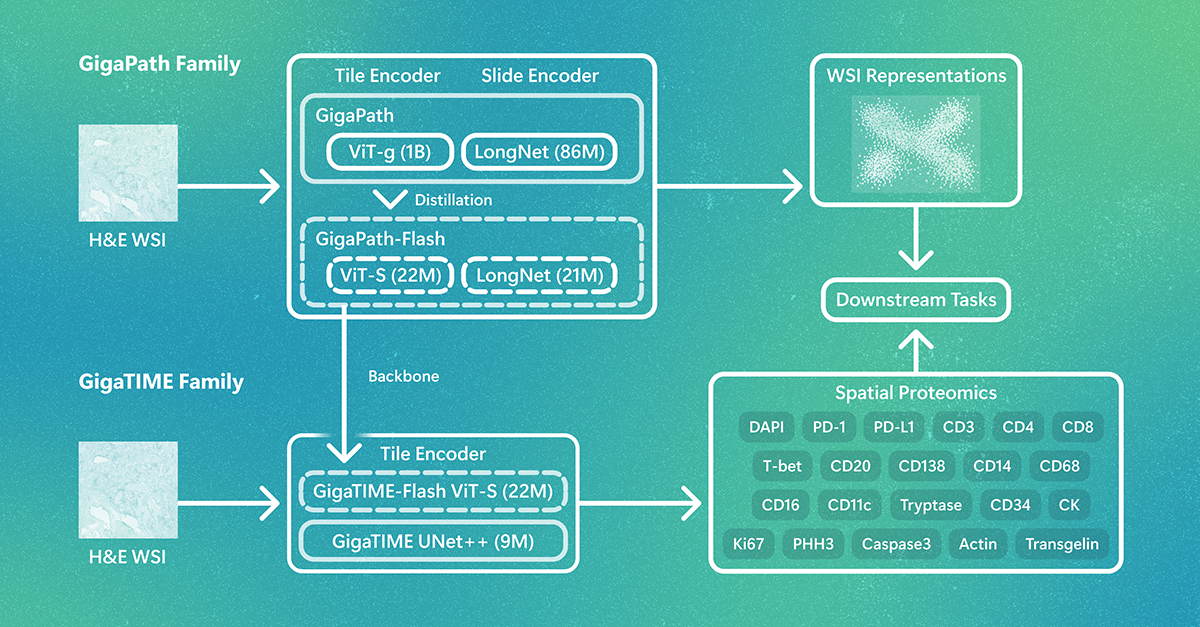
What if pathology foundation models could do more with less? GigaPath-Flash and GigaTIME-Flash cut computational demands while maintaining strong performance, opening the door to larger studies and broader exploration. The post GigaPath-Flash and GigaTIME-Flash: Toward population-scale discovery with efficient pathology foundation models appeared first on Microsoft Research.