Deep coal seams are characterized by geological conditions of high in-situ stress, high reservoir temperature, low permeability, and complex tectonic features, resulting in significant differences in gas occurrence states and migration mechanisms compared with shallow coal seams. Conventional commercial numerical simulators are generally based on simplified dual-porosity models, making it difficult to accurately describe the complex stress sensitivity and multiphase flow dynamics of deep coal seams during production and drainage. This leads to considerable discrepancies between simulation results and actual production data. To address this issue, this study established an efficient numerical simulation method suitable for deep coalbed methane (CBM) characteristics, aiming to accurately characterize single-well gas production, water production, bottom-hole flowing pressure, and produced gas composition. Based on the geological and engineering characteristics of deep coal seams, a fully coupled numerical model was developed considering a quasi-triple-porosity medium (matrix pores, microfractures, and large fractures), competitive adsorption/desorption of multicomponent gases (CH4, CO2, etc.), multiscale diffusion, gas-water two-phase seepage, and coal matrix shrinkage/deformation effects. A typical deep CBM Well JS6-7P01 in the Daning-Jixian block of the Ordos Basin was selected as a case study for history matching and analysis. In terms of computational performance, comparisons under different computational conditions showed that, compared to conventional decoupled or simplified simulation methods, the proposed method increased the computation time by only 0.1-0.2 hours, and the number of Newton iterations and linear iterations by only 10.5% under 4-core and 8-core CPU parallel computing conditions. Regarding matching accuracy and geological understanding, the model performed history matching of gas production, water production, bottom-hole flowing pressure, and produced CO2 molar fraction variations for Well JS6-7P01, achieving a comprehensive history fitting rate of 92%. Based on the numerical simulation results, the contribution proportions of free gas and adsorbed gas during production were further quantitatively calibrated, clarifying the sources of productivity contribution in deep CBM reservoirs. Different stages of fluid flow were finely divided. Finally, the seepage characteristics of deep CBM under multi-field coupling effects were characterized based on the evolution patterns of six fields, including pressure field, saturation field, desorption degree field, permeability field, CO2 adsorption mass density field, and CH4 adsorption mass density field. This method overcomes the limitations of conventional numerical simulation methods and provides a preliminary exploration and an effective tool for the prediction and decision-making of deep CBM development.
Xiongwei Sun, WANG HONGYA, Lai Fengpeng et al.· DOAJ (DOAJ: Directory of Ope...· 0 citations
This paper addresses the numerical solution of nonhomogeneous time-fractional nonlinear parabolic problems defined on unbounded domains, where challenges arise due to temporal nonlocality, nonlinear dynamics, and the infinite spatial extent. To overcome these difficulties, we propose a novel computational framework that transforms the original unbounded domain problem into an equivalent formulation on a bounded domain through the construction of absorbing boundary conditions. Unlike existing approaches that rely on Pad\'e approximations, our method directly utilizes the fundamental properties of fractional derivatives to define these boundaries more accurately. The resulting problem is then discretized using a high-order finite difference scheme, allowing for efficient and precise numerical implementation. Theoretical analysis confirms that the method is stable and ensures controlled computational error. Numerical experiments demonstrate the practical effectiveness of the proposed approach, achieving accurate results with significantly reduced computational cost. This method provides a reliable and efficient tool for modeling diffusion phenomena governed by time-fractional dynamics in unbounded spatial settings.
Seyed Ali Ghanizadeh, Mohammad Hossein Akrami· DOAJ (DOAJ: Directory of Ope...· 0 citations
Intravoxel incoherent motion (IVIM) is a diffusion-weighted magnetic resonance imaging (MRI) method that models slow (D, tissue diffusivity) and fast (D*, microvascular perfusion) signal components (f, signal fraction). This observational study explores the relationship between IVIM metrics and sleep macrostructure and physical activity levels in nineteen healthy elderly individuals (mean age 72.2±5.0). Participants underwent two MRI sessions during wakefulness, four weeks apart, on a GE 3T Premier scanner. IVIM parameters (D, D*, f and their product fD*) were calculated using non-linear least-squares and a deep learning transformer-based estimator and analysed across seven regions of interest. Sleep was recorded at home on 10-14 consecutive nights, following each MRI scan, using a portable electroencephalography (EEG) system. Physical activity was recorded in parallel with actigraphy. Associations were tested using linear mixed effects models, with activity included in sensitivity analyses. Better EEG-derived sleep quality and higher physical activity were predominantly linked to lower estimated values for IVIM fD*. These findings may reflect differences in microvascular perfusion and/or the cerebrospinal fluid compartment associated with sleep and warrant further investigation of the mechanisms linking IVIM metrics to sleep quality. Clinicaltrials.gov: NCT05539378, trial registry name: Exploring the Link Between Sleep and Brain Clearance (BBCDS).
Lena Meinhold, Misha P T Kaandorp, Ziyao Shang et al.· Open Access CRIS of the Univ...· 0 citations
The migration mechanisms of helium (He) in anhydrous and hydrous stishovite under Earth's mantle conditions are studied using density functional theory (DFT) and climbing image nudged elastic band (CI-NEB) transition state calculations. In anhydrous stishovite, He diffusion is constrained to the structurally unobstructed [001] channels, with diffusion activation energies along other directions significantly higher than [001], confirming that He migrates almost exclusively through these anisotropic pathways. Hydrous stishovite, however, hosts "one-dimensional superionic conduits", where the activation energy for He diffusion is less than 50% of that in anhydrous stishovite, leading to markedly enhanced He diffusion rate. Pressure exerts a similar effect on both stishovite types—increasing pressure elevates diffusion energy barriers and reduces He diffusion rates. However, hydrous stishovite exhibits weaker pressure sensitivity: a 50 GPa pressure increase causes a far smaller reduction in He diffusion rates compared to anhydrous stishovite. Temperature-dependent retention analysis further reveals that anhydrous stishovite exhibits delayed thermal responsiveness relative to hydrous stishovite, mirroring the trend observed between quartz and coesite—under equivalent He retention levels, quartz sustains higher temperatures than coesite. These findings underscore the decisive role of crystal structural features, specifically, the [001] channels in anhydrous stishovite and superionic conduits in hydrous stishovite are governing noble gas migration dynamics. By quantifying the modulation of He diffusion by pressure, temperature, and grain size, this work advances mechanistic models for subsurface noble gas cycling and deep Earth degassing processes.
Yu Huang, Hang Ren· DOAJ (DOAJ: Directory of Ope...· 0 citations
To reveal the influence of water content on CO2 injection-enhanced coalbed methane recovery (CO2-ECBM) (CO2 displacement of CH4) in deep coal seams, this study used Fukang deep coal as the research object. Experiments such as 13C nuclear magnetic resonance spectroscopy (13C-NMR) and X-ray photoelectron spectroscopy (XPS) were conducted. A coal matrix model was constructed using molecular simulation software, and the microscopic mechanism of water’s effect on the CO2-ECBM process in deep coal seams was studied using molecular simulation methods. The results showed that after coal matrix adsorbed gas, it underwent significant expansion, and the pore volume significantly decreased. When saturated with adsorbed CH4, the coal matrix porosity decreased by 72.2% compared to the initial value. When the molar ratio of CO2 to CH4 ( xCO2/xCH4 <?fx-imagestate width="10.24466610" height="3.30200005"?> <?fx-imagestate width="10.24466610" height="3.30200005"?> ) was 2, the permeability of coal matrix decreased by 83.8%. Increasing water content significantly inhibited coal reservoir performance. Compared to dry coal, the permeability of the coal matrices with 1%, 3%, and 5% water contents decreased by 50.9%, 94.9%, and 99.6%, respectively, indicating that water strongly hindered gas flow. Competitive adsorption characteristics showed that as xCO2/xCH4 <?fx-imagestate width="10.24466610" height="3.30200005"?> <?fx-imagestate width="10.24466610" height="3.30200005"?> increased, CO2 adsorption amount increased, while CH4 adsorption amount rapidly decreased and was displaced. When xCO2/xCH4 <?fx-imagestate width="10.24466610" height="3.30200005"?> <?fx-imagestate width="10.24466610" height="3.30200005"?> ≥ 1.2, the displacement rate tended to be stable. Increasing water content reduced the absolute adsorption amounts of both CO2 and CH4, as well as the CO2 injection displacement ratio, but had a smaller impact on the relative displacement rate of CH4. The adsorption heat of CO2 was higher than that of CH4, indicating that CO2 had a stronger affinity for coal. Increasing water content enhanced the adsorption heat of both gases, but both values remained below 42 kJ/mol, indicating that the adsorption process was physical adsorption. The interaction energies of coal-CO2, coal-CH4, and CO2-CH4 followed the order of ECoal‒CO2 <?fx-imagestate width="8.97466660" height="3.30200005"?> <?fx-imagestate width="8.97466660" height="3.30200005"?> > ECoal‒CH4 <?fx-imagestate width="9.05933285" height="3.30200005"?> <?fx-imagestate width="9.05933285" height="3.30200005"?> > ECO2‒CH4 <?fx-imagestate width="8.97466660" height="3.30200005"?> <?fx-imagestate width="8.97466660" height="3.30200005"?> , and CO2 maintained an advantage in competitive adsorption. The diffusion coefficients of CO2 and CH4 decreased significantly with increasing water content and xCO2/xCH4 <?fx-imagestate width="10.24466610" height="3.30200005"?> <?fx-imagestate width="10.24466610" height="3.30200005"?> , and the decrease in CH4 was greater than that in CO2, indicating that CH4 diffusion was more sensitive to water. The study reveals the microscopic mechanism of CO2 displacement of CH4 in water-containing coal seams and provides a theoretical basis for the efficient development of CBMe and the engineering practices of CO2 geological storage.
ZHANG PANPAN, HAN MINGCHEN, Mu ZongJie et al.· DOAJ (DOAJ: Directory of Ope...· 0 citations
Stellar orbits in the Galactic disc evolve from their birth to the current shape through both radial migration and dynamical heating. The history of their secular evolution is imprinted in the current kinematics and age-metallicity distribution. We construct a chrono-chemo-dynamical model of the disc, incorporating inside-out growth, metallicity evolution, radial migration, and heating to fit the observed age-metallicity-kinematics distribution of LAMOST subgiant stars in both the low and high- disc. By modelling all distribution parameters with spline fitting, we present the first non-parametric stellar migration and heating history of the Galaxy. We determine the heating-to-migration ratio, the ratio of the root-mean-square changes in radial/vertical and azimuthal actions, to be ≈ 0.075 for radial to azimuthal actions and ≈ 0.015 for vertical to azimuthal actions, implying a highly anisotropic diffusion in the action space. Furthermore, we identify a transition in radial migration efficiency coinciding with the transition moment of the bimodal disc, for which the radial migration was more efficient for the high- disc than for the low- disc. This transition may be attributed to two correlated scenarios: 1) a bar formation epoch accompanied by violent outward migration, and 2) a drop in the gas mass fraction in the disc when the low- disc began to form. These findings offer further constraints on the formation mechanisms of bimodal discs, favouring the downsizing scenario. We also briefly discuss the connection between our results and recent high-redshift observations. In addition to the secular evolution history, our model maps the Milky Way ISM metallicity gradient at different lookback times, which we find has only varied a little (in the range of −0.07 to −0.10 dex/kpc) since disc formation.
Hanyuan Zhang, V. Belokurov, Jason L. Sanders et al.· Edinburgh Research Explorer...· 1 citation
Software engineering theory and practice is still to a large extent based more on faith than on science. Only by contributing to the scientific and empirically grounded body of knowledge within a specific area of application, theory and practice can develop. Experimentation is an important scientific approach to collect empirical data and to test theories as well as to bring light to new phenomena so that theories can be formulated and corrected. This is the background for the emerging field of experimental software engineering. The focus of this minitrack is on experiments and experimental studies performed in academic or industrial settings where the aim is to study the software professionals' work practices related to the development of software. This minitrack is divided in two three-paper sessions. The papers are briefly introduced in the following. The three papers in the first session are experiments performed in an academic setting. Syversen, Anda and Sjoberg report the results from an experiment with 26 subjects where they explore how a use case model can best be applied in an object-oriented development process. Serrano, Calero and Piattini describe how to apply the experimental method in metrics definition for multidimensional data models. Their paper gives an overview of the method including a description of how it was applied. The first session is concluded with a paper authored by Liu and Grandon where they empirically explore with 79 subjects how task performance and domain-specific self-efficacy influence the perceived ease of use of object-oriented analysis techniques. The first two papers in the second session include a set of experiments and an empirical study performed in an industrial setting. Jokela describes five different experiments where the attempt is to assess the quality of the usability engineering processes of four different companies. Jokela explains how the assessment process is iteratively changed and improved based on the results of the earlier experiments. Borjesson and Mathiassen compare two software process improvement initiatives carried out in industry. They focus on factors affecting the implementation success. Dugan, Glinert and Rogers conclude the minitrack by introducing a technology-focused methodology called CAMELOT, which is intended for testing computer supported co-operative work software. They report results from an experiment where the proposed methodology was tried out.
K. Kautz, P. Abrahamsson· 36th Annual Hawaii Internati...· 1 citation
This paper suggests that by operationalizing the concept of commitment in the shape of a model, a new insight is provided in improving software processes—a more human centered approach as opposed to various technical approaches available. In doing so the SPI managers/change agents are able to plan better the software process improvement initiative and benchmark successful projects (as well as failed ones). Results from five interviews with SPI professionals on the proposed Behavior-based Commitment Model are reported, together with early results from the empirical test in 14 software process improvement projects. Early results suggest that the behaviors introduced in the model are relevant in SPI initiatives, the use of model raises the awareness about the people issues in improving processes, and the model could be used aside with CMM, SPICE or other process improvement models.
P. Abrahamsson· Software quality journal· 10 citations
Usability capability is a characteristic of a development organization that predicts the level of usability the development projects are capable of achieving. Our experiments with the existing usability capability models indicate that current process assessment methods do not discover all relevant problems that might impede effective user-centered design (UCD) in development organizations. We propose an enhanced model where the usability capability is analyzed from three dimensions: user-centered infrastructure, implementation of user-centered practices in development projects, and business management commitment to usability as a competitive asset.
Timo Jokela, P. Abrahamsson· International Conference on...· 14 citations
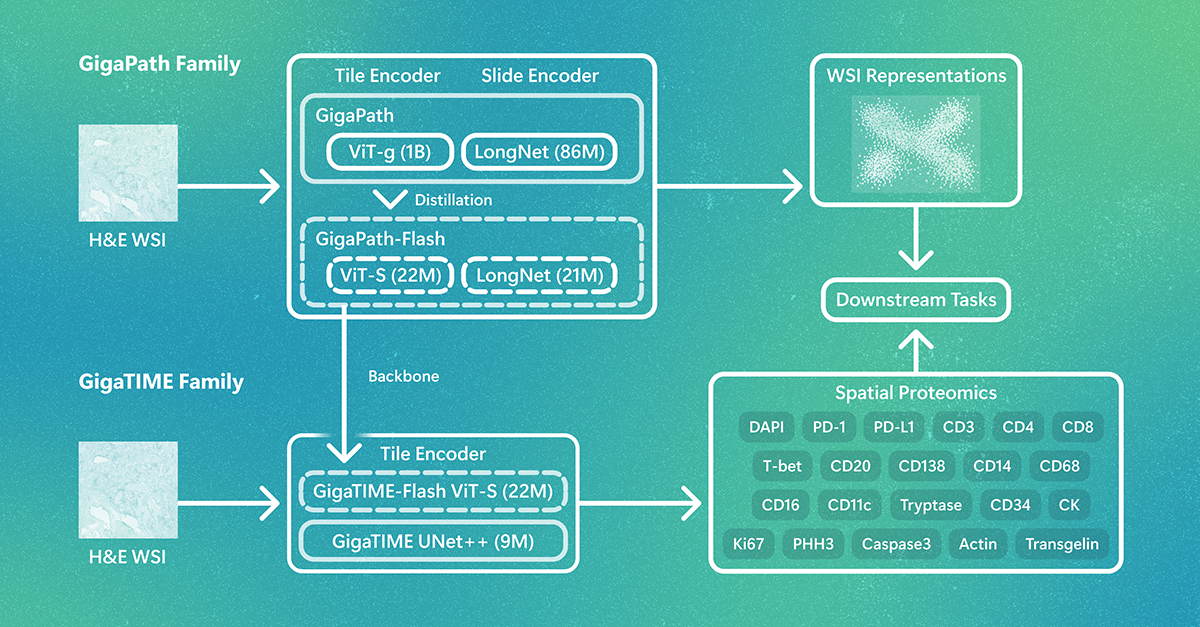
What if pathology foundation models could do more with less? GigaPath-Flash and GigaTIME-Flash cut computational demands while maintaining strong performance, opening the door to larger studies and broader exploration. The post GigaPath-Flash and GigaTIME-Flash: Toward population-scale discovery with efficient pathology foundation models appeared first on Microsoft Research.