Diffusion models have shown marked advancements in 2-D generation and have also become focal points in 3-D generation via consistent multiview image generation. However, the computation and memory demands hinder their real-time deployment on mobile and edge devices. Moreover, the reduction of diffusion timesteps leads to a decrease in interstep similarity, thereby making previous methods ineffective in optimizing computation. The varied layer quantization sensitivity and optimal format in diffusion models also present challenges for traditional quantization methods to achieve efficient memory compression. To address these issues, we first introduce <inline-formula> <tex-math notation="LaTeX">${M}^{3}$ </tex-math></inline-formula> quantization, a mixed-precision, mixed-format, and mixed-granularity quantization framework that allocates optimal precision and format to different data with a unified FP8 computation flow for efficient implementation. Building upon <inline-formula> <tex-math notation="LaTeX">${M}^{3}$ </tex-math></inline-formula> quantization, we present TriM-D, a hardware accelerator designed to optimize computation. It features sparsity-aware dual-branched FP8-MAC units that introduce a dual-branch path and an efficient approximate adder to fully utilize bit-level sparsity of <inline-formula> <tex-math notation="LaTeX">${M}^{3}$ </tex-math></inline-formula>-quantized data. Such an FP8-MAC scheme preserves both efficiency and numerical accuracy. Our experiments demonstrate that TriM-D significantly outperforms the state-of-the-art (SOTA) diffusion accelerator Cambricon-D (Camb-D), achieving an average reduction of 56.5% in memory access and 80.6% in computation cost. In addition, TriM-D provides a <inline-formula> <tex-math notation="LaTeX">$55\times $ </tex-math></inline-formula>, <inline-formula> <tex-math notation="LaTeX">$6.72\times $ </tex-math></inline-formula> improvement in energy efficiency and <inline-formula> <tex-math notation="LaTeX">$3.69\times $ </tex-math></inline-formula>, <inline-formula> <tex-math notation="LaTeX">$2.67\times $ </tex-math></inline-formula> speedups over NVIDIA A100 and Camb-D.
Wenxun Wang, Li-Kai Ma, Chen Tang et al.· IEEE Transactions on Compute...· 0 citations
The discharge of ciprofloxacin (CFX) into aquatic environments poses a threat to ecosystem health. In this study, biochar derived from lotus stem (Nelumbo nucifera) was evaluated as a low-cost adsorbent for CFX removal from aqueous solution. The biochar was characterized by SEM/EDX, BET surface area, FTIR, and point of zero charge (pHpzc). Batch sorption experiments were conducted to examine the effects of solution pH (3, 7, and 10), temperature (20, 26, and 32 °C), and coexisting cations. The kinetics of sorption could be explained using a two-stage intraparticle diffusion model, and the equilibrium isotherms were fitted to the Langmuir model. The maximum adsorption capacity (Qmax) was 22.96 mmol kg⁻¹ at pH 7 and 26 °C. Solution pH influenced the sorption capacity, yet substantial sorption was maintained across the entire pH range studied. Thermodynamic analysis revealed an endothermic, entropy-driven and spontaneous process at all temperatures. Divalent Ca²⁺ suppressed Qmax by 49.0% through competition with CFX for adsorption sites. The sorption process under pH 7 was facilitated by electrostatic attraction, hydrogen bonding, and π–π stacking interactions. Overall, unmodified lotus stem biochar proved to be a promising and cost-effective adsorbent for CFX removal from water.
Vo Lam Uyen Nguyen, Duc Hieu Vo, Thanh Minh Dang et al.· Sustainable Processes Connec...· 0 citations
An Evaluation Agent, middleware that combines Natural Language Inference factual verification, a five-signal poison detector with relevance-weighted aggregation, and a Trust Index is proposed, which reliably blocks instruction injection of unsafe advice while contradiction and subtle semantic weakening remain hard.
Balkrishna Giri, M. Hasan, Jussi Rasku et al.· 0 citations
Reach audiences
Advertise in front of researchers, engineers, and readers.
This paper develops the economics of artificial intelligence as a single connected structure, from the physics of the production function to the aggregate growth constraint and the valuation of the firms building and adopting it. Part I derives the cost of capability from scaling laws, shows why deployed models are systematically overtrained, and estimates the task-success slope directly from 23,235 public evaluation runs: $\hat\beta=0.83$ with no detectable release-date trend. Part II treats market structure: minimum efficient scale, the two-tier equilibrium in which open weights contest the trailing edge but never the frontier, and inference as a capacity-constrained short-run market that rations rather than prices. Part III is the core. We replace the standard automation assignment rule with one that prices reliability, obtaining an automation calendar $t_{\mathrm{aut}}=t_{1/2}+(\tau/\beta)\log_2\gamma$ in which verification cost, not task difficulty, sets the date; derive optimal checkpoint spacing $k^\star\approx\sqrt{v_{\mathrm{ver}}/\lambda}$; and prove the exact best-of-$k$ result. Against a sound verifier, sampling divides the reliability lag by $k$ in the small-$k$ regime and does better outside it; against an unsound verifier, it leaves an error floor that no amount of sampling removes. Part IV aggregates: diffusion inherits its time dispersion from verification costs, and revenue growth is governed by the density of tasks at the current threshold. Part V proves a Baumol bound --- with elasticity of substitution below one, aggregate growth converges to that of the least automatable essential input --- and states three jointly necessary conditions for explosive growth. Part VI treats measurement, policy, and financial markets. Part VII states the investment bridge: technological importance, industry profit, and security return are distinct objects, and a coherent valuation must respect the automation calendar, rent migration, capital consumption, and expectations already in price. The full valuation architecture is reserved for a separate companion paper. Part VIII states eighteen open problems.
Miquel Noguer Alonso· Zenodo (CERN European Organi...· 0 citations
Abstract The injection of CO 2 into geological reservoirs can acidify the reservoir environment, leading to the dissolution of mineral grains and increasing the risk of CO 2 leakage. A deeper understanding of these micro‐scale dissolution mechanisms is therefore essential for the safety of geological CO 2 sequestration. To address this challenge, we develop a multi‐field coupled simulation framework that integrates the Lattice Boltzmann Method (LBM) with the Finite‐Discrete Element Method (FDEM) to model solute transport and mineral micro‐structure dissolution. The framework incorporates a geometric mapping detection scheme and an improved momentum exchange algorithm to capture fluid‐solid interactions. Furthermore, a novel updating scheme for dissolution rates and solute concentrations is proposed, explicitly accounting for mass conservation and complex mineral morphology. A dynamic geometric topology updating algorithm is also proposed to track the morphological evolution of mineral grains. The accuracy and capability of the LBM‐FDEM framework are validated through several numerical benchmarks, including particle settling, solute release from a moving particle, dissolution of polymorphic particles, and reactive transport within a non‐uniform channel, yielding excellent agreement with existing solutions. Finally, this proposed method is applied to investigate the spatiotemporal evolution of fracture dissolution under varying Péclet numbers. The numerical results reveal that under diffusion‐dominated low Péclet regimes, product accumulation restricts dissolution to the upstream inlet, yielding a typical face dissolution pattern. Conversely, strong advection under high Péclet conditions drives rapid reactant penetration, triggering a uniform channelized widening along the entire fracture. Ultimately, this framework demonstrates significant potential for investigating complex hydro‐mechanical‐chemical couplings in subsurface engineering.
Zhijun Wu, Erkang Zhou, Xiang‐Yu Xu et al.· Water Resources Research· 0 citations
Global reliance on coal for energy generation and chemical production necessitates physics-based frameworks that move beyond empirical bulk characterization toward predictive and sustainable utilization strategies. Coal is a heterogeneous, reactive porous medium whose structure, physicochemical properties, and reactivity evolve continuously during thermochemical conversion. Coal mining conditions and associated geological and mechanical disturbances may influence pore–fracture architecture, mineral exposure, and transport accessibility, thereby affecting subsequent conversion behavior. This review develops a unified structure–transport–reaction framework that links coal’s multiscale architecture to transport behavior, reaction regimes, and process-scale performance. Particular emphasis is placed on how thermochemical loading governs pore–fracture evolution, mineral redistribution, and interfacial functionality, thereby controlling heat and mass transfer, adsorption–desorption behavior, and heterogeneous reaction kinetics. Unlike conventional constant-property approaches, the framework highlights conversion-dependent transport properties, spatially heterogeneous reactivity, and dynamic transitions between kinetic- and diffusion-controlled regimes. Coal exhibits a hierarchical pore–fracture system spanning micropores (< 2 nm), mesopores (2–50 nm), macropores, and cleat–fracture networks, with permeability typically ranging from 10⁻²¹ to 10⁻¹⁵ m² and thermal conductivity varying between 0.15 and 0.60 W m⁻¹ K⁻¹ depending on coal rank and conversion state. Under thermochemical conditions of 800–1800 °C, continuous structural evolution modifies pore connectivity, mineral distribution, and surface chemistry, leading to significant changes in transport pathways and reaction accessibility. Major conversion routes, including combustion, gasification, liquefaction, and coal-derived carbon-material production, are critically evaluated in terms of transport limitations, reactivity evolution, ash behavior, and mechanical stability. Advances in operando characterization, image-informed pore-scale simulations, multiscale multiphysics modeling, and physics-informed data-driven approaches are assessed for their ability to bridge scales and improve predictive capability. Overall, this review establishes a mechanistic foundation for understanding mined coal as an evolving porous medium and provides a roadmap for integrating multiscale characterization, transport physics, and reactor-scale modeling to advance next-generation coal conversion technologies.
When four pi turns up in a biological setting, is it a coincidence of numbers or the same root? This paper treats exactly one case: the four pi in the rate at which a cell captures molecules is the same solid angle as in Gauss's law. Not by analogy, but because it is the same equation. No new mathematical theorem and no new law is claimed. Scope of this paper (scope note): no new mathematical theorem and no new law is claimed. The Smoluchowski capture rate, the receptor count of Berg and Purcell, and the reduction of steady diffusion to Laplace's equation are all standard. No measured value is cited; every number is computed from a definition, and no measurement on a real cell is used. No physiology is discussed; nothing is claimed about the actual size, number or arrangement of receptors. The ratio of one to a thousand in Section 7 is a value put there for the sake of the calculation and belongs to no particular cell. No biological conclusion is drawn; nothing is said about why cells are the size they are or about how evolution acted. The reaction-limited case is not treated; only the diffusion-limited steady state appears, with no binding or unbinding rates. No general account of four pi in biology is attempted; one case is treated. Joining things because their numbers agree is what this paper most wants to avoid: the claim of a shared root rests on the equation being the same, not on the value being the same. The relation to earlier papers. Paper 2 treated the pure solid angle appearing in an inverse-square field; this paper shows the same solid angle in diffusion, from the identity of the equations. Paper 1 established that the exponent is the dimension minus one; the failure in two dimensions in Section 6 is where that exponent becomes zero. Paper 156 traced the flatness inside a spherical shell to harmonicity; this paper uses the same harmonicity. Papers 36 and 37 dissected the six pi of Stokes drag; Section 8 places that six pi beside this four pi as a different root. Paper 44 showed that the power of four pi is a mass dimension and that fixing it is a convention of electromagnetic units; Section 8 puts that conventional four pi third. The setting. Let a sphere of radius a absorb on contact the molecules drifting around it. With a distant concentration and a diffusion coefficient, the amount captured per unit time in the steady state is four pi times the diffusion coefficient times the radius times the concentration (Smoluchowski, 1917). The question is what that four pi is. First, steady diffusion is Laplace's equation. The diffusion equation relates the change of concentration in time to the Laplacian, and in the steady state the time derivative vanishes, leaving only the vanishing of the Laplacian. That is the same equation as electrostatics, so the solutions take the same form and one over r appears in spherical symmetry. The four pi enters when the flux through a sphere is counted, for exactly the reason it appears in Gauss's law: the full solid angle of a sphere is four pi. The harmonicity to which Paper 156 traced the flatness inside a shell is the same harmonicity used here. Second, the flux is the same through every enclosing sphere. Setting the diffusion coefficient, the concentration and the radius to one and measuring the flux from the steady solution, moving the radius from one and a half times to a thousand times gives 12.566370614359172 throughout, the six values spreading by 3.55 times ten to the minus fifteenth. And four pi is 12.566370614359172. That the flux does not depend on the radius is Gauss's law itself; this is not a resemblance but the same consequence of the same equation. Third, solving numerically without using the form of the solution gives the same value. Integrating the radial equation over two million points with the outer boundary at four hundred times the radius gives 12.597865194, which differs from the infinite formula 12.566370614 by 3.1 times ten to the minus second. That is not an error: the ratio is 1.002506259, agreeing with R over R minus a, namely 1.002506266, to 6.7 times ten to the minus ninth. What differs is not the method but the outer boundary being finite, and stretching the boundary tenfold shrinks the gap to exactly a tenth. When a number and a formula disagree, first ask what each of them assumed. Fourth, this is the core of the paper. Capture is proportional to the radius and not to the area. Moving the radius from a tenth to ten, the capture rate grows a hundredfold from 1.256637061 to 125.663706144 while the surface grows ten thousandfold from 0.125663706 to 1256.637061436. Capture per unit area falls from 10.000000000 to 0.100000000, by a factor of a hundred. One naturally expects a wider absorbing surface to catch more, but that is surface-limited thinking. In the diffusion-limited case what decides is not the surface but the rate at which molecules arrive from far away, which is proportional to the radius, since a gradient of one over r multiplied by an area of r squared leaves one power of r. That multiplication is exactly the exponent of Paper 1. Fifth, in two dimensions no steady absorber exists. The same calculation in d dimensions gives a solution containing r to the power two minus d, and at d equal to two that power is zero, the power-law solution disappears and a logarithm takes its place. With the outer boundary at ten times the radius the flux is 0.434294482, at a thousand times 0.144764827, at a million times 0.072382414, at ten to the twelfth 0.036191207, and even at ten to the hundredth 0.004342945 remains. It falls as one over the logarithm and reaches zero only in the limit, yet in that limit the steady solution itself does not exist. A creature in a flat world cannot gather food by diffusion alone; more precisely, it needs a wall at a finite distance. This is where the exponent of Paper 1 becomes one at two dimensions and a logarithm replaces one over r. Sixth, the surface may be left almost bare. The whole surface need not absorb: with small receptors scattered over the sphere, the capture rate is a fraction of that of a perfect absorber (Berg and Purcell, 1977). Putting the relative radius of a receptor at one thousandth, 3142 receptors reach half the rate of a perfect absorber while covering 0.078540 percent of the surface. Ninety percent needs 28275 receptors covering 0.706858 percent, and ninety-nine percent needs 311018 covering 7.775442 percent. Zero point zero eight percent of the surface gives half the rate, and more than ninety-nine percent may be left bare, because a molecule strikes the surface many times by diffusion: missing once, it wanders off and comes back. The ratio of one thousandth is a value put there for the calculation and is not a measurement on any cell. Seventh, three kinds of pi appear in this neighbourhood. The four pi of diffusion capture, of the volume of a sphere and of Gauss's law are all solid angles. In the six pi of Stokes drag the pi is a solid angle but the six has another source (Papers 36 and 37), and the six pi in the Einstein relation is inherited from it. The four pi in Poisson's equation in Gaussian units is a convention of units (Paper 44). The same characters sometimes mean a solid angle and sometimes a convention, and six pi is not one and a half times four pi. The only case in which a shared root is claimed here is diffusion capture, and the claim rests on the same Laplace equation, not on the values agreeing. Closing. The four pi in the rate at which a cell captures molecules is the same solid angle as in Gauss's law. Not because the values agree, but because steady diffusion is Laplace's equation. The same equation gives the same one over r, multiplied by the same spherical area, leaving the same four pi, and the check is that the flux does not depend on the radius. Two things followed: capture scales with the radius and not the area, and no steady absorber exists in two dimensions. Last, the surface may be left almost bare, zero point zero eight percent giving half the rate, because a molecule, by diffusion, comes back again and again. The separator is whether it comes from the same equation; that two values agree shows nothing about a shared root. On the making of this work: The ideas and content of this work stem from the author's own considerations. Assistance from an AI (a large language model) was used for structuring, English translation, and checking the algebra. Any remaining errors or misinterpretations are solely the author's. Feedback and corrections are sincerely appreciated. ----- 生物の話に 4π が出てきたとき、それは数字の一致なのか、同じ根なのか。本稿が扱うのは一つだけである——細胞が分子を捕らえる速さに現れる 4π は、ガウスの法則の 4π と同じ立体角である。類推ではなく、同じ方程式だからである。新しい数学定理も新しい法則も主張しない。 本稿の射程(射程注記):新しい数学定理も新しい法則も主張しない。スモルコフスキーの拡散捕捉率、ベルクとパーセルによる受容体の勘定、定常拡散がラプラス方程式に帰着することは、いずれも標準的である。測定値を引かない——本稿の数はすべて定義から計算したものであり、実在の細胞の測定値は一つも使っていない。生理学を論じない——受容体の実際の大きさ・数・分布については何も主張しない。第7節の 1000 分の 1 という比は仮に置いた値であって、特定の細胞のものではない。生物学的な結論を引き出さない——細胞がなぜその大きさなのか、進化がどう働いたかについては何も述べない。反応律速の場合を扱わない——本稿が扱うのは拡散律速の定常状態だけであり、結合速度や解離は入っていない。生物に現れる 4π を一般に論じない——扱うのは拡散捕捉の一件だけである。数字が一致していることを根拠に何かを結ぶことは、本稿がもっとも避けたいことである——本稿が同根だと言えるのは、同じ方程式から出ているからであって、値が同じだからではない。 既刊との関係。論文2 は逆二乗場に純粋な立体角が現れることを扱った——本稿は同じ立体角が拡散にも現れることを、方程式の同一性から示す。論文1 は n = d−1 を示した——第6節の二次元の破れはその指数がゼロになる場所である。論文156 は球殻の内部が平らな理由を調和性に帰した——本稿が使うのは同じ調和性である。論文36・37 はストークス抵抗の 6π を解剖した——第8節はその 6π と本稿の 4π が別根であることを並べる。論文44 は 4π の冪が質量次元であり、a = 4π を固定するのが電磁単位の規約だと示した——第8節はその規約としての 4π を三つ目に置く。 設定。半径 a の球が、周囲にただよう分子を触れた瞬間に吸収するとする。遠方の濃度をC0、拡散係数を D とし、定常状態で単位時間に捕らえる量を求めると、答は 4πDaC0 である(スモルコフスキー 1917)。問いは、この 4π が何かである。 第一に、定常拡散はラプラス方程式である。拡散方程式は濃度の時間変化を D 掛ける濃度のラプラシアンと結ぶが、定常状態では時間変化が消えるので、残るのはラプラシアンがゼロという式だけである。これは静電場の方程式と同じ式であり、したがって解も同じ形になり、球対称なら 1 / r が出る。4π が現れるのは球面を通る流束を数えるときで、ガウスの法則で4π が出るのとまったく同じ理由——球の全立体角が 4π だからである。論文156 が球殻の内部の平らさを帰した調和性は、ここで使っている調和性と同じものである。 第二に、どの半径で測っても流束は変わらない。D も C0 も a も 1 と置き、定常解 C(r) = C0(1 − a/r) から半径 r の球面を通る流束を測ると、r を a の 1.5 倍から 1000 倍まで動かして 12.56637061435917
Yuuki Yamagishi· Zenodo (CERN European Organi...· 0 citations
This paper explores the application of geometric analysis to the study of non-linear diffusion processes. Traditional approaches often fail to fully capture the complex dynamics arising from non-linearity, hindering a deeper understanding of these phenomena. We introduce a novel technique that leverages curvature, symmetry, and geometric transformations to model and analyze diffusion, offering a robust framework for investigating the underlying mechanisms and potentially unlocking new insights into their behavior. The core focus is on establishing a mathematical foundation for analyzing these processes using geometric tools, providing a means to quantitatively assess the rate of change and identify key parameters. The paper details the methodology, presents preliminary results demonstrating the effectiveness of the technique, and concludes with a discussion of future research directions.
Jincheng Zhang· Zenodo (CERN European Organi...· 0 citations
The study aimed to develop and optimize chitosan-based mucoadhesive nanomicelles for intranasal delivery of lamotrigine (LTG), to enhance epilepsy treatment, bypass the blood-brain barrier, and potentially improve brain targeting. LTG-loaded nanomicelles were prepared using thin-film hydration and optimized using a central composite design, response surface methodology, and artificial neural networks. The formulation included D-ɑ-tocopheryl polyethylene glycol succinate, Poloxamer 407, chitosan, and glycerol. Critical quality attributes assessed were micelle size (MS), polydispersity index (PDI), Zeta potential (ZP), pH, LTG content, transmittance, in vitro mucoadhesion, LTG release, and 28-day stability. The MS, PDI, ZP, pH, and LTG content of the optimized mucoadhesive nanomicelles was 31.28 ± 0.34 nm, 0.487 ± 0.00, +31.37 ± 1.97 mV, 4.61 ± 0.01, and 2.89 ± 0.01 mg/mL, respectively. The transmittance was 98.50 ± 0.10%, and significant in vitro mucoadhesion, with reduced migration, was observed for mucin-containing gels. LTG release (96.94% at 6 hours) followed the Higuchi diffusion model, with sufficient LTG released at 40 minutes to potentially reach the minimum effective concentration, based on in vitro release data alone. The formulation remained stable for 28 days at 4 °C and 25 °C. Chitosan-based mucoadhesive nanomicelles are a promising intranasal delivery system for LTG, with the potential for brain targeting, controlled LTG release, and improved epilepsy management.
Siyabonga Melamane, Omobolanle A. Omoteso, Sandile M. Khamanga et al.· Figshare· 0 citations
ABSTRACT We present a physics‐guided neural framework that combines Monte Carlo simulations with experimental measurements to characterize optical properties and predict spectral responses at unseen conditions. The hybrid model jointly learns from simulations with complete optical characterization and experimental data where properties must be inferred through photon diffusion constrained embeddings, enabling knowledge transfer from synthetic to real materials. Applied to transparent wood composites, the framework characterizes wavelength‐dependent effective attenuation from only two experimental samples and accurately predicts optical responses at a third unseen thickness across all measured spectral quantities. Controlled validation on Monte Carlo simulations demonstrates that physics‐guided training reduces prediction errors by at unseen sample thicknesses compared to data‐driven approaches, preventing systematic spectral biases without compromising training performance. This framework enables accurate and non‐destructive material characterization from minimal experimental measurements, reducing the cost and time required for optical property determination across diverse sample configurations.
Fahime Seyedheydari, Kevin Conley, Hui Chen et al.· Advanced Theory and Simulati...· 0 citations
A self-contained 1-D drift-diffusion solver for ETL/perovskite/HTL solar cells, written in pure NumPy/SciPy. It couples Poisson's equation with the electron, hole and mobile-ion continuity equations and supports photoinduced halide-segregation (band-gap-coupled) modelling, steady-state J-V curves, scan-rate hysteresis and small-signal impedance spectroscopy.
Eka Nurfani· Zenodo (CERN European Organi...· 0 citations
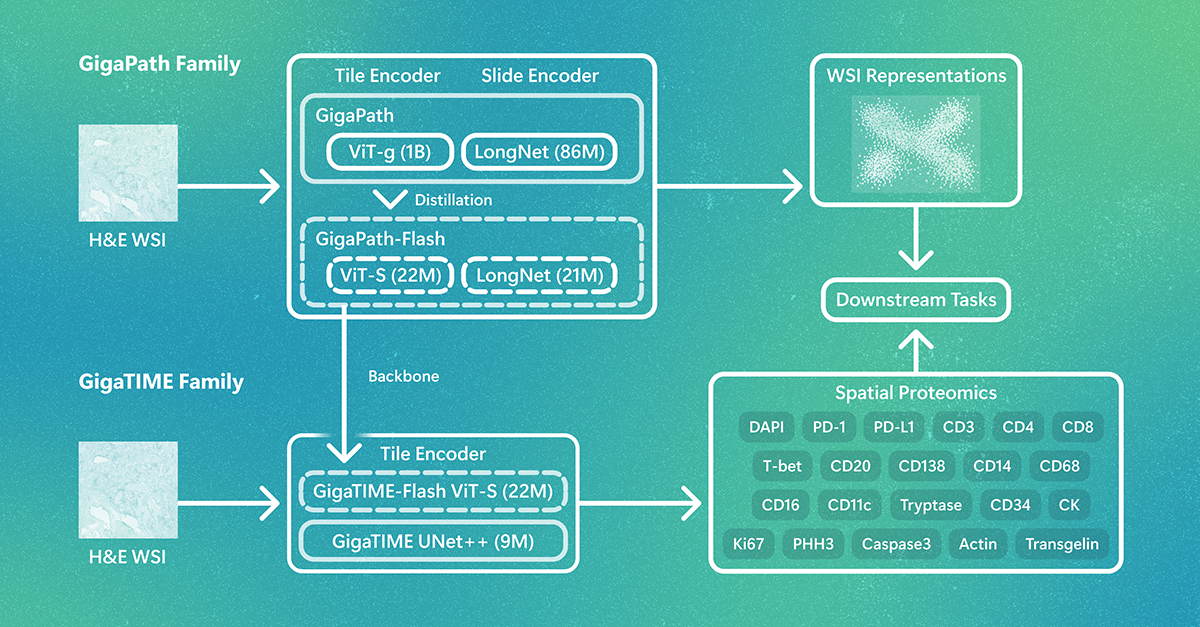
What if pathology foundation models could do more with less? GigaPath-Flash and GigaTIME-Flash cut computational demands while maintaining strong performance, opening the door to larger studies and broader exploration. The post GigaPath-Flash and GigaTIME-Flash: Toward population-scale discovery with efficient pathology foundation models appeared first on Microsoft Research.
We use cookies to run the site and, with your consent, for analytics and to show ads.
See our Cookie Policy.