ABSTRACT Objective Large Language Models (LLMs) are rapidly transforming artificial intelligence applications, but their unprecedented computational, memory, communication, and data‐management demands pose significant challenges to existing computing infrastructures. Traditional cloud and distributed systems were not d...
Minxian Xu, Jingfeng Wu, Shengye Song et al.· Software Practice and Experi...· 0 citations
Abstract Deploying machine learning models on hardware platforms requires careful handling of numerical precision, limited resources, and predictable execution. In practice, mismatches between floating-point software models and their register-transfer level (RTL) implementations can lead to inconsistent inference resul...
M. Madhushankara, H Muralikrishna, Ananthakrishna Thalengala· Discover Applied Sciences· 0 citations
Abstract—The continuous scaling of conventional Deep Neural Networks (DNNs) on classical Von Neumann architectures has reached severe physical boundaries governed by the 'memory wall' and unsustainable thermal dissipation. Battery-constrained edge computing environments—including autonomous micro-robotics, bio-implanta...
Priyanshu Dahiya, Tanish Mudgal, Vishal Shrivastava et al.· Zenodo (CERN European Organi...· 0 citations
Reach audiences
Advertise in front of researchers, engineers, and readers.
This chapter reviews recent advances in biosensor technologies for quality, safety, authenticity, and traceability assessment across the grape-derived product value chain, with emphasis on systems incorporating a biological recognition element in accordance with the IUPAC definition of a biosensor. The reviewed approac...
Hot-rolled strip steel surface defect detection is a vital industrial task that demands both high precision and real-time inference. Nevertheless, existing deep-learning-based detectors struggle to balance accuracy and speed, limiting their practical deployment on resource-constrained edge devices within harsh manufact...
Zhi-Jun Rong, Ao-Han Deng, Yi-Heng Wang et al.· Italian National Conference...· 0 citations
The paper compares several approaches to trajectory tracking control for an industrial robot manipulator. The robot is described by a rigid-link dynamic model that includes inertia, Coriolis and centrifugal terms, gravity, friction and external disturbances. Within one tracking-error formulation we examine classical PI...
Dildora Sevinova, Rayhon Babakhanova, Mahmudjan Abdullayev et al.· Zenodo (CERN European Organi...· 0 citations
ABSTRACT Recent advances in bio‐integrated healthcare technologies have enabled continuous, high‐resolution monitoring and active therapeutic intervention through wearable, implantable, and ingestible platforms. In parallel, edge computing has emerged as a critical framework for processing biomedical data locally, enab...
Gyuwon Kim, Seungwon Yoo, Tae Woog Kang et al.· Advanced Materials· 0 citations
The artificial intelligence field is booming in unexpected ways and has entered into diverse research areas, unlike conventional machine learning methods, which often require substantial computational power, high-performance servers, or network nodes. Tiny machine learning (TinyML) techniques execute efficiently on sma...
Sandhya Avasthi, Suman Lata Tripathi, Khushboo Jain et al.· 0 citations
For thousands of years, crime, violence, interpersonal conflict, mental crisis, anti‑social behaviour and class divides have persisted across human societies. Traditional governance models including legal punishment, moral education and psychological intervention can only deliver post‑hoc remediation rather than root‑c...
XiangKun Wang· Zenodo (CERN European Organi...· 0 citations
العنوان المموه (Camouflaged Technical Title) منظومة هندسية لتكامل وحدات المعالجة الذاتية متعددة العوامل مع شبكات التشغيل الميكانيكي الدقيق والاتصالات الموجهة في البيئات الديناميكية المفتوحة (Integrated Engineering Framework for Self-Adaptive Multi-Agent Processing Units with Micro-Mechanical Operational Networks and Di...
Abuelgasim abayzeed elsmaney ahmed Ahmed· Zenodo (CERN European Organi...· 0 citations
Predictive maintenance (PdM) is a result of the amalgamation of advanced versions of some of the most popular branches of technology, viz. Internet of Things (IoT) and machine learning (ML) have revolutionized equipment maintenance strategies across industries, thereby saving time, effort, and money by anticipating pro...
For decades, a fundamental question about the difficulty of computing in high-dimensional spaces has resisted proof. New research resolves this question, removing a major theoretical obstacle to understanding the efficiency of randomized algorithms used across science and computing. The Kannan–Lovász–Simonovits (KLS) conjecture was proposed in 1995. It asks whether, for a broad class of high-dimensional […] The post Solving a 31-year-old grand challenge in mathematics – the KLS conjecture appear…
MIT News · Artificial Intelligence· news.mit.eduOct 15, 2026
A new computational approach reveals how cells communicate to assemble into tissues. This could accelerate stem cell engineering, improve disease models, and inform therapies.
Microsoft Research Blog· microsoft.comOct 15, 2026
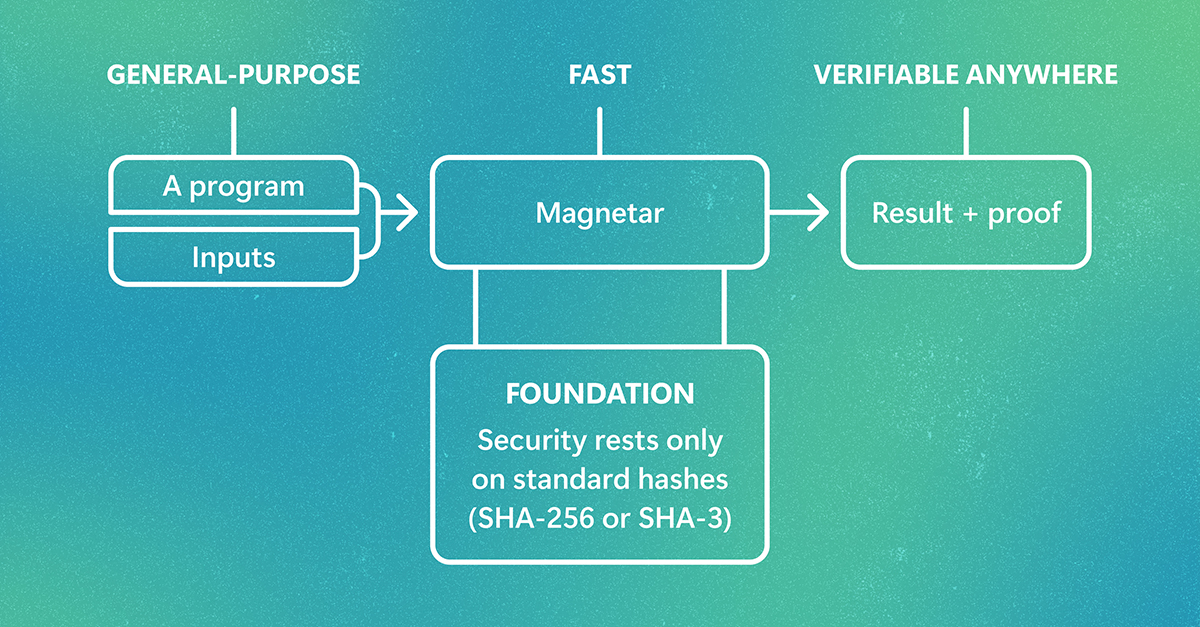
Zero-knowledge proofs can verify computing results without rerunning workloads or exposing sensitive data. Magnetar helps bring them into the mainstream with support for standard programming languages, major speed gains, and quantum-resistant security. The post Proof-based general-purpose computing with Magnetar appeared first on Microsoft Research.
MIT News · Artificial Intelligence· news.mit.eduOct 8, 2026