Driven by the ongoing advancement of intelligent transportation systems (ITSs), conventional vehicular networks have rapidly evolved into a data-intensive vehicular Internet of Things (IoT) ecosystem. However, relying on traditional bit-level offloading in unmanned aerial vehicle (UAV)-assisted IoT networks creates sev...
Xiao-Teng Yang, Jie Feng, Li-Chuan Ma et al.· IEEE Internet of Things Jour...· 0 citations
This paper innovatively proposes a scheduling framework called SPARCD that integrates lightweight position prediction mechanisms, action masking mechanisms, and state filling techniques to construct a multi-objective scheduling model that jointly optimizes task latency, energy consumption, and reliability.
Low-altitude aerial wireless networks (LAWNs) enabled by uncrewed aerial vehicles (UAVs) can provide proximity access and edge computing for delay-sensitive Internet of Things (IoT) services, but they face fast channel variation, mobility-induced service degradation, and limited terrestrial support. This article studie...
Yi Jing, Chun-Xiao Jiang, Jia-Wei Wang et al.· IEEE Internet of Things Jour...· 0 citations
Reach audiences
Advertise in front of researchers, engineers, and readers.
Abstract Multi-stage cyber attacks spanning extended periods pose significant challenges for security investigation, as analysts must reconstruct the complete attack sequence from voluminous system audit logs. Existing provenance graph-based investigation methods either rely on predefined attack knowledge to map activi...
The rapid growth of Internet of Things (IoT) devices and the demands of ultrareliable low-latency communications (URLLCs) necessitate the deployment of mobile edge computing (MEC). Although MEC can reduce transmission delays and network congestion, its decentralization and processing load create challenges for energy e...
Amir Mahdi Rasouli, Moein Esnaashari, Abbas Shabrang Maryan et al.· IEEE Internet of Things Jour...· 1 citation
Remote sensing is a key enabling technology for intelligent vehicle and transportation systems, as it acquires environmental and traffic data beyond the vehicle’s visual range. However, in practical scenarios, the lack of flexible collaboration between sensing nodes and computing facilities leads to low efficiency in t...
Yang Yu, Wen-Hao Fan, Chenhui Bao et al.· IEEE Transactions on Mobile...· 0 citations
Introduction Tomato leaf diseases substantially reduce crop yield and fruit quality, creating a need for accurate, computationally efficient, and potentially deployable image-based disease-screening systems for precision agriculture. This study presents an Attention-Enhanced YOLOv8n-CLS framework for tomato leaf diseas...
Umesh Kumar Lilhore, J. Rexy, Kayal Padmanandam et al.· Frontiers in Plant Science· 0 citations
Driven by their outstanding capabilities in enhancing energy and spectral efficiencies, ambient backscatter communication (ABC) and rate-splitting multiple access (RSMA) have emerged as pivotal technologies for future wireless networks. This paper develops a novel hybrid RSMA-TDMA framework tailored for unmanned aerial...
In the pricing matrix of pairwise compositions of the five basic operators of dimensional surgery—condensation (dimension reduction), dimension raising, suturing, phase transition, and annihilation—the deviation of dimension raising–suturinghas already been fixed as interface fiber information, and condensation–annihil...
changzheng zhou, ziqing zhou· Zenodo (CERN European Organi...· 0 citations
By superimposing a time‑dependent phi‑scaled vector potential on the 132 Hz‑tuned E8 root‑vector lattice, we engineer synthetic gauge fields whose flux quanta lock to the φ³ and 1/φ³ harmonic intervals identified in the phase‑conjugate resonance channels. These fields split the degenerate zero‑energy manifold of the 67...
Andrew Stewart Caldin· Zenodo (CERN European Organi...· 0 citations
The rapid development of mobile medical diagnostic systems, wearable sensors, the Internet of Medical Things, edge computing, and artificial intelligence enables a transition from episodic physiological measurements toward continuous personalized patient monitoring. At the same time, increasing hardware-software comple...
Tymashov E.· Zenodo (CERN European Organi...· 0 citations
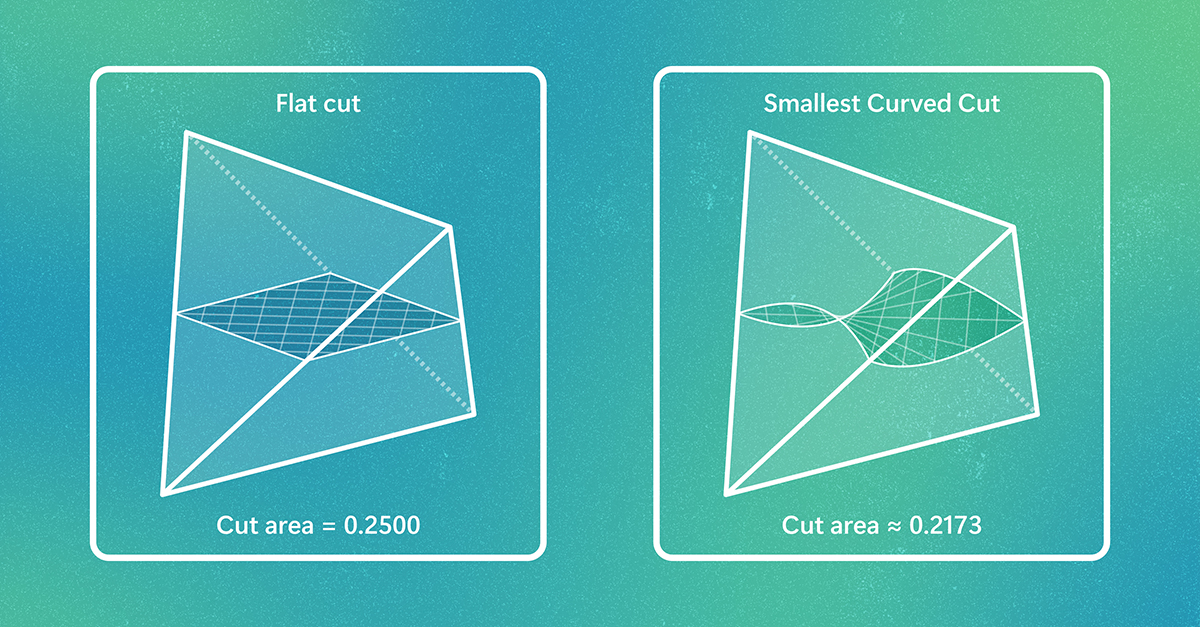
For decades, a fundamental question about the difficulty of computing in high-dimensional spaces has resisted proof. New research resolves this question, removing a major theoretical obstacle to understanding the efficiency of randomized algorithms used across science and computing. The Kannan–Lovász–Simonovits (KLS) conjecture was proposed in 1995. It asks whether, for a broad class of high-dimensional […] The post Solving a 31-year-old grand challenge in mathematics – the KLS conjecture appear…
MIT News · Artificial Intelligence· news.mit.eduOct 15, 2026
A new computational approach reveals how cells communicate to assemble into tissues. This could accelerate stem cell engineering, improve disease models, and inform therapies.
Microsoft Research Blog· microsoft.comOct 15, 2026
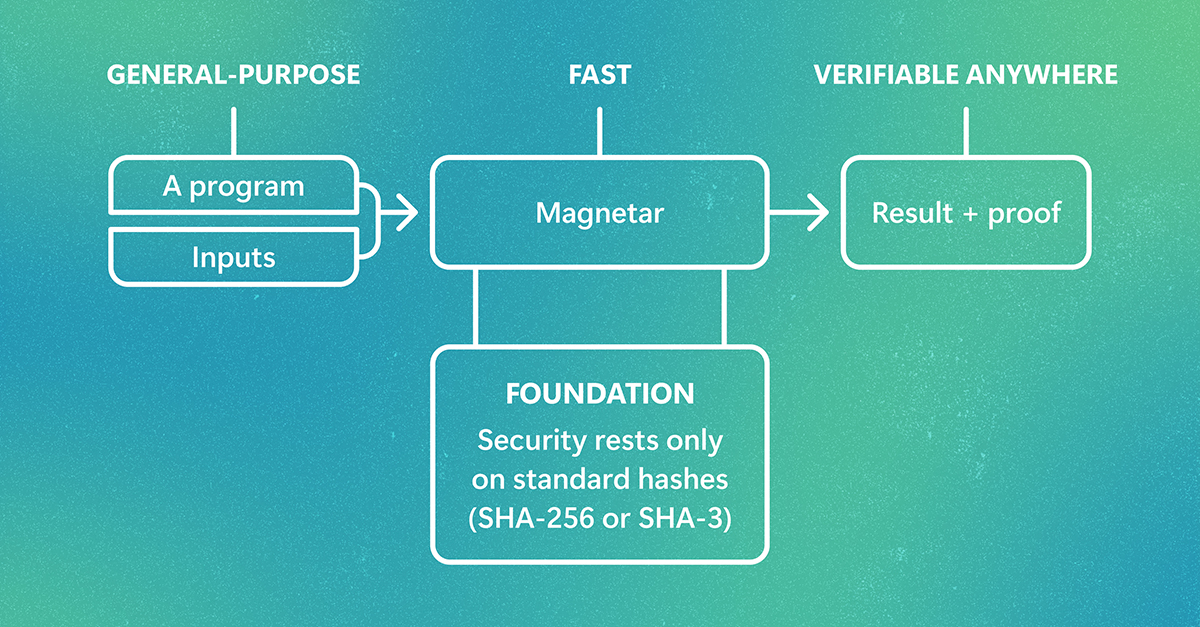
Zero-knowledge proofs can verify computing results without rerunning workloads or exposing sensitive data. Magnetar helps bring them into the mainstream with support for standard programming languages, major speed gains, and quantum-resistant security. The post Proof-based general-purpose computing with Magnetar appeared first on Microsoft Research.
MIT News · Artificial Intelligence· news.mit.eduOct 8, 2026