## Dataset: Serverless Edge Task Offloading Workload A synthetic workload dataset of **5,000 tasks** for evaluating task-offloadingdecisions in serverless edge computing. Each row represents one task generatedby an IoT device, together with the network and device conditions at thatmoment. The dataset was generated with...
Sana Bharti· Zenodo (CERN European Organi...· 0 citations
Technology based on the creation of a digital twin has been developed as an innovative solution to cope with increasing complexities of modern plasma engineering systems. Traditional approaches to modeling plasma reactors are focused on performing static simulations, empirical optimization, and inadequate experiments t...
K. Kesavardhini, J. Albino Wins, P. Saranraj et al.· IGI Global eBooks· 0 citations
Photonic parallel computing inspires important approaches to artificial intelligence, promising substantial gains in processing speed, energy efficiency, and latency. Nevertheless, the integration density and robustness of most optical computing architectures continue to pose significant challenges. Here, we report a w...
Jia-Cheng Sun, Jian Li, Tao Li· Advanced Photonics· 0 citations
Reach audiences
Advertise in front of researchers, engineers, and readers.
With the increase in computational requirements for deep learning, it has become difficult for these models to be applied to the development of edge devices in the Internet of Things; thus, lightweight networking technology has been one of the main research directions recently. This paper will present an organised list...
Ang Su· Applied and Computational En...· 0 citations
ABSTRACT Artificial olfactory systems (AOS) are emerging as a pivotal technology for intelligent odor detection, drawing inspiration from the remarkable sensitivity and adaptability of the biological olfactory system. This review provides a comprehensive summary of recent advances in AOS, from traditional designs based...
Artificial Intelligence (AI) has become essential in cybersecurity systems, enabling threat detection, malware analysis, intrusion detection, phishing identification, and automated incident response. However, AI-driven models operate as black-box systems, limiting transparency, interpretability, accountability, and tru...
Subuhi Kashif Ansari, Yasir Ahmad, Nithinshah Shajahan et al.· Advances in computational in...· 0 citations
Disturbance event recognition in Distributed Acoustic Sensing (DAS) systems faces significant multi-scale heterogeneous challenges. Traditional fixed-length sliding windows often lead to morphological truncation or high data redundancy, severely destroying macroscopic topological semantics. This paper proposes a high-f...
Abstract This paper presents a comprehensive evaluation of YOLO-based architectures for automated transmission tower inspection using UAV imagery under edge computing constraints. The study investigates the performance of different model variants in a resource-constrained embedded environment, focusing on the trade-off...
Gabriel Jose Scheid, Ronnier Frates Rohrich, André Schneider de Oliveira· SN Computer Science· 0 citations
أولاً: الوصف المُموّه باللغة العربية (العنوان والملخص) عنوان البحث المقترح: نظام روبوت جوي ذكي متعدد المراوح فائق السرعة مزود باستشعار بيئي شامل وواجهة تحكم تفاعلية متقدمة للعمليات اللوجستية والإنقاذ السريع الملخص المُموّه: يتناول هذا البحث تصميم وتطوير نظام روبوت جوي غير مأهول (UAV) ذكي وهجين، يعتمد على منظومة دفع كهر...
Abuelgasim abayzeed elsmaney ahmed Ahmed· Zenodo (CERN European Organi...· 0 citations
Smart electronic textiles (e-textiles) are changing the nature of wearable technology, which involves integration of sensors, computing, communication and intelligence into conventional textiles. Wearable systems combining flexible electronics and edge Artificial Intelligence (Edge AI) will provide real-time data acqui...
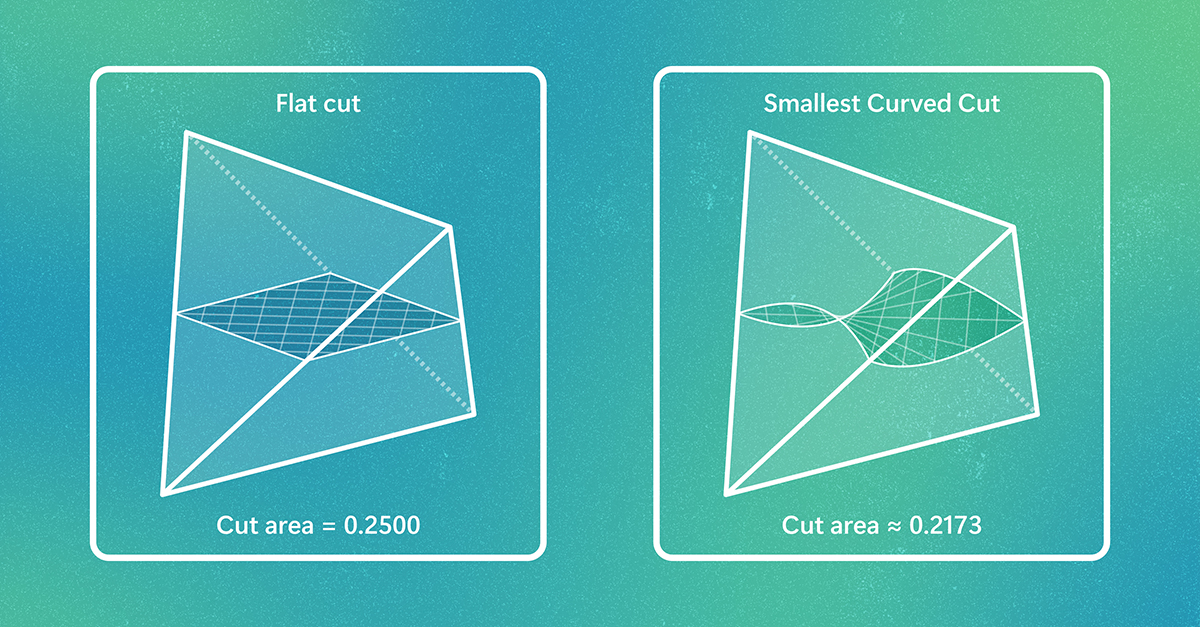
For decades, a fundamental question about the difficulty of computing in high-dimensional spaces has resisted proof. New research resolves this question, removing a major theoretical obstacle to understanding the efficiency of randomized algorithms used across science and computing. The Kannan–Lovász–Simonovits (KLS) conjecture was proposed in 1995. It asks whether, for a broad class of high-dimensional […] The post Solving a 31-year-old grand challenge in mathematics – the KLS conjecture appear…
MIT News · Artificial Intelligence· news.mit.eduOct 15, 2026
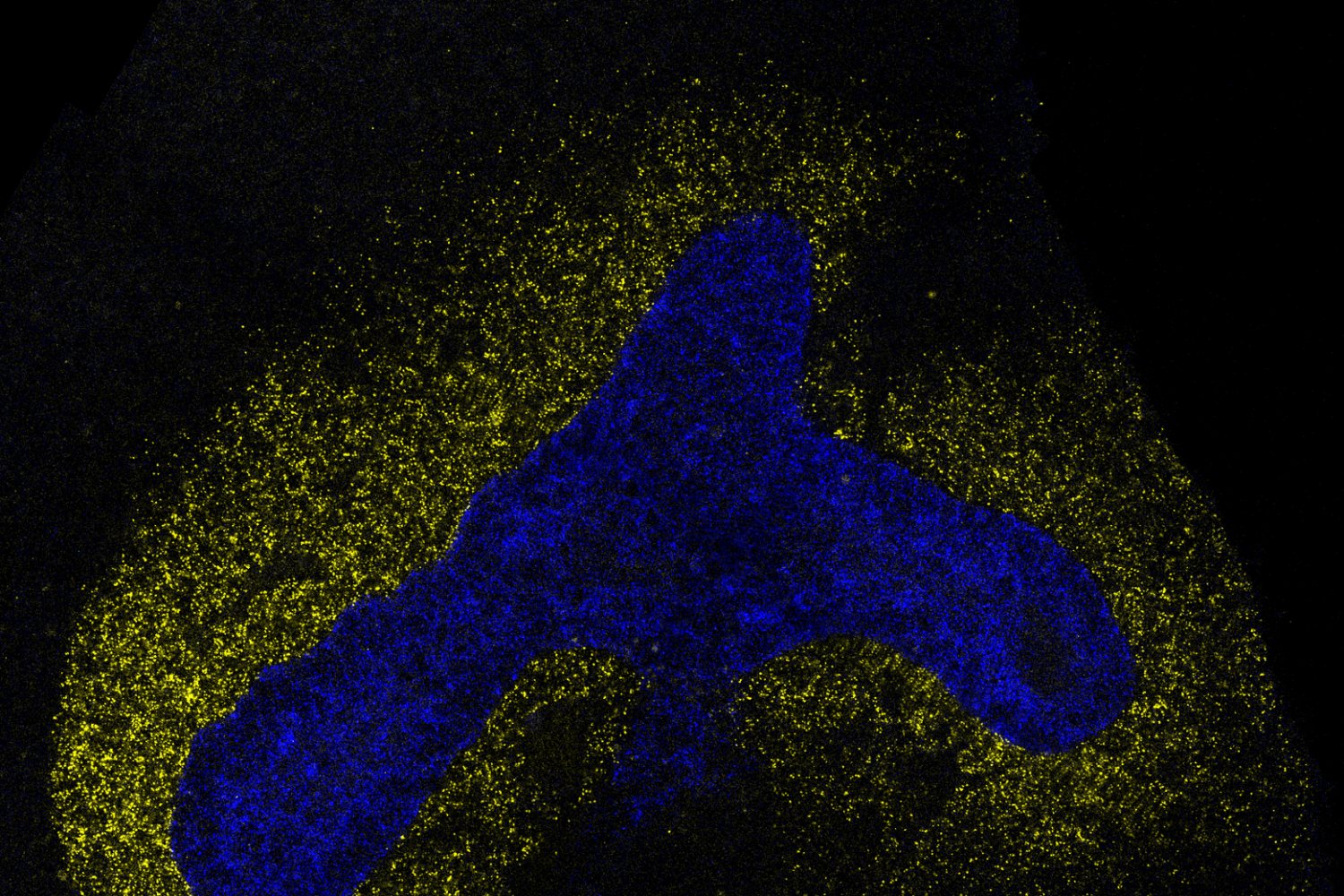
A new computational approach reveals how cells communicate to assemble into tissues. This could accelerate stem cell engineering, improve disease models, and inform therapies.
Microsoft Research Blog· microsoft.comOct 15, 2026
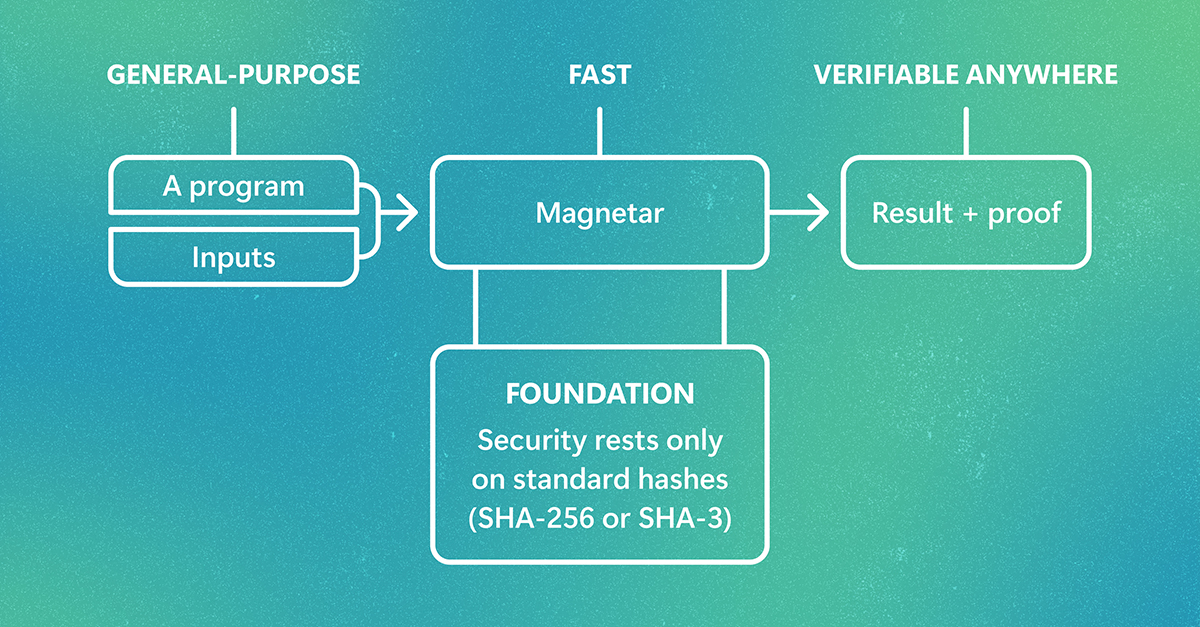
Zero-knowledge proofs can verify computing results without rerunning workloads or exposing sensitive data. Magnetar helps bring them into the mainstream with support for standard programming languages, major speed gains, and quantum-resistant security. The post Proof-based general-purpose computing with Magnetar appeared first on Microsoft Research.
MIT News · Artificial Intelligence· news.mit.eduOct 8, 2026