A complete FPGA-validated RISC-V SoC in which a five-stage RV32IM processor works alongside a custom systolic MAC array, and two propositions are formally proved that the output-stationary schedule reduces computation cycles by a naïve, unblocked sequential CPU execution.
Srujan Sateesh Kalagi, K. R. Vinay Kumar, Shashank Dharamshetty et al.· Discover Artificial Intellig...· 0 citations
A systems vision for AI infrastructure in space is developed as the systems layer that manages AI capabilities across spacecraft, orbital networks, ground stations, and cloud backends, while treating orbital and physical state as part of the resource model.
Qing Li, Qiyang Zhang, Daliang Xu et al.· 0 citations
Quản lý động tài nguyên trong hệ thống điện toán biên đa truy cập (Multi- Access Edge Computing - MEC) phục vụ ứng dụng thực tế ảo và thực tế tăng cường (AR/ VR) đặt ra nhiều thách thức lớn do yêu cầu khắt khe về độ trễ thấp và hiệu quả năng lượng. Học tăng cường sâu (Deep Reinforcement Learning - DRL) đã trở thành cách tiếp cận phổ biến cho bài toán này; tuy nhiên, hiệu năng của DRL phụ thuộc nhiều vào thiết kế hàm phần thưởng. Mục tiêu của bài báo là phân tích và so sánh ba thiết kế hàm phần thưởng đa mục tiêu cho thuật toán Proximal Policy Optimization (PPO) trong môi trường MEC AR/VR, bao gồm: tổng có trọng số tuyến tính (LWS), hàm logarit (LOG) và phương án phân tầng thích ứng (Adaptive Hierarchical - AH) được nhóm tác giả đề xuất. Phương pháp nghiên cứu là xây dựng môi trường mô phỏng MEC AR/VR tùy chỉnh trên Python với 10 thiết bị người dùng và một trạm gốc tích hợp một máy chủ biên duy nhất, sau đó huấn luyện và đánh giá ba phương án trên bốn chỉ số: độ trễ trung bình, năng lượng tiêu thụ, tỷ lệ vi phạm hạn và tốc độ hội tụ; mỗi cấu hình được lặp lại 5 lần với 5 hạt giống ngẫu nhiên khác nhau. Bài báo cũng bổ sung so sánh với ba baseline đơn giản (Random, Greedy battery-aware, AllLocal) và phân tích độ nhạy của tham số trọng số động κ. Kết quả cho thấy hàm phần thưởng AH đề xuất giảm 19% độ trễ trung bình, 27% năng lượng tiêu thụ và 27% tỷ lệ vi phạm hạn so với LWS, đồng thời cho thấy độ ổn định cao trong dải κ rộng.
Hoàng Trọng Nghĩa· Tạp chí Khoa học Trường Đại...· 0 citations
These findings show that reliable evaluation of LLM-generated code requires validated ground truth, protected tests, and multiple explicitly interpreted measures, and that CodeAssay provides a reproducible basis for evidence-based model evaluation in AI-augmented software development.
Shahbaz Siddeeq, Muhammad Waseem, Umar Subhan Malhi et al.· 0 citations
Reach audiences
Advertise in front of researchers, engineers, and readers.
The first comprehensive benchmarking framework specifically designed to accommodate inter-dataset heterogeneity is presented, finding that well-designed small datasets can match or even surpass the performance of larger benchmarks, suggesting that different metrics are applicable to different datasets/testing scenarios.
Yingjuan Cheng, Qing Ye, Linlong Jiang et al.· Journal of Cheminformatics· 0 citations
A novel committor learning framework grounded in the AlphaFold 3 paradigm is proposed that elucidates how ligand substituents regulate the ratio between distinct binding pathways, offering new perspectives for structure-based drug design.
Jintu Zhang, Zichang Jin, Huifeng Zhao et al.· 0 citations
A novel approach for distinguishing individuals with Autism Spectrum Disorder (ASD) using Intuitionistic Fuzzy Set (IFS) theory and Multi-Scale Enhanced Graph Convolutional Networks (MSE-GCNs), which represents a substantial improvement over existing models for ASD and potentially for other neurological disorders.
S. Rajaprakash, C. Basha, K. Manivanan et al.· Discover Artificial Intellig...· 0 citations
This paper introduces Caduceus, a family of MoE-enhanced foundation models built with a hierarchical pre-training paradigm to jointly integrate biological and natural language, and incorporates a multi-task instruction tuning phase, enabling robust protein parsing and natural language question answering.
Mingze Yin, Yiheng Zhu, Jialu Wu et al.· Proceedings of the 32nd ACM...· 0 citations
This work presents a multi-mode energy harvesting-assisted edge computing architecture, integrated with a joint optimization of energy consumption and communication behaviour, aimed at enhancing the sustainability, reliability and autonomy of operation in an industrial IoT context.
Dr. Deepa, M. Mehfooza, Padmavathy Thiruppathi Raj· Microsystem Technologies· 0 citations
It is argued that AI-ML integration improves productivity in agriculture in terms of crop yield prediction, disease prediction and optimization of resources, amongst others, and a comprehensive strategy for future work in designing sustainable agrifood systems is proposed.
Anita Veerappa Karkikatti, R. H. Goudar, Vijayalaxmi N. Rathod et al.· Discover Artificial Intellig...· 0 citations
Scalability analysis demonstrates that the proposed Post-Quantum Probabilistic Hidden-State Deep Learning framework, evaluated with run on IoT networks with over 1000 nodes, exhibits significant performance.
T. G. Keshavamurthy, S. Guruprasad, K. Hareesh et al.· Discover Artificial Intellig...· 0 citations
This study demonstrates the efficacy of the synergy between federated learning and edge computing in IoT security contexts, providing a scalable and privacy-centric solution for anomaly detection across large-scale distributed devices.
Quan Liu, Yuanyuan Feng· Discover Artificial Intellig...· 0 citations
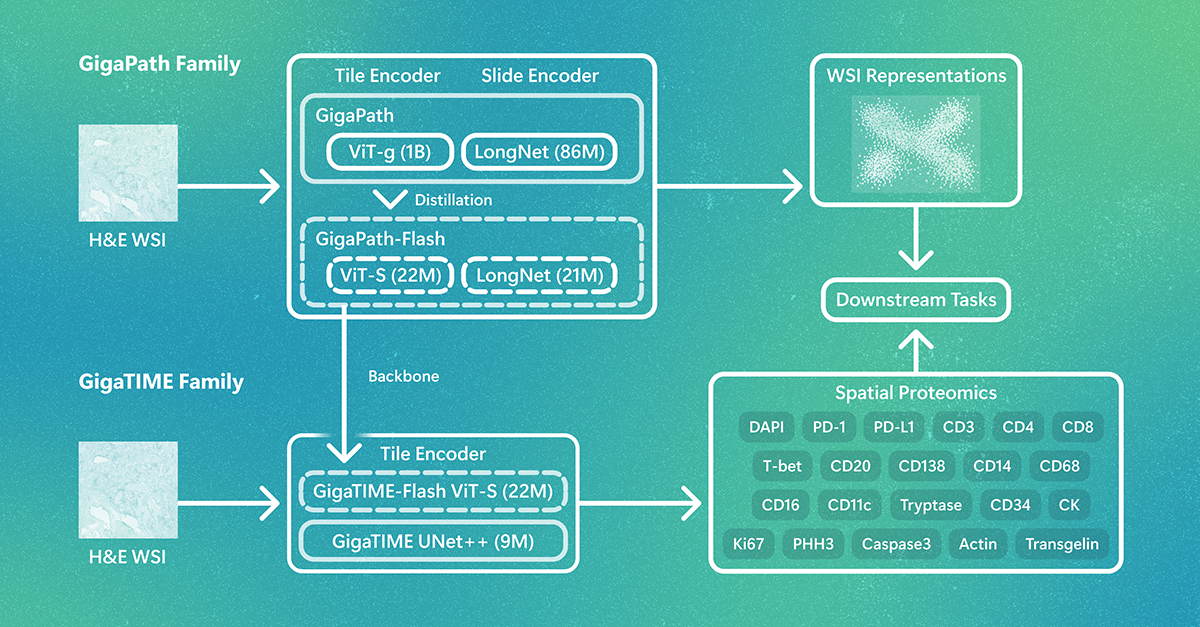
What if pathology foundation models could do more with less? GigaPath-Flash and GigaTIME-Flash cut computational demands while maintaining strong performance, opening the door to larger studies and broader exploration. The post GigaPath-Flash and GigaTIME-Flash: Toward population-scale discovery with efficient pathology foundation models appeared first on Microsoft Research.
MIT News · Artificial Intelligence· news.mit.eduAug 31, 2026
With millions of users across the world, Julia has been used to conduct cutting-edge research and to design new drugs, jet engines, heat pumps, and more.
MIT News · Artificial Intelligence· news.mit.eduAug 27, 2026
A new machine-learning framework aims to improve the success rate of computational protein design while moving away from results that reproduce sequences found in nature.