This paper is an encore submission of our 2026 journal article"Expertise and Information Seeking in the Age of Generative AI: New Procedures, New Problematics"with an extended discussion for the CSCW 2026"Broader Impacts of GenAI in Communication"Workshop on October 10, 2026. In the original article, we employ procedur...
The way advisers split provides a common basis for predictive multiplicity, reconciliation load, and reliance miscalibration and separate aggregation from disclosure and turn the latter into testable questions about how disagreement should be presented and interpreted.
Generative artificial intelligence raises a central question for scientific training and organization. Is research shifting from deep specialization toward broad individual knowledge? We examine this proposition across papers, cited knowledge, contributor histories, and teams using 47,959 articles from six fields over...
This work document a systematic, multi-method problem analysis that uses nine design principle areas as an analytic artifact to examine why existing recommendations cannot be directly transferred to AI companion contexts.
Soobin Cho, Deveshi Modi, Divya Mavinkurve et al.· International Journal of Hum...· 0 citations
Reach audiences
Advertise in front of researchers, engineers, and readers.
IMPLIED is an implication modeling method that treats fixed-rule implications as an initial guide while learning to infer and revise accepted and rejected action labels over time, and predicts human implications more accurately than the fixed rule approach and LLM baselines, approaching the performance of a human-label...
Qiping Zhang, Kate Candon, Debasmita Ghose et al.· 0 citations
AI-powered gameplay support agents hold promise for game-based learning, yet grounding generative models in structured game data remains an open challenge. We present PEARL (Parallel Education Agent for Reflection and Learning), a dual-component Retrieval-Augmented Generation (RAG) system that combines semantic knowled...
Jia-Hong Li, Sai Siddartha Maram, Atieh Kashani et al.· 0 citations
Do AI assistants help believers reason about moral dilemmas consistently with their faith? We present FaithfulBench, the first benchmark to score AI counsel across traditions by how well it adheres to the user's professed faith. Scenarios are drawn from each tradition's most respected texts, with the faithful answer kn...
M Waleed Kadous, Benjamin Olsen, Walter Scheirer et al.· 0 citations
GenARch, a pipeline that integrates GenAI-based visual generation with collaborative XR environments, is developed and deployed in an undergraduate architectural design studio and highlights both opportunities and limitations when GenAI and XR are incorporated into collaborative design education.
Large language models (LLMs) are increasingly used as user simulators, but their ability to reproduce evolving individual financial decisions remains unclear. We present a preliminary study in a controlled paper-trading environment with 120 volunteers. Participants used non-redeemable virtual funds under real-time mark...
Jia-Jie He, Jiang-Yuan Hong, Dong-Ling Ni et al.· 0 citations
This study proposes a formal definition of data storytelling in IML, introduces the DIST Pyramid to align data storytelling with IML, and presents the I-P-O Model to describe their interactions, and develops an architecture to explain AI decisions through distinct "What-if" and "Why-not" event-generation processes.
Le-Men Chao, Zi-Xuan Yang, An-Ran Fang et al.· 0 citations
It is found that user hostility varies 13-fold across models, driven largely by who each model attracts rather than by model behaviour: first-turn hostility spreads far wider than post-response hostility, and more than fifteenfold separates the extremes even after deduplicating opening prompts.
Fan-Qi Zeng, Sadid A. Hasan, Chao-Cheng He· Proceedings of the 10th Work...· 0 citations
The increasing deployment of AI agents in long-horizon tasks yields massive execution logs. Diagnosing failures within these records is crucial for reliability, as it transforms outcome-level signals into actionable interventions. The sheer scale of the data renders human review impractical, driving the need for automa...
Harsh Raj, David Lee, Anas Mahmoud et al.· 0 citations
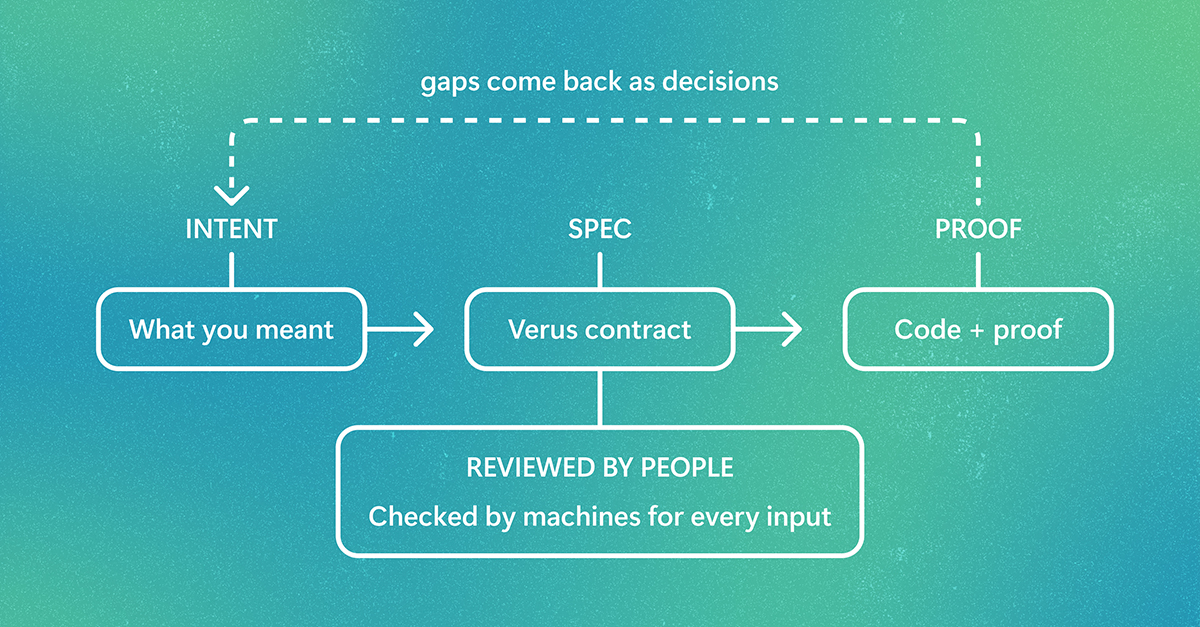
AI agents can generate code at a scale that’s hard for humans to review line-by-line. PDD Kit helps ensure the code is doing what the developer intended by creating formal specifications and testing against them. It converts developer intent into a Verus specification, proves AI-generated code meets it for every input, and uses tests where proofs aren't practical. Developers review intent, not every line. The post Formally verifying agent-written full-stack web apps with PDD Kit appeared first o…
Professor Paris Smaragdis develops computers with superhuman hearing for applications like speech recognition, music understanding, and environmental monitoring.
MIT News · Artificial Intelligence· news.mit.eduOct 23, 2026
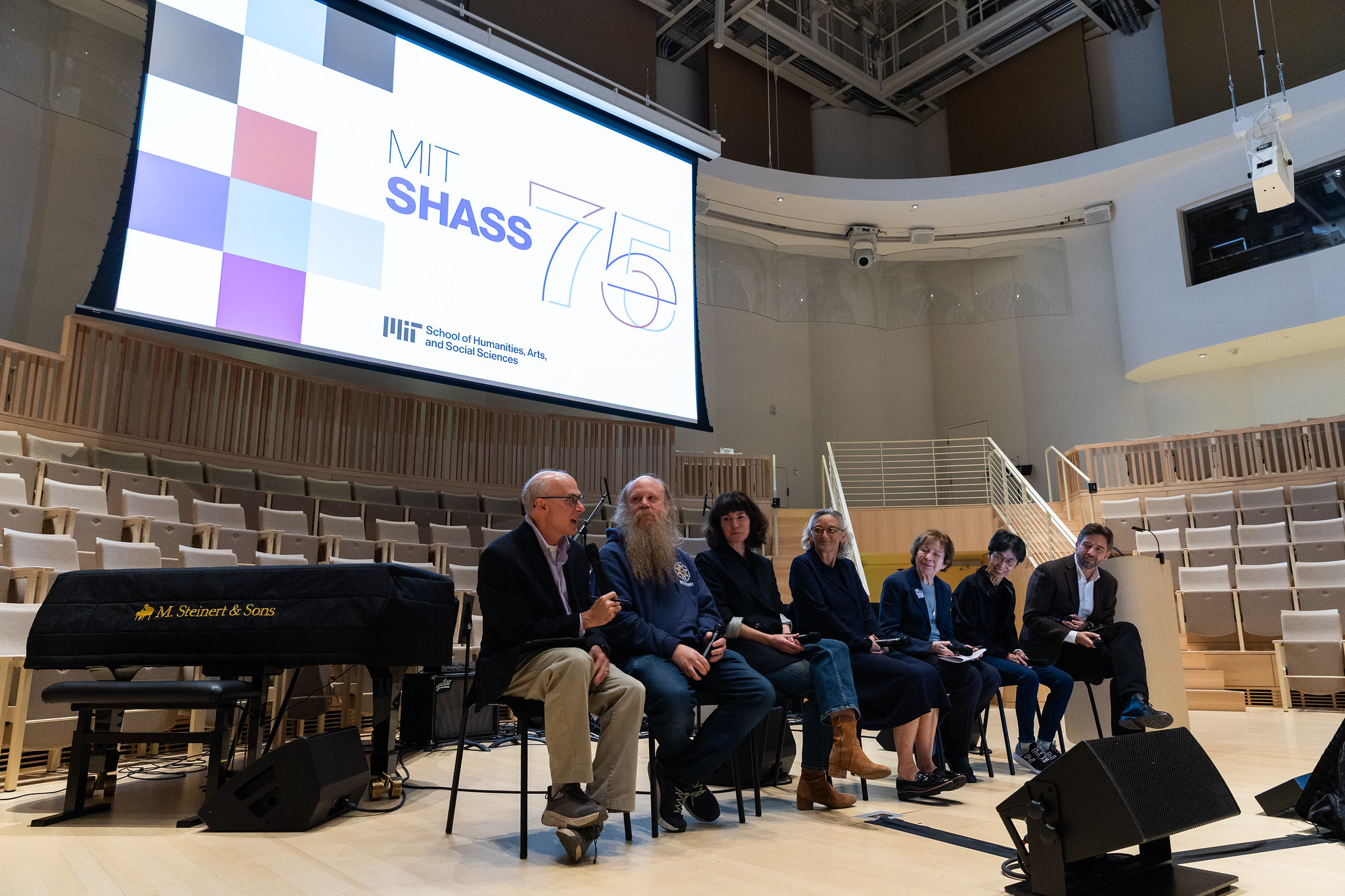
During the School of Humanities, Arts, and Social Sciences’ 75th Anniversary Symposium, President Sally Kornbluth said “MIT has never needed your particular insight and guidance more than we do now.”
MIT News · Artificial Intelligence· news.mit.eduOct 23, 2026
Assistant Professor Benjamin Lindquist studies how engineers deliberately injected randomness into early AI, giving rise to deep-learning models that sometimes hallucinate.
MIT News · Artificial Intelligence· news.mit.eduOct 22, 2026
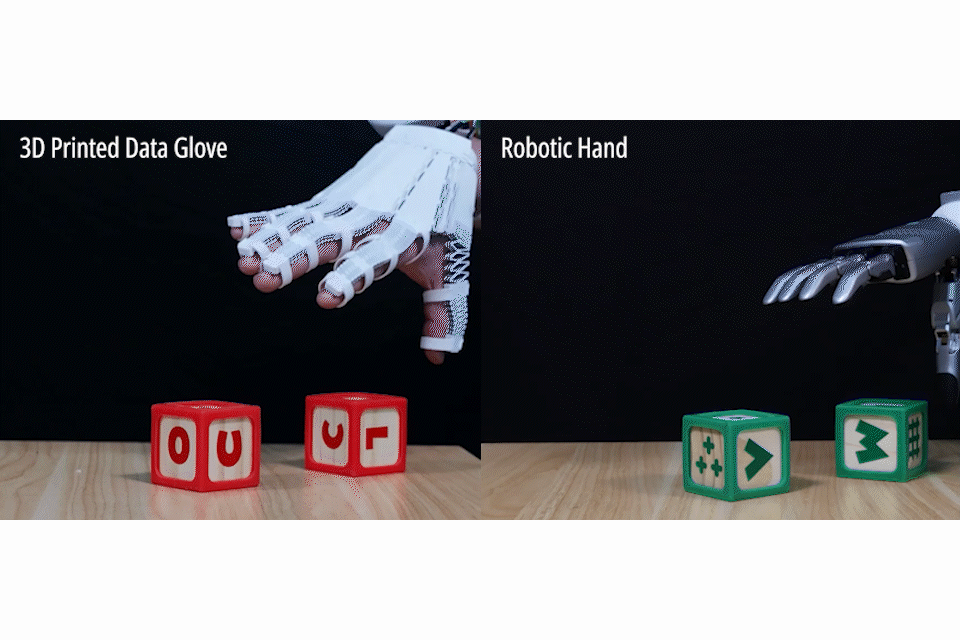
“X-Hinges” helps design and 3D print items like lamps and gloves with an interactive twist: automatically embedded sensors that perceive and adaptively respond to human contact.
We use cookies to run the site and, with your consent, for analytics and to show ads.
See our Cookie Policy.