AI chatbots recognized most psychiatric emergencies but still missed clinically important cases and frequently over-triaged less urgent presentations, and further evaluations should examine how triage performance changes when clinically relevant information must be elicited through conversation.
V. Weilnhammer, Lennart Luettgau, Christopher Summerfield et al.· 2 citations
Robo-Saber demonstrates promise in synthesizing rich gameplay data for predictive applications and enabling a physics-based whole-body VR playtesting agent.
N. H. Kim, Jing-Jing Liu, Jaakko Lehtinen et al.· Computer graphics forum (Pri...· 0 citations
Bias auditing should be treated as an ongoing, multi-vendor process, rather than a one-time assessment, because gender-related biases are common in LLMs, but their direction and magnitude are highly heterogeneous, to the point that some models behave in diametrically opposite ways to others.
A Boundary Negotiating Artifact is designed as a way to mediate meaning in AIRSes, providing an interface for the different stakeholders to collaborate in AI assessment and positioning it as technical backbone in established AIRS frameworks, structuring the collaborative sense-making of the involved stakeholders.
Idoia Landa-Oregi, Tom Deckenbrunnen, Alessio Buscemi et al.· 0 citations
Reach audiences
Advertise in front of researchers, engineers, and readers.
An AI-driven multimodal transcription system that processes screen-recording videos into unified screenplay-style transcripts containing audio dialogue and annotated learning log actions is introduced, offering initial steps towards generalizing log data across diverse systems.
Danielle R. Thomas, Marie Cynthia Abijuru Kamikazi, Ashish Gurung et al.· 0 citations
By identifying which components are indispensable, \framework provides a principled basis for prompt compression and structural analysis of few-shot exemplars, and provides a principled basis for prompt compression and structural analysis of few-shot exemplars.
Ali Alfageeh, Rahul Gopinath, Amin Alipour· 0 citations
Large language models (LLMs) are increasingly positioned as a force to empower underserved communities, and significant efforts are being made to expand access. Yet, access alone does not equate to meaningful adoption. First, even if a system is accessible, it won't be adopted if users are not willing to adopt it. Seco...
PrivacySkills is introduced, a controlled framework for evaluating how agents choose among acquisition pathways that provide the same task-relevant value: consulting publicly available personal information, accessing confidential sources, or interacting with the user.
Lucas Biechy, Cédric Eichler, H. H. Arcolezi et al.· 0 citations
To help researchers understand how to run statistics over LLM judges responsibly, guidance and tooling for the statistical analysis of mixed human-AI judge designs are presented, and recommendations for what CI, p-value, and FWER correction methods to use for small-sample AI evaluations are derived, and researchers are...
It is shown that contrary to previous studies, perturbations can mitigate bias and hallucination in some LLMs over other models, and it's found that Claude 3 is more effective for the tasks represented in most datasets, whereas models like GPT3.5 exhibit varying levels of adequacy.
Mamehgol Yousefi, Ahmad Shahi, Mos Sharifi et al.· International Conference on...· 0 citations
It is argued that legal uncertainty cannot be fully reduced ex ante and that, within reasonable bounds, it is also necessary for regulatory learning because it creates the space in which boundary negotiation over socio-technical meaning can occur.
Tom Deckenbrunnen, Alessio Buscemi, M. Almada et al.· Proceedings of the AAAI/ACM...· 4 citations
Users of language-based assistive agents often make ambiguous requests. In response, an assistant can either directly act on its interpretation of the request --- risking misalignment with the user --- or ask a clarifying question. Which option is the most safe and helpful? A common approach is to ask questions that mi...
T. Nguyen-Hien, Y. Teh, Wee-Sun Lee et al.· 0 citations
AI agents can generate code at a scale that’s hard for humans to review line-by-line. PDD Kit helps ensure the code is doing what the developer intended by creating formal specifications and testing against them. It converts developer intent into a Verus specification, proves AI-generated code meets it for every input, and uses tests where proofs aren't practical. Developers review intent, not every line. The post Formally verifying agent-written full-stack web apps with PDD Kit appeared first o…
Professor Paris Smaragdis develops computers with superhuman hearing for applications like speech recognition, music understanding, and environmental monitoring.
MIT News · Artificial Intelligence· news.mit.eduOct 23, 2026
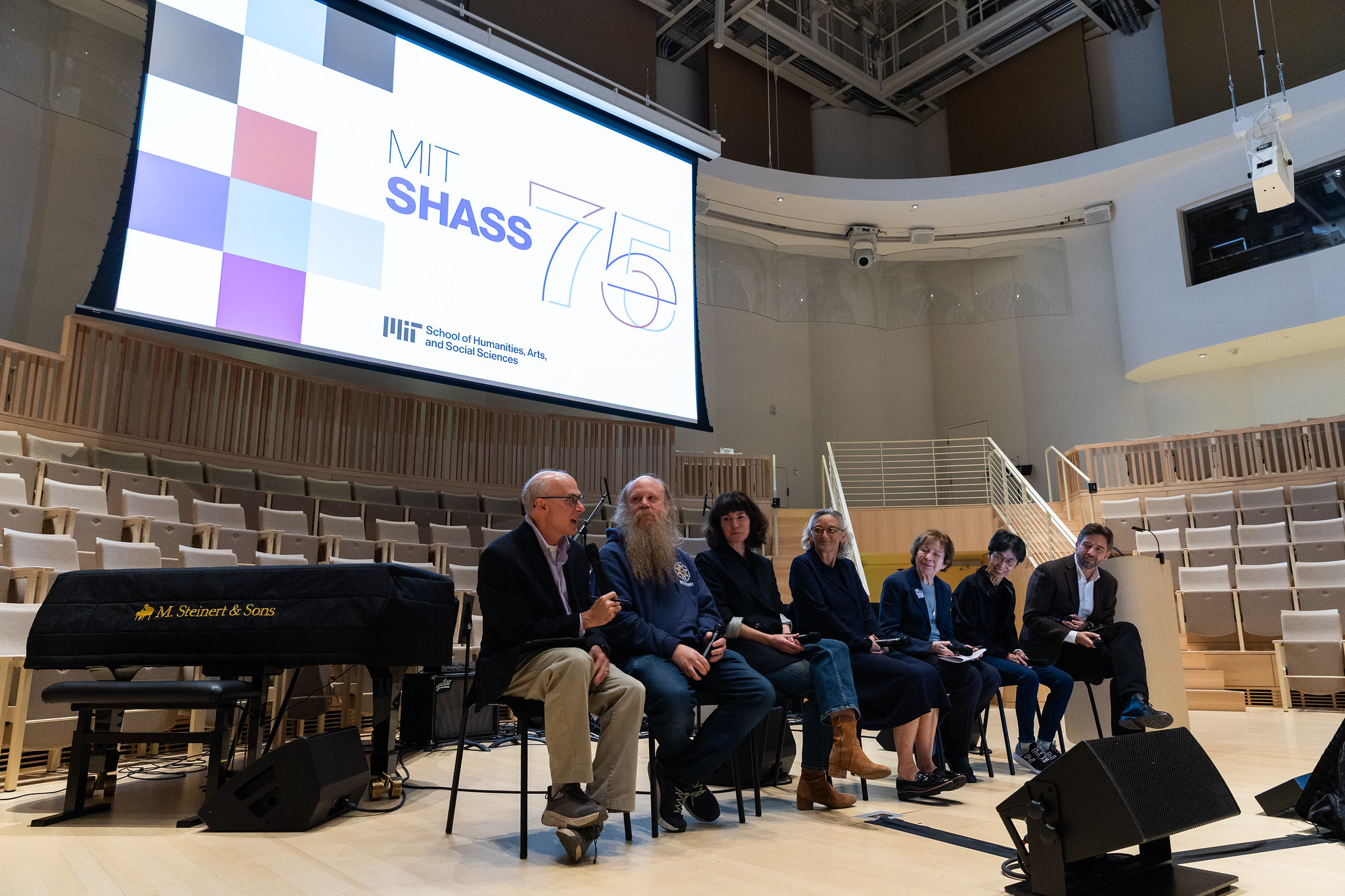
During the School of Humanities, Arts, and Social Sciences’ 75th Anniversary Symposium, President Sally Kornbluth said “MIT has never needed your particular insight and guidance more than we do now.”
MIT News · Artificial Intelligence· news.mit.eduOct 23, 2026
Assistant Professor Benjamin Lindquist studies how engineers deliberately injected randomness into early AI, giving rise to deep-learning models that sometimes hallucinate.
MIT News · Artificial Intelligence· news.mit.eduOct 22, 2026
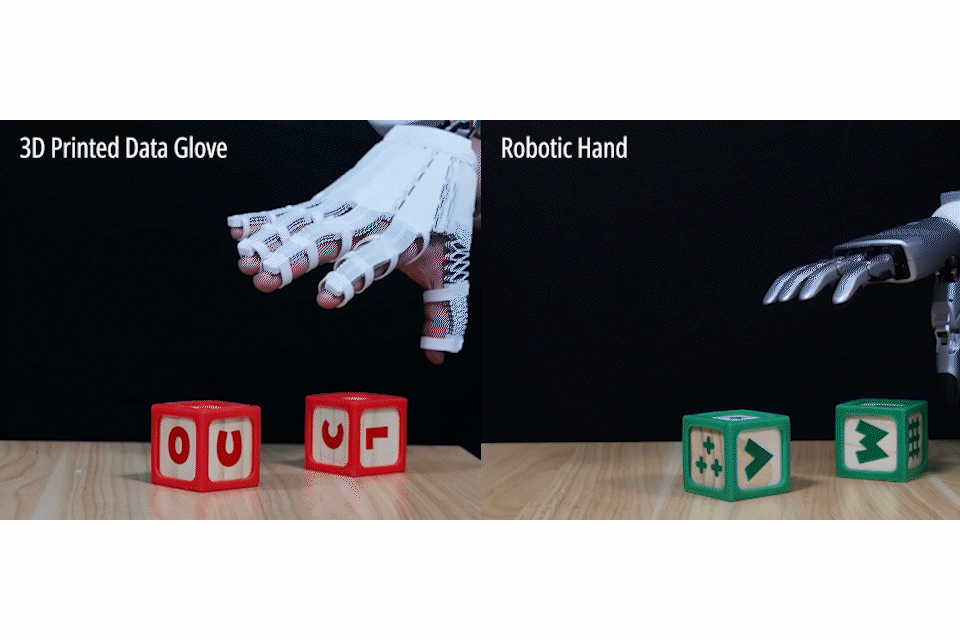
“X-Hinges” helps design and 3D print items like lamps and gloves with an interactive twist: automatically embedded sensors that perceive and adaptively respond to human contact.
We use cookies to run the site and, with your consent, for analytics and to show ads.
See our Cookie Policy.