Value Faces, a system that analyzes a person's existing chat histories from their everyday messaging platforms using Schwartz's ten basic human values and produces separate value profiles for their different relationships, finds that the resulting value profiles distinguished participants' national contexts with twice...
Gabriel Koo, Rayhan Rashed, Farnaz Jahanbakhsh· 0 citations
The results demonstrate that explicitly representing failure strategies complements success strategies and improves performance, and highlight a practical pipeline for constructing and maintaining an interpretable strategy repository from in-the-wild deployment logs by recycling abundant failure interactions as reusabl...
Sanae Yamashita, Yuki Okafuji· IEEE Robotics and Automation...· 0 citations
Mental distance, a loss of belief that the work is worthwhile, is the only symptom unrelated to operational problems, and among posts with a single symptom it is accompanied by a stated intention to leave roughly twice as often as any other.
Nadia Mehjabin, Ji Hyun Kim, Laura J. Barnes et al.· 0 citations
Recognizing technical errors in movement is a perceptual skill important to motor learning, but it is challenging for beginners in fast, complex sports like fencing to develop it. A coach's attention is scarce, live demonstrations vary from repetition to repetition, and video review is limited to whatever camera angle...
A. A. Nargund, Amelia H. Harrison, Timothy Robinson et al.· 0 citations
Reach audiences
Advertise in front of researchers, engineers, and readers.
Preliminary evidence of the technical feasibility of regulation-grounded conversational reporting is provided, with future work needed to evaluate effects on report quality, safety awareness, and learning outcomes.
Fan Yang, Jia-Bin Wu, Yuan Tian et al.· 0 citations
A randomized experiment and an anonymous post-survey at ICML 2026 investigate how reviewers use LLM-use policies in practice and how different LLM-use policies affect review outcomes, and discusses implications for future peer-review policy and tool design.
Sunnie S. Y. Kim, W. Deng, Jennifer Wortman Vaughan et al.· 1 citation
Health misinformation disproportionately harms women, yet interventions rarely address the community norms that sustain false beliefs. We test whether culturally adaptive AI-generated video in which the presenter looks like someone from her community reduces misinformation belief among low-literacy women in suburban In...
Anku Rani, Kokil Jaidka, Shruti Sharma et al.· 0 citations
While clinicians knew where and how to annotate complex concepts in patient notes, in twelve of fourteen tasks they faced barriers to replicating those intuitions with LLMs, which highlighted open problems for HCI research to bridge the gaps between AI data work tools and clinical users' needs.
Venkatesh Sivaraman, Rigney E. Turnham, G. Bonano et al.· 0 citations
MuTable is presented, a prototype that reifies transformations as persistent, composable, and reusable modifiers to support in-situ data exploration and can support coordination between representations, rapid exploration, and greater user agency in constructing visualizations.
F. Sun, Devamardeep Hayatpur, E. JaneL et al.· 0 citations
This paper explores how the technologies U.S. election officials depend on also challenge their work. Every election, misleading narratives stem from errors that occur while using election technology, threatening election official safety and eroding faith in elections. We seek to understand the impact of these challeng...
Delaney Gomen, Josiah D. Hester, Naveena Karusala et al.· 0 citations
The interventions are complementary: the guardrail eliminates unprompted additions and qualifier inflation cheaply, while the checkpoint gives near-categorical guarantees against the most severe failures, invented identities and JD-baited claims.
This work introduces Data Journalist Agent (Data2Story), a multi-agent framework that orchestrates specialized roles into a single virtual newsroom, enabling more evidence-based, transparent, and verifiable reporting.
K. Lin, EI Batu, Yu-Hong Shi et al.· arXiv.org· 0 citations
AI agents can generate code at a scale that’s hard for humans to review line-by-line. PDD Kit helps ensure the code is doing what the developer intended by creating formal specifications and testing against them. It converts developer intent into a Verus specification, proves AI-generated code meets it for every input, and uses tests where proofs aren't practical. Developers review intent, not every line. The post Formally verifying agent-written full-stack web apps with PDD Kit appeared first o…
Professor Paris Smaragdis develops computers with superhuman hearing for applications like speech recognition, music understanding, and environmental monitoring.
MIT News · Artificial Intelligence· news.mit.eduOct 23, 2026
During the School of Humanities, Arts, and Social Sciences’ 75th Anniversary Symposium, President Sally Kornbluth said “MIT has never needed your particular insight and guidance more than we do now.”
MIT News · Artificial Intelligence· news.mit.eduOct 23, 2026
Assistant Professor Benjamin Lindquist studies how engineers deliberately injected randomness into early AI, giving rise to deep-learning models that sometimes hallucinate.
MIT News · Artificial Intelligence· news.mit.eduOct 22, 2026
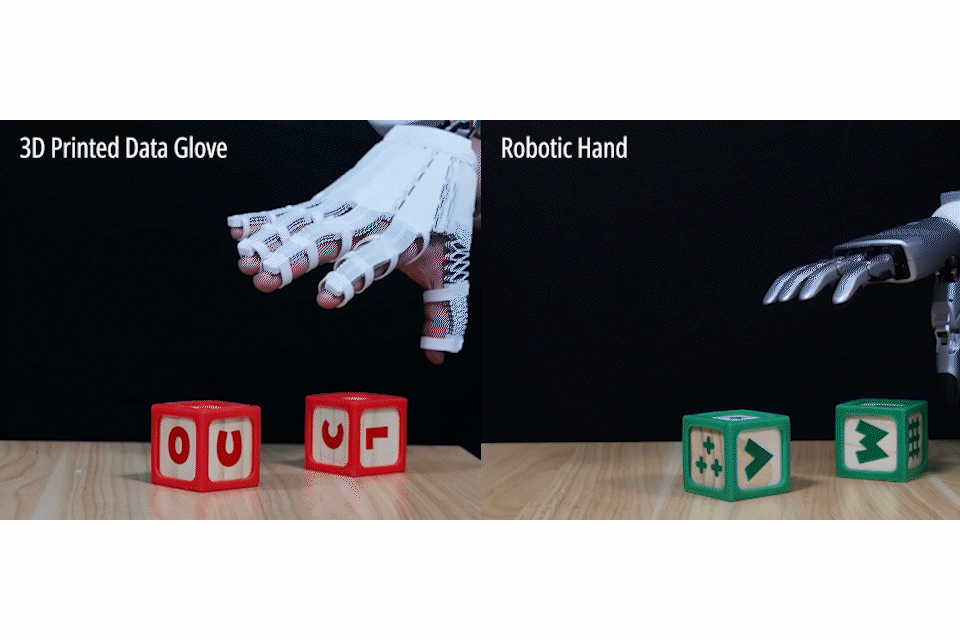
“X-Hinges” helps design and 3D print items like lamps and gloves with an interactive twist: automatically embedded sensors that perceive and adaptively respond to human contact.
We use cookies to run the site and, with your consent, for analytics and to show ads.
See our Cookie Policy.