Legal AI systems require accuracy and verifiable reasoning, yet under-resourced languages lack the specialized models needed to meet these standards. This challenge is particularly acute for statute-based civil law systems like Vietnam’s, where the core task is interpreting and applying codified statutes rather than matching legal precedents. We address this gap by introducing a comprehensive framework for developing reliable legal AI under resource constraints. First, we present vilaw-bench, a novel evaluation benchmark tailored for Vietnamese statute-based legal reasoning that assesses cognitive abilities from basic knowledge retrieval to complex legal interpretation. Second, we propose a multi-stage training framework that progressively builds legal expertise through four phases: focused foundational learning on core legal texts, intensive comprehension practice using large-scale synthetic question-answer data, targeted skill acquisition through supervised fine-tuning, and response quality refinement using Group Relative Policy Optimization (GRPO). We implement this framework to develop VietLegalLM, training on Qwen3-1.7B-Base and Qwen3-4B-Base models. Our systematic evaluation reveals that synthetic comprehension practice produces the largest single-phase improvements in legal reasoning capabilities, while GRPO efficiently refines reasoning structure with minimal training steps. The complete sequential training approach achieves significant performance gains on vilaw-bench compared with baseline models. Our ablation studies demonstrate that practitioners can make informed tradeoffs between comprehensive training and computational efficiency: direct GRPO after pre-training offers a viable alternative to full instruction tuning when resources are limited. We release vilaw-bench, VietLegalLM, and our training framework as open-source resources, providing a reproducible roadmap for developing legal AI in other under-resourced, statute-based legal systems.
Thang Van Le, Anh-Cuong Le, Nguyen Viet Hà et al.· ACM Transactions on Asian an...· 0 citations
This study examines how AI-generated children’s stories produced by large language models (LLMs, e.g., ChatGPT) reflect and reproduce social biases in the social representations of intelligence across gender, racial identity, socioeconomic status, and educational level. We ask three questions: (1) how these narratives mirror hegemonic representations of intelligence; (2) in what ways they legitimize social inequalities; and (3) whether repeated exposure could shape children’s self-perception and aspirations. Grounded in a social-representations/power-relations framework, we generated 216 stories via two prompt scenarios that systematically varied protagonist attributes, ensuring stability through repeated prompting and saturation procedure. We then combined critical discourse analysis, qualitative analytical questioning, and lexicographic analysis to chart fields of possibility, mechanisms of legitimation, and the internalization of power relations. Results show a recurrent alignment with dominant hierarchies: intelligence is frequently naturalized as intrinsic to high-status groups; marginalized protagonists are underrepresented or steered toward alternative (emotional/social) forms of intelligence; and formal schooling is repeatedly positioned as the primary marker of being “truly intelligent.” We discuss implications for stereotype reinforcement, potential constraint of children’s aspirations, and the need for bias-aware narrative design and governance of LLM outputs.
This paper develops a cognitive and hermeneutic theory of resonance in long-form human–AI interaction. Resonance is described as an emergent interpretive phenomenon in dialogue, arising from shifts in perceptual loops, schema flexibility, interpretive registers, and meaning structures. The theory outlines how sustained interaction with a large language model can interrupt automatic cognitive processes, reorganize interpretive dynamics, and produce metastable states in the in-between space of dialogue. The paper provides conceptual foundations and indicators for studying resonance at both cognitive and hermeneutic levels.
Petri Koivula· Zenodo (CERN European Organi...· 0 citations
Replication Package The package contains the datasets, source code, validation results, and generated outputs used throughout the study. It enables researchers to reproduce the literature review, data extraction, coding, validation, and analysis procedures reported in the paper. Note: All the hyperlinks referring to the shared files only work in the local version (downloading the replication package). The online version will not work because the browser cannot locate the referenced local files. License All generated data is provided under DATA_LICENSE Creative Commons 4.0 Attribution License. All scripts are provided under the Script_LICENSE MIT License. Package Structure Replication_Package/ │ ├── README.md ├── Install.md ├── requirements.txt ├── Data License.md ├── Script License.md ├── Understanding Full read and analysis.xlsx ├── Validation understanding architectural degradation.xlsx │ └── Code and outputs/ ├── Title Abstract Round Code and output/ ├── T-A Validation code and Outputs/ ├── Full Read code and outputs/ ├── Validation Full Read outputs/ ├── (Final Round code and outputs) Understanding MLR analysis/ ├── Validation for Final Round (code and outputs)/ └── Figures (Sankey & Heatmap) Data Files 1. Understanding Full read and analysis.xlsx This workbook contains the extracted data and the final coded datasets used throughout the study. Workbook Contents Sheet Name Description Process Documents the complete study workflow, including screening, queries, extraction, and coding procedures followed during the literature review. White (title/abstract) Contains the raw results obtained after the title and abstract screening stage for the white literature (peer-reviewed studies). Grey (title/abstract) Contains the raw results obtained after the title and abstract screening stage for the grey literature. Full read (accepted) Data extraction form containing information extracted from all accepted primary studies during the full-text review. Who Consolidated coding table of the stakeholders associated with software architecture degradation. What Consolidated coding table of the drivers and motivations of software architecture degradation. When Consolidated coding table of the software development lifecycle stages and situations in which software architecture degradation emerges. Where Consolidated coding table of the locations within software systems where software architecture degradation occurs. Why Consolidated coding table of the reasons why practitioners and organizations tolerate or introduce software architecture degradation. How Consolidated coding table of how the identified motivations manifest and evolve into software architecture degradation. 2. Validation understanding architectural degradation.xlsx This workbook contains the validation datasets used to evaluate the reliability and consistency of the coding process. Workbook Contents Sheet Name Description Stats Summary statistics, agreement rates, disagreement counts, and validation results reported in the study. Title abstract (Validation) Validation dataset for the title and abstract screening stage, including sampled studies, validation decisions, and adjudicated outcomes. Who (full read) Validation of the full-text review coding for Who by LLM models and human evaluators. What (full read) Validation of the full-text review coding for What by LLM models and human evaluators. When (full read) Validation of the full-text review coding for When by LLM models and human evaluators. Where (full read) Validation of the full-text review coding for Where by LLM models and human evaluators. Why (full read) Validation of the full-text review coding for Why by LLM models and human evaluators. How (full read) Validation of the full-text review coding for How by LLM models and human evaluators. Who (final round validation) Final-round validation dataset for the coding of stakeholders (Who), including LLM and human validation What (final round validation) Final-round validation dataset for the coding of drivers and motivations (What), including LLM and human validation When (final round validation) Final-round validation dataset for the coding of lifecycle stages (When), including LLM and human validation Where (final round validation) Final-round validation dataset for the coding of locations (Where), including LLM and human validation Why (final round validation) Final-round validation dataset for the coding of motivations (Why), including LLM and human validation How (final round validation) Final-round validation dataset for the coding of manifestations (How), including LLM and human validation Code and Outputs The Code and outputs directory contains the source code, validation scripts, intermediate files, and generated outputs used throughout the study. Folder Description Title Abstract Round Code and output Source code used for the title and abstract screening stage and all the raw outputs. T-A Validation code and Outputs Validation scripts and generated outputs for the title and abstract screening stage. Full Read code and outputs Source code used during the full-text review, data extraction, coding, and analysis. Validation Full Read outputs Validation scripts and generated outputs for the full-text review stage. (Final Round code and outputs) understanding MLR analysis Source code used to generate the final coded datasets, descriptive statistics, tables, and figures reported in the manuscript. Validation for Final Round (code and outputs) Scripts and outputs used for the final validation of the coded datasets before producing the final study results. Figrues (Sankey & Heatmap) Scripts and outputs used in paper for sankey and heatmap diagrams. Replication of the Results This section describes the procedure for reproducing the title and abstract screening, full-text analysis, LLM-based extraction and coding, validation, and final analysis performed in this study. The workflow uses Marco-o1 as the primary model and Mistral, Qwen, and Llama as independent validation models. The computationally intensive LLM experiments were originally executed on a supercomputer. Setting Up the Environment Follow the instructions in INSTALL.md to configure the required software environment. The required Python dependencies are listed in requirements.txt. After configuring the environment, execute the replication stages below in the specified order. 1. Title and Abstract Screening Use the scripts and input data provided in: Code and outputs/Title Abstract Round Code and output/ The scripts process the retrieved white and grey literature and generate the title and abstract screening decisions. The corresponding outputs are provided in the White (title/abstract) and Grey (title/abstract) sheets of: Understanding Full read and analysis.xlsx Studies accepted at this stage proceed to validation and full-text review. 2. Title and Abstract Validation Use the scripts provided in: Code and outputs/T-A Validation code and Outputs/ The title and abstract screening decisions are independently validated using Mistral, Qwen, and Llama. Human validation is performed on the selected validation sample as described in the paper. The resulting validation data are provided in the Title abstract (Validation) sheet of: Validation understanding architectural degradation.xlsx After validation and adjudication, the accepted studies are used as input to the full-text analysis. 3. Preparing the Full-Text Input The full-text analysis requires the PDF files of the studies accepted after title and abstract screening and validation. The PDFs are processed using the scripts provided in: Code and outputs/Full Read code and outputs/ The scripts extract the textual content of each study and provide it to the LLM analysis pipeline. Note: The full-text PDFs are not distributed with the replication package. Researchers wishing to reproduce this stage must obtain the corresponding papers independently and place them in the input location expected by the scripts. 4. Full-Text Analysis with Marco-o1 Use the scripts provided in: Code and outputs/Full Read code and outputs/ Marco-o1 is used as the primary model to analyze the accepted studies and extract information for the six dimensions investigated in the study: Who, What, When, Where, Why, and How. For the original supercomputer execution, the general command structure is: sbatch "MODEL_NAME" The exact Python and batch scripts used in the experiments are provided in the same directory. The resulting extracted data are consolidated in the Full read (accepted) sheet of: Understanding Full read and analysis.xlsx 5. Full-Text Validation After generating the Marco-o1 full-text results, independently validate them using Mistral, Qwen, and Llama. The validation scripts and generated outputs are provided in: Code and outputs/Validation Full Read outputs/ Each validator is executed separately using the corresponding model configuration. For supercomputer execution, the general command structure is: sbatch "MODEL_NAME" The LLM validation results are combined with the human validation decisions according to the validation and adjudication procedure described in the paper. The resulting data are available in the corresponding Who, What, When, Where, Why, and How (full read) sheets of: Validation understanding architectural degradation.xlsx The corresponding agreement statistics are reported in the Stats sheet. 6. Final-Round Analysis After completing the full-text analysis and validation, use the validated results as input to the final coding stage. The scripts and outputs are provided in: Code and outputs/(Final Round code and outputs) Understanding MLR analysis/ Marco-o1 is used to consolidate the
Noman Ahmad, Ruoyu Su, Matteo Esposito et al.· Zenodo (CERN European Organi...· 0 citations
Reach audiences
Advertise in front of researchers, engineers, and readers.
Research on AI consciousness has largely focused on whether AI systems are conscious and how humans attribute consciousness to them. Yet large language models (LLMs) increasingly function as consciousness attributors, generating judgments about whether and to what degree other entities are conscious. We introduce model-generated consciousness attribution as an object of empirical operationalization and diagnosis, defining an attribution rule as the recurring relationship between features of a target and an evaluator’s ratings, without implying subjective belief, intention, or experience. An illustrative probe compared the attribution patterns of nine contemporary models with a human reference. Nearly all model runs occupied the same region of the human-derived measurement space, characterized by comparatively strong, positive weighting of metacognitive self-reflection. The models also produced broadly similar rankings of fictional AI characters from movies, while differing in their overall rating levels. We propose a diagnostic agenda organized around three questions: how model attribution is oriented relative to human references, how attribution rules vary across models, and how observed patterns depend on the cue sets, targets, and task formats through which they are measured. As LLM-generated judgments circulate through public, professional, and academic settings, diagnosing these attribution rules can help characterize how AI systems participate in shaping interpretations of AI consciousness. This remains distinct from the ontological question of whether the systems themselves are conscious.
Bongsu Kang, Chang-Eop Kim· Frontiers in Psychology· 0 citations
Plant taxonomic knowledge contains a long tail of infrequently encountered names, diagnostic characters, and nomenclatural decisions, yet model reliability across this distribution remains unclear. We developed the Chinese-language PTTB-600, comprising 200 general, 300 ordinary specialized, and 100 long-tail fill-in questions, and evaluated 31 large language models (LLMs) or run modes under closed-book conditions without retrieval augmentation. The first author drafted the question bank and answer key; three coauthors with doctorates in plant taxonomy reviewed them independently. All models scored at least 197/200 on general questions, and 21 achieved full marks. The six highest-scoring models answered 291-297/300 ordinary specialized questions (97.0-99.0%) but achieved 63.0-90.0% accuracy on long-tail fill-in questions. Gemini 3.1 Pro Preview ranked first at 587/600; ranks two through six formed a closely spaced cluster with no significant adjacent differences after Holm correction. Across 11 within-family comparisons, thinking-mode runs yielded 20-65 additional correct answers, chiefly on specialized and fill-in tasks. Factual errors were uncommon in routine undergraduate content and concentrated in the generation of rare genus names, fine diagnostic distinctions, and alternative nomenclatural treatments. Top-performing LLMs can provide reliable support for routine teaching under instructor oversight, whereas long-tail identifications and nomenclatural decisions require verification against authoritative sources.
Jian He, Jiamin Xiao, Hong Qu et al.· Diversity· 0 citations
Urban planners are increasingly using Large Language Models (LLMs) to draft project appraisals, raising the question of whether such systems can act as independent evaluators. Here we test this question on two contested urban regeneration projects in Greece: Hellinikon in Athens and TIF-HELEXPO in Thessaloniki. A validation rubric was compiled for each case from court rulings, professional body statements, peer-reviewed scholarship and civic-movement documentation. Four frontier LLMs (ChatGPT 5.4, Claude Opus 4.6, Gemini 3.0 Pro, Grok 4) evaluated each case under four prompts: minimal, comprehensive-impartial, comprehensive-sceptical and comprehensive-advocating. Three of the four models covered 77–79% of rubric positions under comprehensive prompts. Coverage depended more on the neutral factsheet than on model choice. When the framing flipped from sceptical to advocating, sceptical-position coverage fell by 9 percentage points and advocating-position coverage rose by 21 percentage points. Positions articulated by local professional and academic bodies were consistently missed. Multi-model ensembles reached 94% and 84% sceptical-position coverage on Hellinikon and TIF-HELEXPO. This evidence is inconclusive but suggests that LLM outputs still require expert verification of locally documented positions, though multi-prompt and multi-model elicitation with a neutral factsheet can support drafting planning reviews.
This body of work develops a unified relational ontology of form that reinterprets metaphysics, physics, biology, and AI as different expressions of the same underlying problem: how stable forms emerge, persist, and transform within a world constituted not by independent objects, but by relations. Beginning with the formal foundations of relational ontology, the work argues that determination is not imposed upon a pre-existing reality but progressively achieved through hierarchies of relational constraints. This metaphysical framework is then developed across increasingly concrete domains. In physics, it offers an alternative to object-based metaphysics by interpreting physical reality as an ongoing process of relational determination. In biology, it reconceives living systems as dynamically self-maintaining relational organizations whose identity is preserved through continuous return rather than static structure. In the study of large language models, it distinguishes formal continuation from interpretation, showing how recursive relational processes can generate formally integrated conceptual structures while remaining fundamentally distinct from human acts of interpretation. Across these domains, a common theoretical principle emerges: identity is not the persistence of substance but the achievement of relational continuity. Physics, biology, and AI therefore become different manifestations of a single metaphysical logic in which possibility is progressively formed, organization is maintained through recursive constraint, and interpretative meaning requires participatory return rather than formal representation alone. Taken as a whole, this work offers a contingent philosophical framework through which metaphysics can provide a common language for bringing the physical sciences, the life sciences, and the formal sciences into relation. It is an attempt to recover theoria as an inquiry into becoming rather than being, replacing an ontology of independent objects with an ontology of relational determination. The framework does not claim to exhaust the actuality to which its formal structures refer; rather, by bringing different domains into relation, it seeks to make visible both their underlying continuities and the wider metaphysical and interpretative questions that remain open beyond its own determinations
Timothy M. Rogers· PhilPapers (PhilPapers Found...· 0 citations
Gödel's incompleteness theorem and Turing's halting problem are conventionally read as fundamental limits of formal reason. We argue the opposite: they are not limits of reason, but the cost of practicing reason context-free. Incompleteness (Gödel), the undecidability of semantic properties (Rice), the undefinability of truth (Tarski), and the underdetermination of reference (Löwenheim–Skolem) prove to be four projections of a single fact: a context-free system has no internal access to its own semantics. The positive dual of that fact is itself a theorem, the Context Theorem: a context is the exact complement of the property Gödel exploited, and supplying it returns decidability at the sole price of non-effectiveness. The same fact resurfaces today as the hallucination of large language models, which merely continue Gödel's context-freeness because they possess no world, only a token window. Why, then, does physical reality not fall into the same vacuum? We show that it does not, and that the reason lies in the systemic and physical structure of the world itself, a structure from which we derive a single principle that converts an unbounded, self-referential state-space into a finite, solvable, and cognitively meaningful one, with direct consequences for AI safety and security. We conclude, provocatively, that Gödelian incompleteness is not a systemic death sentence but merely the symptom of contextlessness. Preprint — version 2, September 2026. This manuscript has not yet been peer-reviewed. The classical theorems invoked in the formal sections are cited from the literature; their synthesis, the derived claims, and the physical argument are the author's position and have not yet been independently verified. Subsequent versions may incorporate corrections.
Felix Schaller· Zenodo (CERN European Organi...· 0 citations
As Socially Interactive Agents (SIAs) become increasingly integrated into daily life, the ability to calibrate user trust to an agent’s actual capabilities would help ensure appropriate usage of these agents. In this paper, we explore the capacity of Large Language Models (LLMs) to generate multimodal behaviors (verbal, vocal, gestural, and facial expression modalities) that reflect varying levels of ability and benevolence (A&B), two key dimensions of trustworthiness. We propose a novel method for automatically generating behaviors aligned with specific levels of these traits, a first step towards enabling nuanced and trust-calibrated interactions. By analyzing a large dataset of multimodal transcripts generated by LLMs, we demonstrate that GPT-5.4 is able to produce coherent behavior across different modalities (text, intonation, facial expression, and gesture). Using Random Forest feature importance analysis, we show that the generated behaviors align with theoretical expectations for (A&B). However, we also find that when gender is specified in the prompt, LLMs tend to reproduce societal gender stereotypes, associating male agents’ behaviors with high ability and female agents’ behaviors with high benevolence. To validate our approach, we conducted a user study on Prolific using a within-subjects design. Participants perceived different levels of (A&B) in the generated behaviors align with the intended instructions.
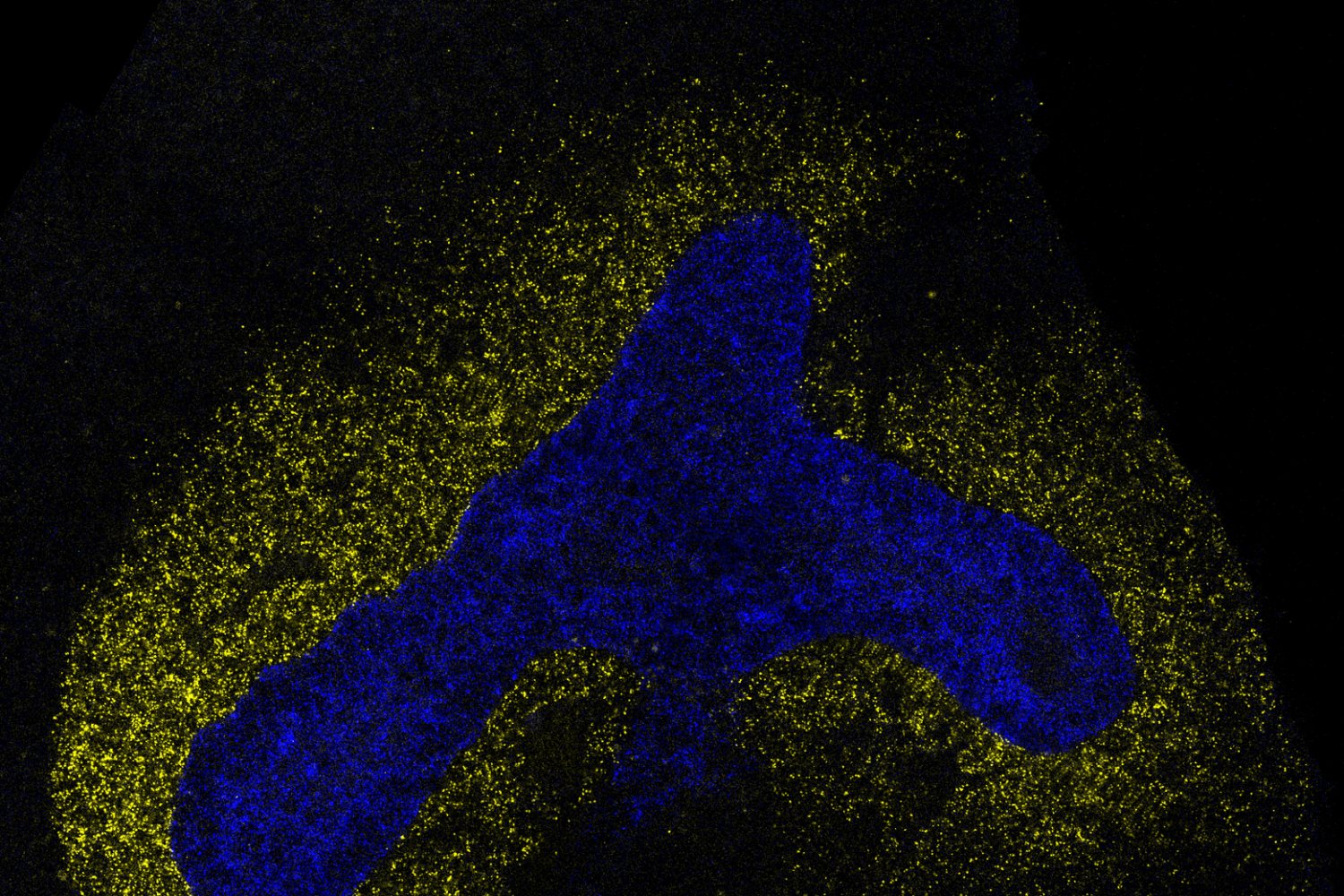
What if pathology foundation models could do more with less? GigaPath-Flash and GigaTIME-Flash cut computational demands while maintaining strong performance, opening the door to larger studies and broader exploration. The post GigaPath-Flash and GigaTIME-Flash: Toward population-scale discovery with efficient pathology foundation models appeared first on Microsoft Research.