Post-traumatic stress disorder (PTSD) is prevalent yet underreported among combat-exposed military personnel. We present Molhim, a culturally adapted multimodal conversational platform, and examine its PTSD screening configuration in a Saudi military healthcare context. The system pairs a system-controlled virtual agent with speech recognition, a large language model, visual understanding, and text-to-speech to deliver structured Arabic-language screening, including the PTSD Checklist for DSM-5 (PCL-5), and automated post-session analysis. In an observer-based feasibility pilot, ten soldiers rated the agent as respectful, safe, and potentially useful, with concordant clinician observations. We discuss design considerations for socially cooperative human-AI systems.
Cengiz Ozel, Waleed Nadeem, Samuel Potter et al.· 0 citations
The rapid growth in the volume, variety, and velocity of geospatial data has created data ecosystems that are highly distributed, heterogeneous, and semantically inconsistent. Existing data catalogs, portals, and infrastructures rely largely on keyword-based search with limited semantic support, which often fails to capture user intent and leads to weak retrieval performance. To address this challenge, this study proposes a knowledge graph-driven multi-agent framework for intelligent geospatial data discovery, powered by large language models. The framework introduces a unified geospatial metadata ontology as a semantic mediation layer to align heterogeneous metadata standards across platforms and constructs a geospatial metadata knowledge graph to explicitly model datasets and their multidimensional relationships. Building on the structured representation, it adopts a multi-agent collaborative architecture to perform intent parsing, knowledge graph retrieval, and answer synthesis, forming an interpretable and closed-loop discovery process. Results show that the framework substantially improves ranking quality and recall compared with traditional systems with high intent matching accuracy and discovery transparency. This study demonstrates the potential to advance geospatial data discovery toward a more semantic, intent-aware, and intelligent paradigm, shedding light on the development of next-generation intelligent and autonomous spatial data infrastructures.
Ruixiang Liu, Zhenlong Li, Ali Khosravi Kazazi· International Journal of Geo...· 0 citations
The rapid integration of foundation models into clinical practice and their use for public health inquiries necessitates a rigorous evaluation of their true clinical reasoning capabilities, which extends beyond success on narrow examinations. Current benchmarks, often based on medical licensing exams or curated vignettes, fail to capture the integrated, multimodal reasoning required in real-world patient care. To address this gap, we developed the Bones and Joints (B&J) Benchmark, a comprehensive evaluation framework comprising 1245 questions derived from real-world patient cases in orthopedics and sports medicine. This benchmark assesses models across seven core tasks that mirror the clinical reasoning pathway, including knowledge recall, text interpretation, image interpretation, diagnosis generation, treatment planning, and the underlying rationale. We evaluated 14 vision-language models (VLMs) and six large language models (LLMs), comparing their performance against expert-derived ground truth. Our findings reveal a pronounced performance gap. While state-of-the-art models achieved high accuracy, exceeding 90% on structured multiple-choice questions, their performance markedly declined on open-ended tasks requiring multimodal integration, with accuracy scarcely reaching 60%. VLMs demonstrated substantial limitations in interpreting medical images and frequently exhibited text-driven hallucinations. Notably, medical-specific models showed no consistent advantage over general-purpose counterparts. These results indicate that current foundation models face significant challenges in achieving independent clinical competence within highly specialized musculoskeletal fields. Their safe deployment should be limited to supportive, text-based roles, while advancement in core clinical tasks awaits fundamental breakthroughs in multimodal integration and visual understanding.
Dingyu Wang, Z. L. Yuan, Jiajun Liu et al.· npj Digital Medicine· 0 citations
Music Recommender Systems (MRSs) have long relied on an information retrieval framing, where progress is measured mainly through accuracy on retrieval-oriented subtasks. While effective, this reductionist paradigm struggles to address the deeper question of what makes a good recommendation. Attempts to broaden evaluation, through user studies or fairness analyses, have had limited impact. The emergence of Large Language Models (LLMs) disrupts this framework: LLMs are generative rather than ranking-based, making standard accuracy metrics questionable. They also introduce challenges such as hallucinations, knowledge cutoffs, non-determinism, and opaque training data, rendering traditional train/test protocols difficult to interpret. At the same time, LLMs create new opportunities, enabling natural language (NL) interaction and even allowing models to act as evaluators. This work argues that the shift toward LLM-driven MRSs requires rethinking evaluation. We first review how LLMs have impacted user modeling, item modeling, and NL-based recommendation in music. We then analyze evaluation practices from NLP, highlighting methodologies and open challenges relevant to MRSs. Finally, we synthesize insights, focusing on how LLM prompting applies to MRSs, to outline a structured set of success and risk dimensions. Our goal is to provide the MRSs community with an updated, pedagogical, and cross-disciplinary perspective on evaluation.
Elena Epure, Yashar Deldjoo, Bruno Sguerra et al.· ACM Transactions on Recommen...· 0 citations
Reach audiences
Advertise in front of researchers, engineers, and readers.
Online job advertisements can reveal changing skill demand only when competency mentions are recoverable as auditable text spans. Chinese lacks a large resource that combines explicit span-boundary rules with coverage of different recruitment genres. We present Chinese-SkillSpan, a corpus of 22,840 sentences from four Chinese recruitment sources. It uses a flat, ESCO-derived inventory of language skills and knowledge, knowledge, skills, and transversal skills and competences (LSKT), with Chinese-specific rules for minimal-complete, non-overlapping spans. Language models propose annotation drafts, but human reviewers retain authority over accepted offsets and types under a shared handbook. The benchmark uses identifier-strict scoring, exact and overlap-tolerant metrics, and source- and length-based analyses. Its evaluation reference is undergoing final human adjudication, so the current results are provisional estimates. The baseline study shows why the resource is challenging: exact extraction changes with Chinese boundary conventions, and accuracy varies across recruitment sources. Taken together, Chinese-SkillSpan contributes a multi-source span resource, a Chinese-specific annotation and evaluation protocol, and a reproducible baseline and diagnostic suite that exposes category, source, and boundary effects. Internal artifact names are confined to the supplementary reproducibility record. Project materials are maintained at https://github.com/AlfredJamesLi/chinese-skillspan-benchmark. The pretrained JobBERT-zh model is available at https://huggingface.co/AlfredJames/jobbert-zh.
Guojing Li, Zichuan Fu, Junyi Li et al.· Zenodo (CERN European Organi...· 0 citations
Large language models (LLMs) may judge whether information appears credible without necessarily establishing whether it corresponds to external facts. This study investigates this distinction by operationally separating Semantic Truth (ST), defined as the correspondence of textual claims with external states of affairs, from Epistemic Truth (ET), defined as the credibility or justification conveyed by a text through coherence, plausibility, evidential presentation, and consistency. The dataset comprised 274 source texts, including newer BBC and CNN articles, older CNN articles, and historical articles, from which controlled variants differing in factual accuracy and presentation were generated. In Phase 1, a single LLM reliability score remained relatively high even as factual accuracy decreased, with completely fabricated texts still receiving mean scores above 3 on a 1–5 scale. In some cases, the model also assigned high numerical reliability despite identifying substantial factual problems in its written justification. Phase 2 separately evaluated ST and ET across 548 authentic and fabricated observations. ST provided stronger discrimination between authentic and fabricated texts than ET, achieving an overall AUC of 0.801, sensitivity of 0.766, and specificity of 0.810. However, semantic discrimination varied markedly with information familiarity, ranging from near-chance performance for newer CNN articles to nearly perfect discrimination for older and historical material. These findings demonstrate that targeted semantic prompting improves factual discrimination but does not fully separate semantic correspondence from information familiarity, plausibility, and other non-factual textual cues. More broadly, the ST–ET framework exposes a potentially important form of truth inflation: epistemic credibility may remain high as semantic correspondence is progressively degraded through increasing fabrication. This provides a basis for future studies to determine how far epistemic credibility can be sustained or inflated as factual grounding deteriorates, thereby defining and quantifying an LLM’s tolerance for increasingly plausible fabrication.
Haoning Luo· Journal of High School Scien...· 0 citations
Starting from the fundamental equations of Jianzi Theory, this paper systematically derives the core equation systems of modern physics. The derivation introduces no external assumptions; it proceeds solely by applying limit conditions to the fundamental quantities of Jianzi Theory—vibrational level \mathcal{V}, position \mathbf{r}, and velocity \dot{\mathbf{r}}—and to its basic equations. The resulting equations include Newtonian mechanics, Maxwell's equations, the laws of thermodynamics, the Schrödinger equation, the Dirac equation, special relativity, the Einstein field equations, the Friedmann equations, and the structure of gauge field theory. All derivations are carried out within the coordinate background of absolute vacuum. (Note on AI-Assisted Computation Certain mathematical derivations and physical calculations in this paper were performed by an AI tool (large language model) based on the theoretical framework and postulate system provided by the author. Specifically, the AI tool contributed to: formula derivation, equation solving, integral evaluation, series summation, and recalculation verification of established quantum mechanical results. All physical insights, core assumptions, logical premises, and the theoretical framework itself were independently developed by the author. The AI tool served solely as an auxiliary instrument for mathematical derivation and computational verification, comparable in role to symbolic computation software or numerical tools routinely employed by researchers. The author has reviewed every derived result for physical plausibility, consistency with known experimental data, and logical coherence, and assumes full responsibility for all conclusions. This statement is provided in the interest of academic transparency, while clearly distinguishing between the originality of ideas and the auxiliary role of computation.)
Yanlei Liu· Zenodo (CERN European Organi...· 0 citations
PeerReviewAgents is a multi-agent framework for structured manuscript review with large language models. A default run converts a PDF locally, applies an optional desk screen, and sends the manuscript to five specialist reviewers covering scientific validity, quantitative evidence, contribution and prior work, reporting and reproducibility, and ethics. Two parallel auditors check methods completeness and citation support. A meta-reviewer prepares a focused agenda, an advocate and skeptic debate it, and an editor issues an accept, minor revision, major revision, or reject recommendation. A journal scout can optionally suggest publication venues. Each run writes the individual reports, audits, debate, decision letter, usage records, and configuration needed to inspect the process. The framework uses graded Haiku, Sonnet, and Opus routing by default and also supports OpenRouter and OpenAI providers. Optional research tools query scholarly literature sources, while target journal settings and revision rounds support venue-specific and follow-up review. The system is research software for review assistance and evaluation, not a substitute for accountable editorial judgment. Garrett, Navarro Garrido and Garcia-Carbonell contributed equally.
Patrick T. Garrett, Aleix Navarro Garrido, Ricard Garcia‐Carbonell et al.· Zenodo (CERN European Organi...· 0 citations
Online job advertisements can reveal changing skill demand only when competency mentions are recoverable as auditable text spans. Chinese lacks a large resource that combines explicit span-boundary rules with coverage of different recruitment genres. We present Chinese-SkillSpan, a corpus of 22,840 sentences from four Chinese recruitment sources. It uses a flat, ESCO-derived inventory of language skills and knowledge, knowledge, skills, and transversal skills and competences (LSKT), with Chinese-specific rules for minimal-complete, non-overlapping spans. Language models propose annotation drafts, but human reviewers retain authority over accepted offsets and types under a shared handbook. The benchmark uses identifier-strict scoring, exact and overlap-tolerant metrics, and source- and length-based analyses. Its evaluation reference is undergoing final human adjudication, so the current results are provisional estimates. The baseline study shows why the resource is challenging: exact extraction changes with Chinese boundary conventions, and accuracy varies across recruitment sources. Taken together, Chinese-SkillSpan contributes a multi-source span resource, a Chinese-specific annotation and evaluation protocol, and a reproducible baseline and diagnostic suite that exposes category, source, and boundary effects. Internal artifact names are confined to the supplementary reproducibility record. Project materials are maintained at https://github.com/AlfredJamesLi/chinese-skillspan-benchmark. The pretrained JobBERT-zh model is available at https://huggingface.co/AlfredJames/jobbert-zh.
Guojing Li, Zichuan Fu, Junyi Li et al.· Zenodo (CERN European Organi...· 0 citations
Starting from the fundamental equations of Jianzi Theory, this paper systematically derives the core equation systems of modern physics. The derivation introduces no external assumptions; it proceeds solely by applying limit conditions to the fundamental quantities of Jianzi Theory—vibrational level \mathcal{V}, position \mathbf{r}, and velocity \dot{\mathbf{r}}—and to its basic equations. The resulting equations include Newtonian mechanics, Maxwell's equations, the laws of thermodynamics, the Schrödinger equation, the Dirac equation, special relativity, the Einstein field equations, the Friedmann equations, and the structure of gauge field theory. All derivations are carried out within the coordinate background of absolute vacuum. (Note on AI-Assisted Computation Certain mathematical derivations and physical calculations in this paper were performed by an AI tool (large language model) based on the theoretical framework and postulate system provided by the author. Specifically, the AI tool contributed to: formula derivation, equation solving, integral evaluation, series summation, and recalculation verification of established quantum mechanical results. All physical insights, core assumptions, logical premises, and the theoretical framework itself were independently developed by the author. The AI tool served solely as an auxiliary instrument for mathematical derivation and computational verification, comparable in role to symbolic computation software or numerical tools routinely employed by researchers. The author has reviewed every derived result for physical plausibility, consistency with known experimental data, and logical coherence, and assumes full responsibility for all conclusions. This statement is provided in the interest of academic transparency, while clearly distinguishing between the originality of ideas and the auxiliary role of computation.)
Yanlei Liu· Zenodo (CERN European Organi...· 0 citations
PeerReviewAgents is a multi-agent framework for structured manuscript review with large language models. A default run converts a PDF locally, applies an optional desk screen, and sends the manuscript to five specialist reviewers covering scientific validity, quantitative evidence, contribution and prior work, reporting and reproducibility, and ethics. Two parallel auditors check methods completeness and citation support. A meta-reviewer prepares a focused agenda, an advocate and skeptic debate it, and an editor issues an accept, minor revision, major revision, or reject recommendation. A journal scout can optionally suggest publication venues. Each run writes the individual reports, audits, debate, decision letter, usage records, and configuration needed to inspect the process. The framework uses graded Haiku, Sonnet, and Opus routing by default and also supports OpenRouter and OpenAI providers. Optional research tools query scholarly literature sources, while target journal settings and revision rounds support venue-specific and follow-up review. The system is research software for review assistance and evaluation, not a substitute for accountable editorial judgment. Garrett, Navarro Garrido and Garcia-Carbonell contributed equally.
Patrick T. Garrett, Aleix Navarro Garrido, Ricard Garcia‐Carbonell et al.· Zenodo (CERN European Organi...· 0 citations
This software package contains the Musiconis Model Context Protocol (MCP) server and companion FastAPI/Gradio application developed for the article “Model Context Protocol Server for the Musiconis Medieval Music Iconography Database,” submitted to Digital Medievalist. The package enables LLM-assisted exploration of the Musiconis medieval music iconography database. It provides MCP tools for searching and retrieving iconographic records, accessing reference data and database statistics, generating summaries, and asking natural-language questions about the collection. The repository includes the Python application, MCP server, API routes, database bootstrap scripts, tests, technical documentation, SQL and JSON runtime fixtures, Docker configuration, and installation instructions. The large Musiconis JPEG image corpus is intentionally excluded from this software deposit.
Xavier Fresquet· Zenodo (CERN European Organi...· 0 citations
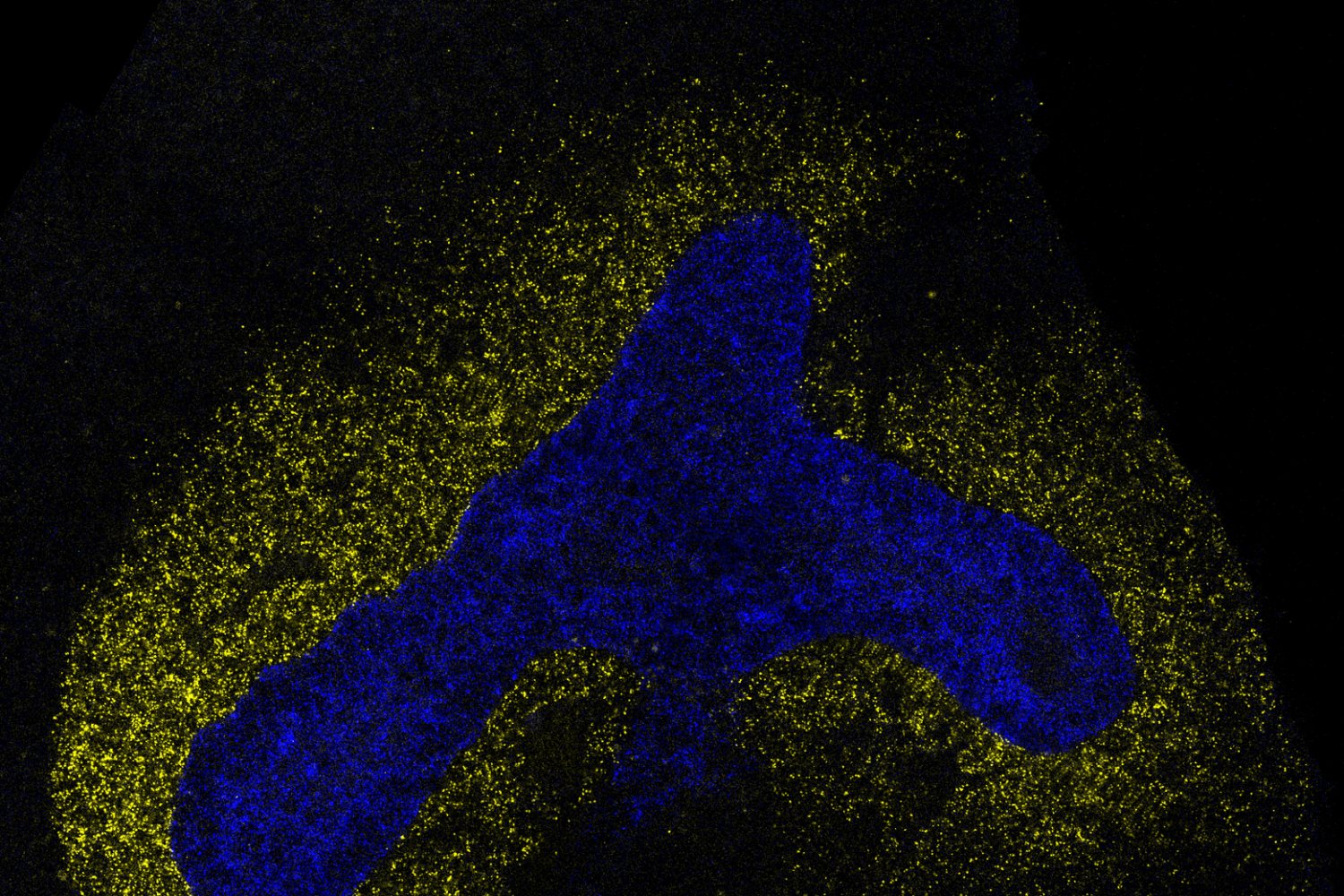
What if pathology foundation models could do more with less? GigaPath-Flash and GigaTIME-Flash cut computational demands while maintaining strong performance, opening the door to larger studies and broader exploration. The post GigaPath-Flash and GigaTIME-Flash: Toward population-scale discovery with efficient pathology foundation models appeared first on Microsoft Research.