Predicting storm surge induced by landfalling tropical cyclones is crucial for flood mitigation and coastal risk management. Traditionally, physics-based numerical models simulate storm surge by solving the Navier--Stokes equations using numerical methods, but these simulations are computationally expensive. Generative models are promising for storm surge emulation because they can generate diverse realizations rather than producing a single deterministic prediction. However, their use for storm surge emulation remains largely unexplored. In this paper, we leverage diffusion models for storm surge surrogate modeling, combining a baseline prediction stage with conditional generation to provide a more interpretable modeling framework. We develop SurgeGen, a two-stage generative framework for generating storm surge scenarios conditioned on hypothetical storms with parameters defined in a continuous space. First, a baseline model produces a coarse estimate of the storm surge height. This estimate then conditions a diffusion model, which generates refined storm surge scenarios that better capture spatial patterns and variability. We demonstrate that our approach can generate realistic and diverse storm surge scenarios under conditions both within and outside the training distribution.
Retrieval-Augmented Generation (RAG) has made dense retrieval over large document collections a standard building block. Organizations increasingly outsource vector indexes to untrusted clouds, exposing proprietary corpora and user queries. Cryptographic protection is challenging because each query searches corpus-scale state, causing computation, correlated randomness, and communication to grow with the corpus. At million-document scale, a naive secure implementation takes minutes and about 90 GB of communication per query. Even recent optimized systems require 10--22 seconds. We propose Spruce (Scalable Private Outsourced Retrieval Using Compact Embeddings), which co-designs representations with the cryptographic protocol. Spruce learns compact binary codes that preserve candidates for full-precision reranking, replacing corpus-wide embedding scoring with efficient Hamming-distance computation under two-server multi-party computation (MPC). A corpus-calibrated fixed-radius protocol avoids multi-round candidate selection while preserving retrieval quality. Spruce also provides private cluster pruning, which trades minor quality loss for substantially less computation, and a one-core owner-operated dealer that removes cloud OT preprocessing bottlenecks. Across four corpora containing 383K--5.42M documents, Spruce preserves the original search quality with median candidate sets of only 382--1,952. At 10 Gbps inter-server bandwidth, full scans take 0.21--2.97 seconds, $4.8$--$6.7\times$ faster than the closest measured prior work. Private pruning takes 0.06--1.09 seconds, achieves $13.1$--$22.9\times$ speedups, and retains $93.9\%$--$97.3\%$ of full-float NDCG. On the largest corpus, pruning and the dealer jointly improve sustained throughput by $31.5\times$ at 1 Gbps per link.
We propose a geometric parametrization of the filters in a single convolutional layer: the parameter is no longer an ordered family of filter vectors, but a fixed-dimensional subspace of the filter space. For one-dimensional finite-stride convolution, the filter-to-convolution-operator correspondence gives an injective linear map $\mathcal{C}:\mathcal{K}\to H$. This map sends filter subspaces in $\mathrm{Gr}(q,\mathcal{K})$ to operator subspaces in $\mathrm{Gr}(q,H)$; composing it with the Pl\"ucker embedding yields a projective parametrization $\Phi:\mathrm{Gr}(q,\mathcal{K})\to\mathbb{P}(\bigwedge^q H)$. Using $T_U\mathrm{Gr}(q,\mathcal{K})\cong\mathrm{Hom}(U,\mathcal{K}/U)$, we compute the differential of the induced Grassmannian map and show that the differential of $\Phi$ is injective at every point. We then use the vanishing equations for Pl\"ucker coordinates and standard affine coordinates on a Grassmannian to prove that $\mathrm{Gr}(q,\mathcal{C}(\mathcal{K}))\hookrightarrow\mathrm{Gr}(q,H)$ is a closed embedding, and hence that $\Phi$ is a closed embedding. Consequently, the parameter space is isomorphic to its projective image, the parametrization is finite and birational onto its image, every fiber is a singleton, and the resulting projective neural variety is smooth. For $k=4$ and $q=2$, we also use Singular to recover the image ideal and check its dimension, degree, chart rank, and smoothness. This computation illustrates, rather than replaces, the general proof. Finally, we discuss possible connections with filter redundancy and low-rank convolution, while distinguishing the proved geometric results from application proposals requiring numerical validation.
Logit-based knowledge distillation for autoregressive language models usually aligns teacher and student next-token distributions over the entire vocabulary. However, this global objective overlooks relative preferences among likely token alternatives. Existing local approaches often select candidate tokens from either the teacher or the student alone. Teacher-only selection can miss tokens that the student considers likely, while student-only selection can rely on an inaccurate ranking early in training. We propose Adaptive Local Relational Alignment (ALRA), a position-specific framework combining student proposals with teacher guidance. At each valid prediction position, the student proposes likely tokens, while the teacher's most probable token is included as an anchor. ALRA adjusts the number of selected tokens according to how broadly the teacher distributes probability within this candidate set relative to the current batch. Adaptive Local Divergence retains the mass-matching term and separately matches the relative token distributions within the selected and remaining vocabulary regions. Unlike the exact full-vocabulary decomposition, it replaces the teacher-mass coefficients of the two conditional terms with unit coefficients, preventing either term from being downweighted solely because its region has low teacher probability. Student-Weighted Pairwise Relational Alignment emphasizes high-probability token pairs with small student probability gaps and gives less weight to unlikely or clearly separated pairs. Experiments on The Pile with randomly initialized 200M- and 500M-parameter students across nine zero-shot benchmarks yield average accuracies of 36.62% and 37.40%. ALRA exceeds the strongest competing distillation baseline by 0.94 and 0.83 percentage points and improves over pre-training without distillation by 2.31 and 2.91 points, respectively.
Quang Hoang Trung, Quang Huu Hieu, Phuc Van Hoang Nguyen et al.· 0 citations
Reach audiences
Advertise in front of researchers, engineers, and readers.
Constant optimization refines the numerical coefficients of candidate expressions in tree-based genetic programming for symbolic regression. But its per-generation cost has led modern GPU-accelerated frameworks to omit it or restrict it to lightweight forms. We present a GPU-resident, batched Levenberg--Marquardt solver that optimizes constants across a structurally heterogeneous population of expression trees using a fixed number of population-wide CUDA launches per iteration. Reverse-mode automatic differentiation assembles the per-tree Jacobian in one backward sweep, making the dominant per-iteration cost independent of the number of constants per tree, and a double-precision delivery guard guarantees that returned constants are never worse than their initial values. On early-generation populations, the solver sustains up to $5.1{\times}10^{5}$ trees per second on an NVIDIA A100; at a GPU-saturated benchmark configuration it delivers roughly $9.9{\times}$ the throughput of Operon running on a 64-core EPYC 7763, while matching fp64-reference quality. Integrated in-process into EvoGP, the solver enables end-to-end search to recover governing equations on $10$ of $18$ constructed problems versus 0 for stock EvoGP. Our code is at https://github.com/TensorConv/CuSR.
Hao Mao, Xu Tony Liu, Shuai Lu et al.· 0 citations
This paper addresses infinite-dimensional Bayesian inference for inverse problem of partial differential equations with model parameters in infinite-dimensional Hilbert space. To effectively incorporate prior information, we propose a novel continuous normalizing flows based infinite-dimensional model. Specifically, by introducing a well-defined neural ordinary differential equation in infinite-dimensional space, a simple reference measure can be transformed into a more complex measure which encodes the prior information. A corresponding theoretical framework is established to ensure the well-posedness of our proposed Bayesian prior in infinite-dimensional space. We also provide training methods of the prior for two distinct data settings, along with two sampling algorithms for the resulting Bayesian posterior. The proposed framework is applied to three representative inverse problems: the simple smooth inverse problem, inverse scattering problem, and the inverse heat conduction problem. Numerical experiments support the theoretical analysis and demonstrate the efficiency of the proposed algorithms.
Long-duration gravitational-wave modelling must resolve fast orbital motion together with slow dissipative evolution while preventing small numerical errors from accumulating into secular phase drift. Here we ask whether the finite-time evolution map itself can be learned as an explicit, differentiable, structure-preserving object and then repeatedly composed through a complete inspiral. We construct three neural-flow architectures: a symplectic and slimplectic flow on Galley's doubled phase space, [SINFONIA-J0]; a Taylor-anchored flow, [SINFONIA-J1]; and a Magnusian flow that learns the finite-time dissipative correction in the interaction picture, [SINFONIA-J2]. Applied to a 2.5PN neutron-star inspiral, all three expose the same controlling mechanism: long-time accuracy is governed not by pointwise map error alone, but by its signed projection onto a single secular channel fixed by energy--angular-momentum balance. Encoding this structure allows the learned maps to remain accurate through $10^{2}$--$10^{5}$ window compositions to coalescence at timesteps of a full orbital period and beyond, reaching chained phase errors orders of magnitude below a benchmark slimplectic integrator at lower cost. The same secular structure can also be exploited for physics inference: when the channel is left unconstrained, the accumulated phase retains enough information to recover an un-modelled dynamical-friction-like force, both parametrically and as a learned function of separation. Network-off controls isolate the contribution of learning from the analytic structure already built into each map. These results establish a proof of concept for structure-preserving learned evolution maps as tools for fast long-duration integration and physics inference in gravitational-wave source modelling.
Remote voice studies often retain a final audio file with limited evidence about how it was captured, transferred, processed, and accepted. This paper presents VocalCap, an institution-controlled, browser-based system for self-guided capture of voice and related acoustic signals by participants without technical training. A versioned protocol drives the workflow. Each accepted recording retains a browser-native object, a client-lossless Float32 WAV derived from the same MediaStream, and a server-canonical mono PCM16 WAV, linked to evidence of capture execution, technical quality, byte-level integrity, recovery, and transformation provenance. IndexedDB preserves accepted browser artifacts until server confirmation, while session completion requires successful verification of every task and artifact. Software tests challenged the acquisition contracts with malformed or altered objects, exact-zero interruptions, channel-topology variants, and interrupted or repeated operations. A post hoc technical audit of 39 consented pilot recordings found 25 sample-identical stereo files and 14 files with signal confined to the left channel. Topology-aware active-channel selection limited the canonical root-mean-square level difference to less than 0.001 dB in all 14 affected files; equal-weight stereo averaging would have introduced approximately 6.02 dB of attenuation. Production end-to-end verification completed two five-task profiles in Chromium and WebKit, yielding 10 accepted recordings and 30 retained artifacts that passed server-side integrity and format checks. The results verify VocalCap's software behavior under the tested browser-engine conditions. Device-level acoustic agreement, target-population usability, clinical validity, and biomarker performance remain subjects for separate studies.
Large Language Models (LLMs) often help users generate artifacts through iterative cycles of generation and revision in conversation. A challenge here is that, when users specify only a local change during revision, LLMs must instead identify the relevant dependencies and propagate the revision to all affected parts of the artifact. This paper studies this ability of LLMs on conversationally generated artifacts, where the artifact context and its dependencies may be embedded in the conversation history. Toward practical use, we also explore cost-effective test-time compute for this new setting. Specifically, we introduce a new benchmark for this setting, and evaluate nine revision methods, including sequential reflection and parallel sampling variants, using gpt-oss-20b/120b, gpt-5.4-mini, and qwen3.5-9b/27b/122b on the benchmark. The results show that baselines achieve accuracies of 68.3--93%, and the most cost-effective method is selecting from three parallel samples using either LLM-based or medoid selection, which improves accuracy by 2.2--9.7%. Our code and dataset are available at https://github.com/ntt-dkiku/llm-revision-propagation.
Smoothness of a function on the real line is reflected in the decay of its Fourier transform, which suggests that smoothness of a function in $L^2(G)$ for a group $G$ should mean concentration of the Fourier coefficients at low frequency. Such a reading presupposes an ordering of the irreducible representations of $G$, but for non-abelian $G$, no ordering is canonical. Given a symmetric generating set $S$, the Laplacian of the associated Cayley graph is block diagonal over the dual, and we order the irreps by the mean of the eigenvalues in each block. This produces an ordering function $\omega:\widehat{G}\to\mathbb{R}$ that depends only on the pair $(G,S)$. This function is bounded between zero and two, vanishing only at the trivial representation and achieving the upper bound exactly when the Cayley graph is bipartite. We then ask how much freedom the construction has. Within the class of operators satisfying natural axioms, the induced orderings are exactly the real functions on the dual vanishing at the trivial representation and agreeing on conjugate pairs, and the orderings coming from inversion orbits of conjugacy classes form a basis for them. We cut the freedom down further by requiring two additional inputs: nonnegativity of the class weights and a declaration of which group elements count as uniform incremental changes, which pins the operator to the Cayley-Laplacian up to positive scale. We observe that the construction persists for compact groups even though the Cayley graph does not, and we extend the theory to finite sets carrying a transitive group action, where the acting group selects which frequencies exist and the generating set orders them. The answer to the title question is therefore that smoothness is a property of a function together with a choice of group and generating set, not of the function alone.
Counterfactual audits are the standard tool for checking whether a clinical agent treats demographically distinct but clinically identical patients differently. They report a flip rate: how often an action changes when only the patient descriptor changes. We show that this quantity is uninterpretable on its own. Re-running an identical condition ten times over sixteen vignettes (same narrative, same descriptor string, nothing varied) moved a clinical agent's action in 8.7% of outcome-vignette cells, and instability was heterogeneous across actions by a factor of eight, from 0.022 for ICU escalation to 0.179 for controlled-substance caution. No demographic contrast in our data was distinguishable from that floor. A second model gives a pooled floor of 6.7% and ranks the six actions almost identically (Spearman 0.94, exact p=0.017), so the floor is not one system's artefact. Majority-vote aggregation over five draws removes 39% of it and then flattens, and a null simulation attributes the residue to heterogeneous per-cell rates, so replication mitigates without eliminating. Any counterfactual fairness estimate reported without a per-action floor beside it therefore cannot be read as evidence of disparity. The measurements were taken with FairMedAgent, an evaluation harness for disparity in the actions of clinical LLM agents whose estimand, the within-range counterfactual flip rate, counts only flips between actions a published decision rule admits and a clinician has adjudicated. That estimand requires band adjudication, which is under way; no disparity result is claimed here. Each synthetic vignette runs a six-stage trajectory (five model-facing decisions around a deterministic environment step) under fixed-form conditions spanning race, sex, age, insurance, English proficiency, and their intersections. The harness, the floor protocol, and every analysis script are released.
Writing proficiency manifests in how students develop content, organize ideas, choose words, and use language. Despite growing interest in LLM-based student simulation, whether LLMs can reproduce such multidimensional variation in extended writing remains largely unexplored. In this work, we explore if language models can realistically simulate student writing, and introduce SWIM, a task that formulates Student Writing sIMulation as proficiency-conditioned essay generation. We evaluate prompting, supervised fine-tuning (SFT), and reinforcement learning (RL) methods for writing simulation using automated essay scoring as a measure of profile alignment. Extensive experiments reveal that prompting provides limited proficiency control, even for strong proprietary LLMs with rubric-grounded strategies. In particular, while models can adjust content-oriented traits, they struggle to reproduce the lexical, grammatical, and organizational variation in different proficiency levels. SFT substantially improves alignment, while RL with the proposed proficiency-alignment reward yields further gains across all writing traits and essay prompts. Our findings suggest that explicit supervision enables substantially stronger profile alignment than prompting alone, while authentic low-proficiency writing remains challenging to reproduce.
Heejin Do, Jakub Kontak, Mrinmaya Sachan· 0 citations
A weeklong summer workshop brought higher education faculty to campus to explore how AI and machine learning materials can be adapted for their classrooms.
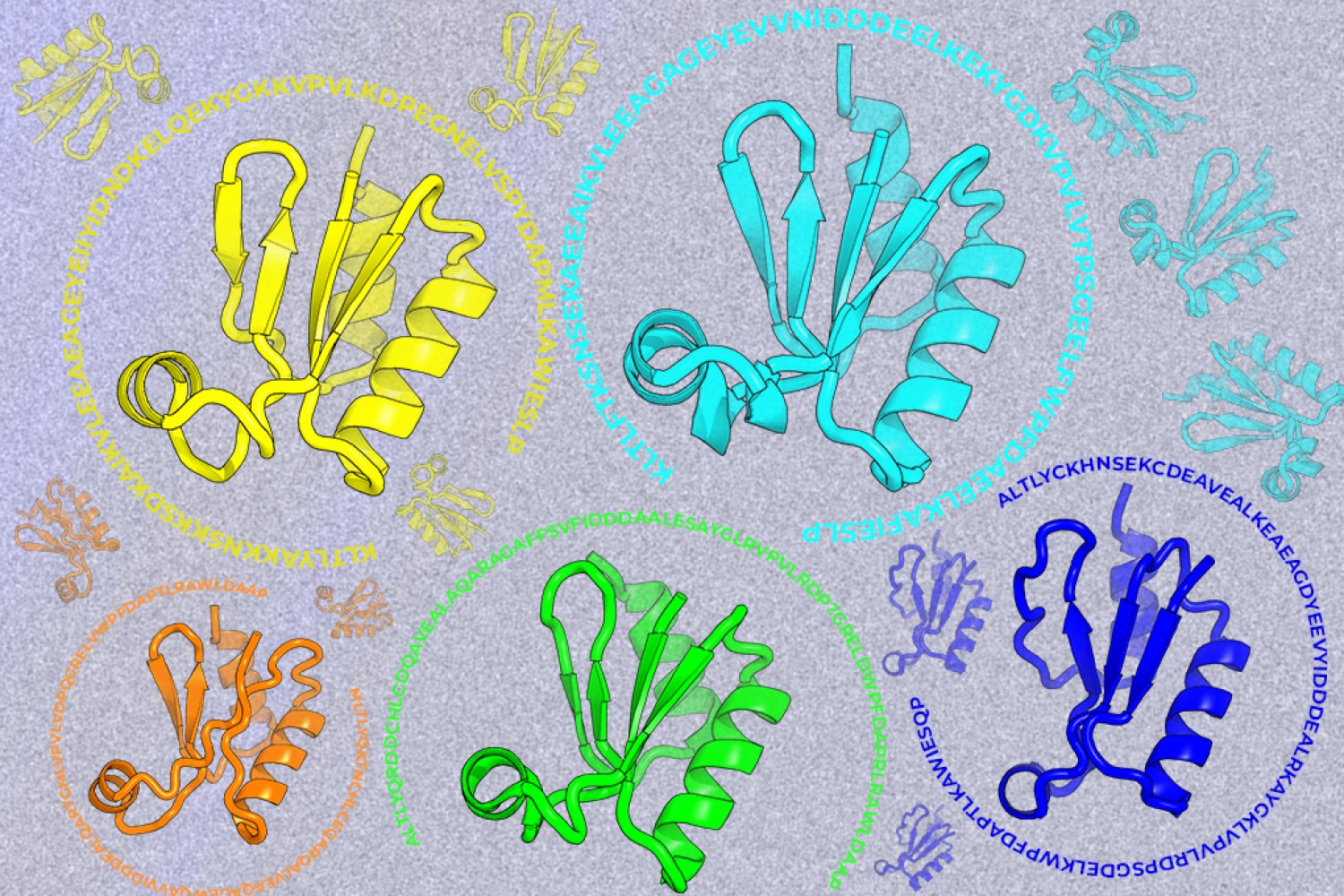
A new machine-learning framework aims to improve the success rate of computational protein design while moving away from results that reproduce sequences found in nature.
MIT News · Artificial Intelligence· news.mit.eduAug 24, 2026