Existing circuit discovery methods rely on templated tasks with clean counterfactuals, limiting their use on diverse natural text. We adapt Contextual Decomposition for Transformers (CD-T) for unstructured settings via label-balanced activation means and task-directional relevance scoring, enabling counterfactual-free circuit discovery. We leverage the discovered circuits for Circuit-Targeted Supervised Fine-Tuning (CT-SFT), restricting parameter updates to task-relevant heads and LayerNorm. Experiments on NusaX cross-lingual sentiment transfer show that CT-SFT is highly competitive for low-resource adaptation. While non-circuit sparse updates and full fine-tuning sometimes match target accuracy through capacity recruitment, CT-SFT most consistently avoids catastrophic forgetting, preserving source-language and related-task performance. Extensions to XNLI support the source-retention and intervention findings on a harder task and two model families, showing that circuit-targeted adaptation provides a more controlled, intervention-supported alternative to global fine-tuning.
Khumaisa Nur'aini, Ayu Purwarianti, Alham Fikri Aji et al.· 0 citations
Foundation models for healthcare require balancing robust generalization across heterogeneous clinical populations and disease settings with the architectural simplicity needed for deployment. We present a pre-trained model focused on demographic attributes that enhances feature utility across medical domains in a plug-and-play fashion. We introduce the General Demographic Pre-trained (GDP) model, designed to extract intrinsic representations of patient status based on age and sex, the two most ubiquitous clinical features. The composition of GDP was optimized by investigating various encoding methods and visit-reordering schemes. The model was pre-trained and transferability was validated by embedding the learned representations into diverse disease and geographic cohorts characterized by distinct demographic profiles. The optimal model configuration was subsequently validated against top-performing tabular foundation models (TabPFN, TabICL, and TabFM). Our findings demonstrate that concatenating GDP-derived embeddings with raw residual features consistently enhances predictive performance across classification tasks while elevating the relative importance of demographic attributes. The embedding transformation provides superior representational separability compared to the original data distribution, yielding competitive discrimination performance across metrics against all three general-purpose foundation models and tree-based algorithm. GDP has successfully served the purpose of a foundation model, which produce enriched representations that amplify the predictive insight of these features beyond their raw form. The generated embeddings can be directly concatenated with residual features, serving as an enhancement layer that maintains full compatibility with standard tabular classifiers.
Multi-view learning is widely applied to real-life datasets, but it often suffers from both missing views and missing labels. Prior probabilistic approaches addressed the missing view problem by using a product-of-experts scheme to aggregate representations from present views and achieved superior performance over deterministic classifiers, using the information bottleneck (IB) principle. However, the IB framework is inherently fully supervised and cannot leverage unlabeled data. In this work, we propose a semi-supervised generative model that utilizes both labeled and unlabeled samples in a unified framework. Our method maximizes the likelihood of unlabeled samples to learn a latent space shared with the IB on labeled data. We also include modality-specific information in likelihood modeling and perform cross-view mutual information maximization in the shared latent space to enhance the extraction of shared information across views. Compared to existing approaches, our model achieves better predictive and generation performance on complex datasets with missing views and limited labeled samples.
We consider linear two-time-scale stochastic approximation algorithms driven by martingale noise. Recent applications in machine learning motivate the need to understand finite-time error rates, but conventional stochastic approximation analyses focus on either asymptotic convergence in distribution or finite-time bounds that are far from optimal. Prior work on asymptotic central limit theorems (CLTs) suggests that two-time-scale algorithms may be able to achieve $1/\sqrt{K}$ error in expectation, with a constant given by the expected norm of the limiting Gaussian vector. However, the best known finite-time rates are much slower. We derive the first nonasymptotic Wasserstein-1 CLT for linear two-time-scale stochastic approximation with Polyak-Ruppert averaging driven by martingale difference noise. As a corollary, we show that the expected error achieved by Polyak-Ruppert averaging decays at rate $1/\sqrt{K}$, which significantly improves on the rates of convergence in prior works.
Seo Taek Kong, Sihan Zeng, Thinh T. Doan et al.· 0 citations
Reach audiences
Advertise in front of researchers, engineers, and readers.
As trajectories sampled by policies used by reinforcement learning (RL) and generative flow networks (GFlowNets) grow longer, credit assignment and exploration become more challenging, and the long planning horizon hinders mode discovery and generalization. The challenge is particularly pronounced in entropy-seeking RL methods, such as generative flow networks, where the agent must learn to sample from a structured distribution and discover multiple high-reward states, each of which take many steps to reach. To tackle this challenge, we propose an approach to incorporate the discovery of action abstractions, or high-level actions, into the policy optimization process. Our approach involves iteratively extracting action subsequences commonly used across many high-reward trajectories and `chunking' them into a single action that is added to the action space. In empirical evaluation on synthetic and real-world environments, our approach demonstrates improved sample efficiency performance in discovering diverse high-reward objects, especially on harder exploration problems. We also observe that the abstracted high-order actions are interpretable, capturing the latent structure of the reward landscape of the action space. This work provides a cognitively motivated approach to action abstraction in RL and is the first demonstration of hierarchical planning in amortized sequential sampling.
Oussama Boussif, L\'ena N\'ehale Ezzine, Joseph D Viviano et al.· 0 citations
Clustering is a fundamental task in machine learning and data science, and similarity graph-based clustering is an important approach within this domain. Doubly stochastic symmetric similarity graphs provide numerous benefits for clustering problems and downstream tasks, yet learning such graphs remains a significant challenge. Marcus theorem states that a strictly positive symmetric matrix can be transformed into a doubly stochastic symmetric matrix by diagonal matrices. However, in clustering, learning sparse matrices is crucial for computational efficiency. We extend Marcus theorem by proposing the Marcus mapping, which indicates that certain sparse matrices can also be transformed into doubly stochastic symmetric matrices via diagonal matrices. Additionally, we introduce rank constraints into the clustering problem and propose the Doubly Stochastic Adaptive Neighbors Clustering algorithm based on the Marcus Mapping (ANCMM). This ensures that the learned graph naturally divides into the desired number of clusters. We validate the effectiveness of our algorithm through extensive comparisons with state-of-the-art algorithms. Finally, we explore the relationship between the Marcus mapping and optimal transport. We prove that the Marcus mapping solves a specific type of optimal transport problem.
Jinghui Yuan, Chusheng Zeng, Fangyuan Xie et al.· 0 citations
Clinical guidelines underscore the importance of regularly monitoring and surveilling arteriovenous fistula (AVF) access in hemodialysis patients to promptly detect any dysfunction. Although phono-angiography/sound analysis overcomes the limitations of standardized AVF stenosis diagnosis tool, prior studies have depended on conventional feature extraction methods, restricting their applicability in diverse contexts. In contrast, representation learning captures fundamental underlying factors that can be readily transferred across different contexts. We propose an approach based on deep denoising autoencoders (DAEs) that perform dimensionality reduction and reconstruction tasks using the waveform obtained through one-level discrete wavelet transform, utilizing representation learning. Our results demonstrate that the latent representation generated by the DAE surpasses expectations with an accuracy of 0.93. The incorporation of noise-mixing and the utilization of a noise-to-clean scheme effectively enhance the discriminative capabilities of the latent representation. Moreover, when employed to identify patient-specific characteristics, the latent representation exhibited performance by surpassing an accuracy of 0.92. Appropriate light-weighted methods can restore the detection performance of the excessively reduced dimensionality version and enable operation on less computational devices. Our findings suggest that representation learning is a more feasible approach for extracting auscultation features in AVF, leading to improved generalization and applicability across multiple tasks. The manipulation of latent representations holds immense potential for future advancements. Further investigations in this area are promising and warrant continued exploration.
Li-Chin Chen, Yi-Heng Lin, Li-Ning Peng et al.· 0 citations
This paper presents an information-gain-guided reinforcement-learning sensor-selection framework for single-vessel tracking in heterogeneous maritime sensor networks. The proposed approach is motivated by information-theoretic sensor management: instead of activating all sensors or repeatedly performing computationally expensive online expected-information-gain evaluation, a learned policy selects one tracking-relevant sensor at each decision epoch. A Bayesian sequential Monte Carlo tracker estimates the vessel state from noisy measurements and provides a belief representation for scheduling under nonlinear and non-Gaussian conditions. A Proximal Policy Optimization agent selects one of five sensors in a georeferenced simulation of the CMMI Smart Marina testbed at Ayia Napa Marina, Cyprus. The policy is trained on the testbed's actual five-sensor configuration. The agent observes belief-state, detection-history, coverage, sensor-geometry, and realized-information-gain features. The reward is defined as a realized-information-gain term gated by an observability mask. Final-test simulations compare the proposed framework with random single-sensor selection, always-on sensing using all sensors simultaneously, and the expected-information-gain sensor-selection baseline proposed in our previous work. Results show that the learned policy achieves tracking performance close to always-on sensing while activating only one sensor per decision time step and avoiding the computationally expensive online entropy search required by expected-information-gain selection. Additional zero-shot evaluation without retraining on ten moderately perturbed versions of actual layout configuration showed broadly stable tracking, with any increase in positional tracking error remaining below 1 meter across all perturbations.
Andrei Starodubov, Yaqub Aris Prabowo, Andreas Hadjipieris et al.· 0 citations
Predictive modeling for clinical decision support requires both strong predictive performance and transparent, auditable, and human-reviewable decision logic. Although deep learning and tree-based ensemble methods can achieve high accuracy, their black-box nature remains a major obstacle to trustworthy clinical deployment. Moreover, clinical prediction often operates under practical constraints, including limited sample sizes, severe class imbalance, and feature evolution arising from changes in diagnostic criteria or clinical documentation practices. We propose Medical Heuristic Learning (MHL), a constrained paradigm for LLM-assisted rule learning. Rather than relying on updates to implicit model weights, MHL integrates statistical probes, medical knowledge probes, initial rule synthesis, and iterative rule optimization to construct an executable rule-based expert system. The resulting rule system is expressed entirely using the native logical and control-flow constructs of a programming language. Valid rule versions are recorded and retained along the search trajectory, making the decision logic explicit, interpretable, and auditable. MHL also supports continual learning by using previously validated rules as a starting point and iteratively revising them in response to updated feature information under data drift or feature evolution. MHL is not tied to any specific programming language. Comprehensive experiments on medical datasets show that MHL achieves predictive performance comparable to that of state-of-the-art methods, performs favorably in small-sample and highly imbalanced settings, and supports the transfer and adaptive revision of validated rules under feature evolution. Overall, these findings suggest that non-gradient-based heuristic systems offer an approach to balancing predictive performance and transparency in clinical decision support.
Leveraging Large Language Models (LLMs) to automatically formulate and solve optimization problems from natural language has emerged as an efficient paradigm for automated optimization. However, existing methods still exhibit limited generalization: they are sensitive to superficial narrative variations, reuse experience mainly at the case level, and struggle to adapt to shifted or emerging problem types. We propose OptSkills, an archetype-centric skill learning and reasoning agent system for optimization modeling and solving. To improve robust generalization, our system clusters problems by their underlying archetypes rather than surface narratives. To improve in-distribution generalization, it explores diverse modeling paradigms and solver configurations within each cluster, then distills successful trajectories into reusable workflow-level skills. To improve out-of-distribution generalization, it refines existing skills or expands the skill library using newly obtained trajectories. Our system achieves a state-of-the-art micro-averaged accuracy of 68.27% on datasets encompassing diverse problem types and scenarios. In addition, on MIPLIB-NL, a highly challenging large-scale and high-dimensional benchmark, it achieves 26.91% accuracy, outperforming DeepSeek-V3.2-Thinking by 4.53%. After skill learning on Nano-CO, it reaches 72.79% on the OOD NLCO benchmark. Code and skills are available at https://github.com/fujiwaranoM0kou/OptSkills.
Haochen Yang, Ke Zhao, Mengyuan Ma et al.· 0 citations
While Artificial Intelligence (AI) offers transformative potential for operational performance, its deployment in safety-critical domains such as aviation requires strict adherence to rigorous certification standards. Current EASA guidelines mandate demonstrating complete coverage of the AI/ML constituent's Operational Design Domain (ODD) -- a requirement that demands proof that no critical gaps exist within defined operational boundaries. However, as systems operate within high-dimensional parameter spaces, existing methods struggle to provide the scalability and formal grounding necessary to satisfy the completeness criterion. Currently, no standardized engineering method exists to bridge the gap between abstract ODD definitions and verifiable evidence. This paper addresses this void by proposing a method that integrates parameter discretization, constraint-based filtering, and criticality-based dimension reduction into a structured, multi-step ODD coverage verification process. Grounded in gathered simulation data from prior research on AI-based mid-air collision avoidance research, this work demonstrates a systematic engineering approach to defining and achieving coverage metrics that satisfy EASA's demand for completeness. Ultimately, this method enables the validation of ODD coverage in higher dimensions, advancing a Safety-by-Design approach while complying with EASA's standards.
Thomas Stefani, Johann Maximilian Christensen, Elena Hoemann et al.· 0 citations
A long-standing challenge in AI is to develop agents capable of solving a wide range of physical tasks and generalizing to new, unseen tasks and environments. A popular recent approach involves training a world model from state-action trajectories and subsequently use it with a planning algorithm to solve new tasks. Planning is commonly performed in the input space, but a recent family of methods has introduced planning algorithms that optimize in the learned representation space of the world model, with the promise that abstracting irrelevant details yields more efficient planning. In this work, we characterize models from this family as JEPA-WMs and investigate the technical choices that make algorithms from this class work. We propose a comprehensive study of several key components with the objective of finding the optimal approach within the family. We conducted experiments using both simulated environments and real-world robotic data, and studied how the model architecture, the training objective, and the planning algorithm affect planning success. We combine our findings to propose a model that outperforms two established baselines, DINO-WM and V-JEPA-2-AC, in both navigation and manipulation tasks. Code, data and checkpoints are available at https://github.com/facebookresearch/jepa-wms.
Basile Terver, Tsung-Yen Yang, Jean Ponce et al.· 0 citations
A weeklong summer workshop brought higher education faculty to campus to explore how AI and machine learning materials can be adapted for their classrooms.
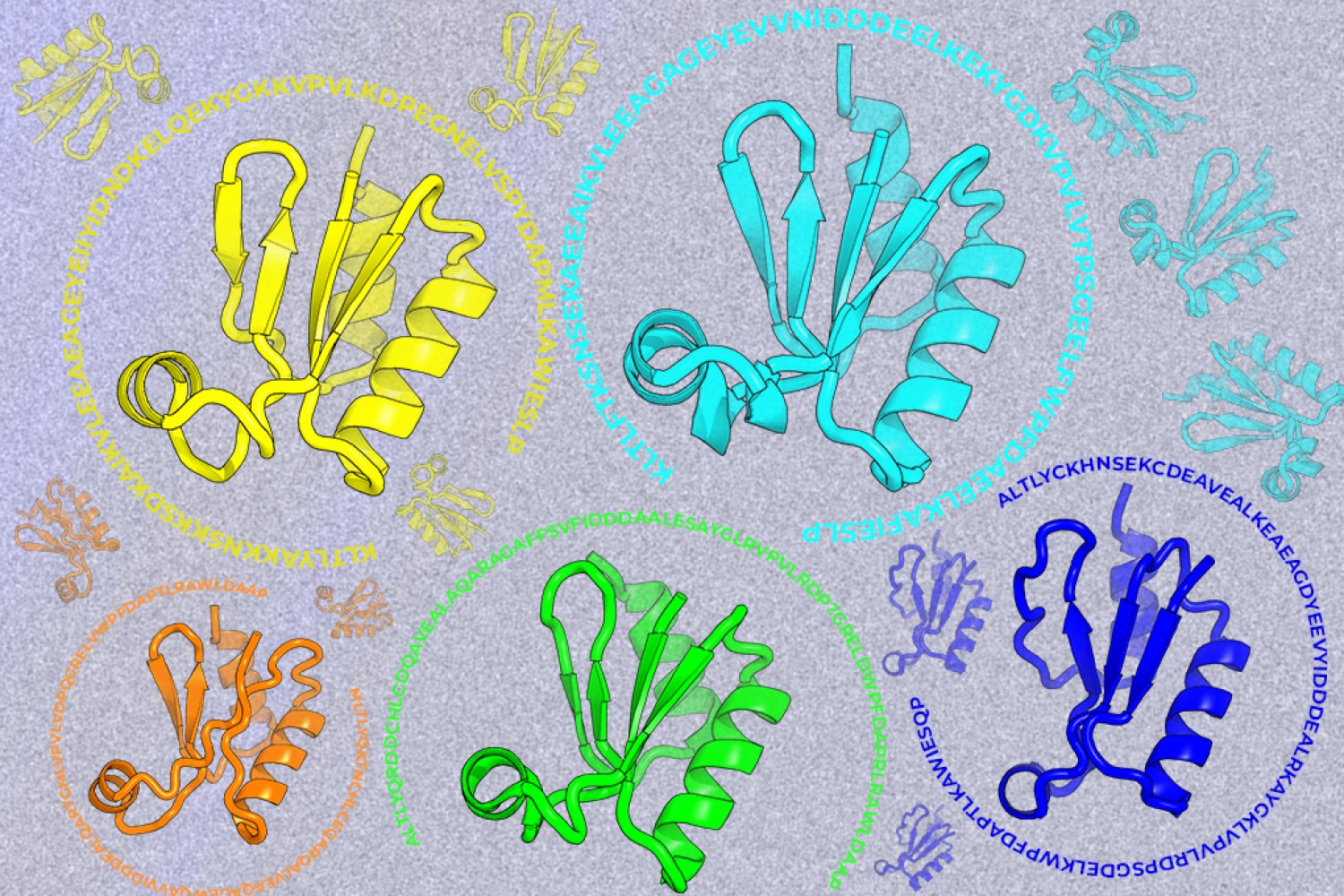
A new machine-learning framework aims to improve the success rate of computational protein design while moving away from results that reproduce sequences found in nature.
MIT News · Artificial Intelligence· news.mit.eduAug 24, 2026