This paper systematically investigate the memorization behaviors of RF through the test statistics of Membership Inference Attacks (MIA), culminating in a complexity-calibrated metric that successfully decouples intrinsic image spatial complexity from genuine memorization signals.
Mingxing Rao, Daniel Moyer· arXiv.org· 0 citations
This work presents SELA, a neuro-symbolic VLM agent framework that iteratively grounds primitives from signal visualizations and composes them under ELT constraints, producing both event intervals and faithful tree-structured explanations.
Sky Chenwei Wan, T. Hou, Yifei Wang et al.· arXiv.org· 0 citations
Experiments on SEED and DEAP under both subject-dependent and leave-one-subject-out protocols show that GRN consistently outperforms competitive baselines, while additional analyses confirm the effects of prototype learning, PLV/coherence resonance, and leakage-safe reference construction.
Personalized GRPO is introduced, a novel alignment framework that decouples advantage estimation from immediate batch statistics and achieves faster convergence and higher rewards than standard GRPO, thereby enhancing its ability to recover and align with heterogeneous preference signals.
Jialu Wang, Heinrich Peters, A. Butt et al.· arXiv.org· 1 citation
Reach audiences
Advertise in front of researchers, engineers, and readers.
MUSE (Multimodal Unified Safety Evaluation), an open-source, browser-based, run-centric platform for multimodal safety evaluation, demonstrates the value of run-centric, fine-grained evaluation for characterizing multimodal safety behavior beyond a single binary success metric.
It is shown that the dominant source of error in out-of-sample forecasts stems from distortions of the latent manifold rather than changes in the latent dynamics, allowing for a lightweight, computationally efficient adaptation procedure with very sparse fine-tuning data.
Ismaël Zighed, Andrea Nóvoa, Luca Magri et al.· Computers & Fluids· 0 citations
This work proposes GAD-MoRE, a novel framework for zero-shot Generalizable Graph Anomaly Detection with a Mixture of Riemannian Experts architecture, which significantly outperforms state-of-the-art generalist GAD baselines in the zero-shot setting.
Xinyu Zhao, Qingyun Sun, Jiayi Luo et al.· arXiv.org· 0 citations
This work introduces Constrained GRPO, a Lagrangian-based extension of GRPO for constrained policy optimization, and addresses the coupling induced by reward scalarization by scalarizing standardized advantages rather than rewards.
Roger Girgis, Rodrigue de Schaetzen, Luke Rowe et al.· arXiv.org· 2 citations· ⚡1
A comprehensive analysis of the performance-forgetting trade-offs inherent in low-rank adaptation using principal components of weight matrices as initialization reveals that fine-tuning intermediate components leads to better balance and robustness to high learning rates than first (PiSSA) and last (MiLoRA) components in existing work.
A. Quercia, Arya Bangun, Ira Assent et al.· arXiv.org· 1 citation
This study develops a theoretical framework framing transformers as kernel regressors, motivating a purely intrinsic strategy for ablating heads based on the stable rank of the per-head projection matrices, and uncovers the specific heads responsible for degenerate phenomena widely observed in TSFMs.
Anthony Bao, Venkata Hasith Vattikuti, Jeffrey Lai et al.· arXiv.org· 3 citations
Experiments on small-scale datasets with simulated ground truth across the full data distribution show consistent accuracy gains over baselines, demonstrating the method's effectiveness in data-scarce manufacturing environments.
Dennis Gross, Helge Spieker, Arnaud Gotlieb et al.· arXiv.org· 0 citations
A weeklong summer workshop brought higher education faculty to campus to explore how AI and machine learning materials can be adapted for their classrooms.
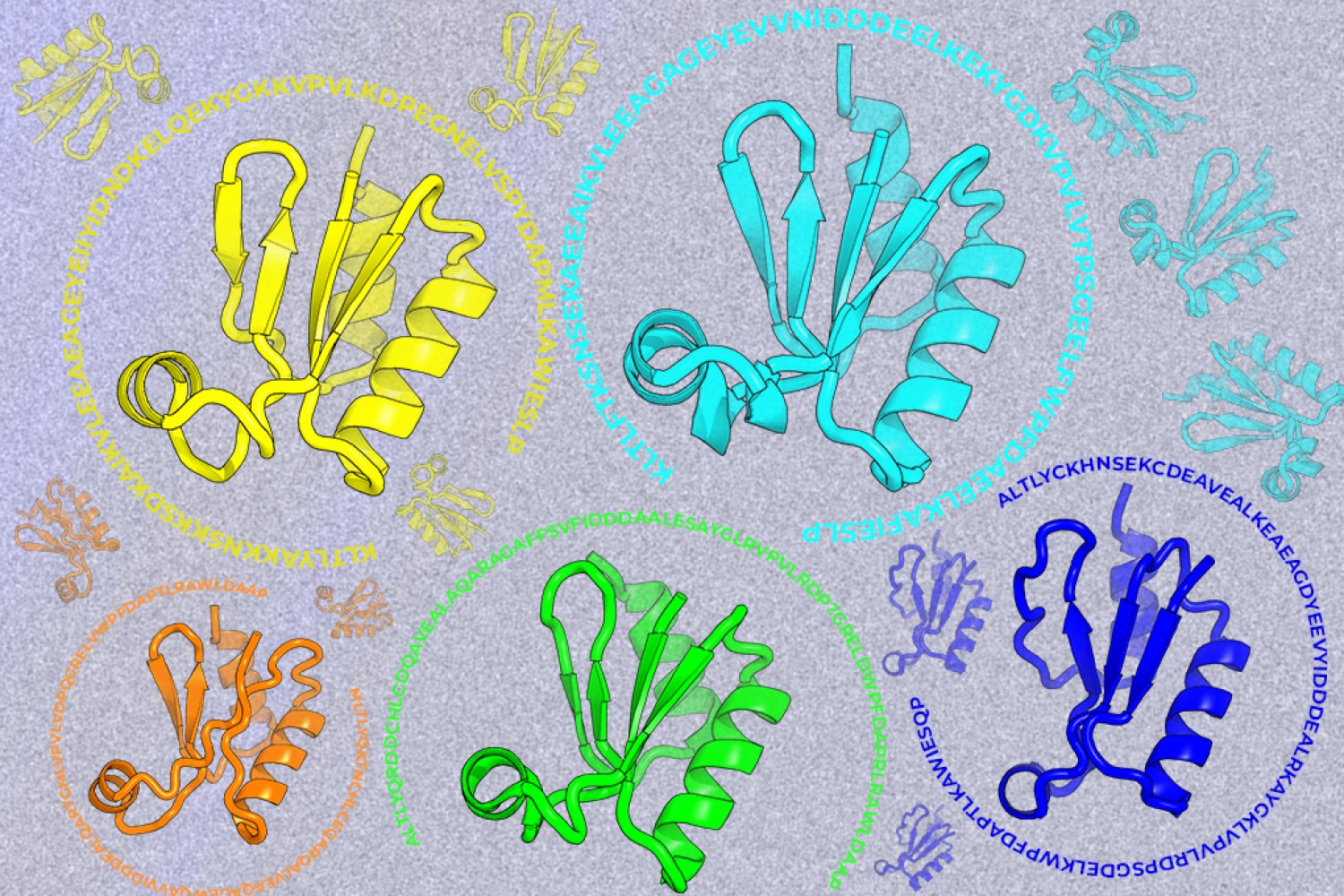
A new machine-learning framework aims to improve the success rate of computational protein design while moving away from results that reproduce sequences found in nature.
MIT News · Artificial Intelligence· news.mit.eduAug 24, 2026