Large language models are trained to model conditional distributions over text, yet it remains inadequately understood whether they capture the full diversity of plausible outputs present in their training data. We study this question through an information-theoretic lens by comparing the conditional entropy of model-generated outputs with that of the corresponding training data. Given paired input-output samples, we use conditional entropy and its matrix-based analogue based on von Neumann entropy to measure output variability beyond what is explained by the conditioning input, without requiring multiple reference outputs for the same prompt. Across LLM families with publicly available training data, including OLMo, Pythia, and GPT-Neo, we consistently find that model-generated outputs exhibit lower conditional entropy than their training data, across different model scales, sequence lengths, and decoding strategies. We observe a similar conditional diversity gap beyond language modeling, including class-conditioned ImageNet generators and text-conditioned models trained on MS-COCO. To address this gap, we propose a post-hoc correction mechanism that generates multiple outputs for each input and reweights them through a matrix-entropy projection, increasing conditional diversity while remaining close to the original model distribution. We prove the concavity of the matrix-based conditional entropy functional, which makes the resulting entropy-constrained projection a convex optimization problem, and develop a scalable mirror-descent algorithm for its implementation. Our results reveal a systematic conditional diversity gap between modern generative models and their training data, and provide an information-theoretic framework for measuring and mitigating this gap.
Time series representation learning (TSRL) has attracted growing research interests in recent years. Two recent explorations in TSRL are: i) exploiting a transformer-based framework to learn time series; ii) instead of using only the targeted dataset, borrowing time series from other datasets to to facilitate representation transfer. While these two explorations are shown effective, the self-supervised time series recovery task in (i) and the single-source dataset used in (ii) are technically simple and thus can be enhanced with new ideas. In this work, we propose a new TSRL framework, namely multi-source multi-phase time series representation transfer (SMart), which has two novel mechanisms to address the aforementioned deficiencies: 1) a multi-phase recurrence plots recovery task, in three alternative modes, for guiding the encoder to embed time series dynamics into the time series representation; and 2) a source dataset selector to select multiple suitable source datasets to supplement the original target dataset for pre-training the TSRL encoder. Experimental results show that SMart outperforms several state-of-the-art models for time series representation learning, classification and regression on both uni-variate and multi-variate time series datasets, reducing mean absolute error up to 19.5% for time series regression, and increasing average accuracy up to 1.34\% for time series classification.
Generative modeling directly on geometric manifolds can avoid errors introduced by flattening non-Euclidean data, repeated ambient projection, and coordinate inconsistency in Euclidean representations. Schrodinger bridges provide a probabilistic generative framework for entropy-regularized transport between prescribed endpoint distributions. We study Schrodinger bridges for kinetic dynamics on Lie group manifolds with state X_t = (g_t, xi_t) in G x g, allowing endpoint observations to constrain only the variables that are actually measured. In particular, the entropy projection determines the conditional law of the unobserved endpoint velocities.
For the same observed endpoint bridge, we develop two computational realizations: Wrapped-Kernel Bridge Calibration (WKBC) uses an explicit periodized kinetic kernel on compact Abelian groups, whereas Reciprocal Conditional-Control Bridge Matching (RCCBM) handles compact non-Abelian groups through two-sided endpoint calibration and mollified conditional-control matching. The canonical teacher-mixture path law is itself a Markov reciprocal law, so forward generation uses a calibrated initial law and one learned Doob controller. Moreover, we establish a modular error bound in the bounded-Lipschitz path metric that provides a clean separation of errors due to endpoints, control regression, initialization, discretization, and related approximations.
Experiments on multiple Lie group manifold datasets validate the feasibility and consistency of our proposed method, covering protein and RNA torsions, SO(3), U(n), and the Protein Conformational Transition Pathway Generation task using mdCATH trajectories in a compact reduced representation. The source code is publicly available at https://github.com/cafferyzhang12/Schr-dinger_Bridge_on_LieGroup.
Diffusion models achieve high sample quality but remain expensive at inference time because sampling requires many sequential neural function evaluations (NFEs). Existing acceleration methods either use fixed step-skipping schedules, adapt step sizes based on local numerical error, or require additional training. We introduce GeoSPRINT (Geometric Step Pruning for Inference in Trajectories), a training-free framework for constructing non-uniform sampling schedules from the geometry of denoising trajectories. GeoSPRINT detects geometrically redundant steps using a hyperplanarity test in latent space, implemented efficiently via QR factorization, and converts the resulting redundancy profile into a sampling schedule that allocates more steps to high-curvature regions of the trajectory. In addition, we introduce the trajectory projection score $\alpha_{\mathrm{traj}}$, a residual-variance metric that quantifies trajectory straightness and serves as a model-free diagnostic for rectified flow quality. Across CIFAR-10 ($32{\times}32$), LSUN Church ($256{\times}256$), and Stable Diffusion v1.5 ($512{\times}512$ latent), GeoSPRINT consistently improves over uniform DDIM (Denoising Diffusion Implicit Models) schedules at matched NFE budgets. On CIFAR-10, GeoSPRINT improves FID (Fr\'echet Inception Distance) by 0.7-1.1 over DDIM across 49-89 NFEs and surpasses DPM-Solver++ at NFE${\geq}30$ despite using a first-order DDIM solver. On LSUN Church, it reduces FID from 1.48 to 1.26 at 52 steps, and on Stable Diffusion v1.5 it achieves up to 1.93 FID improvement over DDIM. These results show that trajectory geometry provides a useful global signal for allocating inference steps and that schedule quality can substantially improve diffusion sampling efficiency without retraining.
Arpita Joshi· 0 citations
Reach audiences
Advertise in front of researchers, engineers, and readers.
We study online maximization of nonnegative, non-monotone DR-submodular functions over compact convex down-closed subsets of the $d$-dimensional unit cube. The best known constructive offline approximation factor is $0.401$ under the corresponding meta-solvability assumptions, whereas comparable adversarial online guarantees had remained at $1/e$. We show that this factor is also achievable online. In the post-decision full-information value-oracle model, our algorithm attains factor $0.401$ with sublinear approximate regret when oracle feedback is conditionally unbiased and bounded.
The online algorithm does not run the offline construction on a changing objective. Instead, it replaces the offline objective-dependent box step by a weighted online learner that controls the required residual terms cumulatively. An exact asymmetric balance theorem preserves the offline coefficients despite adversarial variation. The direct implementation has $O(T^{3/4})$ regret and uses $O(dT^{1/4})$ oracle calls per round. More generally, for every $\delta\in[0,1/4]$, batching gives $O(T^\delta)$ calls per round and $O(T^{4/5-\delta/5})$ regret, including a one-call $O(T^{4/5})$ endpoint. Under a positive-anchor condition, randomized blocking retains factor $0.401$ with $O(T^{5/6})$ one-point bandit regret.
Most vector databases rely on graph-based indexes, notably HNSW and Vamana, for approximate nearest neighbor search. With embedding models widely adopted, the datasets these databases store grow rapidly. At a fixed accuracy, how does search cost scale with dataset size? The prevailing answer is poly-logarithmic growth. Yet the claim is proven only under special conditions and asserted without proof for the indexes used in practice. It is also largely untested: standard benchmarks measure cost at one dataset size, not across sizes. We put the claim to the test. The answer depends on the scale itself. While the dataset size $N$ is small relative to the data's intrinsic dimensionality, search cost grows as $N^c$ for a constant $0<c<1$. We call this scaling the Sublinear Power Law. Once $N$ is large enough, growth slows to subpolynomial, consistent with the poly-logarithmic claim. The Sublinear Power Law appears on every dataset, mostly up to its full size, at every recall target, query hardness level, and index configuration we test. The transition to subpolynomial growth appears on the two datasets that grow large enough relative to their intrinsic dimensionality. One mechanism underlies both behaviors: a dataset's intrinsic dimensionality grows with its size until the data resolves its underlying distribution. Higher intrinsic dimensionality packs more vectors into the query neighborhood the search must examine. We present a unifying theory of beam-search cost that explains our observations. For exact and bounded-degree constructions, we prove the Sublinear Power Law and the eventual transition to poly-logarithmic scaling, and derive the scale at which it occurs. We also develop models that predict the power-law exponents for any recall target and index configuration. These models give a principled way to navigate trade-offs among search cost, insertion cost, and recall as data grows.
Dermatology artificial intelligence (AI) models are predominantly trained on light-skinned, cancer-focused image collections, yet they are increasingly proposed for deployment in resource-constrained settings where patients differ from training populations along two confounded axes: skin tone and disease distribution. We investigate whether poor generalization is primarily caused by skin-tone underrepresentation or disease-distribution shift. We evaluate a cancer-trained baseline (ResNet-50 fine-tuned on HAM10000 and ISIC 2019), two dermatology foundation models (DermLIP and MONET), and a general-purpose vision model (DINOv3) as frozen feature extractors. Models are evaluated on a tone-stratified disease-matched dataset (Diverse Dermatology Images, DDI) and a disease-shifted tone-diverse dataset (Skin Condition Image Network, SCIN). Our results show that disease-distribution shift contributes more than skin tone in the evaluated settings. The cancer baseline decreases from 0.62 to 0.21 balanced accuracy when transferred to unfamiliar clinical conditions, while the within-disease skin-tone gap is smaller (0.10-0.18) and inconsistent. Label-free representation analysis shows that this failure reflects a representational limitation rather than only missing output labels: cancer-specialized features poorly cluster unfamiliar conditions (kNN purity lift +0.06 over chance), whereas dermatology-pretrained features retain stronger transferable structure (+0.23). Finally, we show that representation quality predicts recoverable performance under lightweight adaptation. Starting from dermatology foundation models, approximately ten labeled examples per clinical category recover most attainable performance. We release the evaluation protocol and code to support reproducible auditing of dermatology AI generalization.
Nirajan Kunwor, Sanjaya Poudel, Quoc-Huy Trinh et al.· 0 citations
Federated learning (FL) lets institutions train a shared model without exchanging data, and Low-Rank Adaptation (LoRA) makes this practical at scale by communicating only compact low-rank updates. Biomedical imaging is a compelling setting for this combination: patient data are archived behind privacy regulations, and institutions differ widely in scanners, protocols, and compute. Such heterogeneity raises the question of how federated LoRA updates should be aggregated, increasingly pressing as multimodal vision-language models become central to medical image analysis. We benchmark federated Parameter-efficient fine-tuning (PEFT) of BiomedCLIP for chest radiograph classification across four public cohorts on three continents (USA, Vietnam, Spain). Federated LoRA adaptation improves shared-class AUC on all four cohorts over the unadapted BiomedCLIP backbone (mean 0.687 to 0.802), showing that the gains come from federated adaptation rather than from the pretrained model's zero-shot ability. Relative to isolated single-cohort training, federation improves the weaker cohorts while largely preserving the strongest and approaches a centralized reference (0.812) that pools all data. The singular value decomposition (SVD)-based product-space aggregation introduced by FlexLoRA is essential to this gain (naive factor averaging drops mean AUC by 0.097), whereas a drift-correcting optimizer (FedProx) shows no benefit over FedAvg in our single-seed runs, consistent with LoRA's low-rank updates already limiting client drift. Biomedical vision-language models can thus be adapted collaboratively across heterogeneous, geographically distributed institutions without centralizing data.
Sanjaya Poudel, Nirajan Kunwor, Manish Dhakal et al.· 0 citations
Decentralized, serverless learning increasingly connects devices running different architectures, where the standard tool, decentralized SGD, is undefined as models with different parameter counts cannot be averaged. Knowledge distillation (KD) exchanges soft predictions rather than weights and sidesteps this obstacle, yet convergence theory for fully decentralized, asynchronous peer-to-peer (P2P) KD is lacking. We provide one, relocating consensus from parameter space to function (output) space: a KD event is a geometric contraction operator in logit space on the peers' predictive distributions, which we analyse in the Hilbert space of predictions on a reference measure. Under standard smoothness/variance assumptions and two realizability assumptions, one bridging parameter SGD to the functional step and one controlling restricted task/KD alignment, the time-averaged functional stationarity and function-space disagreement converge at rate $O(1/(\eta T))$ to an $O(\eta)+O(B_f^2)+O(\zeta_f^2)$ neighbourhood. Here $B_f$ is the distance from the task optimum to the peers' reachable classes and $\zeta_f$ measures persistent local-task heterogeneity. Across homogeneous, width-heterogeneous, and mixed-family networks of the experiments, KD contracts function disagreement by $40-61\times$, while isolated training does not. The sampled stationarity diagnostic has late transient exponents $0.99-1.90$ on the shared-skeleton main runs, and the four-point step-size sweep exhibits the predicted transient: neighbourhood tradeoff.
Lucas Qingyang Fang, Tiyao Liu, Jinhao Jing et al.· 0 citations
Compact instruction-following rerankers are attractive for deployment, but conventional distillation pipelines typically train students by offline imitation of teacher outputs on a fixed set of examples, constraining supervision to the teacher's observed ranking space. We revisit reranker distillation through the lens of reinforcement learning.
We propose a two-stage framework combining off-policy teacher optimization with on-policy student distillation. In Stage 1, a 4B teacher reranker is strengthened with off-policy GRPO using LLM-judge feedback on 88K instruction-following examples. In Stage 2, a compact 1B student samples rankings from its own policy and receives soft teacher-derived rewards on those rankings, coupling student exploration with knowledge transfer.
Our strongest gains appear under distribution shift. On MAIR-11, the original 11-subset, 869-query evaluation, the proposed student reaches 0.7670 nDCG@6, outperforming offline listwise KD by +4.6 points. Controlled comparisons against offline pairwise RankNet KD and on-policy GKD show that neither changing the offline distillation objective nor moving teacher-distribution matching on-policy reproduces the performance of reward-based on-policy distillation over student-sampled rankings. The advantage persists on MAIR-Full: across all 126 tasks and 9,356 queries, the proposed method obtains the highest task-macro point estimates among the evaluated distillation variants, reaching 0.6808 nDCG@6 and 0.7865 MRR@6. It also exceeds two released 7B RL-trained rerankers on the comparable MAIR-11 evaluation, while the same Stage 2 training procedure consistently improves three architecturally distinct alternative student backbones.
On the 9,861-query validation benchmark, the resulting 1B reranker achieves 0.7624 nDCG@6 while providing a favorable quality-efficiency tradeoff relative to larger alternatives.
A language model's prediction of its next token develops across layers, and lens methods track this process by decoding intermediate hidden states into tokens. But a lens reading reflects both the hidden state and the readout (the unembedding matrix) used to decode it. Many lenses are fit on a corpus, and we show that two lenses differing only in their fitting corpus can report different tokens for the same hidden states. We call this dependence corpus conditionality. To examine readout structure independently of the fitting corpus, we introduce Sparse Readout Prism (SRP), which decomposes the readout using only its weights and expresses any token logit or logit difference as a sum of contributions from sparse readout features. This reveals readout features as a new unit of analysis for lens readings, exposing structure that token identities can obscure and enabling comparisons across tokens, contexts, layers, and lenses. Replacing the original readout with SRP's sparse approximation reconstructs 8.9-17.3 percentage points more of the tested logit differences than the strongest of six baselines built on geometric relations among readout rows. Ablating features shifts logit differences in proportion to their SRP contributions. Although token readings vary with the fitting corpus, the dominant readout feature remains stable. Because SRP uses no corpus in its construction, it provides a control independent of the fitting corpus for lens analyses.
Matteo He, William F. Shen, Xinchi Qiu et al.· 0 citations
Power-outage planning requires scenarios before an event occurs. These scenarios must represent uncertainty in magnitude, timing, and duration while preserving temporal dependence. However, severe events are rare, and data from any single region contain few examples of extreme outage and restoration patterns. To address this challenge, we introduce OutageDiT, a foundation model for generating seven-day outage trajectories at quarter-hour resolution, trained on outage and weather records across the United States. Specifically, a condition encoder processes the historical context and known future covariates once per forecast, and a shallow flow decoder reuses the resulting horizon-aligned states to generate complete trajectories. The resulting samples support point forecasting, uncertainty quantification, and conditional event simulation within one deep generative model. Across outage forecasting benchmarks, OutageDiT improves forecast accuracy and scenario quality over strong baselines and supports zero-shot transfer to held-out regions. Together, these results position conditional outage simulation as a bridge from outage forecasting to operational planning under uncertainty.
A new machine-learning framework aims to improve the success rate of computational protein design while moving away from results that reproduce sequences found in nature.
MIT News · Artificial Intelligence· news.mit.eduAug 24, 2026
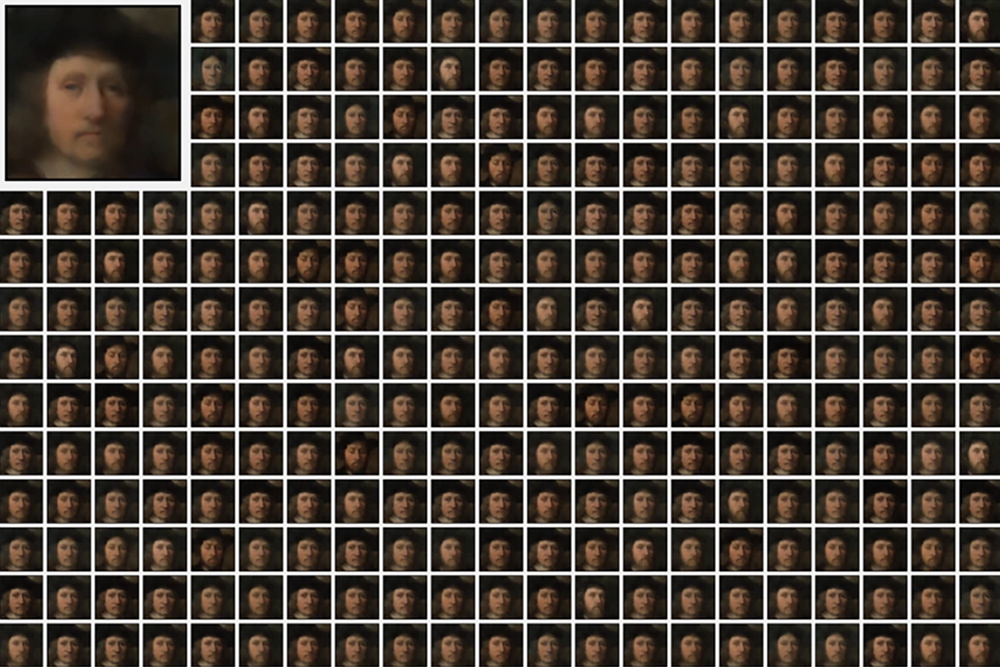
A new method for surgically removing training examples from a model reveals that as datasets grow, the link between what a model learns and what it produces dissolves.