The Generalized Naive Bayes (GNB) model was introduced for discrete and categorical random variables as an extension of classic Naive Bayes. We now accommodate the GNB framework to continuous explanatory variables. A central result of the paper is that structure learning of the GNB depends only on the pair copulas of t...
Ábrahám Papp, Botond Szilágyi, Edith Alice Kovács· 0 citations
This work proposes SAGE (Sequential Anchor-Gated Exchange), an optimal-stopping peer selector under a one-model-bearing-exchange budget, and shows that the selector never returns a peer worse than random gossip with high probability, and proves that no such guarantee holds for selectors that commit without a certificat...
Ke Xiao, Qiyuan Wang, Christos Anagnostopoulos· 0 citations
Root cause analysis at a remote site is slow: evidence is scattered across pod logs, Kubernetes events and cluster-level objects, and many operators cannot send production logs to a hosted model at all. On-premise inference removes the second constraint but raises a question live-cluster benchmarks have not addressed:...
Generative world models aim to predict future states conditioned on actions, where action controllability is fundamental for reliable dynamics modeling. While recent efforts leverage simulator-generated data to enhance this capability, existing training pipelines face two fundamental limitations. First, static offline...
Yikun Miao, Fangqi Zhu, Quanxin Shou et al.· 0 citations
Reach audiences
Advertise in front of researchers, engineers, and readers.
Robotic systems are typically composed of multiple independently developed modules that work together to perceive, predict, and act in the environment. Although each module may perform reliably in isolation, composing them does not necessarily preserve uncertainty calibration at the system level. In this work, we show...
Textual-gradient methods automate prompt optimization through natural-language feedback, but their iterative updates can be unstable. We identify two sources of this instability: noisy gradients produced from already-correct examples and over-specialization to hard cases that degrades performance on simpler inputs. We...
Yi-Fan Xu, Yi-Xuan Li, Xin-Zhuo Li et al.· 0 citations
Financial language models can transform unstructured firm-specific news into structured decision signals, but financial AI research lacks an integrated deployment framework for evaluating whether those signals remain useful in financial decision systems. Computer science research has developed strong methods for time-s...
Probabilistic forecasting requires accurate central predictions and calibrated uncertainty estimates. This paper presents TEMPER, the Temporal Encoder-Masked Probabilistic Ensemble Regressor, a univariate time-series forecasting algorithm that combines a temporal autoencoder, a differentiable masked neural decision for...
Multi-teacher on-policy distillation allows a student to learn from complementary specialists on its own trajectories. Domain-routed approaches, however, select one teacher per example and keep it fixed throughout the response. This design both depends on domain labels that mixed training corpora often lack and cannot...
Jie Sun, Mao Zheng, Ming-Yang Song et al.· 3 citations
Inferring network topology from noisy node observations is a central problem in graph signal processing. In this paper, we consider Laplacian-constrained graph estimation for Gaussian Markov random fields, focusing on the underdetermined regime in which the number of samples is smaller than the number of graph nodes. E...
Christoffer Kjellson, C. Altafini, Emma Tegling· IEEE Signal Processing Lette...· 0 citations
Despite impressive visual quality, state-of-the-art video diffusion models often generate content that violates real-world physical laws. While existing solutions rely on external priors or specialized data, we investigate the root cause by exploring the internal mechanisms of these models. Specifically, we present the...
Yue-Yan Li, Hai-Bo Wang, Cai-Xia Yuan et al.· 1 citation
Vision-language-action (VLA) models have achieved strong performance in embodied manipulation, but still lack a clear mechanism to balance behavioral stability with task-semantic sensitivity. We identify two complementary failure modes. Under task-preserving changes, where task semantics remain unchanged but scene appe...
Shuai-Jun Liu, Fei-Yang You, Cheng-Ju Wu et al.· 0 citations
Training AI agents with reinforcement learning can be challenging because their tools, context, and decision-making are managed by complex frameworks. Agent Lightning connects existing agents to RL training, making it easier to improve them without rebuilding them. The post Agent Lightning v1.0: A 3,500-Line Lightweight Agentic RL Framework for Training Agents with Real Harnesses appeared first on Microsoft Research.
MIT News · Artificial Intelligence· news.mit.eduOct 6, 2026
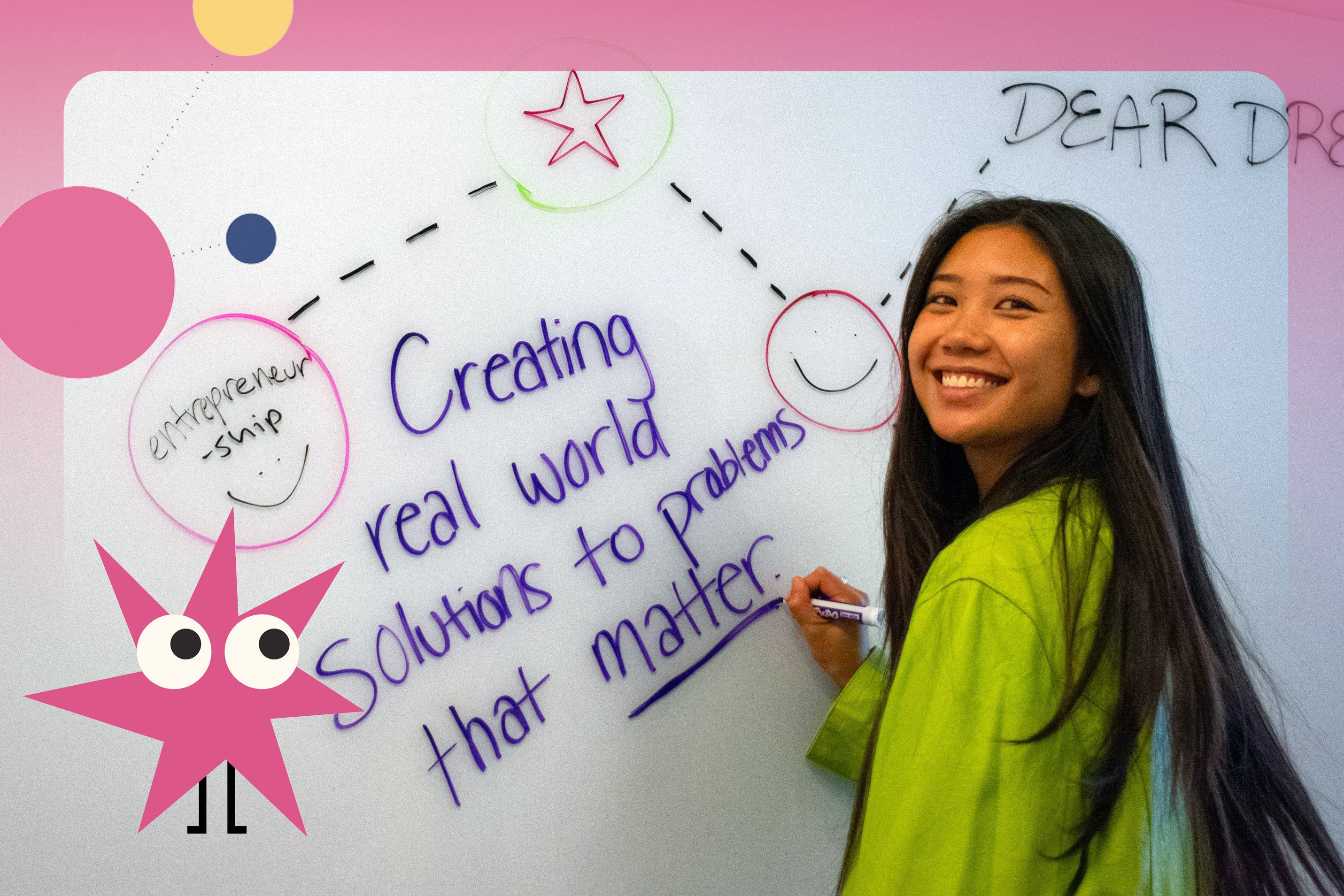
Martin Trust Center Managing Director Bill Aulet introduces Dear Dreamer, a free platform for middle and high school students who want to learn about entrepreneurship.
We use cookies to run the site and, with your consent, for analytics and to show ads.
See our Cookie Policy.