Language models often abandon a correct answer when the prompt contains a cue, a hint toward a wrong option such as "I think the answer is B." Sycophancy and related biases show this failure. They are often studied separately and blamed on alignment. We test this view causally, tracing the attention heads behind these...
Prakhar Gupta, Terry Jingchen Zhang, Zhijing Jin· 0 citations
Language models generalize beyond their training corpus to learn linguistic phenomena (Patil et al., 2024; Misra and Mahowald, 2024), showing that there exists indirect evidence driving learning. Prior work has inferred that indirect evidence exists without identifying its character or considered specific hypotheses ab...
W. Dai, Zheng-Hao Zhou, Maya Viswanathan et al.· 0 citations
Federated Learning (FL) is a powerful machine learning framework that allows building a global model from the contributions of multiple, distributed clients, while ensuring the privacy of their local data. However, its heavy computational and communication overheads challenge its use for contemporary AI workloads such...
Ali Sarabadani, Massimo Piccardi, M. Abolhasan et al.· 0 citations
Competence-based evaluation (CBE) is argued for, which tests whether models reliably apply the same competence across a family of problems and provides diagnostic profiles and an evaluation protocol that can grow with future models.
Ji-Ze Jiang, Cheng-Xiang Zhai· 0 citations
Reach audiences
Advertise in front of researchers, engineers, and readers.
Standard autoregressive language models generate text sequentially, but revision requires referring back to tokens in the input context or those already generated. Causal Edit Serialization (CES) is introduced as a framework for expressing such revisions within the same causal token stream. Special pointer tokens are p...
Reasoning rerankers write a rationale before ranking a candidate slate, and existing systems read item metadata to do so, even though generative recommenders increasingly represent items as compact Semantic IDs (SIDs). Ranking from SIDs alone has two appeals: SID prompts are far shorter than the matched item text, and...
Zhenwei Tang, Jin-Tao Liu, Di Bai et al.· 0 citations
Language models that read financial news are usually trained on text from the same years used to test them, so a backtest can reward hindsight. We build news topics from NoLBERT, an encoder pretrained only on text published between 1976 and 1995, adapted into a sentence encoder by contrastive fine-tuning on passages of...
Kevin Foley, Jonathan Hartadi, Shivesh Prakash et al.· 0 citations
Large language model (LLM) unlearning aims to forget certain information while preserving others, without retraining from scratch. SoTA methods such as NPO, SimNPO, and SatImp balance forgetting and retain through whole model fine-tuning, while FOM-UL explores selective layer updates. Prior works show that suppressing...
Jingkai Guo, Ziyi Zhao, Chaitali Chakrabarti et al.· 0 citations
While LLMs demonstrate strong capabilities in English Relation Extraction (RE) tasks, a significant gap remains in assessing their RE performance in low-resource languages, due to a lack of standardized benchmarks. Creating native, language-specific annotated RE benchmarks is expensive and requires human expertise, whi...
Running prompt tokens through fewer routed experts during prefill is a simple way to make mixture-of-experts (MoE) serving cheaper, yet it is unclear what this damages. We locate the damage with token-, layer- and attention-path interventions on short-answer question answering in four MoE families. At half the experts...
A common way to make language models and agents more accurate is to spend more compute at inference time: generate many candidate solutions and submit the one a verifier prefers. Success then requires that some candidate is correct and that the verifier picks it. The first grows predictably with the number of samples;...
Reinforcement learning with verifiable rewards has become a scalable post-training paradigm for large language models. However, training agents over long-horizon interactions presents two challenges: using only terminal rewards makes turn-level credit assignment sparse and high-variance, while sequential mini-batch upd...
Heming Zou, Qi Wang, Yi-Xiu Mao et al.· 2 citations
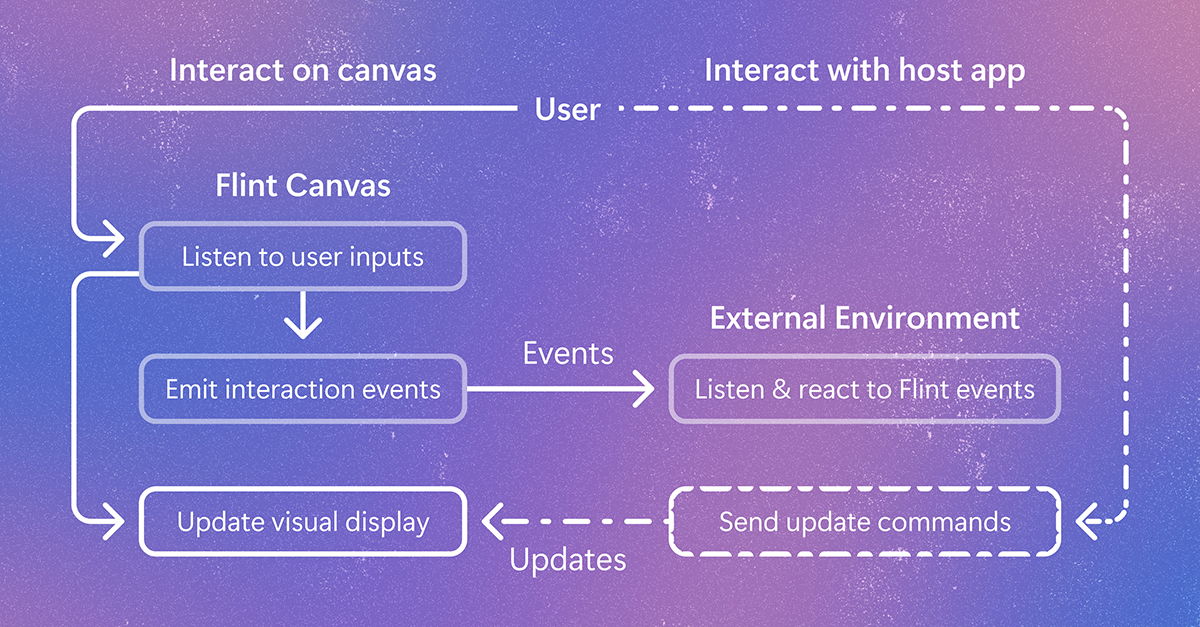
Flint-interactive gives AI agents a language for creating interactive visualizations. Click a chart, filter data, highlight related content, and explore beyond the view the author originally chose. The post Flint-interactive: A language for creating interactive data visualizations appeared first on Microsoft Research.