AtomSearch is introduced, which keeps revision actions local while using subsequent skill states to guide search, and shows how local rule edits can support the exploration of useful revision paths and yield compact skills, with additional offline evaluations used to explore alternative states.
Jiang-Shuai-Chen-Rui-,-Zhang-Rong-,-Wang-Gui-Fang- Tong, Sen Deng, Ming-Pei Peng et al.· 0 citations
Self-distillation in agentic reinforcement learning has produced a growing number of methods. However, existing evaluations often reuse published baseline scores under differing experimental conditions, provide few direct comparisons among contemporaneous methods, and give limited attention to training stability and co...
Linhao Zhong, Bozhen Fang, Xuehao Wang et al.· 0 citations
The nature of improvement in each case is characterized: while recoverable concepts can be articulated through definitions and explanations, irrecoverable concepts cannot be transmitted, even with examples, and might require novel learning mechanisms.
Alexander Spangher, Daniel E. Ho, Di-Yi Yang et al.· 0 citations
Simulated students let researchers test tutoring systems and teaching strategies before real learners are available, but only if the simulation reproduces where a particular learner succeeds and fails. The common approach asks a large language model to role-play a student, but a role does not model what this learner kn...
Yi-Lin Jiang, Fei Tan, Xuan-Yu Yin et al.· 0 citations
Reach audiences
Advertise in front of researchers, engineers, and readers.
Reinforcement learning provides a direct mechanism for optimizing task objectives in large language model-driven agents, but task rewards are typically sparse trajectory-level signals that only evaluate task success, without directly supervising action-conditioned environment transitions, leaving the model with limited...
Maolin Ran, Minda Chen, Di Huang et al.· 0 citations
We propose DAGFormer, a Transformer language model whose cross-layer connections are planned by a jointly trained topology predictor. Beyond the residual connections in a standard Transformer, DAGFormer adds direct connections from earlier layers to later ones, and the predictor controls the strength of every connectio...
As large language models (LLMs) are increasingly used to generate text, their misuse has become a growing societal problem, with implications for academic misconduct, model distillation, and cyberattacks. For these reasons, Model Authorship Attribution (MAA), which identifies the source model of a given text, is import...
Minseok Ko, Hyunseok Lee, Woo-Min Song et al.· 0 citations
The same recipe trained on a multi-domain corpus improves the frozen backbone on twelve evaluation benchmarks spanning mathematics, science, and commonsense, without task-specific adaptation.
Kutay Tire, Atula Tejaswi, Haris Vikalo et al.· 0 citations
This work presents an automated framework that classifies suspected overdoses from death investigation reports, while producing supporting explanations guided by expert knowledge, and shows that a pipeline model with explanations grounded in the input death investigation reports outperforms the other settings.
Raavi Gupta, Zi-Qing Yang, Karli R. Hochstatter et al.· 0 citations
Typed decision models are language models that answer a question with a fixed set of possible answers by returning a probability for each answer instead of generating text. We study them on tabular data and compare four decision models with three large language models (LLMs) on row classification, fact verification and...
Bao-Wen Zhang, Hangting Ye, Hong-Yuan Zha· 1 citation
A unified framework that models both student responses to questions and tutor-posed subtasks during dialogues on a shared item response theory (IRT) scale is proposed and results show that the framework outperforms strong baselines on both question difficulty prediction and response correctness prediction.
Zhang-Qi Duan, Simon Woodhead, Maya Miller-Vedam et al.· 0 citations
Best-of-N sampling is a simple inference-time scaling strategy for large language models, yet its behavior under incomplete reward models remains poorly understood. We study Best-of-N as a competition between the extreme reward tails of correct and incorrect responses. This view shows that success depends not only on t...
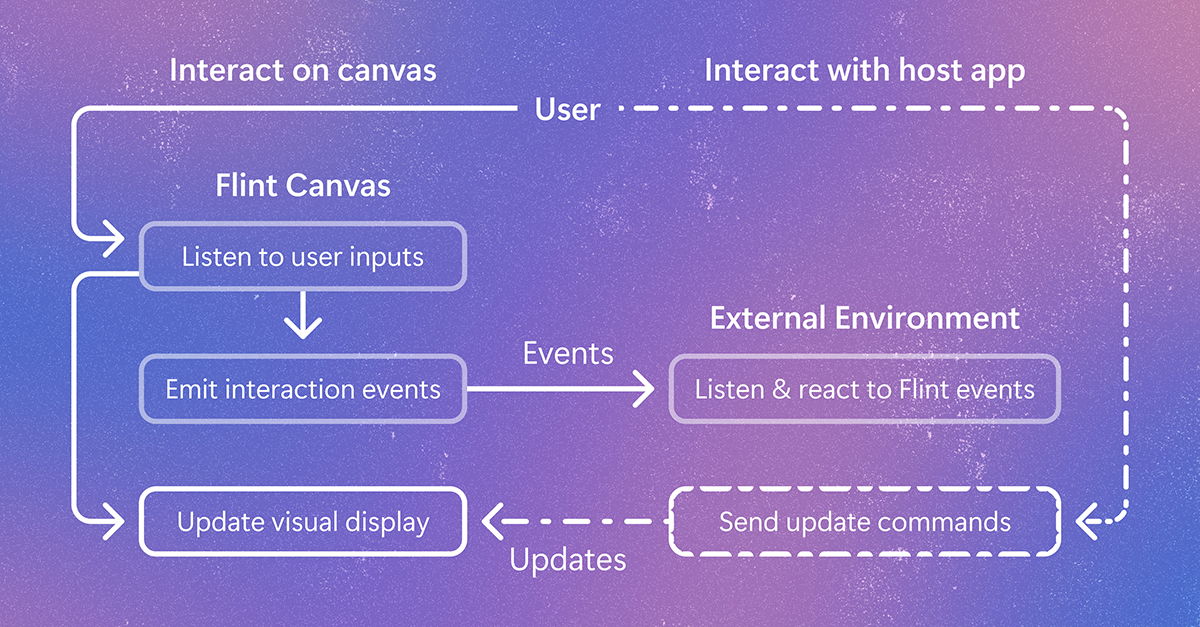
Flint-interactive gives AI agents a language for creating interactive visualizations. Click a chart, filter data, highlight related content, and explore beyond the view the author originally chose. The post Flint-interactive: A language for creating interactive data visualizations appeared first on Microsoft Research.