Results show that treating the KV cache as a neural network and optimizing it with test-time training can preserve retrieval accuracy under aggressive compression, and transfers across model scales and families.
Multimodal code intelligence connects the symbolic world of programs with the visual world their execution creates. Interest in this capability is burgeoning, as models are increasingly asked to produce charts, webpages, animations, and semi-structured documents. Recently, proprietary models have pushed far ahead, prod...
Qiushi Sun, Jingyang Gong, Yang Liu et al.· 0 citations
On-policy self-distillation provides dense supervision for reasoning models via a privileged self-teacher. However, this supervision reflects local token preferences rather than the expected return of an unguided student continuation. Recent methods combine this signal with GRPO. They use GRPO for update directions and...
Fei Wu, Zhen-Rong Zhang, Jian-Shu Zhang et al.· 0 citations
Bias audits of multilingual language models usually compare a model's average stereotype score in English with its average in another language and read the difference as a difference in fairness. We ask how much of that difference is noise. Auditing ten open models in eight languages, we measure how far scores move whe...
Harsh Kumar· 0 citations
Reach audiences
Advertise in front of researchers, engineers, and readers.
The scaling relationship of compute and performance for language models (LMs) has been extensively studied; more recently, models are being designed to scale memory use, as well. In particular, adding embeddings for n-grams scales memory separately from compute use, because each pass only processes individual embedding...
Ian Magnusson, Noah A. Smith, P. W. Koh· 0 citations
Context can improve large language model performance, but these gains may be lost after context removal. Inspired by biological systems consolidation, we formulate Memory Consolidation (MC) as internalizing these gains while preserving non-target capabilities, connecting context-specified editing, skill learning, and b...
Jintian Zhang, Feng He, Xinnian Liang et al.· 0 citations
Speculative decoding accelerates LLM generation through lightweight drafting and parallel verification. It is particularly promising for long inputs, where KV-cache access costs can be amortized over multiple accepted tokens. Yet most drafters are trained on short sequences and degrade on long inputs, while long-contex...
Shu-Xuan Li, Jia-Liang Kang, Yang-Hao Zhou et al.· 0 citations
An agent can improve its behavior within an unresolved problem by changing how it acts and which experience it retains. We propose MMLA-RSI, a recursive self-improvement scheme with two implementations in Memory-Mediated Learning Architecture: Reasoning-Time Training (RTT) changes the policy state $\Phi$, while Reasoni...
Multilingual models share capacity across languages, so adding languages can hurt performance on existing ones. Mixture-of-experts models expand this capacity with little additional per-token computation. Given this extra capacity, does adding experts reduce what each additional language costs? To answer this question,...
Joel Dag, Nikit Srivastava, Hamada M. Zahera et al.· 0 citations
In-context control of a model's own activations might not yet be a threat to activation monitors, but it exists in a few models and needs to be tracked as models evolve.
Davide Baldelli, Robyn Kozierok, Mirko Bronzi et al.· 0 citations
Language models often produce semantically similar answers to open-ended questions, even when many plausible alternatives exist. Generating useful alternatives requires identifying both what the query calls for and what existing responses already cover. We introduce Gap Detection, a framework that searches for relevant...
Xucheng Yu, Haibo Jin, Xiaoqi Wang et al.· 0 citations
The number of attention heads in a transformer is usually set by convention or grid search. We test a simple heuristic for setting it in advance: estimate the intrinsic dimension of token representations without labels, and use roughly that many heads. We estimate intrinsic dimension with a nested-dropout VAE trained o...
Arjun Boya, Charan Sai Bandaru, Masthanaiah Pillimetla et al.· 0 citations
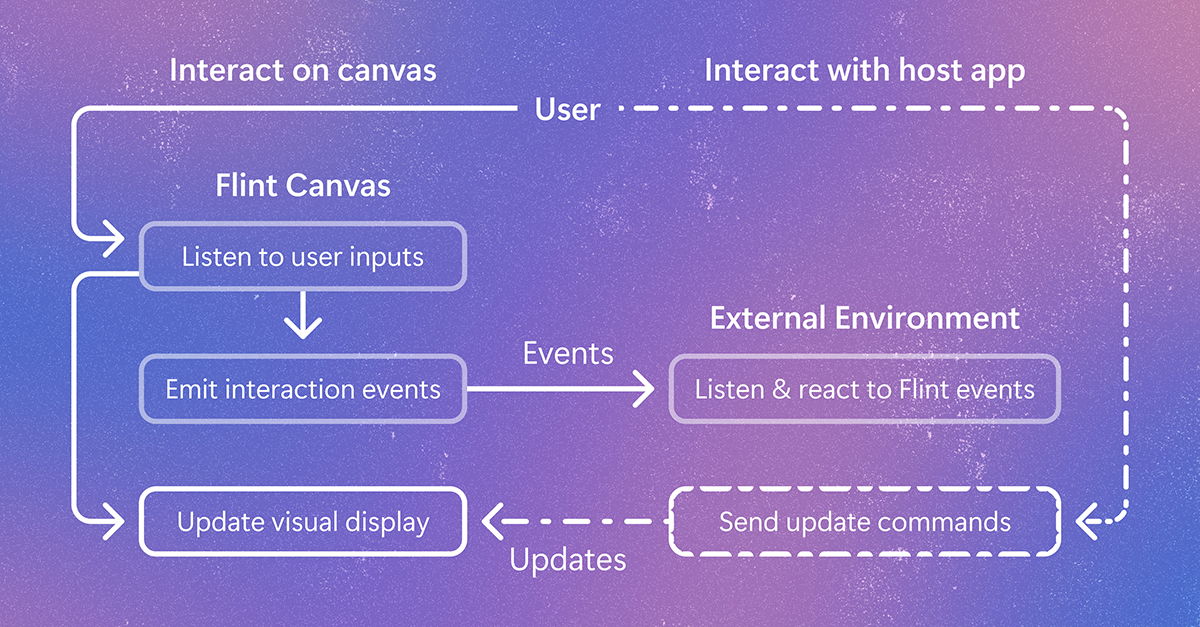
Flint-interactive gives AI agents a language for creating interactive visualizations. Click a chart, filter data, highlight related content, and explore beyond the view the author originally chose. The post Flint-interactive: A language for creating interactive data visualizations appeared first on Microsoft Research.