EnsembleLink, an algorithm that uses pre-trained embeddings alongside string-based scorers to retrieve a short list of candidates and then identify the likeliest matches, is introduced, an algorithm that matches or exceeds the performance of most prior approaches while generalizing across scripts and formats that those...
Science fiction is widely credited with unsettling gender. This article asks whether that holds at the linguistic level, in how readily gendered reference gives way to its counterpart, a neutral term, or other social category, and whether it separates the genre from general fiction. It does so by masking man/men, woman...
Sparse attention reduces the KV-cache traffic that dominates long-context LLM decoding, but practical methods largely operate at coarse granularity. Token-level selection offers finer control, yet presents two challenges: low-dimensional scoring may lose query--key structure needed for accurate ranking, while gathering...
Recent work has questioned whether large language models (LLMs) can be useful for temporal event prediction. Despite vast pretrained world knowledge, LLMs often underperform simpler specialized models. We ask whether this knowledge is truly inaccessible, or whether current methods fail to present event prediction in a...
Zijun Wu, Zhitian Zhang, Hossein Hajimirsadeghi et al.· 0 citations
Reach audiences
Advertise in front of researchers, engineers, and readers.
It is demonstrated that strong English summarization performance does not necessarily transfer to Bengali and the need for comprehensive evaluation frameworks for low-resource languages is emphasized.
Khan Mahi Al Atahar, Nazifa Tasneem, Ajwad Abrar· 0 citations
Do large language models (LLMs) exhibit systematic ideological bias when reasoning about economic causal effects? As LLMs are increasingly used in policy analysis and economic reporting, where directionally correct causal judgments are essential, this question has direct practical stakes. We present a systematic evalua...
Donggyu Lee, Hyeok Yun, Jungwon Kim et al.· 0 citations
Situational awareness, the capacity of an AI system to recognize its own nature, understand its training and deployment context, and reason strategically about its circumstances, is widely considered among the most dangerous emergent capabilities in advanced AI systems. Separately, a growing research effort seeks to im...
Subramanyam Sahoo, Aman Chadha, Vinija Jain et al.· 0 citations
Modern ML research increasingly faces an evaluation bottleneck: building benchmarks and running experiments is costly, slowing iteration. We ask how much can be inferred about evaluation outcomes before experiments, given only a natural-language description of the task and setup. We call this setting anticipatory evalu...
Jungsoo Park, Ethan Mendes, Gabriel Stanovsky et al.· 0 citations
Large Language Models (LLMs) with billions of parameters are prime targets for network pruning, which removes some model weights without hurting performance. Prior approaches such as magnitude pruning, SparseGPT, and Wanda either concentrated solely on weights or integrated weights with activations for sparsity. Howeve...
Rocktim Jyoti Das, Mukul Ranjan, Mingjie Sun et al.· 0 citations
Training LLMs to act as capable agents requires learning from multi-turn interactions with environments. However, multi-turn interaction trajectories generated by heterogeneous agent runtimes are difficult to transform into structured, high-quality training data that training engines can readily consume. In this paper,...
Daoyu Wang, Mingyue Cheng, Qingchuan Li et al.· 0 citations
The deployment of coding agents in privacy-sensitive and resource-constrained environments drives the demand for capable open-weight Small Language Models (SLMs). However, they suffer from a fundamental capability gap: unlike frontier large models, they lack the inference-time strong generalization to handle complicate...
Jinjun Peng, Magnus Saebo, Tianjun Zhong et al.· 0 citations
Recent advances highlight Reinforcement Learning with Verifiable Rewards (RLVR) as a promising approach to enhancing LLM capabilities. However, it remains unclear whether the current practice of RLVR truly expands models' reasoning boundary or mainly amplifies high-reward outputs that base models already know. We intro...
Fang Wu, Weihao Xuan, Danny Xing et al.· 0 citations
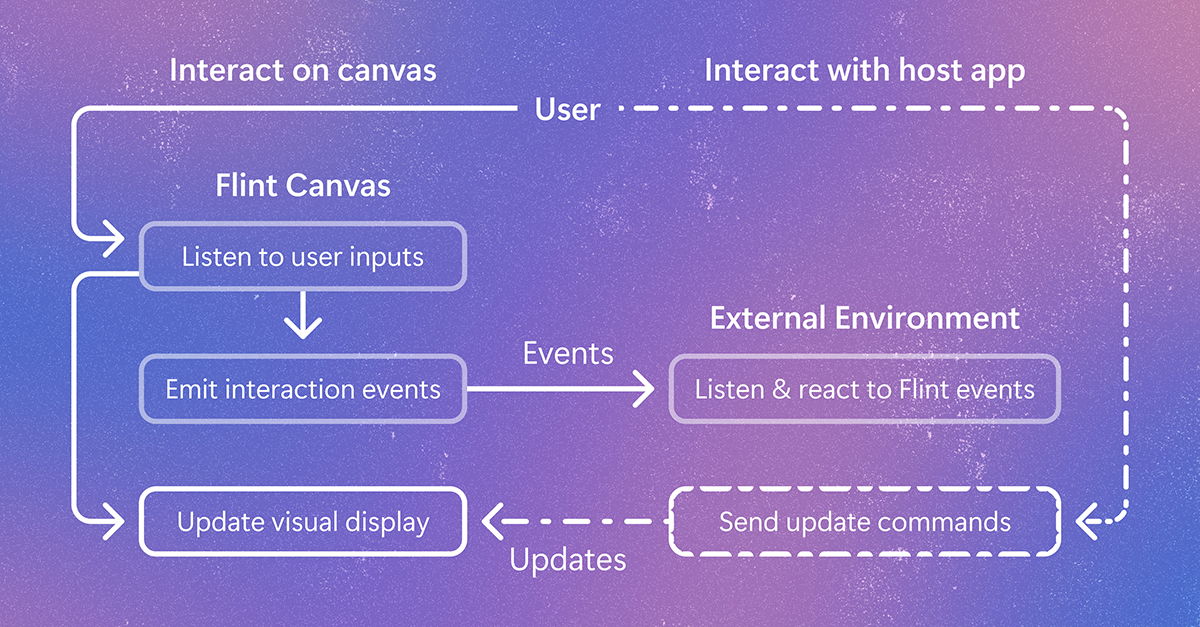
Flint-interactive gives AI agents a language for creating interactive visualizations. Click a chart, filter data, highlight related content, and explore beyond the view the author originally chose. The post Flint-interactive: A language for creating interactive data visualizations appeared first on Microsoft Research.