Large language models trained on unrestricted internet corpora inevitably embed information from the future, introducing lookahead bias that compromises the validity of backtests and causal inference in finance and the social sciences. Point-in-time language models--trained exclusively on text available up to each cale...
Bryan Kelly, Semyon Malamud, Johannes Schwab et al.· 0 citations
Thematic indexing -- the practice of assigning structured conceptual labels to sections of text -- is essential to scholarly access in large-scale literary and historical editions, yet it remains a largely manual, labour-intensive process. This paper explores the application of machine learning to automatic thematic in...
Miguel Arana-Catania, Gillian Pink, Glenn Roe· 0 citations
Phone segmentation and recognition are inherently related tasks, yet modern approaches typically model them separately. We argue that phonetic structure is already latent in the representations of self-supervised speech models (S3Ms), so one only needs to steer them to solve both tasks. We leverage S3M-based Phonologic...
Shikhar Bharadwaj, Kwanghee Choi, Stephen McIntosh et al.· 0 citations
Metacognition is a critical component of intelligence that describes the ability to monitor and regulate one's own cognitive processes. Yet LLMs exhibit systemic deficiencies in key metacognitive faculties: they hallucinate with high confidence, fail to recognize knowledge boundaries, and misrepresent their internal un...
Gabrielle Kaili-May Liu, Avi Caciularu, Gal Yona et al.· 0 citations
Reach audiences
Advertise in front of researchers, engineers, and readers.
SPARK is introduced, a novel framework that formulates parametric knowledge control as a latent participation policy learning problem, enabling LLMs to adaptively regulate the contribution of parametric knowledge during generation.
Ruochang Li, Peng-Cheng Huang, Zheng-Hao Liu et al.· 2 citations
Sequential user behavior modeling is widely adopted in industrial recommender systems; however, significant gaps remain in financial services, where pre-login web interactions and authenticated in-app experiences differ drastically. Specifically, pre-login web users typically explore new products, whereas logged-in app...
Dianjing Fan, Yao Li, Kyaw Hpone Myint et al.· 0 citations
Long-context reasoning is an essential capability for large language models, particularly when they are deployed as autonomous agents that must reason over lengthy trajectories. Reinforcement learning (RL) has recently emerged as a dominant paradigm for improving this ability, yet existing work largely focuses on rewar...
Xiaoyue Xu, Sikui Zhang, Xiaorong Wang et al.· 0 citations
Continual post-training enables models to absorb emerging knowledge after deployment, but repeatedly updating shared parameters can accumulate weight drift, potentially causing catastrophic forgetting and degrading general capabilities. Retrieval-augmented generation avoids such parameter drift, yet often lacks the dep...
Weihang Su, Jiacheng Kang, Jingyan Xu et al.· 0 citations
Passing an exact-clone null gate does not entail passing a matched target-selection utility gate. We call a non-tie preference between exact duplicates dark current. On 102 prespecified fresh RewardBench 2 rows, all four configuration--criterion cells report 0/102 clone preferences. Both neutral utility arms pass, but...
Hiroyasu Usami, Keisuke Hara, Ayato Tsuboi et al.· 0 citations
Large language model agents use skills that package reusable instructions, code, and resources. Existing skill-injection attacks exploit trust in these packages by adding malicious content. As agents become more capable, however, they can skip unnecessary steps, inspect code, and reject unrelated actions. We introduce...
Haochang Hao, Dehai Min, Zhifang Zhang et al.· 0 citations
Large language models can support medical question answering, but privacy, cost, and reliability still limit their clinical use in focused domains. Can rubric-based reinforcement learning bring a locally deployable model close to much larger systems? We study Group Relative Policy Optimization (GRPO) for heart-focused...
Arash Ahmadi, Parisa Masnadi Khiabani, Sarah Sharif et al.· 0 citations
How can a population of agents self-orchestrate and self-adapt into stronger collective intelligence without centralized control? Inspired by Friedrich Hayek's economic theory of decentralized coordination in markets, we study this question through an agent economy in which agents compete via auctions for the right to...
Zhenting Qi, Huangyuan Su, Ao Qu et al.· 0 citations
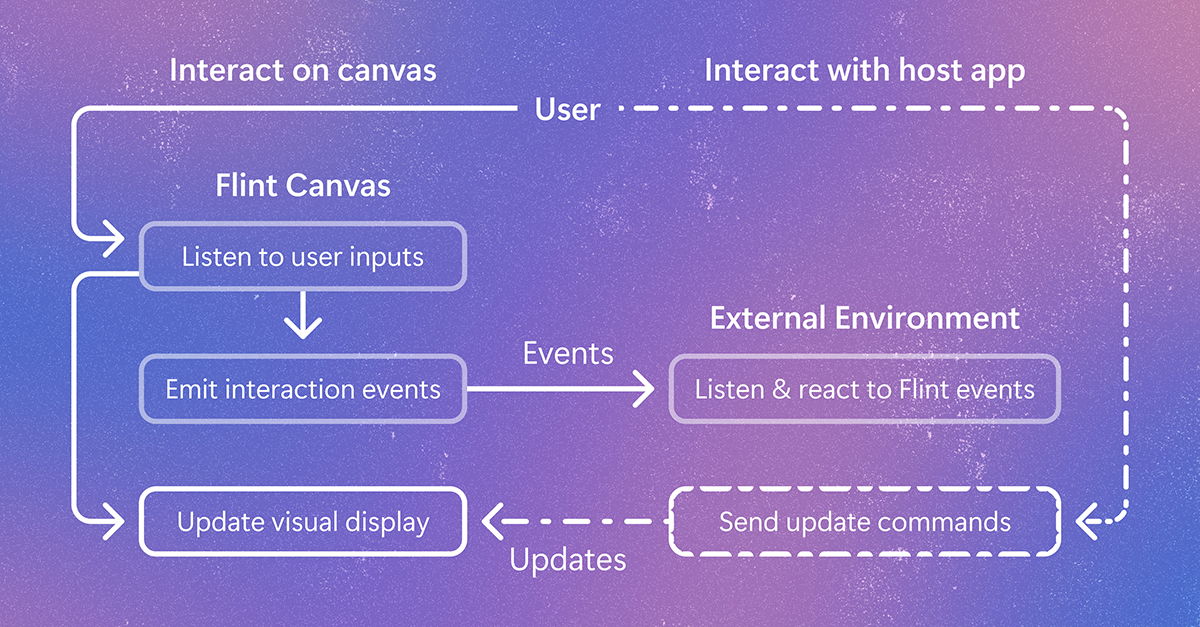
Flint-interactive gives AI agents a language for creating interactive visualizations. Click a chart, filter data, highlight related content, and explore beyond the view the author originally chose. The post Flint-interactive: A language for creating interactive data visualizations appeared first on Microsoft Research.