Autoregressive language models are usually trained with next-token prediction under a fixed left-to-right target order. This paper studies target-token organization as a training-time design choice across arithmetic reasoning, multi-label text classification, and text generation. Controlled order studies show that the...
Chun-Hao Yang, Bo-Han Feng, Tzu-Yuan Lai et al.· 0 citations
Personalized text generation requires models not only to produce coherent text but also to align with a target user's style, tone, and topical focus. Existing retrieval-augmented approaches such as LaMP and PGraphRAG enrich profiles with user and neighbor histories, but they stop at generation and often yield outputs t...
Durga Prasad Maram, Dhruvin Gandhi, Zonghai Yao et al.· 0 citations
Scientific literature question answering is a pivotal step towards new scientific discoveries. Recently, \textit{two-stage} retrieval-augmented generated large language models (RAG-LLMs) have shown impressive advancements in this domain. Such a two-stage framework, especially the second stage (reranker), is particularl...
Haotian Chen, Qingqing Long, Meng Xiao et al.· 0 citations
Merging multiple task-specific fine-tuned checkpoints into a single multi-task model provides an attractive alternative to joint multi-task training. To mitigate cross-task interference, a common strategy is to sparsify task vectors before aggregation. However, many widely used methods rely on a uniform global sparsity...
Yingfeng Luo, Dingyang Lin, Junxin Wang et al.· 0 citations
Reach audiences
Advertise in front of researchers, engineers, and readers.
Large language model (LLM) agents are increasingly organized into multi-agent systems for complex reasoning and decision-making tasks. However, scaling such systems can substantially increase inference cost, especially when multiple agents repeatedly process overlapping or role-irrelevant context. Many existing multi-a...
Jun Liu, Zhenglun Kong, Changdi Yang et al.· 0 citations
Ensuring the trustworthiness of Multimodal Large Language Models (MLLMs) requires rigorous evaluation of gender bias, particularly in socially sensitive domains. Existing benchmarks primarily assess bias in isolated contexts and are less suited to capturing biases that emerge through interpersonal interactions. We intr...
Identifying which tokens and activations truly influence model predictions is critical for both the efficiency and interpretability of large auto-regressive language models. Yet in practice, token importance is typically inferred from attention distributions that entangle contextual relevance with softmax-normalization...
Debabrata Mahapatra, Shubham Agarwal, Apoorv Saxena et al.· 0 citations
Unlearning large language models (LLMs) is important due to copyright and privacy concerns. A key challenge is unintended forgetting, where removing data inadvertently impairs model utility. While prior work has focused on architectural innovations, the influence of data-level factors remains underexplored. We introduc...
Peizhi Niu, Evelyn Ma, Boya Hou et al.· 0 citations
Large language models (LLMs) have demonstrated the ability to generate formative feedback and instructional hints in English, making them increasingly relevant for AI-assisted education. However, their ability to provide effective instructional support across different languages, especially for mathematically grounded...
LLM benchmarks are often treated as coherent measurement units, yet they are heterogeneous collections of instances spanning diverse domains, skills, formats, and contexts. As a result, aggregate benchmark scores can conflate model capability with benchmark composition, obscuring what existing benchmarks actually cover...
Eunsu Kim, Haneul Yoo, Guijin Son et al.· 0 citations
It is found that, across multiple pre-trained decoder-only LLMs, the analyzed personas show large differences in representation space only within the final third of the decoder layers.
C. Cintas, M. Rateike, Erik Miehling et al.· AAAI/ACM Conference on AI, E...· 3 citations
Introduction: Horizon scanning in healthcare assesses early signals of innovation, crucial for timely adoption. Current horizon scanning faces challenges in efficient information retrieval and analysis, especially in grey literature, presenting a need for innovative tools.
Methodology: This article introduces SCANAR...
Lena Schmidt, Oshin Sharma, Chris Marshall et al.· 0 citations
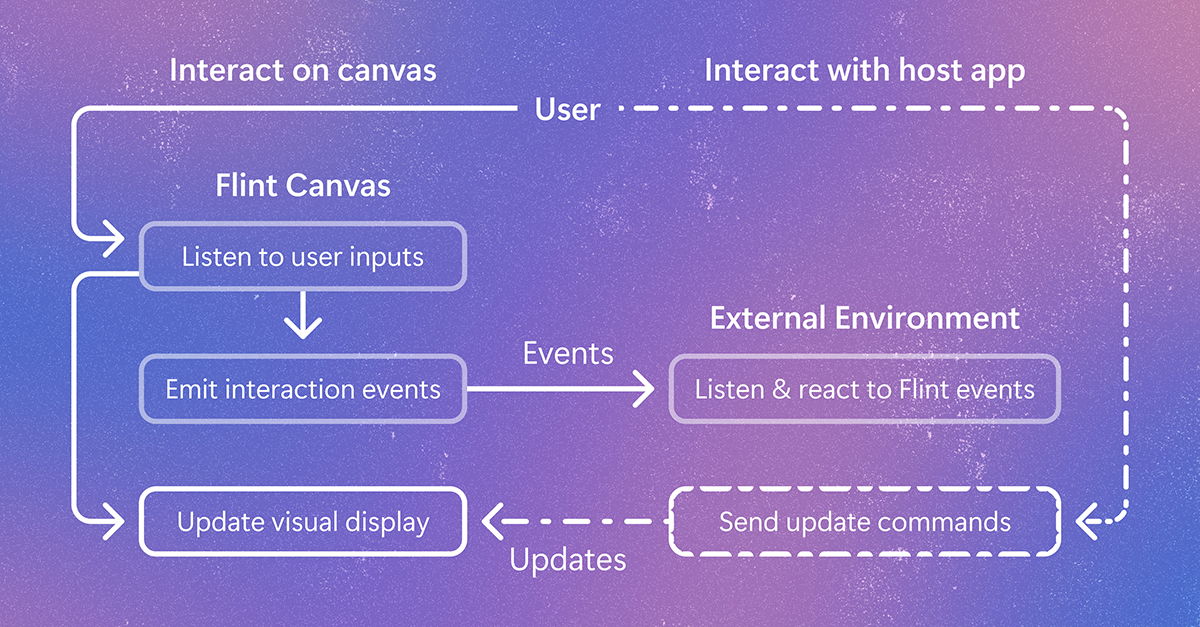
Flint-interactive gives AI agents a language for creating interactive visualizations. Click a chart, filter data, highlight related content, and explore beyond the view the author originally chose. The post Flint-interactive: A language for creating interactive data visualizations appeared first on Microsoft Research.