Toxicity detection has become core safety infrastructure for online moderation, dataset filtering, and deployed language-model systems. Yet most detectors still treat toxicity as an intrinsic property of isolated text. This position paper argues that toxicity detection should be evaluated as the contextual measurement...
Sergei Berezin, Reza Farahbakhsh, Noel Crespi· 0 citations
Emergent Language (EL) focuses on the emergence of communication among artificial agents. Although symbolic communication channels more closely mirror the discrete nature of human language, learning such protocols remains fundamentally difficult due to the non-differentiability of symbol sampling. Existing approaches t...
Mohammad Mahdi Samiei Paqaleh, Mehdi Jamalkhah, Mahdieh Soleymani Baghshah· 0 citations
In recent years, a substantial body of work in visually grounded natural language processing has focused on real-life multimodal scenarios such as describing content depicted in images or videos. However, comparatively less attention has been devoted to studying the nature and degree of interaction between the differen...
Aditya K Surikuchi, Raquel Fern\'andez, Sandro Pezzelle· 0 citations
A comprehensive survey and a taxonomy of state-of-the-art open LLMs and AIFMs for clinical tasks and a subjective evaluation of LLM-driven personalized prescriptions are provided, highlighting the importance of responsible and transparent deployment in healthcare contexts.
Rating-based human evaluation has become an essential tool to accurately evaluate the impressive performance of large language models (LLMs). However, current rating systems suffer from several important limitations: first, they fail to account for biases that significantly influence evaluation results, second, they re...
Jasper Dekoninck, Maximilian Baader, Martin Vechev· 0 citations
MoE facilitates the development of large models by making the computational complexity of the model no longer scale linearly with increasing parameters. The learning sparse gating network selects a set of experts for each token to be processed; however, this may lead to differences in the number of tokens processed by...
Peizhuang Cong, Aomufei Yuan, Shimao Chen et al.· 0 citations
Failure attribution for LLM-based agentic systems, i.e., identifying which steps in a failure trajectory caused the task to fail, is critical for debugging and improving these systems. Existing approaches either rely on prompting-based pipelines, which are computationally expensive, or require post-training on failure...
Samuel Yeh, Yiwen Zhu, Shaleen Deep et al.· 0 citations
Doctor agents are moving beyond single-turn answer generation toward evolving clinical decision systems that acquire evidence within episodes and reuse experience across episodes. Fixed-input medical QA and many interactive benchmarks provide limited support for evaluating how episode-level decisions interact with cros...
Context managers summarize or evict old messages so agents can operate beyond a finite window. This creates a reliability problem: removing history that still shapes the model's computation may change later actions, while retaining everything defeats compression. We study plans because agents create them early and are...
Production LLM agents increasingly depend on real-time search, yet native search grounding bundles retrieval policy, provider choice, evidence injection, cost, latency, and generation behavior behind a single model-provider boundary. This coupling makes grounding hard to inspect, tune, reuse, or port, and can trigger S...
As Large Language Model based agents enter autonomous scientific research, their ability to resist pseudoscience becomes increasingly important. Otherwise, such systems may rapidly generate plausible yet misleading studies that contaminate academic literature and erode trust in science. We present PseudoBench, an adver...
Xinyang Liao, Lingyu Li, Huacan Liu et al.· 0 citations
The results suggest that generative engine optimization (GEO) should be studied not only as a security risk, but also as an emerging marketing practice that shapes market competition.
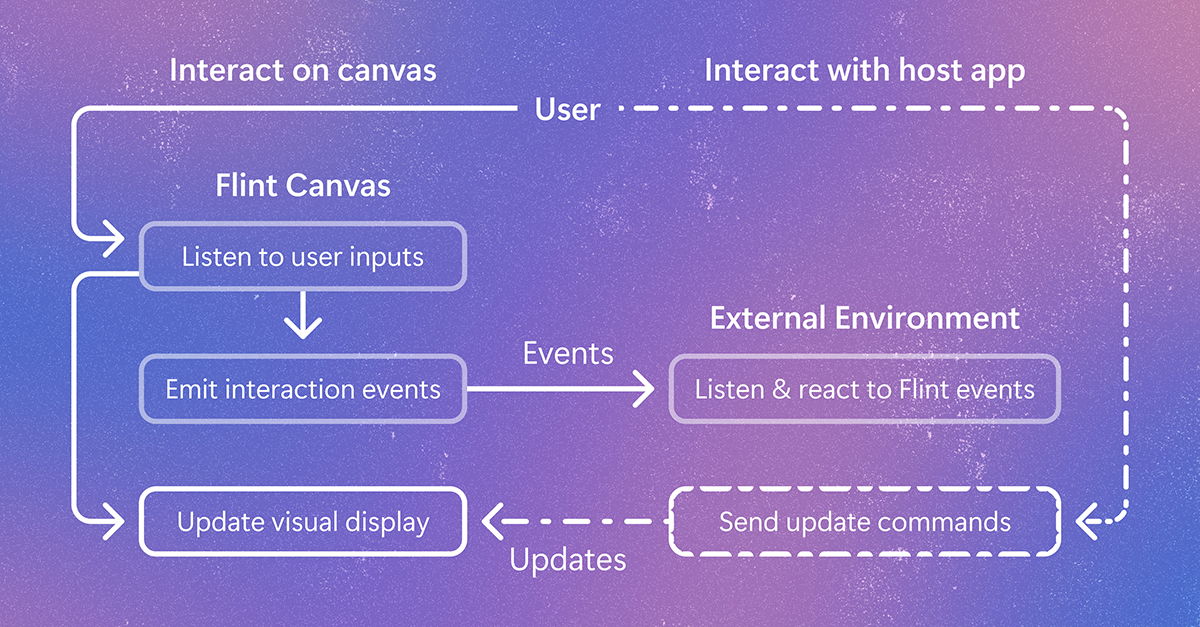
Flint-interactive gives AI agents a language for creating interactive visualizations. Click a chart, filter data, highlight related content, and explore beyond the view the author originally chose. The post Flint-interactive: A language for creating interactive data visualizations appeared first on Microsoft Research.