How can we build an agent that thinks beyond human language, yet still acts through it in the external environment? Modern LLM agents still reason and interact through text, while latent reasoning offers an efficient internal medium but lacks native tool access and reasoning transparency. We bridge these two directions...
Jiaru Zou, Yunzhe Qi, Sirui Chen et al.· 0 citations
Pre-trained Large Language Model (LLMs) are effective on many tasks in zero-shot and few-shot settings. For machine translation of low-resource languages, the obvious options are few-shot prompting and fine-tuning on a small parallel set. We ask: what if moderate amounts of low-resource monolingual data are also availa...
Frontier language-model agents can now improve robots on their own: they write control code, test it, and keep what works as skills and memories for the next task. We introduce SEAR (Self-Evolving Agentic Robotics), a framework and benchmark built around two questions. Is the agent really learning, or just trying more...
Xin-Yi Wang, Bang-Zheng Li, Han-Yu Wang et al.· 3 citations
LLM ensemble gains are often measured against a single baseline, but the value attributed to additional candidates can change with the comparison used. We study an LLM aggregator under four matched conditions: Direct (no candidates), Single-slot (one candidate in a multi-slot interface), Duplicate (one candidate repeat...
Donghwan Kim· 0 citations
Reach audiences
Advertise in front of researchers, engineers, and readers.
Reinforcement learning (RL) from unit tests is the common recipe for post-training code models, but a unit test only asks whether the final program passes. We analyze what this unit-test-only reward teaches a model during debugging and find that, while it raises pass rates, it also teaches the model to edit more and to...
Yun-Kai Zhan, Miao-Sen Chai, Shang-Shang Wang et al.· 0 citations
Large language models rely on prompt context to perform in-context learning, follow formats, and adapt to local evidence. This ability, however, also raises a robustness concern: models may reuse irrelevant tokens from earlier context when answering a later query. Prior work identifies this behavior as contextual entra...
Biomedical language models (LMs) provide strong representations for clinical tasks, but they often fail to capture the hierarchical structure among medical concepts. This limitation is especially pronounced for rare and fine-grained clinical codes in long-tailed vocabularies, where hierarchy-agnostic LM representations...
Zi-Yang Song, Li Shen, Yi-Xuan Li et al.· 0 citations
Recent advances in zero-shot voice cloning systems make it possible to reproduce a recognizable voice from a short recording and attach it to arbitrary virtual characters. Prior work suggests that familiar vocal identity can carry over associated personality impressions to new targets such as robots or virtual characte...
Johanna Magdalena Kuch, Maud van Lier, Daksitha Senel Withanage Don et al.· 0 citations
Searching text-rich knowledge graphs requires following relations while examining textual evidence. Predefined graph interfaces constrain what evidence agents can access, even when they write code to combine tool calls or process retrieved subgraphs. We propose direct knowledge graph interaction (DKGI), a harness in wh...
This paper revisits two representative methods, Self-Distillation Policy Optimization (SDPO) and On-Policy Self-Distillation (OPSD), and finds that their reported gains do not consistently generalize to unseen problems and are largely explained by overfitting or transferring existing reasoning behavior, rather than eff...
J. Adhinarta, Raina Wu, Ashutosh Sharma et al.· 0 citations
Comparing five typed decision models and seven generative baselines on 11,117 English text questions from nine ToM benchmarks across six capability groups suggests that Jev could reduce the cost and waiting time of repeated ToM selection.
Ka-Po Chung, Chunkit Chan, Yuxuan Liu et al.· 2 citations
Multimodal LLMs are typically trained by first aligning a vision encoder with a language model via projector training on large image-caption datasets, followed by joint training of the full multimodal model. Despite its widespread use, the role of the projector training stage remains poorly understood. We find that (i)...
Fabian Gr\"oger, Na\"el Ouerghemi, Shuo Wen et al.· 0 citations
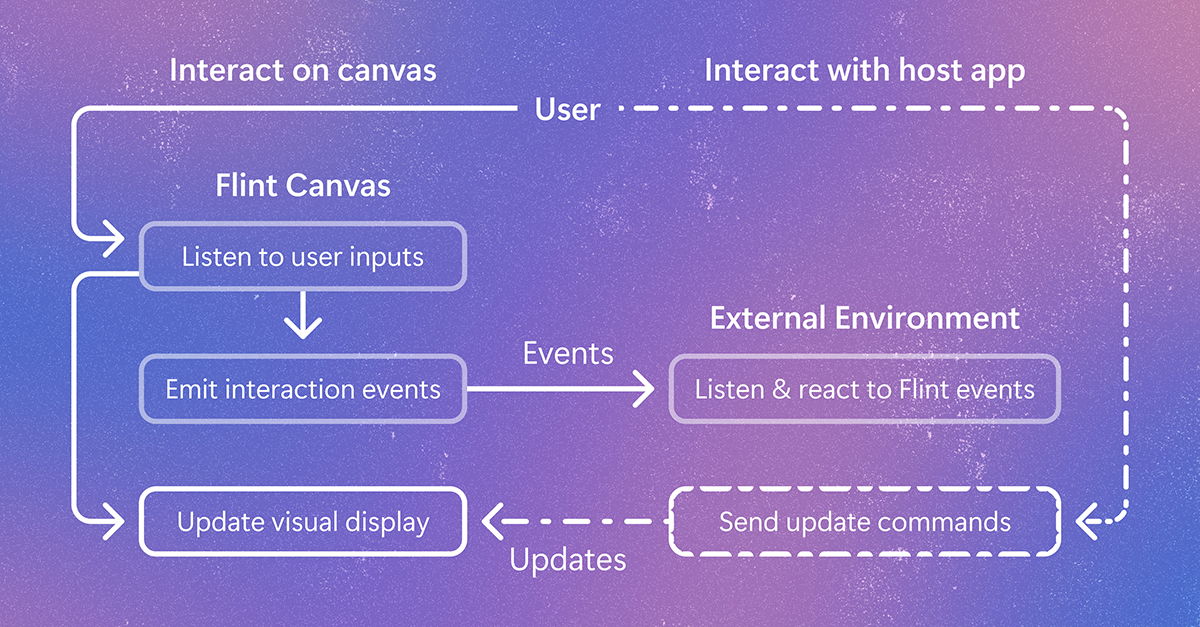
Flint-interactive gives AI agents a language for creating interactive visualizations. Click a chart, filter data, highlight related content, and explore beyond the view the author originally chose. The post Flint-interactive: A language for creating interactive data visualizations appeared first on Microsoft Research.