The stories told about artificial intelligence (AI) play a central role in shaping public understanding, policy debates, and expectations about technological change. News media are especially influential in this process. Using a cross-regional corpus of 12,924 English-language news articles about AI published since 202...
This work empirically identifies that the ordered vocabulary-head logits follow a remarkably consistent log-linear relation across prediction contexts, architectures, and scales, emerging progressively during pretraining.
S. Narashiman, Aravind Ramana Venkatramanan, Nambi Seshadri· 0 citations
Autoformalization (AF) requires more than compilation: formal statements must preserve the meaning of their informal sources, a property known as faithfulness. An emerging frontier is the automated evaluation of this property, yet most existing methods operate at the statement level and produce whole-item verdicts, fai...
Yuming Feng, Tadd Mao, Dhruva Arekar et al.· 0 citations
Readout scaling changes what a sparse autoencoder (SAE) learns, but the benefit of removing it depends on the data. We use readout-canonicalized decision-space (RC-DS) coordinates to remove singular-value gains while preserving retained decision information. At a fixed readout condition number, changing the generating...
Brain Xiao, Sarah Wilson· 0 citations
Reach audiences
Advertise in front of researchers, engineers, and readers.
We trained Agaram 2.5B, a 2.5-billion-parameter Tamil-English language model, from scratch on about 50 billion tokens (58% Tamil, the rest English, math, code and parallel text) on one node of eight H100 GPUs in about six days, with a new tokenizer that, unlike our first model's, keeps line breaks. Supervised fine-tuni...
Large Language Models (LLMs) are aligned to human preferences, after pre-training and supervised fine-tuning steps. However, standard RL alignment steps such as RLHF do not focus on factuality of LLMs, hence they may generate non-factual information, which could result in unintended consequences. In response, a number...
Pratuat Amatya, Vinay Setty, V. Venktesh et al.· 0 citations
Prompt-based adaptation offers several ways to specialize a frozen language model, ranging from natural-language prompt optimization to learned continuous prompts. These methods are usually compared through downstream performance, although similar outputs need not arise from similar internal computations. We study how...
Mikhail Aleksandrov, Nail Bashirov, M. Ivanov et al.· 0 citations
Large language models are increasingly used as judges to reduce reliance on costly human evaluation, yet their scores can systematically disagree with human judgments. We ask whether responses to an explicitly imposed evaluative bias can help correct a judge's implicit scoring biases. We introduce PRISM (Probe-based Re...
Post-training quantisation reduces the memory cost of large language models, but it remains unclear whether compression preserves language skills of regional varieties as reliably as their standard-language counterparts. We study this question for Bavarian, Standard German, and English using BAVGROUND, a multiple-choic...
Jophin John, Michael Hoffmann, Piroska Lendvai et al.· 0 citations
Conversational Recommender Systems (CRSs) require reliable user simulators for cost-effective evaluation. LLM-based simulators have made realistic simulation possible but typically condition on profiles derived from explicit ratings, demographics, and static sources capturing surface preferences while omitting implicit...
Erfan Shahabi, Amirhossein Roshandel, Mohammad Sadegh Sadeghi et al.· 0 citations
Autonomous research agents must acquire and reason over evidence within a limited budget. Yet relevant sources can remain uninspected or unused, leaving a gap between retrieval coverage and the evidence that informs research. The challenge is to align fast local judgments with changing evidence needs and feed their fin...
Ya-Sheng Sun, Yan Dai, Yi-Meng Chen et al.· 0 citations
This work evaluates Caesar and layered variants across eight models and 139 injection-task pairs, separating instruction recovery from attack success, and highlights the risk of promoting decoded, untrusted content into actionable instructions.
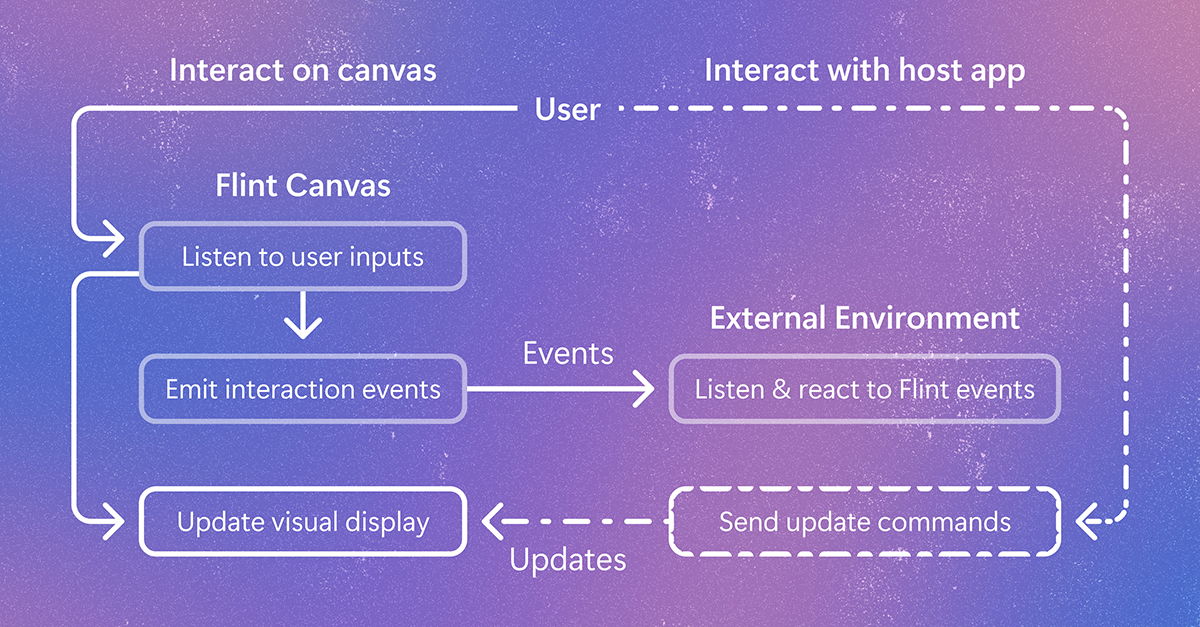
Flint-interactive gives AI agents a language for creating interactive visualizations. Click a chart, filter data, highlight related content, and explore beyond the view the author originally chose. The post Flint-interactive: A language for creating interactive data visualizations appeared first on Microsoft Research.