LLM agents can adapt to task feedback by revising the textual context that guides their behavior, without changing their model parameters. However, turning execution rewards into reusable context updates is challenging: individual trajectories offer limited comparative evidence about what to change, while task-specific...
On-policy self-distillation improves a model using guidance from the model itself, but it still requires a teacher that provides more useful predictions than the student. Existing approaches obtain such guidance by giving the teacher additional context or instructions. We ask whether it can instead come from changing h...
Wei Fan, Qing-Yue Yang, Chao-Hong Tan et al.· 0 citations
Sycophancy in Large Language Models, the tendency to align responses with user preferences over ground truth, has largely been studied using questions without a clear ground truth and with a single, plainly stated user opinion. We present a systematic study of which framings of a user's claim trigger sycophancy in fact...
Jean Seo, Pepa Atanasova, Isabelle Augenstein· 0 citations
Owner-Aware Routing is proposed, which drafts a schema-only SQL query, counts the owners whose tables it joins, and routes the question before any private row is read, and beats every fixed protocol on PeopleJoin, by up to 9.3 points on held-out organizations.
Zhe-Xi Feng· 0 citations
Reach audiences
Advertise in front of researchers, engineers, and readers.
This work investigates the application of the Membership Inference Test (MINT) to large language models (LLMs) fine-tuned with LoRA, aiming to determine whether specific samples were used during training and address concerns about data privacy, leakage, and transparency. Building on our previous LoRA-MINT framework, wh...
Gonzalo Mancera, J. Fiérrez, Aythami Morales et al.· 1 citation
Non-prefix KV cache reuse is a promising approach for improving inference efficiency in multi-agent systems as agents share the same context blocks. However, when agents have conflicting tasks, directly reusing non-prefix KV caches across agents can severely degrade model performance, causing up to a 90% drop. Existing...
Zhi-Wei Chen, Zhong-Tao Rao, Wai-Kit Xiu et al.· 0 citations
Diffusion language models (DLMs) enable flexible parallel generation by resolving tokens according to the model's evolving predictability rather than a fixed left-to-right order. This flexibility, however, introduces training choices absent from standard autoregressive teacher forcing: which reference tokens are visibl...
Miao Li, Han-Yang Jiang, Heng-Yu Fu et al.· 0 citations
A medical vision-language model may analyze a given CT scan and correctly detect both kidneys in view. Continuing this conversation, if a user provides a prescription with an opposite direction, medical VLMs often sycophantically choose to realign their diagnosis. In this work, we study regressive sycophancy under fabr...
The design of attention mechanisms in long-context large language models faces an ``impossible triangle''among KV cache size, training and prefill FLOPs, and model quality. GQA achieves strong quality but incurs high KV cache overhead; alternative approaches such as MLA and MFA can compress the cache, but MLA suffers f...
Xi-Bo Ding, Guo-Xia Wang, Jin-Le Zeng et al.· 0 citations
Diffusion large language models (dLLMs) have attracted increasing research attention due to their bidirectional attention and arbitrary order decoding. However, there are two issues in dLLMs inference: the decoding difficulty is dominated by the tokens on the right side of the block, and the block-wise decoding inheren...
Zhaohui Zheng, Chenhang He, Jinrui Zhang et al.· 0 citations
Sparse autoencoders decompose language model representations into interpretable features, but feature interpretation in this literature remains predominantly correlational. Attribution methods offer more direct estimates of feature influence, yet their faithfulness to actual causal effects has not been systematically e...
Persona vectors are linear directions in the residual-stream activations of LLMs that encode behavioral traits and enable fine-grained control over model behavior. Among them, the evil persona vector is particularly relevant to understanding harmful behavior, jailbreak vulnerabilities, and the unlearning of harmful kno...
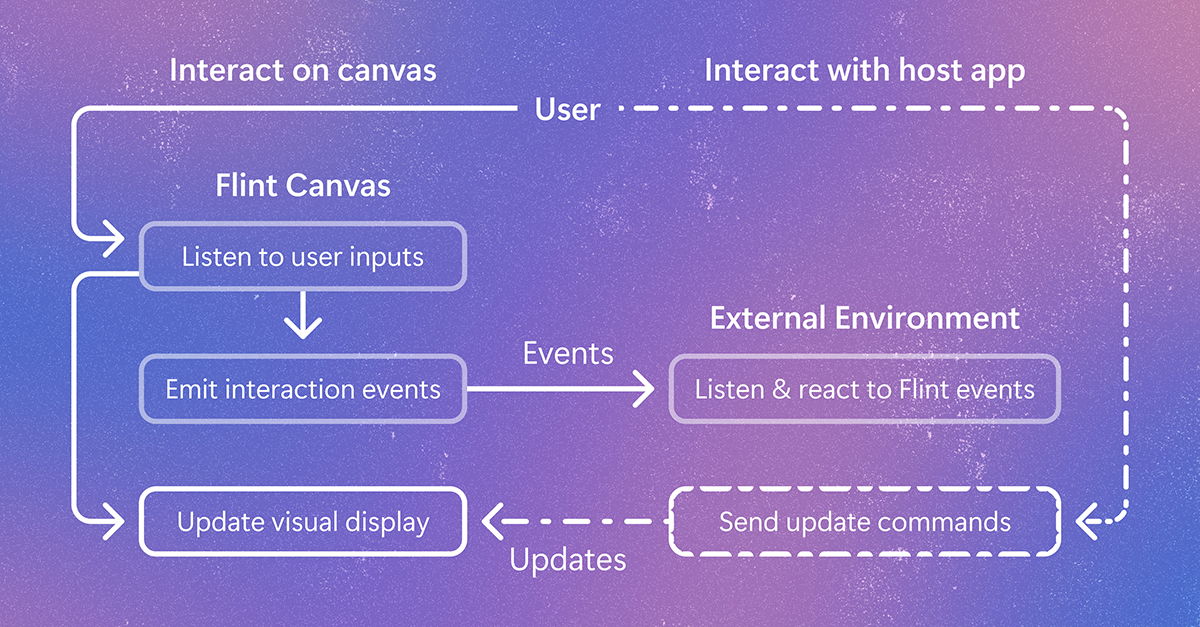
Flint-interactive gives AI agents a language for creating interactive visualizations. Click a chart, filter data, highlight related content, and explore beyond the view the author originally chose. The post Flint-interactive: A language for creating interactive data visualizations appeared first on Microsoft Research.