Language model (LM) agents can fail for different reasons, requiring different explanations and interventions. We study how state beliefs, action values, and action preferences interact as LM agents reason and commit to decisions in text-rendered grid worlds. We estimate task-relevant beliefs using report-based and rep...
A. S. Okcu, Wei-Sheng Wang, Tong-Meng Xie et al.· 0 citations
Formal verification proves that a program satisfies its specification, but says nothing about whether the specification captures what the author meant. As LLMs increasingly write both code and specifications, a gap between the author's natural-language requirement and the specification becomes a live risk. A machine-ch...
Martin Amster, One An, Holly Baker et al.· 0 citations
AI-generated outputs are frequently perceived as highly creative, but also tend to be more similar to each other (homogenized) than human ideas. Does the human heterogeneity that extends beyond AI reflect valuable thinking that AI misses? Alternatively, is greater human heterogeneity driven by lower-quality ideas and l...
Kibum Moon, Dan R. Johnson, Kostadin Kushlev et al.· 0 citations
We introduce StartLux-Decision, decision models from 0.8B to 27B parameters that combine efficient single-pass prediction with adaptive, confidence-guided reasoning. The Instant models use bidirectional attention in full-attention layers to improve decision accuracy while keeping single-pass inference. The AutoThink mo...
Xialie Zhuang, Zunhai Su, Jia Pan et al.· 0 citations
Reach audiences
Advertise in front of researchers, engineers, and readers.
The original EneMonIE proposal describes a Web-based semantic system for continuously monitoring energy trends through targeted information extraction from heterogeneous online media. This article presents EneMonIE-Backend, an implementation-derived redesign that converts that conceptual pipeline into a modular, execut...
Janik Lesage, Khadim L\^o, and Jean-S\'ebastien Dessureault· 0 citations
Full-duplex spoken language models (FD-SLMs) support simultaneous listening and speaking, but often lag behind half-duplex spoken language models (HD-SLMs) in general capabilities. We propose Dialogue-to-Duplex (D2), a framework that converts pretrained HD-SLMs into high-capability FD-SLMs at fine temporal granularity....
Cheng-Kuang Chang, Alexander H. Liu, Brian Kingsbury et al.· 0 citations
Information extraction models often perform well on the datasets they are trained on, but transferring to new domains and annotation guidelines remains challenging. Supporting user-specified types alone does not resolve this problem. We present CalOn, a unified 0.6B-parameter encoder for entity, relation, and event ext...
Yang Wang, Hanlin Xiao, Yanan Ma et al.· 0 citations
Standard hate speech detection datasets often emphasize explicit harmful language, but directed harm can also be expressed indirectly, without clearly hateful wording. Sarcasm is one such form of indirect expression, as it can convey harmful intent through mock praise, exaggeration, humor, or apparent politeness. In th...
Niyazi Ahmet Metin, Dilara Kek\"ull\"uo\u{g}lu· 0 citations
Reliable agentic tool use requires training data that pair diverse multi-step workflows with executable evidence that the requested outcomes were achieved. Scaling either trajectory coverage or verification alone is insufficient as new environments introduce distinct states, rules, and dependencies that must also be re...
Xiaoyang Yuan, Ji Zhao, Xingyu Hu et al.· 0 citations
Syntactic language models (SLMs) that generate sentences along with their syntactic tree structures have shown promise in both syntactic generalization and downstream tasks. Prior studies, however, have mostly evaluated smaller models trained on less pretraining data and tested on narrower task suites. In addition, the...
Peng-Cheng Wang, Zhe-Xu Zhang, Chao Lou et al.· Proceedings of the 2026 Conf...· 0 citations
Teacher rationales can help a smaller model answer health professions questions, but they can also reinforce errors. We examined when they help and how this evidence can guide training using Brazilian Portuguese questions from medical and multiprofessional residency examinations. First, we measured how a teacher ration...
Tiago Martinelli, Jo\~ao Paulo Papa, Adriano Jos\'e Pereira· 0 citations
State space models provide efficient linear-complexity processing for long sequences, but their performance frequently degrades as context length grows. We propose SuPER-Mamba, a training-free framework that uses Surprisal as a model-intrinsic signal for long-range state routing in pretrained Mamba models. SuPER-Mamba...
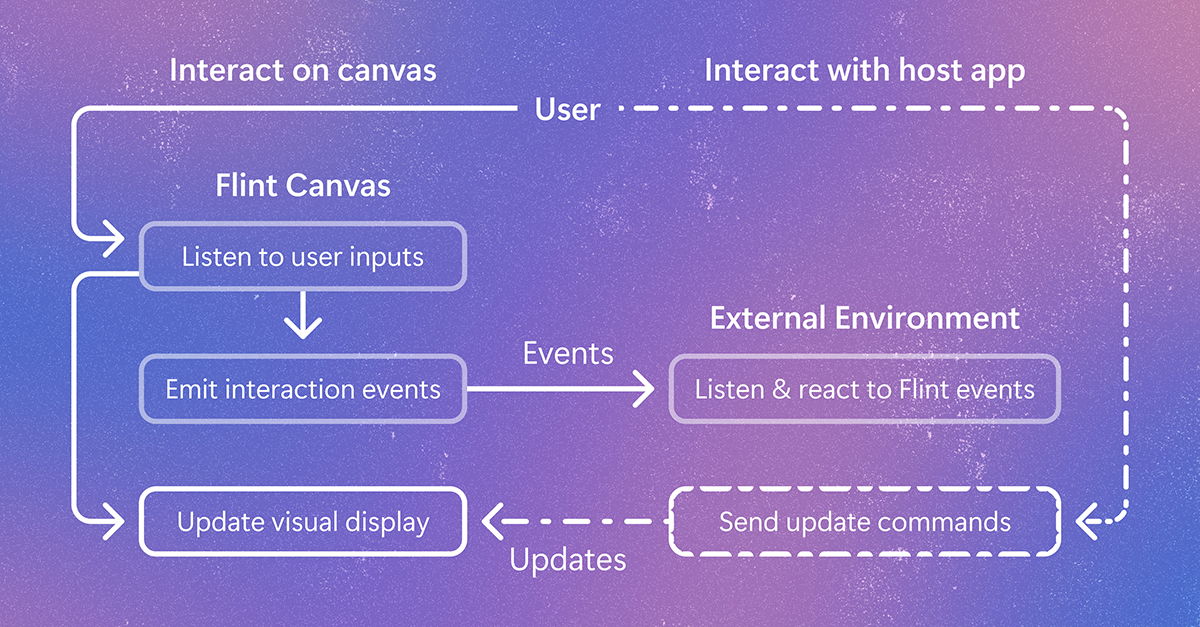
Flint-interactive gives AI agents a language for creating interactive visualizations. Click a chart, filter data, highlight related content, and explore beyond the view the author originally chose. The post Flint-interactive: A language for creating interactive data visualizations appeared first on Microsoft Research.