Sentence-level recognition of depression symptoms is challenging because similar expressions can differ in symptom relevance, and language-model inference is insufficiently grounded in diagnostic definitions. This study proposes a two-stage framework separating symptom-candidate generation from definition-grounded verification. A contrastively fine-tuned sentence encoder generates a symptom candidate per sentence, and a fine-tuned language model verifies whether the candidate is present or absent using the sentence, its context, and a candidate-specific diagnostic definition, checking its judgment against that definition before answering. Evaluated against encoder, inference-based, medical, and general LLM baselines and a matched single-stage supervised classifier, the proposed pipeline attains the best accuracy and F1 scores of all methods, with rationales matching expert-authored annotations. A preliminary clinical audit indicates moderate alignment with diagnostic definitions, with explanation quality strongly dependent on prediction correctness. The results support decomposing symptom recognition into candidate generation and definition-grounded verification, though performance remains limited for rare categories.
Weiming Li, Catarina Barata, Miguel Constante et al.· 0 citations
Spoken dialogue state tracking recovers slot-value pairs from speech, where ASR errors concentrate in entity values and persist across turns, making it both a generation and an editing problem. A strong per-turn text editor corrects much of this but, operating on the transcript alone, leaves three recoverable errors: a value predicted inconsistently across turns, an omitted slot, and a value the audio does not support. We present AVERT, which scores each candidate value by combining cross-turn agreement with a trained audio-conditioned verifier and resolves the three error types with three operators, vote, add, and swap, each restricted to the slots where its error is common. On SpokenWOZ, a base speech-LLM reaches 33.04 JGA, a text editor 38.34, and AVERT 40.13, without retraining either. This is in the range of a 1B end-to-end system that consumes the full spoken history (39.32), though AVERT uses two 1B decoders rather than one. The audio verifier contributes a statistically significant gain, and restricting each operator to a selected slot subset matters: removing it lets unrestricted voting overwrite correct categorical values and fall below the editor.
Farsi, spoken by more than 120 million people, lacks a comprehensive benchmark for dialogue generation and understanding. We introduce TALKFA, a unified benchmark comprising three complementary datasets: (1) WIKI-FADIAL, 4.2K Wikipedia-grounded dialogues for knowledge-grounded generation; (2) DAILYDIALOG-FA, 6.6K dialogues annotated for dialogue acts and emotions; and (3) PLAYDIAL-FA, 2.1K theatrical dialogues with sentiment labels. While LLMs assist data construction, every dialogue undergoes multi-stage review and revision by native Farsi speakers, and only the final human-approved dialogues are released. Experiments with six LLAMA and MISTRAL models show that LoRA substantially improves dialogue generation while requiring only 25-50% of the training data to recover over 90% of the final performance gains. Across classification tasks, FABERT achieves the best dialogue-act performance, LORA-MISTRAL-7B performs best on emotion recognition, and MISTRAL-24B achieves the highest sentiment score. Human evaluation and independent external validation demonstrate the reliability of the benchmark, while comparisons with GPT-4.1 as an LLM judge reveal that automatic metrics substantially overestimate dialogue quality. Zero-shot evaluation with frontier LLMs further shows that TalkFa remains a challenging benchmark. We will release all datasets, annotation guidelines, code, and checkpoints.
Neda Jamshidi, Kamyar Zeinalipour, F. Akbari et al.· 0 citations
Large language models (LLMs) are increasingly deployed on mobile devices, making energy efficiency a key deployment constraint, yet the energy impact of prompt design remains underexplored. This paper aims to understand how two prompt properties, cognitive load and phrasing pattern, shape the energy behavior of on-device LLM inference. We conduct a broad empirical study covering prompt properties, datasets, models, and devices, with phase-level profiling that separates prefill and decode energy. We find that cognitive load primarily affects the energy cost per token, while phrasing pattern affects energy largely through token usage. Our energy-quality analysis further shows that prompt design reshapes the attainable frontier differently across models, highlighting the need for model-aware prompt design in energy-efficient on-device LLM inference. Code, datasets, and scripts are available at https://amai-gsu.github.io/PromptProperty/.
Wei Hu, Xiaolong Tu, Dawei Chen et al.· 0 citations
Reach audiences
Advertise in front of researchers, engineers, and readers.
How do learners avoid overgeneralizations such as Tom laughed me without explicit negative evidence? Constructionists have posited two proposals that describe indirect negative evidence against overgeneralizations: preemption (which privileges exposure to near-synonymous construction---e.g., she made him laugh) vs. entrenchment (all exposures to a verb's grammatical usages, including cases like He laughed). We disentangle these hypotheses by running controlled rearing experiments on LMs trained on child-caregiver conversations, where we systematically remove preemptive vs. non-preemptive evidence. We find that while LMs avoid overgeneralizations, they do not show preemption at a verb-specific level, instead showing weak but non-zero evidence of abstract preemption. Combined with results from analyzing the LMs' training dynamics, we find that LMs treat competing structures as indirect positive---as opposed to negative---evidence in the verb-specific condition. Insofar as preemption is the more plausible route to avoiding overgeneralizations in humans, our results point the need for there to be sensitivities to indirect negative evidence in neural network learners, and suggest new human experiments to test abstract preemption.
Meme understanding goes beyond recognizing visual content or literal text; it requires implicit cultural knowledge and pragmatic inference that most vision-language models still lack. We introduce MemeCULT-1K, a multilingual benchmark of 1,000 South Asian memes in Bengali, English, and Hindi, where each meme is paired with a cultural context note and three human-written explanations, along with a supplementary set of 54 Bengali regional dialect memes. We evaluate thirteen popular Vision Language Models (VLMs) under two settings: meme-only and context-aware. Providing minimal cultural context yields consistent gains across all models and languages: mean SBERT similarity improves from 44.6 to 56.4 (+11.8), BLEURT from 37.3 to 42.3 (+5.0), and LLM-as-a-Judge scores from 2.57 to 3.43 out of 5 (+0.86). Fine-grained error analysis reveals that closed-source models fail mainly on entity and reference misidentification, while open-source models are bottlenecked by broader cultural knowledge gaps, with linguistic and phonological failures proving the most context-resistant across both. These results highlight the difficulty of culturally grounded meme understanding and motivate future work on explicit cultural knowledge integration. Our dataset and code are publicly available at TawsifDipto17/MemeCULT-1K.
Tawsif Tashwar Dipto, Mehedi Ahamed, Radib Bin Kabir et al.· 0 citations
Mobile payment applications in Nepal are graphically mediated and largely inaccessible to visually impaired users. This paper presents SpeakPay, a voice-first digital wallet, and documents the central technical contribution: a controlled study of domain adaptation for low-resource financial speech recognition. We introduce NepFinSpeech-403, a 403-utterance dataset of Nepali financial voice commands (send, load, and balance operations spanning 237 unique numerals), and fine-tune Whisper large-v2 with LoRA. On the held-out test set, the domain-adapted model reduces Word Error Rate from 129.95% (zero-shot baseline) to 42.58% --- a 67.2% relative reduction --- and improves Devanagari numeral recognition accuracy from 0.0% to 73.9%. We find that word-level metrics understate the practical task-level impact: domain adaptation improves the Transaction Success Rate from 1.67% to 33.33%, a roughly 20x gain. The improvement is consistent at the individual-utterance level (sign test, $p < 10^{-17}$) and across all command types. A data efficiency analysis shows that as few as 100 domain-specific utterances are sufficient to halve the zero-shot WER, with performance plateauing around 300 examples. Error analysis reveals systematic numeral confusion patterns (zero insertion/deletion, prefix hallucination) that account for the majority of remaining transaction failures. The trained system is deployed as a publicly accessible voice-first web application. All code, dataset, model weights, and this paper are released at https://github.com/subedibiraj/speakpay.
Grounded question answering systems should answer only when the supplied evidence supports the answer. In multi-hop QA, this requirement is difficult because partial evidence can make an unsupported answer appear plausible. We study selective answering through evidence sufficiency boundaries: for the same question, a model should abstain under unsupported or partially supported context, answer when the context first becomes sufficient, and keep the answer stable when redundant evidence is added. We introduce Evidence Sufficiency Boundary Training, a generation-native training framework that constructs ordered evidence chains and supervises the abstain-to-answer transition directly. The method combines level supervision, a boundary flip margin, post-boundary stability, and answer recall protection. We build evidence chains from HotpotQA, 2WikiMultiHopQA, and MuSiQue, then evaluate models with chain metrics, raw QA utility, and unsupported-answer rates on external non-answerable sets. With Qwen2.5-3B-Instruct and LoRA adaptation, Evidence Sufficiency Boundary Training gives the strongest boundary localization among the tested systems, with flip accuracy of 0.807 compared with 0.781 for a token-level abstention baseline. It also achieves the lowest overall unsupported-answer rate on external non-answerable evaluation, 0.095 compared with 0.101 for the same baseline, while retaining competitive raw QA F1. The results show that grounded selective answering improves when training marks the evidence level where refusal should give way to answering.
Haruto Sato, Yuki Tanaka, Ren Nakamura et al.· 0 citations
Masked diffusion models (MDMs) are a promising family of language generators, but achieving high-quality few-step generation remains challenging. In MDMs, all forward trajectories collapse to a single fully masked state, leaving no terminal entropy for consistency-style few-step generation. While recent few-step alternatives based on uniform-state diffusion avoid this degeneracy, it becomes harder to distinguish clean tokens from noise than MDMs, which usually harms modeling quality and training efficiency. In this work, we propose a multi-mask diffusion model (MultiMDM) that preserves the masking structure towards few-step generation. In the forward process, each clean token is first pushed towards a designated mask and then gradually mixes over the mask set. As a result, the backward process has a drafting capability by predicting a designated mask before refining to a clean token. We derive a closed-form ELBO training objective for MultiMDM that supports continual training from pretrained MDMs. In addition, we formulate a purely discrete-state consistency distillation scheme, with a shared-Gumbel coupling to reduce pathwise entropy. Experiments on pretraining and distillation show that MultiMDM provides an effective foundation for principled few-step generation.
Sijin Chen, Yinuo Ren, Heyang Zhao et al.· 0 citations
Chart-to-code generation is commonly trained through supervised fine-tuning on reference plotting scripts, implicitly treating the gold code as a fully observable target. However, many chart programs contain latent variables that cannot be uniquely recovered from the rendered image. We identify this latent-observation mismatch in four forms across five chart types: aggregation-induced mismatch, where raw samples are reduced to box statistics or histogram bin masses; normalization-induced mismatch, where absolute scale is removed in pie charts; projection-induced mismatch, where 3D information is lost through 2D rendering; and level-set-induced mismatch, where a scalar field is observable only through selected contour lines. These mismatches introduce target ambiguity and require models to generate information unsupported by the image. We propose Observation-Aligned Supervision, which replaces latent variables with visually constrained quantities. We instantiate it using box statistics, bin weights, and wedge proportions, and study 3D scatter and contour charts through controlled experiments. Across multiple VLMs, observation-aligned supervision generally improves observable-value recovery in both-executable evaluations and mostly improves end-to-end recovery, while the contour study reveals a trade off between observation alignment and representational compactness.
Large language models (LLMs) are increasingly deployed in applications with societal impact, raising concerns about the cultural biases they encode. We probe these representations by evaluating whether LLMs can perform author profiling from song lyrics in a zero-shot setting, inferring singers' gender and ethnicity without task-specific fine-tuning. Across several open-source models evaluated on more than 10,000 lyrics, we find that LLMs achieve non-trivial profiling performance but demonstrate systematic cultural alignment: most models default toward North American ethnicity, while DeepSeek-1.5B aligns more strongly with Asian ethnicity. This finding emerges from both the models' prediction distributions and an analysis of their generated rationales. To quantify these disparities, we introduce two fairness metrics, Modality Accuracy Divergence (MAD) and Recall Divergence (RD), and show that Ministral-8B displays the strongest ethnicity bias among the evaluated models, whereas Gemma-12B shows the most balanced behavior. Our code is available on [GitHub](https://github.com/ValentinLafargue/CulturalProbingLLM) and results on [HuggingFace](https://huggingface.co/datasets/ValentinLAFARGUE/AuthorProfilingResults).
Valentin Lafargue, Ariel Guerra-Adames, Emmanuelle Claeys et al.· 0 citations
Unlearning knowledge is a pressing and challenging task in Large Language Models (LLMs) because of their unprecedented capability to memorize and digest training data at scale, raising more significant issues regarding safety, privacy, and intellectual property. However, existing works, including parameter editing, fine-tuning, and distillation-based methods, are all focused on flat sentence-level data but overlook the relational, multi-hop, and reasoned knowledge in naturally structured data. In response to this gap, this paper introduces Graph Oblivion and Node Erasure (GONE), a benchmark for evaluating knowledge unlearning over structured knowledge graph (KG) facts in LLMs.This KG-based benchmark enables the disentanglement of three effects of unlearning: direct fact removal, reasoning-based leakage, and catastrophic forgetting. In addition, Neighborhood-Expanded Distribution Shaping (NEDS), a novel unlearning framework, is designed to leverage graph connectivity and identify anchor-correlated neighbors, thereby enforcing a precise semantic separation between the forgotten fact and its semantic neighborhood. Evaluations on LLaMA-3-8B and Mistral-7B across multiple knowledge editing and unlearning methods showcase NEDS's superior performance (1.000 on unlearning efficacy and 0.839 on locality) on GONE and other benchmarks. The dataset is available at https://huggingface.co/datasets/GONE-Anonymous/GONE.
A new method, called CW-Net, translates the reasoning process of an autonomous vehicle’s AI system into understandable concepts that explain its behavior.
MIT News · Artificial Intelligence· news.mit.eduAug 31, 2026
With millions of users across the world, Julia has been used to conduct cutting-edge research and to design new drugs, jet engines, heat pumps, and more.
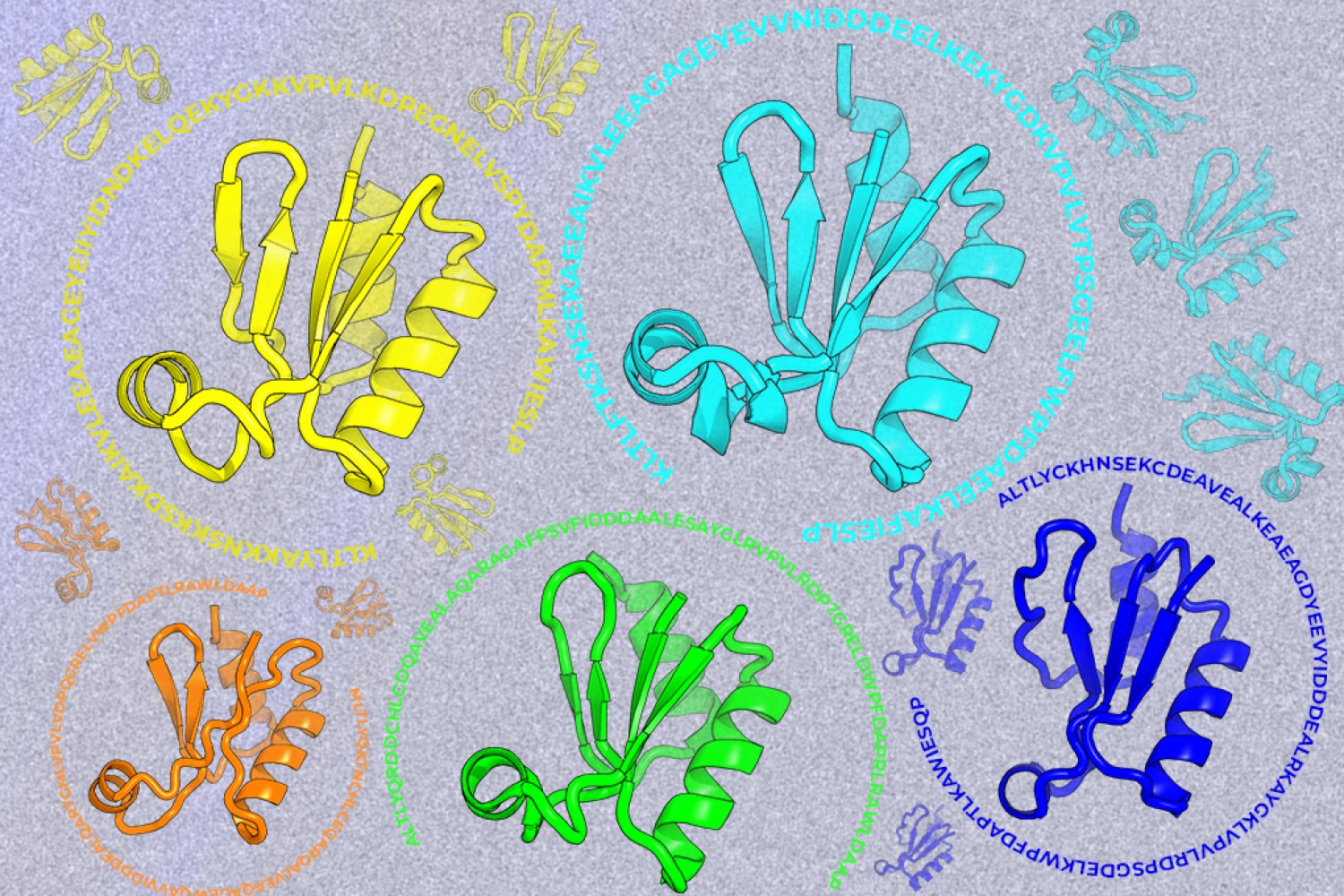
A new machine-learning framework aims to improve the success rate of computational protein design while moving away from results that reproduce sequences found in nature.
New MIT research could lead to better materials for a fossil-fuel-free process for making the chemical that's essential to fertilizer and other products.
We use cookies to run the site and, with your consent, for analytics and to show ads.
See our Cookie Policy.