This paper introduces a novel self-adaptive optimization algorithm designed for modeling biological molecules. Biological systems exhibit intricate and dynamic behaviors, making traditional optimization methods often inadequate. This algorithm addresses this limitation by incorporating a self-adjustment mechanism that dynamically modifies parameters and topology to optimize a system's behavior. We present a framework for automated parameter tuning and topology manipulation, aiming to provide a more flexible and adaptable approach to biological molecular modeling. The algorithm's effectiveness is demonstrated through a series of simulations focusing on protein folding and ligand binding. The resulting results highlight the algorithm's potential for significantly improving model accuracy and robustness.
Jincheng Zhang· Zenodo (CERN European Organi...· 0 citations
Protein folding is a fundamental biological process, and achieving accurate and stable folding is critical for protein function. Current methods often struggle to preserve the intricate network of interactions within the protein structure, leading to misfolded proteins and disease. This paper introduces a novel Dynamic Evolutionary Algorithm (DEA) specifically designed to prioritize protein topology preservation during folding. We propose a fitness function that directly rewards the algorithm for maintaining structural integrity, addressing the limitations of existing approaches. The algorithm incorporates topology information through a novel representation and leverages evolutionary strategies to iteratively refine the protein's structure towards a stable and functional conformation. We demonstrate the effectiveness of the proposed algorithm through simulations and analysis of protein folding pathways, showcasing a significant improvement in structural fidelity compared to conventional methods.
Jincheng Zhang· Zenodo (CERN European Organi...· 0 citations
Background: Mesenchymal stromal cell-derived conditioned medium (MSC-CM) represents a promising cell-free approach for regenerative medicine; however, variability in production conditions remains a major challenge for standardization. This study investigated how serum-free conditioning duration influences the proteomic composition and regenerative activity of human dental pulp stem cell-conditioned medium (DPSC-CM). Methods: DPSC-CM was collected after 24, 48, and 72 h of serum-free conditioning and characterized by label-free LC-MS/MS proteomics using donor-blocked differential abundance analysis. DPSC viability and apoptosis were assessed by Annexin V/PI flow cytometry. The angiogenic activity of CM 48 h and CM 72 h was evaluated using the ex ovo chick chorioallantoic membrane (CAM) assay, while all CM groups were assessed for their effects on human exfoliated deciduous teeth (SHED) metabolic activity and osteogenic differentiation. Osteogenesis was evaluated by alkaline phosphatase (ALP) and Alizarin Red S (ARS) staining. PI3K/Akt signaling was investigated for CM 48 h by Western blotting. Results: Serum-free conditioning for up to 72 h did not significantly affect DPSC viability or apoptosis. Proteomic analysis identified 1562 proteins. Differential abundance analysis identified 914 differentially abundant proteins (DAPs) between CM 48 h and CM 24 h and 745 between CM 72 h and CM 24 h, whereas no DAPs were detected between CM 72 h and CM 48 h. Enriched biological processes included extracellular matrix organization, cell-substrate adhesion, cytoskeletal organization, protein folding, and angiogenesis-related pathways. In the CAM assay, CM 48 h in-creased total vessel area, whereas CM 72 h increased total vessel length. CM 48 h en-hanced SHED metabolic activity at day 3. Although ALP staining did not differ significantly among groups, CM 48 h produced greater matrix mineralization than CM 24 h. PI3K inhibition reduced Akt phosphorylation, whereas CM 48 h had no significant effect on the p-Akt/Akt ratio. Conclusion: Serum-free conditioning duration influences DPSC-CM composition and biological activity, with the major proteomic transition occurring between 24 and 48 h. Among the conditioning periods evaluated, 48 h demonstrated the most consistent combination of proteomic and functional effects, supporting further investigation as a candidate conditioning duration for DPSC-CM production.
Chronic kidney disease (CKD) is a progressive disorder characterized by metabolic dysfunction, mitochondrial impairment, oxidative stress, and chronic inflammation, ultimately leading to irreversible renal damage. Despite advances in understanding CKD pathophysiology, effective therapies targeting these interconnected molecular processes remain limited. In this study, we performed a comprehensive data-independent acquisition (DIA)-based proteomic analysis to investigate the molecular alterations associated with CKD and to evaluate the therapeutic impact of DVA treatment. Using a CKD model with three treatment conditions (DVA, KY, and DVA+KY) alongside disease and healthy controls, we quantified global proteomic changes and applied statistical filtering (fold change ≥2, p ≤0.05) followed by K-means clustering (k=10). Distinct protein clusters revealed bidirectional modulation upon DVA treatment. Notably, Cluster 1 comprised proteins downregulated in CKD but significantly restored following DVA administration, while Cluster 2 included proteins elevated in CKD that were suppressed by DVA. Pathway enrichment and network analyses demonstrated that Cluster 1 proteins were predominantly associated with mitochondrial function, oxidative phosphorylation, and metabolic processes, whereas Cluster 2 proteins were enriched in immune signaling, oxidative stress, cytoskeletal remodeling, and proteostasis pathways. At the molecular level, DVA treatment restored key mitochondrial and metabolic regulators, including components of the electron transport chain (e.g., COX5A, NDUFS5, SDHB) and redox homeostasis proteins, indicating recovery of cellular bioenergetics. Concurrently, DVA suppressed inflammatory mediators (STAT2, IFI47, GBP2), oxidative stress-related proteins (CYBB, PRDX5), and cytoskeletal regulators linked to renal injury (ARHGEF12, FMNL2). Network and Reactome analyses further confirmed coordinated modulation of interconnected biological systems rather than isolated protein changes. Collectively, our findings demonstrate that DVA exerts a dual therapeutic effect by restoring essential mitochondrial and metabolic pathways while simultaneously suppressing inflammation, oxidative stress, and cytoskeletal dysregulation in CKD. This systems-level proteomic reprogramming highlights DVA as a promising candidate for CKD intervention and provides mechanistic insights into disease progression and therapeutic targeting.
R. SHETTIGAR, Shobha Dagamajalu, Hemashree krkampa et al.· bioRxiv (Cold Spring Harbor...· 0 citations
Reach audiences
Advertise in front of researchers, engineers, and readers.
This paper introduces a novel framework for quantum computing that integrates adaptive quantum state generation algorithms with the self-adaptive geometry of topology. The core idea is to combine the precision of quantum computation with the inherent flexibility of topological structures. We propose a method for dynamically adjusting quantum qubit configurations through a self-adaptive geometric mapping, aiming to enhance computational efficiency and accuracy, particularly in the simulation and optimization of complex systems such as protein folding and material properties. The framework leverages the unique properties of topological spaces to achieve precise and robust results.
Jincheng Zhang· Zenodo (CERN European Organi...· 0 citations
This paper introduces an innovative framework for analyzing and optimizing fractal networks, leveraging the concept of 'Symmetry Metric' to guide network design. We propose a novel method for quantifying network structure using a mathematical definition of self-similarity and employing this metric to optimize network parameters. The core claim is that this approach, focused on understanding the network's inherent structure, offers a significant advancement over traditional methods, particularly in complex systems where precise outcome prediction is challenging. This work investigates the application of this framework to neural network design and protein folding, demonstrating its efficacy in achieving optimized network topologies. The paper details the algorithm for calculating the Symmetry Metric and provides a preliminary analysis of its impact on network performance. Furthermore, we explore the potential for incorporating this framework into automated design tools.
Jincheng Zhang· Zenodo (CERN European Organi...· 0 citations
Psoriasis is a chronic inflammatory skin disorder marked by skin hyperproliferation and rapid inflammation. Effective therapies should be immunomodulatory, anti-inflammatory and antioxidant in nature. This study evaluates the therapeutic potential of grape seed extract (GSE) (Vitis vinifera L.) in managing psoriasis by investigating its ability to inhibit the biomarker heat shock protein 90 alpha class A1 (HSP90AA1). Gas chromatography (GC) revealed the phytoconstituents of grape seed extract and anti-inflammatory and antioxidant properties were evaluated to determine its therapeutic potential. A docking simulation study of the important bioactives of GSE was screened for their binding activity against HSP90AA1 which was identified as a psoriasis marker gene through network pharmacology in a previous study. The antiproliferation effect was determined by cell viability assay. A psoriasis model was established in HaCaT cells with inflammatory cytokines and qRT-PCR estimated the HSP90AA1 expression. An imiquimod-induced psoriasis mice model was used to evaluate the effectiveness of GSE on splenomegaly. Gas chromatography analysis revealed that GSE contains a significant concentration of flavonoids, which could substantiate its bioactivity. It consists of 40 different compounds making it diverse in therapeutic potential. Grape seed extract demonstrated potent antioxidant activity with IC50 values of 2.38 ± 0.06 mg/mL for DPPH (2,2-diphenyl-1-picrylhydrazyl) scavenging and 1.24 ± 0.07 mg/mL for nitric oxide (NO) scavenging and effective protection against inflammatory protein denaturation, with an IC50 value of 1.16 ± 0.02 mg/mL. Molecular studies revealed that key bioactives, Epicatechin-3-gallate and Procyanidin B4, possess a high binding affinity for the psoriasis marker protein HSP90AA1. Domain analysis of HSP90AA1 and the nature of its amino acids that interacted with the bioactives of grape seed were observed. Grape seed extract exhibited cell viability of 59.51 % against HaCaT keratinocyte cell lines, indicating the presence of antiproliferative activity. It also showed significant 0.2-fold downregulation of HSP90AA1 gene expression in human keratinocytes. Its systemic immunomodulatory potential was validated by its ability to reverse splenomegaly in an imiquimod-induced psoriasis mouse model, supporting its potential for adjunct anti-psoriatic therapy.
T Vandanaraj, T Santhrani· Plant Science Today· 0 citations
Quantum-driven constraint on complex systems aims to accelerate solution processes by dynamically adjusting constraint parameters. This paper explores the potential of quantum annealing and variational quantum eigensolver (VQE) to optimize these parameters. The core claim is to implement an algorithm that dynamically adjusts constraint parameters on complex systems (e.g., protein folding, DNA sequencing) to achieve optimal solution speed and accuracy. The approach leverages quantum annealing for its ability to escape local optima and VQE for efficient exploration of the solution space. This research investigates the feasibility and potential advantages of employing quantum computing for optimization tasks within complex systems, offering a novel methodology for enhancing computational efficiency.
Jincheng Zhang· Zenodo (CERN European Organi...· 0 citations
Background: Serial glial fibrillary acidic protein (GFAP) trajectories have become an important framework for contextualizing evolving secondary-injury pathophysiology after moderate-to-severe traumatic brain injury (msTBI). However, total GFAP pools release and clearance signals that may be less useful for longitudinal bedside decisions than a proteoform-resolved assay. We compared total GFAP with neoGFAP™, defined here as calpain-generated GFAP proteoforms intended to index active astroglial proteolysis during the subacute phase. Methods: We analyzed 651 serial serum samples from 95 msTBI patients from a previously described single-site cohort. Total GFAP and neoGFAP were measured on the same MSD platform from 6 to 240 hours after injury. Early (6 to 72 h) and late (96 to 240 h) windows, data-derived tertiles, and serial trajectory summaries were calculated directly from serial samples. Models were benchmarked against age plus admission post-resuscitation Glasgow Coma Scale (GCS) and the admission IMPACT extended risk score using five-fold stratified cross-validation. Outcomes were unfavorable outcome (GOSE 1 to 4), less-than-good recovery (GOSE 1 to 6), Disability Rating Scale (DRS) ≥15, mortality, and neuroimaging worsening at 6 months. Results: The cohort contributed 95 serial biomarker profiles, with 90 participants evaluable for 6-month GOSE and 89 for DRS. Unfavorable outcome occurred in 57/90 (63.3%), and less-than-good recovery in 79/90 (87.8%). For unfavorable outcome, IMPACT plus early neoGFAP reached AUROC 0.85 versus 0.84 for IMPACT plus early total GFAP and 0.81 for IMPACT alone. For less-than-good recovery, IMPACT plus late neoGFAP achieved AUROC 0.90 versus 0.84 for late total GFAP and 0.82 for IMPACT alone. Secondary analyses for DRS, mortality, and neuroimaging worsening showed smaller differences. Conclusions: In this retrospective analysis, neoGFAP provided clearer incremental value than total GFAP for recovery-oriented monitoring, especially when late-window reassessment of patients who remained at risk for less-than-good recovery was required. Results support prospective testing of neoGFAP™ as a pathophysiology-informed adjunct to serial bedside decision making, repeat-assessment thresholds, and recovery stratification.
Kevin Wang, Guangzheng Cai, Khadija Boukholda et al.· medRxiv· 0 citations
Abstract Fluorescent indicators are indispensable imaging tools for visualizing the spatiotemporal dynamics of biological processes. Red fluorescent indicators are in particularly high demand because they offer compatibility with existing green fluorescent indicators or optogenetic tools, and longer wavelength fluorescence has inherent advantages for biological applications. We previously described a chemigenetic indicator design that combines a green fluorescent protein and a synthetic chelator in an effort to combine the advantages of conventional protein-based biosensors and synthetic chemosensors. We now demonstrate that this chemigenetic design can be extended to red fluorescent proteins. Through screening of variants with a range of chromophore–chelator orientations, followed by directed evolution, we developed a red fluorescent calcium ion (Ca2+) indicator with 5.4-fold fluorescence intensity change when going from 0 to 39 μM Ca2+ with purified proteins. Although the functionality of the current version is lost when expressed in mammalian cells and the selectivity is low, these results establish this chemigenetic design as a strategy that can be extended to other fluorescent protein color variants.
Shosei Imai, Wenchao Zhu, Robert E. Campbell et al.· ACS Chemical Biology· 0 citations
This paper introduces a novel self-adaptive optimization algorithm designed for modeling biological molecules. Biological systems exhibit intricate and dynamic behaviors, making traditional optimization methods often inadequate. This algorithm addresses this limitation by incorporating a self-adjustment mechanism that dynamically modifies parameters and topology to optimize a system's behavior. We present a framework for automated parameter tuning and topology manipulation, aiming to provide a more flexible and adaptable approach to biological molecular modeling. The algorithm's effectiveness is demonstrated through a series of simulations focusing on protein folding and ligand binding. The resulting results highlight the algorithm's potential for significantly improving model accuracy and robustness.
Jincheng Zhang· Zenodo (CERN European Organi...· 0 citations
Vernonia calvoana (VC), a commonly used medicinal plant in West Africa, has been shown by our research team to inhibit the proliferation of OVCAR-3 ovarian cancer cells through mechanisms involving oxidative stress, DNA damage, and S-phase cell cycle arrest. The objective of the current study was to elucidate the intrinsic apoptotic mechanisms triggered by VC fraction seven (VCF7). OVCAR-3 cells were treated with VCF7 (0, 8, 16, and 32 μg/mL) for a duration of 48 h. Apoptosis was assessed using Annexin V/Propidium Iodide (PI) staining followed by flow cytometry analysis. Mitochondrial membrane potential (ΔΨm) was assessed through JC-1 staining and confocal microscopy, while chromatin condensation was analyzed using DAPI staining. DNA fragmentation was examined by agarose gel electrophoresis. Caspase 3 activity was measured using flow cytometry. Protein expression levels of p53, Bcl-2, cytochrome c, caspase-9, and caspase-3 were determined by Western blot analysis, and mRNA expression levels of p53 and Bcl-2 were evaluated using qRT-PCR. VCF7 induced apoptosis in a concentration-dependent manner. Analysis using Annexin V/PI indicated an increase in apoptotic cell populations from 10.5% to 30%, along with a rise in necrotic cells from 7% to 50% across treatment concentrations. A modest, concentration-associated decrease in mitochondrial membrane potential was recorded (0.96-, 0.88-, and 0.85-fold at 8, 16, and 32 μg/mL, respectively; p < 0.05). DAPI staining validated the concentration-dependent chromatin condensation and nuclear fragmentation. The analysis of DNA fragmentation showed progressive internucleosomal degradation, appearing as a smear pattern with distinct fragments at elevated concentrations, indicative of concurrent apoptotic and necrotic cell death. The activation of caspase-3 reached a peak of 28% at 16 μg/mL. Western blot analysis indicated an upregulation of p53, a downregulation of Bcl-2, an increase in total cytochrome c protein levels, and an increased expression of caspase-9 and caspase-3 in a concentration-dependent manner. These findings were corroborated at the transcriptional level by qRT-PCR, which showed increased p53 mRNA and decreased Bcl-2 mRNA expression. Taken together, these results underscore the potential of VCF7 as a promising plant-derived anticancer agent and support the need for further preclinical and clinical studies in ovarian cancer.
Ariane M. Chitoh, Clément G. Yedjou, Ingrid K. Tchakoua et al.· International Journal of Mol...· 0 citations
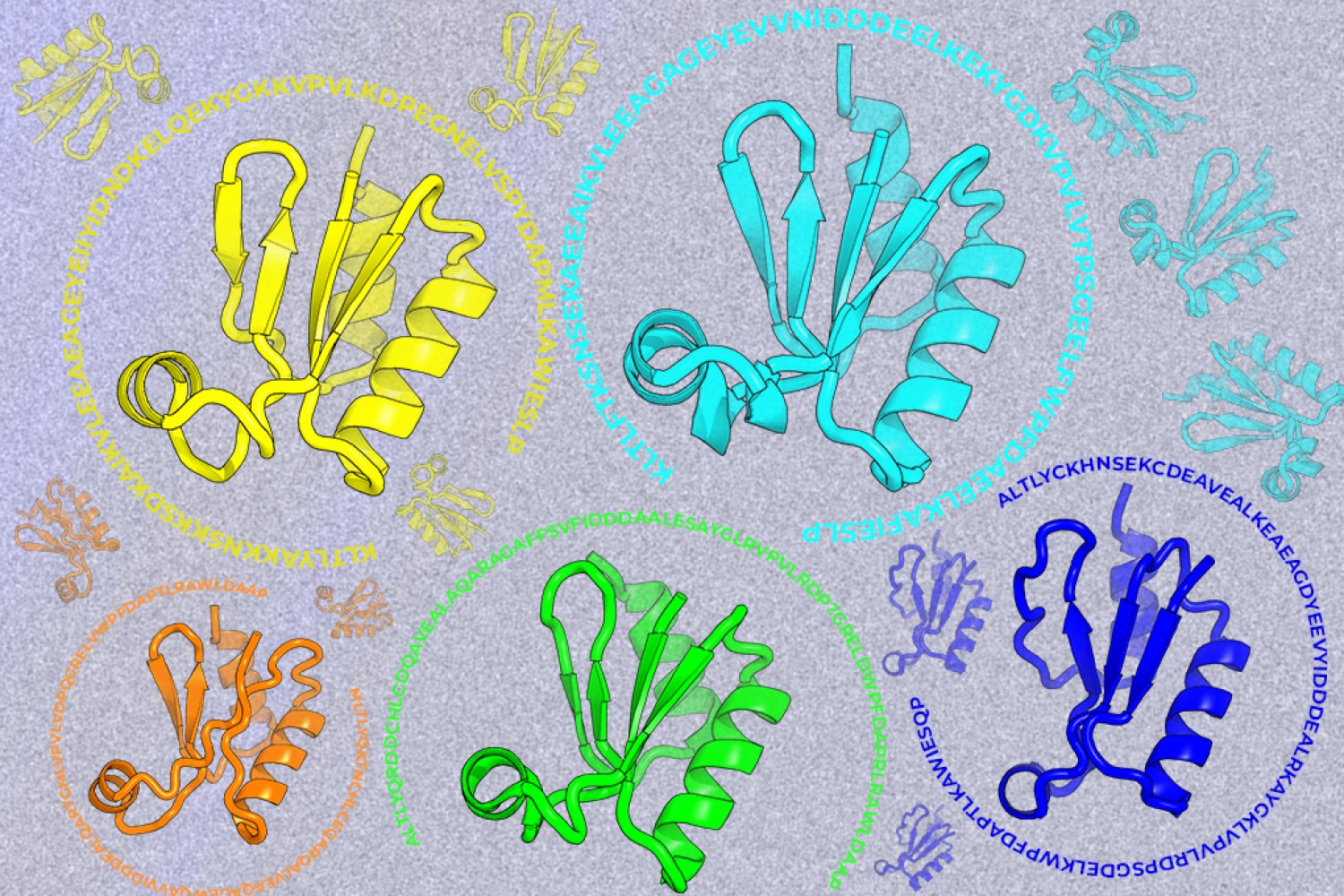
A new machine-learning framework aims to improve the success rate of computational protein design while moving away from results that reproduce sequences found in nature.