Quality managers, change agents and researchers are often troubled in defining and demonstrating the level of success achieved in software process improvement (SPI) initiatives. So far, there exist only few frameworks for identifying the level of success achieved in SPI. Analysis shows that these frameworks do not provide a comprehensive view from all relevant stakeholders involved in SPI. Early results from an ongoing research effort to discover and operationalise success dimensions are reported. Adapted from the project management literature it is suggested that five dimensions characterise the level of success achieved in SPI: (1) project efficiency, (2) impact on the process user, (3) business success, (4) direct operational success and (5) process improvement fit. Results from an empirical analysis are reported where 23 change agents evaluated the relative level of importance of each dimension. Early results indicate that change agents valued the process user satisfaction the most and the process improvement fit the least. This finding confirms the need of having various stakeholders and dimensions acknowledged in a framework that is used to measure the overall success of an SPI initiative.
P. Abrahamsson· arXiv.org· 12 citations· ⚡1
Reach audiences
Advertise in front of researchers, engineers, and readers.
This study presents the results of a systematic mapping study on software size estimation metrics and methods. The methods are investigated based on the entity type(s) measured by the method, size attribute type, size measure(s), and theoretical/empirical validation status of the method, and restriction with respect to functional domain type(s) and software development methodology applicability. Based on the results of the survey, we provide a discussion on the current state of the art in software sizing.
Sohaib Shahid Bajwa, Çigdem Gencel, P. Abrahamsson· Joint Conference of Internat...· 10 citations
Test-driven development (TDD) is a programming technique in which the tests are written prior to the source code. It is proposed that TDD is one of the most fundamental practices enabling the development of software in an agile and iterative manner. Both the literature and practice suggest that TDD practice yields several benefits. Essentially, it is claimed that TDD leads to an improved software design, which has a dramatic impact on the maintainability and further development of the system. The impact of TDD on program design has seldom come under the researchers' focus. This paper reports the results from a comparative case study of three software development projects where the effect of TDD on program design was measured using object-oriented metrics. The results show that the effect of TDD on program design was not as evident as expected, but the test coverage was significantly superior to iterative test-last development.
Maria Siniaalto, P. Abrahamsson· International Symposium on E...· 54 citations· ⚡5
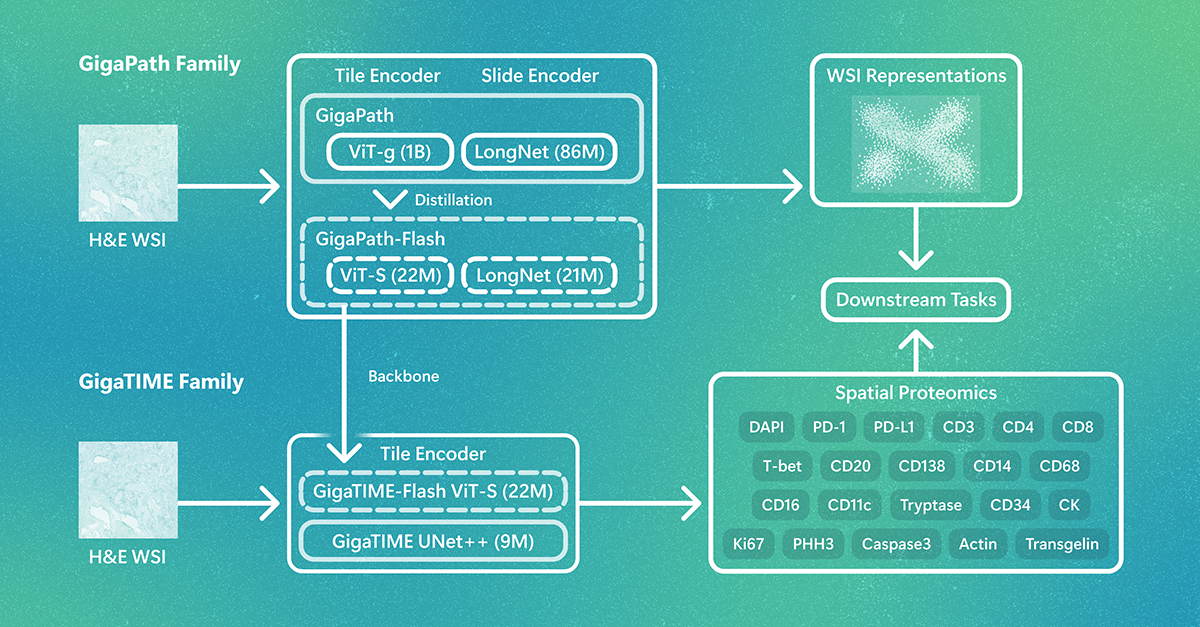
What if pathology foundation models could do more with less? GigaPath-Flash and GigaTIME-Flash cut computational demands while maintaining strong performance, opening the door to larger studies and broader exploration. The post GigaPath-Flash and GigaTIME-Flash: Toward population-scale discovery with efficient pathology foundation models appeared first on Microsoft Research.
MIT News · Artificial Intelligence· news.mit.eduAug 27, 2026
A new machine-learning framework aims to improve the success rate of computational protein design while moving away from results that reproduce sequences found in nature.