Fluorogenic probes that report enzyme activity are essential for studying biological functions. However, designing them for targets with low catalytic turnover and narrow substrate specificity remains a significant challenge. Here, we present a precision design framework that separates the requirements for sensitivity and selectivity by integrating molecular docking, quantum chemical modeling of fluorogenic mechanisms, and targeted fine-tuning of the probe structures. As a proof of concept, we developed A5, a fluorogenic substrate for aldehyde dehydrogenase 2 (ALDH2) that exhibits high isoform selectivity and a >240-fold signal enhancement over the standard NADH assay. A5 enables quantitative imaging of ALDH2 activity across multiple biological scales─in blood samples, live cells, and intact mouse brains─and supports the identification of small-molecule activators with therapeutic potential in an Alzheimer's disease model. This work establishes a modular strategy for creating activity-based probes tailored to challenging enzymatic targets, with broad applications in precision imaging, drug discovery, and mechanistic biochemistry.
Rongrong Tao, Yu Chen, Taorui Yang et al.· Journal of the American Chem...· 4 citations
Atomic charge is crucial in drug design for analyzing reactive sites and interactions between ligands and targets. While quantum mechanical methods offer high accuracy, they are generally computationally costly. Conversely, empirical approaches, while computationally efficient, frequently suffer from lack of precision and generalizability. Recent a number of machine learning-based models have been developed for atomic charge predictions, but they struggle with accurately representing molecular structures and capturing the chemical environments affecting atomic charges, thus limiting their generalization and accuracy. To overcome these limitations, we propose LumiCharge, a novel atomic charge prediction framework that incorporates high-order spherical harmonics convolutions and explicitly models multibody interactions. In constructing this model, we employ a strategy that integrates both high- and low-order information, enhancing its geometric spatial perception capability, which is currently underexplored in the field. Benchmark evaluations demonstrate that LumiCharge outperforms state-of-the-art (SOTA) models by 30%-60% across diverse data sets. Additionally, in cross-scale experiments, LumiCharge demonstrates exceptional extrapolation capability and robustness across molecules of varying sizes, effectively overcoming the limitations imposed by molecular sizes. On an external halogen-containing test set, LumiCharge achieves an RMSE of 0.055e, meeting practical application requirements. Finally, a case study of virtual screening for the androgen receptor (AR) target further validates its outstanding accuracy compared to the OPLS3e force field and other deep learning (DL)-based baseline models, highlighting its exceptional generalization capacity and practical utility in real-world scenarios.
Qun Su, Hui Zhang, Qiaolin Gou et al.· Journal of Physical Chemistr...· 2 citations
Accurate prediction of the peptide-protein interaction (PepPI) is crucial for developing peptide-based therapeutics and vaccines. However, this computational task has traditionally faced significant challenges, such as the scarcity of structure data along with the corresponding label of the binding affinity for bound complexes. To address these challenges, we introduce PepBAN, a deep learning framework for modeling PepPI predictions. PepBAN incorporates two technical advancements: (1) adopting the protein language model ESM-2 to characterize proteins and ESM-2 or a graph-based foundation model for peptides without structure data and (2) leveraging the conditional domain adversarial learning to enhance generalization across a broad range of protein targets, especially when there are limited binding data. At the core of PepBAN is a bilinear attention network (BAN) that effectively learns the pattern of pairwise local interactions, enables the identification of key residues participating in the peptide-protein interactions, and offers an intuitive approach to interpret the underlying mechanisms of PepPIs via analyzing attention weights. Our numerical experiments demonstrated that PepBAN outperformed the previous state-of-the-art models across several well-established benchmark studies. Furthermore, we evaluated PepBAN's applicability in predicting cyclic peptide-protein interactions, a task that poses significant challenges due to the presence of noncanonical amino acids. These nonstandard residues require specialized handling, which most existing sequence-based PepPI prediction models did not adequately address, and we adopt an atom-resolved molecular graph approach to process cyclic peptides. Despite this complexity, PepBAN demonstrated a clear advantage by achieving a superior prediction performance and offering a distinct edge in tackling the emerging chemical space of cyclic peptides, which has great potential for novel therapeutic development. In summary, PepBAN serves as a valuable tool for advancing peptide-based drug and therapeutic development.
Shuaiyan Li, Xiaorui Wang, Yuchen Zhu et al.· Journal of Chemical Informat...· 2 citations
The androgen receptor (AR) represents a pivotal therapeutic target for prostate cancer. However, existing orthosteric ligand-binding pocket (LBP) antagonists [e.g., enzalutamide (ENZ)] encounter significant obstacles due to resistance-conferring mutations in the LBP. Allosteric antagonists targeting the BF3 site exhibit great potential in overcoming such resistance but have low inhibitory efficacy. In our study, we employed an integrated computational modeling strategy, including Gaussian-accelerated molecular dynamics (GaMD), MM/GBSA free-energy calculations, and elastic network model (ENM)-based signaling communication pathway analyses. This approach is used to probe the cooperativity of allosteric BF3 antagonists [e.g., VPC-13808 (VPC)] with diverse orthosteric LBP ligands [e.g., ENZ and testosterone (TES)] in suppressing AR activity. Herein, four types of AR systems were examined: AR bound to LBP agonist (AR·TES), LBP antagonists (e.g., AR·ENZ), and combinations of LBP agonist/antagonist with BF3 antagonist (e.g., AR·TES·VPC and AR·ENZ·VPC). Results indicate that BF3 antagonists can synergize with the LBP antagonist to amplify conformational flexibility in H12 and induce anticorrelated dynamics of H12 with H3 and H4. This induces the downward movement of H12 and its displacement away from H3/H4, triggering the wide opening of the AF2 binding cleft and substantially reducing the coactivator recruitment. Furthermore, the BF3 antagonist can interact with specific residues (e.g., F673, F826, L830, and Y834) and cooperate with the LBP agonist or antagonist to allosterically perturb the AF2 conformation. Multiple short- and/or long-range BF3→AF2 and LBP→AF2 signaling transition pathways are involved, such as F673→Y834→L722→L812→L744→V746→L873→ENZ→L880/V889/V891. These mechanistic insights establish the foundation for developing novel AR BF3 antagonist and LBP-BF3 combination therapies, suggesting a promising avenue for enhancing the efficacy and overcoming the resistance in castration-resistant prostate cancer treatment.
Xiaotian Kong, Yushan Zou, Peng Cao et al.· Journal of Chemical Informat...· 1 citation
Atomic charge is a fundamental quantum chemical property essential for advancing drug design and discovery. Although quantum mechanics (QM) methods offer the highest level of accuracy, their computational demands scale quadratically with the number of atoms, limiting their practicality for large-scale applications. In light of this, empirical and semiempirical methods have been introduced to improve computational efficiency, albeit often at the expense of accuracy. The advent of artificial intelligence has witnessed a growing application of machine learning (ML) techniques to accelerate atomic charge predictions. However, existing ML models often suffer from low accuracy and limited generalization capabilities. To address these challenges, we introduce an advanced equivariant graph attention neural network specifically engineered to model long-range atomic electrostatic interactions with high precision. This model introduces a sophisticated global graph attention mechanism, enabling it to capture charge contributions across multiple scales. By utilizing a combination of structural symmetry-preserving transformations and multiscale attention, our approach not only preserves the inherent symmetries of molecular structures but also substantially improves the model's accuracy, generalization, and robustness in complex scenarios. Our empirical analyses demonstrate that, compared to leading baseline models, the proposed model improves charge prediction accuracy by over 40% on average across various charge-calculation schemes. Remarkably, the model achieves superior performance on the external RESP (restrained electrostatic potential) test data sets, with a 54.6% improvement over the baseline. Additionally, we evaluated our charge model under the setting of virtual screening, where it outperforms both the OPLS3 charges and baseline deep learning models across all evaluation metrics, highlighting its extensive potential for scientific discovery.
Qiaolin Gou, Qun Su, Jike Wang et al.· Journal of Chemical Informat...· 1 citation
Accurate modeling of protein-peptide interactions is essential for understanding fundamental biological processes and designing peptide-based drugs. However, predicting the complex structures of these interactions remains challenging, primarily due to the high conformational flexibility of peptides. To support a fair and systematic evaluation of recent deep learning (DL) approaches, we introduce PepPCBench, a benchmarking framework tailored to assess protein folding neural networks (PFNNs) in protein-peptide complex prediction. As part of this framework, we curated PepPCSet, a data set of 261 experimentally resolved complexes with peptides ranging from 5 to 30 residues. We benchmark five full-atom PFNNs, including AlphaFold3 (AF3), AlphaFold-Multimer (AFM), Chai-1, HelixFold3 (HF3), and RoseTTAFold-All-Atom (RFAA), using comprehensive evaluation metrics. Our benchmarking reveals meaningful performance differences among these methods and highlights the influence of peptide length, conformational flexibility, and training set similarity on prediction accuracy. While AF3 shows strong performance in structure prediction, further analysis indicates that confidence metrics correlate poorly with experimental binding affinities, underscoring the need for improved scoring strategies and generalizability. By providing a reproducible and extensible framework, PepPCBench enables a robust evaluation of PFNN-based methods and supports their continued development for peptide-protein structure prediction.
Silong Zhai, Huifeng Zhao, Jike Wang et al.· Journal of Chemical Informat...· 13 citations· ⚡1
The interest in covalent drugs has resurged in recent decades, spurring the development of numerous specialized computational docking tools to facilitate covalent ligand design and screening. Herein, we present CarsiDock-Cov, a new paradigm distinguishing itself as the first deep learning (DL)-guided approach for covalent docking. CarsiDock-Cov retains the core components of its non-covalent predecessor, leveraging a DL model pretrained on millions of docking complexes to predict protein–ligand distance matrices, along with a dedicated-designed geometric optimization procedure to convert these distances into refined binding poses. Additionally, it incorporates several key enhancements specifically tailored to optimize the protocol for covalent docking applications. Our approach has been extensively validated on multiple public datasets regarding the docking and screening of covalent ligands, and the results indicate that our approach not only achieves comparably improved applicability compared to its non-covalent predecessor, but also exhibits competitive performance against various state-of-the-art covalent docking tools. Collectively, our approach represents a significant advance in covalent docking methodology, offering an automated and efficient solution that shows considerable promise for accelerating covalent drug discovery and design.
Chao Shen, Hongyan Du, Xujun Zhang et al.· Acta Pharmaceutica Sinica B· 12 citations
Targeted covalent drugs have demonstrated remarkable potential in disease treatment over the past decades. However, existing methods for covalent drug design are often limited to serine and cysteine, ignoring other potentially ligandable binding sites. Statistical analyses indicate that over 95% of binding pockets contain covalent-binding residues, suggesting that all ligands that targeting these pockets possess the potential to be modified into covalent ligands. To achieve this goal, we introduced CovalentLab, an interactive computational platform that integrates ligand-based and warhead-based strategies into a unified workflow for the rational design of covalent ligands. Leveraging a covalent binding site prediction model constructed on ESM-2 with LoRA fine-tuning, CovalentLab enables the prediction and ranking of nine classes of covalent-binding residues in proteins according to their reactivity and facilitates systematic warhead attachment to ligands using 210 electrophilic groups or user-defined warheads. Using this platform, a comprehensive library of more than 100,000 covalent molecules across 95 targets was generated. Notably, CovalentLab has been successfully applied to various essential real-world targets, identifying wet-laboratory-validated bioactive compounds ranging from TRK orthosteric inhibitors to GAC allosteric inhibitors. By bridging gaps in covalent drug discovery, CovalentLab offers a versatile, publicly accessible resource to expand the druggable targets and accelerate the development of targeted covalent therapies.
Xi Xue, Xiangying Liu, Xue Liu et al.· JACS Au· 4 citations· ⚡1
Recently, various self‐supervised learning (SSL) methods based on 3D graph neural networks (GNNs) have been developed to comprehensively represent the structural information of molecules in 3D space; this is essential for discovering new drugs. However, existing methods fail to comprehensively characterize the 3D structures of molecules and neglect the electronic structural information that significantly influences key properties such as molecular reactivity, strong electrostatic interactions, and chemical adsorption. Therefore, here, a novel molecular representation learning method is constructed, Q‐GEM, incorporating quantum and geometric structural information enhancement, based on the quantum chemical property database QuanDB and SSL methods. Q‐GEM comprises a GNN embedded with the molecular electronic and complete 3D geometrical structural information as well as several well‐designed multiscale SSL tasks, achieving superior absolute molecular conformation prediction and conformational discrimination. The Q‐GEM achieved state‐of‐the‐art performance in 12 out of 13 prediction tasks on the MoleculeNet dataset, with an average performance improvement of 3.3% and 2.0% for classification and regression prediction tasks, respectively. Moreover, an average performance improvement of 5.2% is achieved in three localized quantum chemical properties, fully demonstrating the excellent performance of Q‐GEM in distinguishing molecular electronic structures. The Q‐GEM represents a novel, powerful breakthrough for accurate molecular property prediction.
Zhijiang Yang, Liangliang Wang, Tengxin Huang et al.· Advancement of science· 5 citations
To fulfill functions for differentially regulating the downstream signaling pathways, functional ligands (i.e., agonists or antagonists) targeting nuclear receptors (NRs) are designed to stabilize different conformations (active or inactive) of the proteins. However, in practical applications, it is usually difficult to determine the molecular category of an NR ligand because these molecules all bind in the same location of an NR protein, namely, the ligand-binding pocket (LBP). Considering that ligands with different properties (agonists or antagonists) prefer to bind with differential conformations of NRs, it is possible to identify the molecular type of a given ligand through the differential binding environment (active or inactive conformations) of the protein-ligand interaction. Therefore, in this study, we established a unified model (NRIGN) based on the deep graphic architecture to discriminate agonists and antagonists targeting 26 successful or in-clinical-trial NR targets. Our result shows that NRIGN achieves an excellent prediction accuracy (ACC >0.95) and is robust enough to be applied in various real-world scenarios, such as predicting the molecular type of ligands in crystallized NR structures, ligands with multiple NR activities, and ligands with their types altered by target mutations. The proposed model is expected to promote rational design of drugs targeting NR proteins.
Kaimo Yang, Dejun Jiang, Qirui Deng et al.· Journal of Chemical Informat...· 2 citations
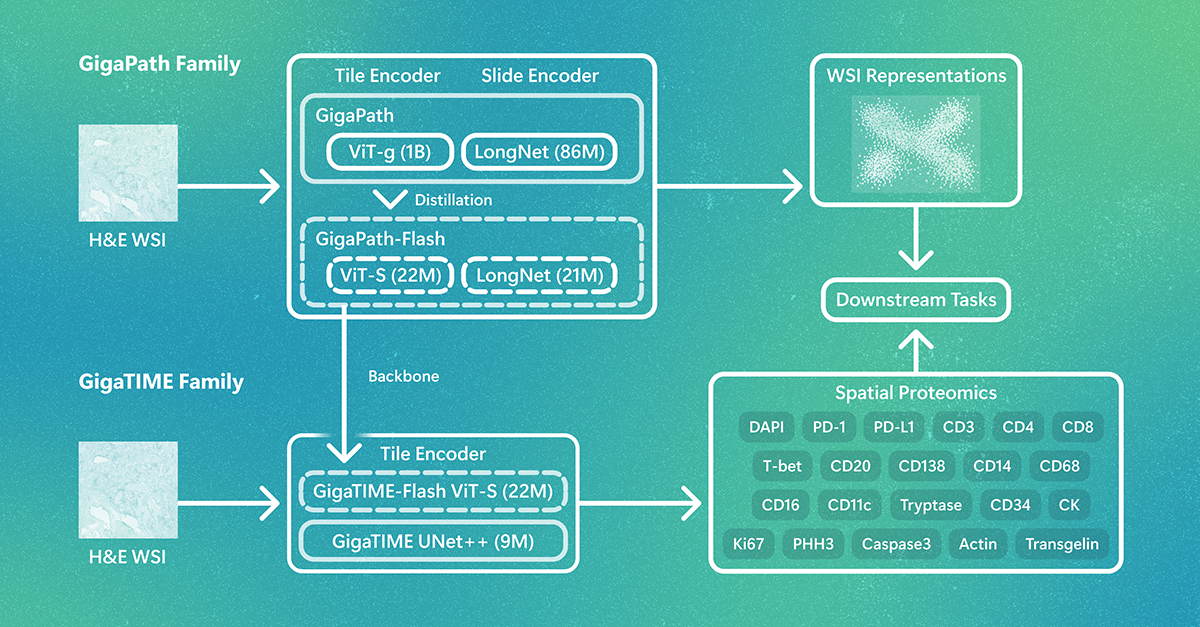
What if pathology foundation models could do more with less? GigaPath-Flash and GigaTIME-Flash cut computational demands while maintaining strong performance, opening the door to larger studies and broader exploration. The post GigaPath-Flash and GigaTIME-Flash: Toward population-scale discovery with efficient pathology foundation models appeared first on Microsoft Research.
MIT News · Artificial Intelligence· news.mit.eduAug 27, 2026
A new machine-learning framework aims to improve the success rate of computational protein design while moving away from results that reproduce sequences found in nature.