Skip to content

Allosteric Cooperativity Mechanism Investigation of Orthosteric and Allosteric Ligands in Modulating AR Activity: A Molecular Dynamics Study

Oct 2025 · Journal of Chemical Information and Modeling · 1 citation · 57 references
Computer Science Medicine

Abstract

The androgen receptor (AR) represents a pivotal therapeutic target for prostate cancer. However, existing orthosteric ligand-binding pocket (LBP) antagonists [e.g., enzalutamide (ENZ)] encounter significant obstacles due to resistance-conferring mutations in the LBP. Allosteric antagonists targeting the BF3 site exhibit great potential in overcoming such resistance but have low inhibitory efficacy. In our study, we employed an integrated computational modeling strategy, including Gaussian-accelerated molecular dynamics (GaMD), MM/GBSA free-energy calculations, and elastic network model (ENM)-based signaling communication pathway analyses. This approach is used to probe the cooperativity of allosteric BF3 antagonists [e.g., VPC-13808 (VPC)] with diverse orthosteric LBP ligands [e.g., ENZ and testosterone (TES)] in suppressing AR activity. Herein, four types of AR systems were examined: AR bound to LBP agonist (AR·TES), LBP antagonists (e.g., AR·ENZ), and combinations of LBP agonist/antagonist with BF3 antagonist (e.g., AR·TES·VPC and AR·ENZ·VPC). Results indicate that BF3 antagonists can synergize with the LBP antagonist to amplify conformational flexibility in H12 and induce anticorrelated dynamics of H12 with H3 and H4. This induces the downward movement of H12 and its displacement away from H3/H4, triggering the wide opening of the AF2 binding cleft and substantially reducing the coactivator recruitment. Furthermore, the BF3 antagonist can interact with specific residues (e.g., F673, F826, L830, and Y834) and cooperate with the LBP agonist or antagonist to allosterically perturb the AF2 conformation. Multiple short- and/or long-range BF3→AF2 and LBP→AF2 signaling transition pathways are involved, such as F673→Y834→L722→L812→L744→V746→L873→ENZ→L880/V889/V891. These mechanistic insights establish the foundation for developing novel AR BF3 antagonist and LBP-BF3 combination therapies, suggesting a promising avenue for enhancing the efficacy and overcoming the resistance in castration-resistant prostate cancer treatment.

View source

Similar papers

#computer vision Review Sep 2017

Agile Software Development Methods: Review and Analysis

Agile - denoting "the quality of being agile, readiness for motion, nimbleness, activity, dexterity in motion" - software development methods are attempting to offer an answer to the eager business community asking for lighter weight along with faster and nimbler software development processes. This is especially the case with the rapidly growing and volatile Internet software industry as well as for the emerging mobile application environment. The new agile methods have evoked substantial amount of literature and debates. However, academic research on the subject is still scarce, as most of existing publications are written by practitioners or consultants. The aim of this publication is to begin filling this gap by systematically reviewing the existing literature on agile software development methodologies. This publication has three purposes. First, it proposes a definition and a classification of agile software development approaches. Second, it analyses ten software development methods that can be characterized as being "agile" against the defined criterion. Third, it compares these methods and highlights their similarities and differences. Based on this analysis, future research needs are identified and discussed.

P. Abrahamsson, O. Salo, Jussi Ronkainen et al. · 728 citations · ⚡54
#machine learning Review Open access Oct 2014

Software development in startup companies: A systematic mapping study

Context: Software startups are newly created companies with no operating history and fast in producing cutting-edge technologies. These companies develop software under highly uncertain conditions, tackling fast-growing markets under severe lack of resources. Therefore, software startups present a unique combination of characteristics which pose several challenges to software development activities. Objective: This study aims to structure and analyze the literature on software development in startup companies, determining thereby the potential for technology transfer and identifying software development work practices reported by practitioners and researchers. Method: We conducted a systematic mapping study, developing a classification schema, ranking the selected primary studies according their rigor and relevance, and analyzing reported software development work practices in startups. Results: A total of 43 primary studies were identified and mapped, synthesizing the available evidence on software development in startups. Only 16 studies are entirely dedicated to software development in startups, of which 10 result in a weak contribution (advice and implications (6); lesson learned (3); tool (1)). Nineteen studies focus on managerial and organizational factors. Moreover, only 9 studies exhibit high scientific rigor and relevance. From the reviewed primary studies, 213 software engineering work practices were extracted, categorized and analyzed. Conclusion: This mapping study provides the first systematic exploration of the state-of-art on software startup research. The existing body of knowledge is limited to a few high quality studies. Furthermore, the results indicate that software engineering work practices are chosen opportunistically, adapted and configured to provide value under the constrains imposed by the startup context.

Nicolò Paternoster, Carmine Giardino, M. Unterkalmsteiner et al. · 394 citations · ⚡54

Related blog posts

Microsoft Research Blog Aug 31, 2026

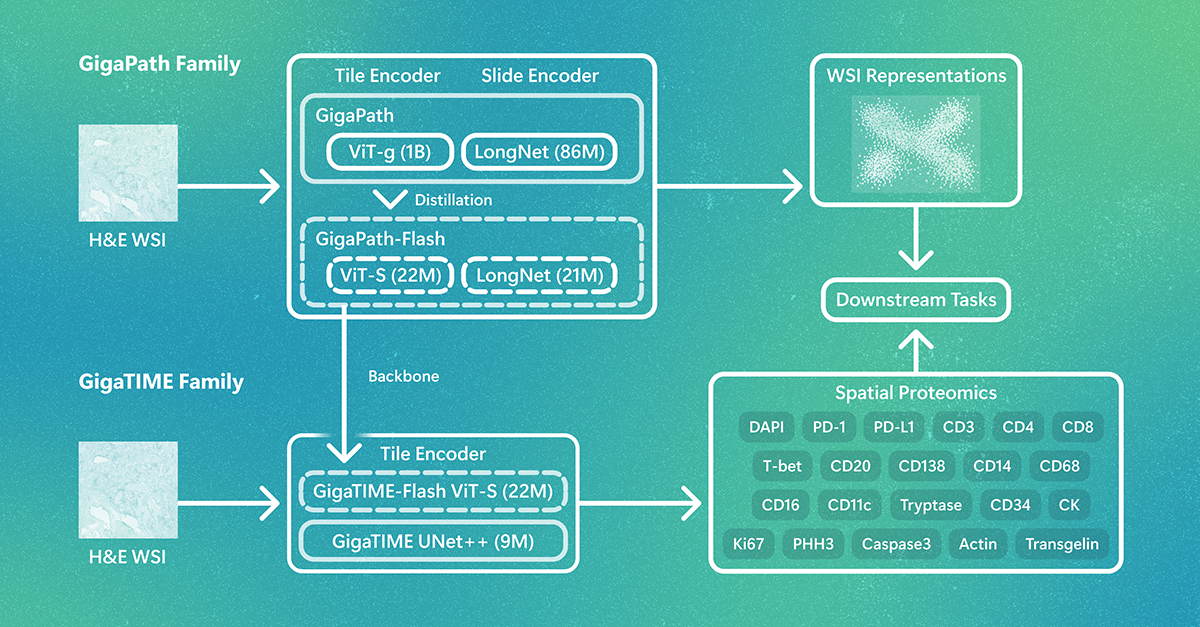
GigaPath-Flash and GigaTIME-Flash: Toward population-scale discovery with efficient pathology foundation models

What if pathology foundation models could do more with less? GigaPath-Flash and GigaTIME-Flash cut computational demands while maintaining strong performance, opening the door to larger studies and broader exploration. The post GigaPath-Flash and GigaTIME-Flash: Toward population-scale discovery with efficient pathology foundation models appeared first on Microsoft Research.