The integration of organic synthesis with enzymatic catalysis offers a promising route toward efficient and sustainable construction of complex molecules. While organic synthesis enables diverse transformations, enzymatic catalysis enhances stereoselectivity under mild conditions, improving cost-effectiveness and environmental impact. However, current enzymatic synthesis planning algorithms face challenges in formulating robust hybrid organic–enzymatic strategies. Key issues include the difficulty in devising hybrid planning approaches and the reliance on template-based enzyme recommendations, which limits their adaptability across diverse scenarios. Here we show ChemEnzyRetroPlanner, an open-source hybrid synthesis planning platform that combines organic and enzymatic strategies with AI-driven decision-making. The platform features advanced computational modules, including hybrid retrosynthesis planning, reaction condition prediction, plausibility evaluation, enzymatic reaction identification, enzyme recommendation, and in silico validation of enzyme active sites. A central innovation is the RetroRollout* search algorithm, which outperforms existing tools in planning synthesis routes for organic compounds and natural products across multiple datasets. ChemEnzyRetroPlanner provides an intuitive graphical interface and programmatic APIs for scalability, while leveraging the chain-of-thought strategy and the Llama3.1 model to autonomously activate hybrid synthesis strategies for diverse scenarios. The results indicate that this fully automated, open-source system holds potential value for improving the efficiency and sustainability of molecular synthesis. The integration of organic and enzymatic synthesis enhances molecule construction efficiency. Here, the authors present ChemEnzyRetroPlanner, an AI-driven platform for automated hybrid synthesis planning, improving synthesis route efficiency and sustainability.
Accurate atomistic biomolecular simulations are vital for understanding disease mechanisms and drug discovery, yet existing methods struggle to balance quantum-mechanical accuracy with computational scalability. Classical force fields often lack precision, while quantum methods are computationally prohibitive for complex biological systems. Here we show that LiTEN, a scalable equivariant neural network, resolves this dilemma by efficiently modeling complex three- and four-body interactions with linear complexity via Linearly Tensorized Quadrangle Attention. We introduce LiTEN-FF, a foundation model pre-trained on extensive datasets to ensure broad chemical generalization across diverse molecular spaces. We demonstrate that LiTEN achieves state-of-the-art accuracy on standard benchmarks, consistently outperforming leading approaches in both precision and speed. Furthermore, LiTEN-FF enables comprehensive modeling tasks, ranging from geometry optimization to free energy surface construction, with high computational efficiency for large biomolecules. This framework provides a physically grounded, versatile foundation for advanced biomolecular modeling and drug design applications.
Qun Su, Kai Zhu, Qiaolin Gou et al.· Nature Communications· 2 citations
Retrosynthesis planning is a crucial task in organic synthesis, and deep-learning methods have enhanced and accelerated this process. With the advancement of the emergence of large language models, the demand for data is rapidly increasing. However, available retrosynthesis data are limited to only millions. Therefore, we pioneer the utilization of the template-based algorithm to generate chemical reaction data, resulting in the production of over 10 billion reaction datapoints. A generative pretrained transformer model is subsequently developed for template-free retrosynthesis planning by pre-training on 10 billion generated data. Inspired by the strategies of large language models, we introduce reinforcement learning to capture the relationships among products, reactants, and templates more accurately. Experiments demonstrate that our model achieves state-of-the-art performance on the benchmark, with a Top-1 accuracy of 63.4%, substantially outperforming previous models. Computer-aided synthesis-planning methods have significantly assisted synthesis planning. In this work, the authors present RSGPT, a generative model pre-trained on ten billion data points, achieving state-of-the-art performance for synthesis planning
Yafeng Deng, Xinda Zhao, Hanyu Sun et al.· Nature Communications· 17 citations· ⚡2
Enzymatic reactions play an emerging role in a broad spectrum of scientific and industrial applications. The inherent complexity of enzymes, such as their substrate specificity, conformational flexibility, and the vast diversity of reactions involved, poses substantial challenges for the advanced computational prediction of enzymatic reactions with desirable accuracy. Moreover, existing approaches are mostly tailored for a specific sub-task, such as substrate prediction or binding site annotation, which limits their applicability. In this study, we introduce ERAM, a task-agnostic multimodal learning framework capable of addressing a broad range of downstream applications with both accuracy and efficiency. ERAM aligns pre-trained molecular representations from Protein Language Model with the knowledge of enzyme catalysis by modeling enzymatic reactions as multi-relational data. In enzyme retrieval tasks, ERAM achieves an improvement of 28.31% in mean average precision compared with the state-of-the-art (SOTA) method, CREEP. In substrate prediction tasks, ERAM outperforms the SOTA method ESP, achieving average improvements of 35.53% and 22.97% in Matthews correlation coefficient across two datasets. Additionally, ERAM exhibits commendable interpretability by assigning higher attention weights to binding sites, resulting in lower false-positive rates (42.36%) and higher overlap scores (70.59%) in the unsupervised binding site prediction task compared to RXNAA Mapper. By learning embeddings of substrates, enzymes, and products within a unified knowledge graph latent space, ERAM demonstrates its potential as a versatile and effective tool for enzyme catalysis research.
Multi-target drugs hold great promise for treating complex diseases, yet existing methodologies predominantly rely on ligand-based approaches, which lack sufficient biological context and are often confined to specific target pairs, resulting in limited generalizability. Here, we introduce LaMGen, a general-purpose multi-target drug design framework powered by large language models (LLMs). Built on MTD2025, a dataset comprising over 600,000 quantum-accurate molecular conformations and 700,000 multi-target associations, LaMGen directly yields energy-favorable conformations with quantum-level accuracy. The framework integrates ESM-C protein embeddings, rotation-aware ligand tokens, and a TriCoupleAttention module to capture multi-level target–ligand interactions. Across independent benchmarks, LaMGen outperforms diffusion-based model across multiple properties, generating molecules in an average of 0.44 s, while preserving high conformational plausibility. Retrospective analyses demonstrate that LaMGen not only can reproduce molecules identical to known actives, but also consistently produces structurally novel candidates with conserved core scaffolds and superior binding affinities. Designing effective multi-target therapeutics remains a major challenge, as existing ligand- or protein-centric methods struggle to generate biologically contextualized, spatially valid 3D molecules, particularly for triple-target systems. This study introduces LaMGen, an LLM-powered framework that leverages large-scale protein-ligand data and rotation-aware molecular encoding to rapidly produce chemically plausible multi-target candidates, achieving strong zero-shot generalization, superior molecular quality, and robust performance across dual- and triple-target design tasks.
Qun Su, Qiaolin Gou, Hui Zhang et al.· Nature Communications· 1 citation
Biotoxins, mainly produced by venomous animals, plants, and microorganisms, exhibit high physiological activity and unique effects such as lowering blood pressure and analgesia. A number of venom-derived drugs are already available on the market, with many more candidates currently undergoing clinical and laboratory studies. However, drug design resources related to biotoxins are insufficient, particularly because of a lack of accurate and extensive activity data. To fulfill this demand, we developed the Biotoxins Database (BioTD). BioTD is the largest open-source database for toxins, offering open access to 14,607 data records (8,185 activity records), covering 8,975 toxins sourced from 5,220 references and patents across over 900 species. The activity data in BioTD are categorized into five groups: Activity, Safety, Kinetics, Hemolysis, and other physiological indicators. Moreover, BioTD provides data on 1,532 mutants, refines the whole sequence and signal peptide sequences of toxins, and annotates disulfide-bond information. All of the data in the database can be downloaded for free. Given the importance of biotoxins and their associated data, this new database is expected to attract broad interest from diverse research fields in drug discovery. BioTD is freely accessible at http://biotoxin.net/.
Gaoang Wang, Hang Wu, Yang Liao et al.· Journal of Chemical Informat...· 0 citations
Targeting the intrinsically disordered N-terminal domain of the androgen receptor (AR-NTD) represents a promising strategy to overcome resistance in prostate cancer. However, its inherent lack of a stable tertiary structure and highly dynamic conformational ensemble pose formidable challenges for rational drug design. This study introduces an integrated computational workflow that combines enhanced sampling techniques and machine learning collective variables to identify druggable conformations of the AR-NTD and elucidate the binding mechanism of its modulator, EPI-002. We characterize nine metastable states of the Tau-5 region and reveal that ligand recognition is driven by π–π stacking and structured water-mediated hydrogen bonds. Leveraging these insights, we perform structure-based virtual screening based on the identified druggable conformations and identify K53, a rationally designed AR-NTD antagonist, which exhibits potent anti-proliferative activity in enzalutamide-resistant prostate cancer cells. K53 directly binds the AR-NTD, suppresses AR transcriptional activity, and demonstrates high selectivity for cancer cells. This work provides a rational design paradigm for targeting intrinsically disordered proteins and offers a therapeutic candidate for resistant prostate cancer. In this work, the authors develop a machine learning–based enhanced sampling workflow to target the intrinsically disordered AR-NTD, identifying druggable conformations and enabling transferable modeling of ligand binding for rational drug discovery.
Kai Zhu, Huating Wang, Jintu Zhang et al.· Nature Communications· 0 citations
Context: LLM-based multi-agent systems enable automation and decision support in software development, yet existing studies rely on benchmark datasets offering only binary pass-or-fail results, limiting insight into real-world applicability. Objective: This study empirically investigates the potential and limitations of LLM-based agents in autonomous software development tasks. Method: A two-phase approach was employed: developing a multi-agent system, CodePori, for automated code generation, and conducting participant-based evaluation to assess practical performance. Results: Participant feedback reveals key strengths, challenges, and areas for improvement in LLM-based multi-agent systems, highlighting aspects missed by standard code-generation benchmarks. Conclusions: While LLM-based multi-agent systems show potential for large-scale software development, successful integration requires addressing challenges such as memory limitations, hallucinations, and code smells, alongside a practitioner-centric perspective.
Z. Rasheed, Muhammad Waseem, Kai-Kristian Kemell et al.· 31 citations
Context: Manual qualitative data analysis is time-intensive and can compromise validity and replicability, affecting analysis design, implementation, and reporting. Large Language Models (LLMs) enable human-bot collaboration in Software Engineering (SE), but their potential for qualitative data analysis in SE remains largely unexplored. Objective: The objective of this study is to design and develop an LLM-based multi-agent system that synergizes human decision support with AI to automate various qualitative data analysis approaches. Methods: We used LLM-based multi-agents systems to assist the qualitative data analysis process, deploying 27 agents, each responsible for a specific task, such as text summarization, initial code generation, and extracting themes and patterns. Results: The main findings are: (1) the LLM-based multi-agent system accelerates the qualitative data analysis process, (2) the system effectively automates tasks such as text summarization, initial code generation, and theme extraction, and (3) the publicly accessible code facilitates validation and further evaluation. Conclusion: The proposed LLM-based multi-agent system automates qualitative data analysis process, creating opportunities for researchers and practitioners. Future improvements focus on enhancing multilingual performance and integrating continuous expert feedback. The source code of proposed system and system details can be found here: https://github.com/GPT-Laboratory/Qualitative-Analysis-with-an-LLM-Based-Agentts
Z. Rasheed, Muhammad Waseem, Aakash Ahmad et al.· arXiv.org· 40 citations
Collaborative AI experimentation in industry-academia requires environments that support rapid trials while maintaining controlled access, organisational isolation, and traceable workflows. Although interest in AI sandboxes is increasing, practical guidance on designing and building governance-aware experimentation platforms remains limited. This work designs and operationalizes a governance-aware, multi-tenant AI sandbox that supports structured experimentation and produces reusable evaluation evidence across stakeholders. The sandbox was developed in an industry-academia ecosystem using iteratively validated requirements gathered from industrial partners. The solution adopts a layered reference architecture that separates a multi-tenant presentation layer from a backend control plane and isolates execution and data management concerns into dedicated layers. The sandbox supports governed onboarding, project-based collaboration, controlled access to AI services, and traceable experimentation through approval workflows and audit logging. By structuring experiment context and governance decisions as persistent records, the sandbox enables evaluation evidence to be reused and compared across projects and stakeholders. The development experience yields lessons learned and practical considerations that inform deployment and future evolution of governance-aware sandbox platforms.
Muhammad Waseem, M. Islam, Md Nasir Uddin Shuvo et al.· arXiv.org· 0 citations
Collaborative AI experimentation across industry and academia requires platforms that enable rapid prototyping while preserving controlled access, tenant separation, and transparent workflows. Despite growing interest in AI sandboxes, there is still limited practical guidance on how to design and implement platforms that integrate experimentation capabilities with governance requirements. This work presents the design and implementation of a governance-aware, multi-tenant AI sandbox for structured experimentation and the generation of reusable evaluation evidence across projects and stakeholder groups. The sandbox was developed within an industry-academia collaboration based on requirements that were iteratively refined with industrial partners. Its reference architecture separates the multi-tenant user interface from the backend control plane and places execution and data-management functions in dedicated layers. The platform supports governed user onboarding, project-centered collaboration, managed access to AI services, approval workflows, audit logging, and traceable experimentation. Experiment configurations, contextual information, and governance decisions are stored as persistent records, allowing evidence and outcomes to be compared and reused across projects. The development process provides practical lessons for deploying and extending governance-aware AI sandbox platforms in collaborative research and industrial environments.
Muhammad Waseem, M. Islam, Md Nasir Uddin Shuvo et al.· 0 citations
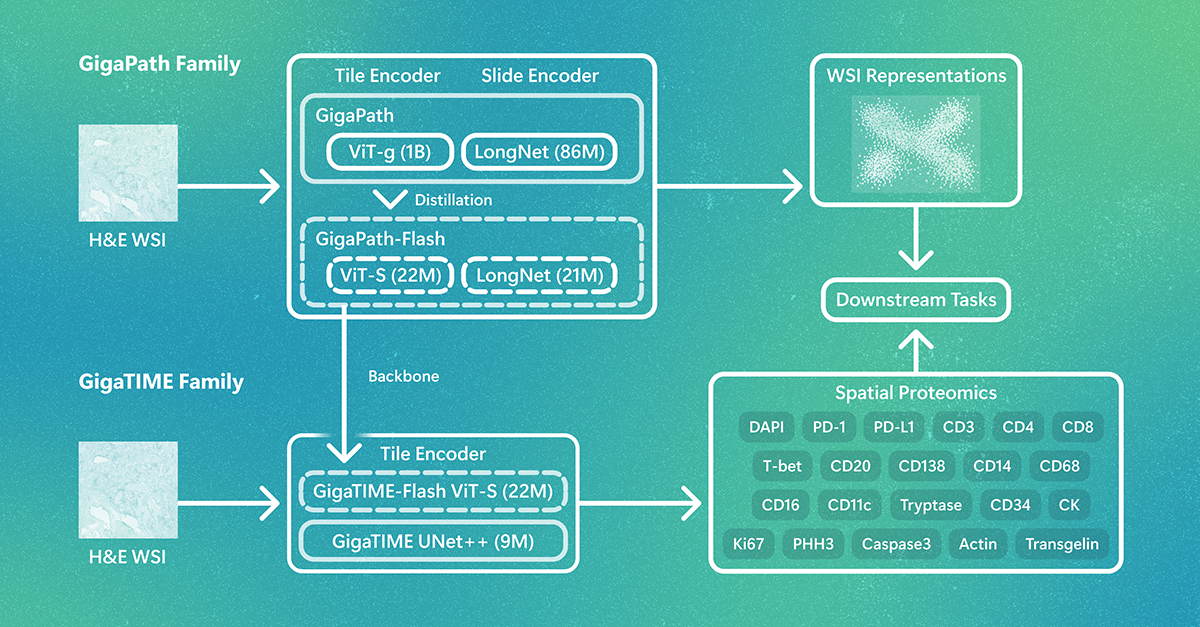
What if pathology foundation models could do more with less? GigaPath-Flash and GigaTIME-Flash cut computational demands while maintaining strong performance, opening the door to larger studies and broader exploration. The post GigaPath-Flash and GigaTIME-Flash: Toward population-scale discovery with efficient pathology foundation models appeared first on Microsoft Research.
MIT News · Artificial Intelligence· news.mit.eduAug 27, 2026
A new machine-learning framework aims to improve the success rate of computational protein design while moving away from results that reproduce sequences found in nature.